

At the heart of the Balkans, where centuries of complex borders and shifting sovereignties have carved out one of Europe’s most intricate geopolitical regions, a new chapter of micronationalism is unfolding. This time, it’s not driven by ancient history, conquest, or revolution, but by the dream of a 20-year-old Australian digital designer named Daniel Jackson.
What began as a teenage experiment has grown into a self-proclaimed nation: the Free Republic of Verdis. Tucked into a disputed stretch of forest along the Danube River, Verdis now claims a flag, a currency, a government, and hundreds of hopeful citizens.
The Birth of Verdis: From Childhood Dream to Micronational Reality
Daniel Jackson was just 14 years old when he first imagined creating a country of his own. Like many teenagers playing in the digital spaces of the internet, the idea was more fantasy than plan. Yet, for Jackson, the vision didn’t fade. Instead, it slowly grew into something tangible. By the time he turned 18, Daniel Jackson began to transform his dream into reality by drafting laws, designing a flag, and laying the foundation for what he would soon call the Free Republic of Verdis.
The location he chose for his project is no ordinary patch of land. Known as “pocket three,” the 125-acre forested area lies between Croatia and Serbia—specifically along the Danube River—and is the subject of a long-standing border dispute between the two nations. Neither country officially claims the area, making it a rare example of terra nullius, or “nobody’s land,” in Europe.
On May 30, 2019, Jackson formally declared the independence of Verdis. While this declaration holds no recognition from any sovereign state or international body, it marks the beginning of what Daniel Jackson and his followers hope will one day become a legitimate, peaceful microstate.
Read : New Zealand Becomes Second Country to Approve Use of ‘Magic Mushrooms’ to Treat Depression
The location is only accessible by boat from Osijek, Croatia. Despite its isolation and legal uncertainty, Jackson and his small group of supporters persisted. Over time, a community began to form online and off, bound together by a shared interest in the micronation movement and Jackson’s charismatic vision. Today, Verdis claims nearly 400 citizens from around the globe.
Micronation Building: Governance, Challenges, and Hope
While many may dismiss micronations as fantasy or performance art, the citizens of Verdis see things differently. Daniel Jackson has carefully constructed a governmental structure, forming a cabinet and drafting laws. He envisions Verdis as a place governed by democratic principles—one that values transparency, equality, and sustainability.
The official languages of Verdis are English, Croatian, and Serbian—an inclusive gesture that acknowledges the region’s cultural and linguistic diversity. The micronation uses the Euro as its de facto currency, and its administrative efforts, though limited in reach, reflect an earnest attempt to establish functional civic structures.
Read : Kuwait: Country known For Its Massive Amount Of Natural Resources Like Oil And Gas
Citizens are issued Verdisian passports, though Jackson warns against using them for international travel. Despite his caution, there are anecdotal reports that some passport holders have managed to use them while traveling, perhaps as novelty documents or with lenient border officers. These passports, along with the government’s selective approach to citizenship, add a layer of seriousness to Verdis’ ambitions. Applicants with skills in medicine, law enforcement, or emergency response are prioritized—a nod to the practical limitations and needs of a hypothetical small state.
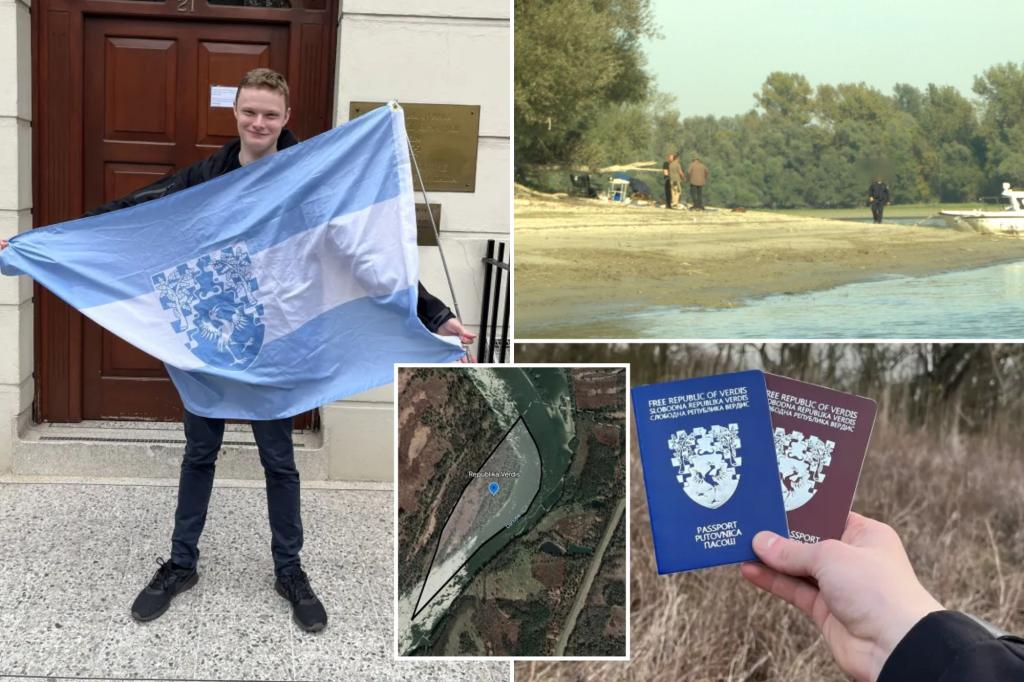
But the road has not been easy. In October 2023, an attempt by Jackson and other settlers to establish a physical presence in Verdis was met with resistance. Croatian police detained and deported the group, including Jackson himself, who was subsequently banned for life from entering Croatia. This event marked a significant setback for the movement, highlighting the fragile line between international law, border disputes, and independent ambition.
“They deported us but couldn’t give a reason why. They said we were a threat to homeland security,” Daniel Jackson recounted. The event cast a shadow over Verdis’ physical viability, but it did not extinguish Jackson’s resolve. Since then, he has continued to lead what he calls a “government in exile,” operating largely online and advocating for recognition and support.
The Croatian authorities, according to Daniel Jackson, have grown increasingly hostile, allegedly setting up surveillance along the Danube shoreline to prevent access to the disputed land from the Serbian side. These developments have pushed Jackson to focus more of his diplomatic efforts on Serbia, whose officials he claims have shown a more open attitude toward his cause.
Dreams of Recognition and the Future of Verdis
Despite the many legal and logistical challenges, Daniel Jackson remains optimistic about Verdis’ future. His vision is not rooted in conquest or rebellion, but in idealism—a belief that unclaimed land, properly stewarded, can become the foundation for a new, peaceful community. He emphasizes that his personal ambition is not to rule, but to facilitate. If Verdis is ever internationally recognized, Jackson has pledged to step down and call for democratic elections, distancing himself from the image of a self-styled monarch or authoritarian leader.
Much of the Verdisian identity is built around community and creativity. Jackson, a Roblox developer by profession, has experience building virtual worlds—skills that have translated into the digital structuring of Verdis’ institutions. His background in design and digital collaboration has helped foster a sense of legitimacy among citizens, many of whom interact through online platforms and digital forums.

But for all its whimsical qualities, the Free Republic of Verdis also raises serious questions about borders, identity, and the concept of sovereignty in the 21st century. As political boundaries around the world become more contested and digital communities continue to thrive, projects like Verdis challenge traditional notions of statehood. Micronations like Sealand, Liberland, and now Verdis, exist in a legal and political gray zone, often blending satire, activism, and idealism.
What sets Verdis apart, perhaps, is the timing and the tenacity of its founder. In an age defined by global uncertainty and a renewed focus on small-scale governance, Jackson’s dream strikes a chord. For those disillusioned with bureaucracy or looking for meaning beyond borders, Verdis offers a tantalizing glimpse of what could be possible if imagination were allowed to take root in the real world.
At the same time, Verdis’ future depends on diplomacy, strategy, and recognition. Without legal standing, access to land, or international support, its existence remains symbolic. The Croatian government shows little sign of yielding ground, and the area’s disputed status further complicates matters.
Still, Daniel Jackson is undeterred. He continues to travel to Belgrade, meeting with supporters and keeping the vision alive. Whether Verdis will ever transcend its current status is uncertain, but it already represents something rare in today’s world: the power of youthful conviction to shape a new narrative, however unconventional.
Jackson’s story is a modern parable—about borders both real and imagined, about the intersection of digital and physical worlds, and about how one person’s dream can ignite the hopes of hundreds. The Free Republic of Verdis may be small, obscure, and unrecognized, but in the eyes of its citizens, it is something much larger: a promise of belonging, of creativity, and of a better way to build a world.
Mindful play is an essential part of a healthy entertainment experience.
It enables users to keep awareness while enjoying interactive activities.
Setting limits helps avoid problems.
Responsible play also encourages thoughtful choices.
https://dosweeps.com/game-categories/instant-win-crash
By managing time and budget, players can avoid stress.
This approach creates a comfortable long-term experience.
Knowledge of personal habits makes a real difference.
Ultimately, responsible gaming helps preserve fun for everyone.