

Austin Peay State University has agreed to pay theater professor Darren Michael $500,000 as part of a settlement resolving a contentious employment dispute that arose after he was fired for sharing a social media post related to conservative commentator Charlie Kirk.
The settlement, confirmed by Michael’s attorney and the university, follows the professor’s reinstatement in late December and marks a significant reversal by the Clarksville, Tennessee institution, which acknowledged that it failed to follow required tenure termination procedures. The case has become one of the most prominent examples in a growing wave of disputes involving academic employment, social media speech, and First Amendment protections in the aftermath of Kirk’s death.
Background of the Firing and Reinstatement
The controversy began in September when Darren Michael, a tenured professor at Austin Peay State University, shared an article on his personal social media account discussing past comments made by Charlie Kirk regarding gun deaths and the Second Amendment. The article, titled “Charlie Kirk says gun deaths are ‘unfortunately’ worth it to keep 2nd Amendment,” was posted shortly after Kirk was killed during an event at Utah Valley University on Sept. 10. Michael did not add any original commentary or caption to the shared link.
Despite the absence of additional remarks, the post quickly drew attention. Two days later, U.S. Sen. Marsha Blackburn of Tennessee shared a screenshot of Michael’s post on her X account, tagging the university and asking, “What do you say, Austin Peay?” That public spotlight intensified scrutiny of Michael’s actions and prompted a swift response from the university.
Later that same day, Austin Peay State University announced that Michael had been fired. In a statement, the university said the social media post was “insensitive, disrespectful and interpreted by many as propagating justification for unlawful death.” APSU President Mike Licari stated that such actions did not align with the university’s commitment to mutual respect and human dignity, and that the faculty member had been terminated.
The decision immediately raised questions about academic freedom, due process, and the rights of tenured faculty. In October, the university partially walked back its original position, clarifying that Michael had not been formally terminated but was instead suspended, with the administration beginning the process of terminating his tenure. This shift suggested internal recognition that the initial handling of the matter may not have complied with established policies.
Read : Scenic Wonders: A Journey Through England’s Top 10 Most Beautiful Villages
On Dec. 30, 2025, the university took a further step back. In an email obtained by Clarksville Now and later confirmed by The Tennessean, President Licari acknowledged that APSU “did not follow the required tenure termination process in this matter.” Michael was reinstated to his position that same day, approximately three months after the initial firing. Licari expressed regret for the impact the situation had on Michael and the campus community and pledged to ensure fairness and due process in future actions.
Terms of the Settlement and Legal Implications
Following Michael’s reinstatement, negotiations between the professor and the university culminated in a settlement agreement that includes a $500,000 payout to Michael, as well as reimbursement for therapeutic counseling services. The terms were confirmed by Michael’s attorney, David King, and acknowledged by a spokesperson for Austin Peay State University, though the university declined to comment on specific details of the agreement.
Read : Retired Cop Larry Bushart Files Lawsuit After 37 Days Jailed Over Charlie Kirk Meme
According to King, the settlement resolves issues related to Michael’s employment status and compensation, effectively closing that chapter of the dispute. However, King indicated that the legal matter may not be entirely concluded. He stated that they are “exploring future options” against individuals who allegedly interfered with Michael’s First Amendment rights, signaling the possibility of additional legal action beyond the university itself.
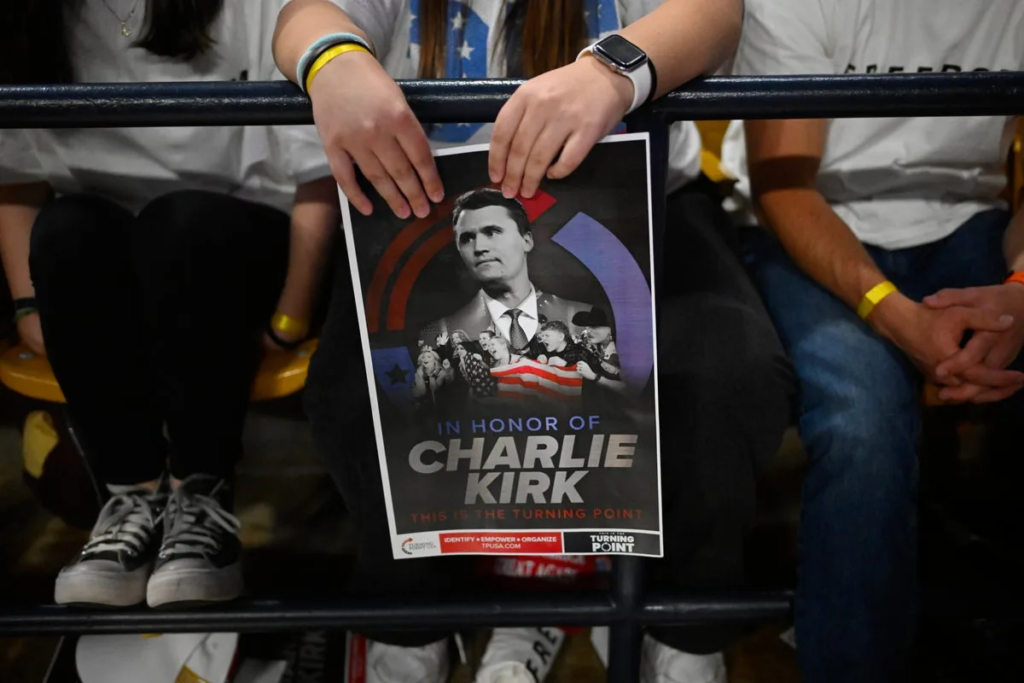
The settlement underscores the legal risks universities face when disciplinary actions involving tenured faculty and expressive conduct are taken without strict adherence to internal policies and constitutional considerations. Tenure termination processes are typically governed by detailed procedures designed to protect academic freedom and ensure that faculty are not punished for protected speech.
APSU’s admission that it failed to follow those procedures proved to be a pivotal factor in the outcome. From a broader legal perspective, the case illustrates the complex balance between institutional values, public pressure, and constitutional protections. While universities often seek to uphold standards of conduct and respond to community concerns, public institutions such as Austin Peay State University are also bound by the First Amendment.
Disciplinary actions based on speech, particularly when that speech occurs on a personal platform and involves matters of public concern, are subject to heightened scrutiny. The inclusion of compensation for therapeutic counseling services further reflects the personal toll the episode took on Michael, reinforcing how employment disputes tied to public controversy can extend beyond professional consequences to affect mental and emotional well-being.
A Broader Pattern of Charlie Kirk-Related Employment Disputes
Darren Michael’s case is not an isolated incident. In the weeks following Charlie Kirk’s death, numerous individuals across Tennessee and other parts of the United States reported facing disciplinary actions, firings, or legal trouble after posting comments or content perceived as critical of Kirk or his views. Conservative activists, influencers, and politicians have played a visible role in amplifying such posts online, often calling for accountability or employment consequences.
One notable Tennessee case involves Laura Sosh-Lightsy, a Middle Tennessee State University faculty member with more than two decades of service. Sosh-Lightsy was serving as the Associate Dean of Student Care and Conduct when she was fired on Sept. 10 after posting about Kirk’s death on her personal Facebook page. She filed a First Amendment lawsuit against the university in early November, arguing that her termination violated her constitutional rights.

Another case centers on Moncia Meeks, a former employee of the Tennessee Department of Commerce and Insurance and a state representative candidate. Meeks was fired after responding to a friend’s social media posts about Kirk. She filed a First Amendment lawsuit against the state in early December, further expanding the legal challenges arising from these incidents.
Perhaps the most extreme example involves Larry Bushart, a retired police officer and National Guardsman living in Lexington, Tennessee. Bushart was arrested on Sept. 22 after posting an image of a quote from President Donald Trump in a social media comment thread related to a Kirk memorial. He was charged with threats of mass violence and held on a $2 million bond. His incarceration led to the loss of his job in medical transportation. After significant public pressure, Bushart was released on Oct. 29 and has since filed a First Amendment lawsuit against Perry County, the county sheriff, and an investigator involved in his arrest.
Together, these cases highlight a broader national debate over how employers, particularly public institutions, respond to politically charged speech in the digital age. They also underscore the growing role of social media as a catalyst for employment disputes and legal action, where posts made in personal capacities can rapidly escalate into high-profile controversies. The settlement involving Darren Michael stands out due to its size and the university’s explicit acknowledgment of procedural failure.
Funded coverage of First Amendment issues by the USA TODAY Network’s South region, through a collaboration between the Freedom Forum and Journalism Funding Partners, reflects the broader significance of these disputes within the legal and journalistic landscape. As similar cases continue to move through courts, the outcome of Michael’s dispute may serve as a reference point for other public employees and institutions navigating the intersection of free speech, public accountability, and internal governance.
paradise casino yuma az
References:
miurl.do