
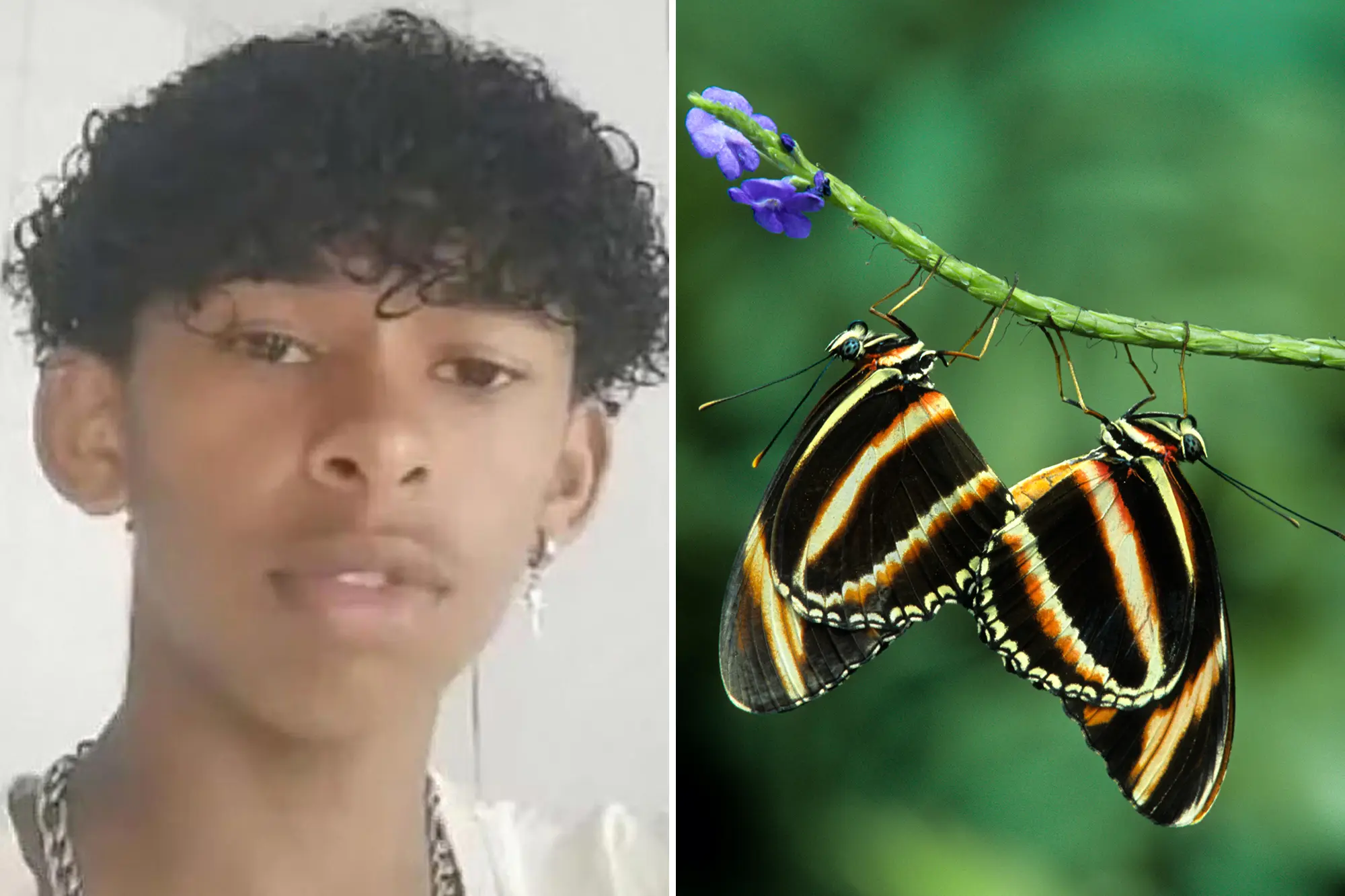
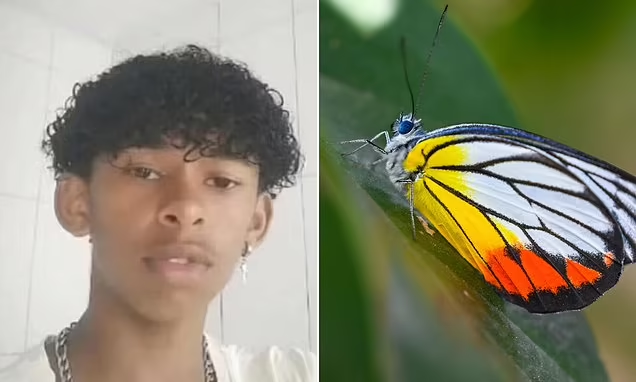
The tragic death of 14-year-old Davi Nunes Moreira has shocked Brazil and the world, highlighting the dangers of extreme online challenges. The young boy reportedly injected himself with a mixture of dead butterfly remains and water, leading to fatal health complications.
His untimely death has prompted an investigation into the potential influence of social media trends that encourage dangerous self-experimentation. As authorities work to determine the exact cause of death, experts warn about the potential risks of toxic exposure from insects and the broader issue of reckless online challenges.
Davi Nunes Moreira initially claimed he had injured himself while playing, but as his condition worsened, he admitted to mixing a dead butterfly with water and injecting it into his body. He was rushed to a hospital in northeast Brazil, but despite medical intervention, he did not survive.
Authorities are now investigating whether he was influenced by a viral challenge circulating online, though no official confirmation has been made yet. His father later discovered a syringe under his pillow, further intensifying concerns about the dangers of self-experimentation among teenagers.
The Risks of Injecting Foreign Substances
Injecting any foreign substance into the body without medical supervision is highly dangerous and can have severe consequences. In Davi Nunes Moreira’s case, experts believe that toxins present in the butterfly remains may have triggered septic shock, a life-threatening condition that occurs when the body responds to infection in a way that leads to organ failure.
While some butterflies, particularly those that feed on toxic plants like milkweed during their caterpillar stage, contain small amounts of toxins, the effects of injecting such substances directly into the bloodstream are not well studied.
Butterflies are not typically considered hazardous to human health, but their bodies may carry bacteria, fungi, or other pathogens that can be harmful when introduced into the bloodstream.
Read : Bizarre! Hundreds of Eight-Legged Creatures Rain Down from the Sky in Brazil
The act of injecting organic material poses a significant risk of infection, leading to potentially fatal conditions such as sepsis. Without immediate and appropriate medical treatment, septic shock can quickly result in death.
Read : 17-Year-Old Chinese Badminton Player Dies of Cardiac Arrest During Championship Match: Watch
Medical experts warn that the human body is not designed to handle the direct introduction of unsterilized organic matter. When foreign substances enter the bloodstream, they can cause blockages, severe immune reactions, or the proliferation of harmful microorganisms. Even if the material itself is not highly toxic, the potential for bacterial contamination is immense, making such experiments incredibly dangerous.
The Impact of Dangerous Viral Challenges
Davi Nunes Moreira’s tragic death is not the first instance of a viral challenge leading to serious consequences in Brazil. In April 2024, a social media influencer, Thammy MC, suffered severe tissue damage and necrosis after attempting a dangerous challenge that involved standing in an ice bucket for an extended period.
Her feet turned black due to frostbite, and doctors warned that she had narrowly avoided severe blood clots and permanent skin loss. The rise of reckless online trends has become a growing concern worldwide.
Social media platforms provide instant access to content that encourages risky behavior, often without proper warnings or explanations of the potential consequences. Teenagers, in particular, are highly susceptible to peer pressure and the desire for online validation, which can drive them to participate in extreme challenges without considering the risks.
Several past trends have resulted in injuries and fatalities, including the “Tide Pod Challenge,” where individuals consumed laundry detergent pods, and the “Cinnamon Challenge,” which involved attempting to swallow large amounts of cinnamon powder, leading to choking and respiratory issues.
The common factor in these challenges is their deceptive simplicity—many seem harmless or amusing at first glance, but the underlying dangers are severe.
In Davi Nunes Moreira’s case, it remains unclear whether he was directly influenced by an online challenge or if he experimented on his own. However, the mere possibility that social media may have played a role raises significant concerns about the responsibility of platforms in regulating harmful content.
Authorities in Brazil are now investigating whether there is a direct link between Davi’s death and an online trend, hoping to prevent similar tragedies in the future.
The Need for Awareness and Preventive Measures
In light of this tragedy, experts and parents alike are emphasizing the importance of educating young people about the dangers of self-experimentation and unverified online challenges. The influence of social media on adolescent behavior cannot be ignored, and proactive measures are needed to ensure that teenagers are aware of the risks associated with viral trends.
Parents and guardians should maintain open communication with their children, encouraging them to discuss any unusual activities or online content they come across.
Many teens may not fully understand the consequences of their actions and might participate in dangerous challenges simply out of curiosity or peer pressure. By fostering a supportive and educational environment, families can help prevent such incidents from occurring.
Additionally, social media companies must take greater responsibility in monitoring and removing harmful content that promotes risky behaviors.
While platforms often rely on algorithms to detect inappropriate material, stronger human oversight and stricter regulations may be necessary to prevent dangerous trends from spreading. Educational campaigns highlighting the real-life consequences of reckless online challenges could also play a crucial role in deterring young users from engaging in risky activities.
Schools and community organizations can contribute by integrating digital literacy and safety awareness programs into their curricula. Teaching students about critical thinking, media literacy, and the potential dangers of viral trends can equip them with the knowledge to make informed decisions.
Rather than solely focusing on restricting access to social media, empowering teenagers with the ability to assess risks independently may be a more effective approach.
The loss of Davi Nunes Moreira serves as a tragic reminder of the hidden dangers lurking within online culture. While the internet provides immense opportunities for learning and connection, it also exposes young users to potentially harmful influences.
By working together—parents, educators, policymakers, and tech companies—society can strive to create a safer digital environment for future generations.