

A federal judge in New Mexico has sentenced an Anthony man to nearly two decades in prison after authorities uncovered an extensive methamphetamine distribution operation conducted from a tow-behind trailer located on his parents’ property. The case, built on controlled drug purchases and a detailed federal investigation, illustrates the scale of narcotics trafficking that can operate quietly within residential settings and the significant penalties imposed under federal law for large-scale meth distribution.
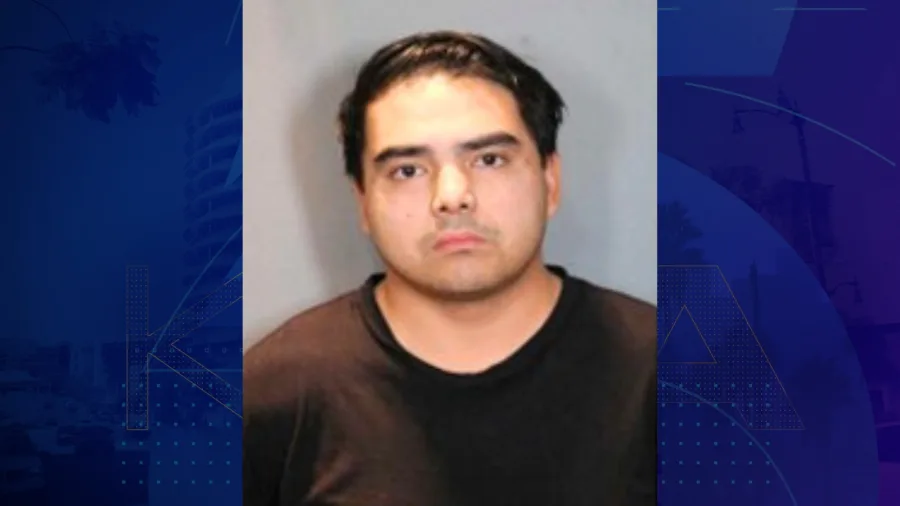
Court records show that David Amaya, 43, pleaded guilty to possession with intent to distribute 50 grams or more of methamphetamine, a charge that carries severe sentencing consequences due to the quantity involved and the surrounding circumstances documented by investigators.
The sentence was handed down in December at the federal courthouse in Las Cruces, bringing an end to an investigation that began months earlier with undercover operations. In addition to the lengthy prison term, Amaya will serve five years of supervised release following his incarceration. Federal prosecutors and law enforcement officials described the case as a clear example of coordinated drug enforcement efforts involving the FBI and the U.S. Attorney’s Office for the District of New Mexico.
Federal Sentencing and Court Proceedings
U.S. District Judge Margaret I. Strickland sentenced Amaya to 19 years and seven months in federal prison after reviewing the evidence and the terms of his plea agreement. According to federal court records, David Amaya pleaded guilty in September, resolving the primary drug charge while securing the dismissal of a separate count alleging possession of a firearm in furtherance of a drug trafficking crime. Assistant U.S. Attorney Kirk Williams prosecuted the case on behalf of the federal government.
The sentencing followed standard federal guidelines that weigh the quantity of drugs involved, the presence of firearms, and other aggravating factors. In this case, authorities recovered more than a kilogram of methamphetamine, far exceeding the statutory threshold that triggers enhanced penalties. While the firearm charge was dismissed as part of the plea agreement, court documents still detailed the discovery of multiple weapons and large amounts of ammunition inside the trailer, information that formed part of the factual basis of the case.
Read: Crime Challenges: Examining the Top 10 Countries with High Crime Rates
Acting U.S. Attorney for the District of New Mexico Ryan Ellison and FBI Albuquerque Field Office Special Agent in Charge Justin A. Garris announced the sentencing in a joint news release, emphasizing the collaboration between federal prosecutors and investigators. They noted that the outcome reflects ongoing efforts to disrupt drug distribution networks operating within southern New Mexico, particularly those supplying methamphetamine, a substance that has had a significant impact on communities across the region.
Investigation and Controlled Drug Sales
The investigation into Amaya began in mid-2024 after FBI agents conducted controlled purchases of methamphetamine in July and August. Controlled buys involve law enforcement using undercover agents or cooperating witnesses to purchase illegal drugs from suspected dealers under closely monitored conditions. These transactions provide direct evidence of distribution activity and often serve as the foundation for search warrants and subsequent arrests.
Based on information gathered during the controlled buys, agents sought and obtained a search warrant on Aug. 22, 2024, targeting a specific tow-behind trailer where Amaya was known to live and conduct narcotics transactions. The trailer was situated on property owned by his parents in Anthony, a small community in southern New Mexico near the Texas border. According to a federal complaint affidavit, the trailer served as both Amaya’s residence and the base of his drug distribution activities.
The search revealed that the trailer lacked basic amenities, including a restroom. Investigators discovered a small makeshift bathroom structure located nearby, equipped with a portable toilet. Recognizing its proximity and potential connection to the trailer, agents obtained an additional warrant to search this structure as well. What they found inside significantly expanded the scope of the case.
Throughout the trailer and the bathroom structure, agents located what the affidavit described as a large quantity of a white crystalline substance suspected to be methamphetamine. In one notable discovery, agents found a clothing hamper inside the bathroom structure containing a gallon-sized zip-top bag filled with suspected methamphetamine. Additional quantities were recovered from various locations inside the trailer, including the bed, under the bed, and on a nightstand.
Evidence Seized and Admissions by the Defendant
In total, federal agents seized 1,183 grams of methamphetamine during the search, an amount that far exceeded the 50-gram threshold specified in the charge to which Amaya pleaded guilty. The quantity suggested not personal use but distribution on a significant scale, reinforcing the prosecution’s case that Amaya was actively engaged in selling the drug over a sustained period.

In addition to the drugs, agents discovered firearms and ammunition inside the trailer. According to the affidavit, a black Ruger .357 caliber handgun loaded with five rounds of ammunition and a black Mossberg 500 E410 gauge shotgun were found on the bed. Authorities also reported finding hundreds of rounds of ammunition. While the firearm charge was ultimately dismissed, the presence of weapons in close proximity to large quantities of drugs was documented in court filings.
During an interview with agents, Amaya admitted that the methamphetamine belonged to him and stated that he had accumulated it over time. He reportedly told investigators that he did not realize how much methamphetamine he had in his possession. Regarding the firearms, Amaya said he kept them for protection, explaining that he wanted people to know he had guns so they would be less likely to target him.
These statements, along with the physical evidence recovered during the search, formed the basis of the federal case against him. By pleading guilty, Amaya accepted responsibility for the drug distribution charge, allowing the case to move directly to sentencing without a trial.
The outcome underscores the serious consequences associated with large-scale methamphetamine distribution under federal law. With a sentence approaching 20 years in prison and a subsequent term of supervised release, the case reflects the judiciary’s approach to drug trafficking offenses involving substantial quantities and the use of residential properties as distribution points.
Playing io, my dudes! Heard good things and gave it a shot. So far, so good. Give it a whirl! Check it out: playing io