
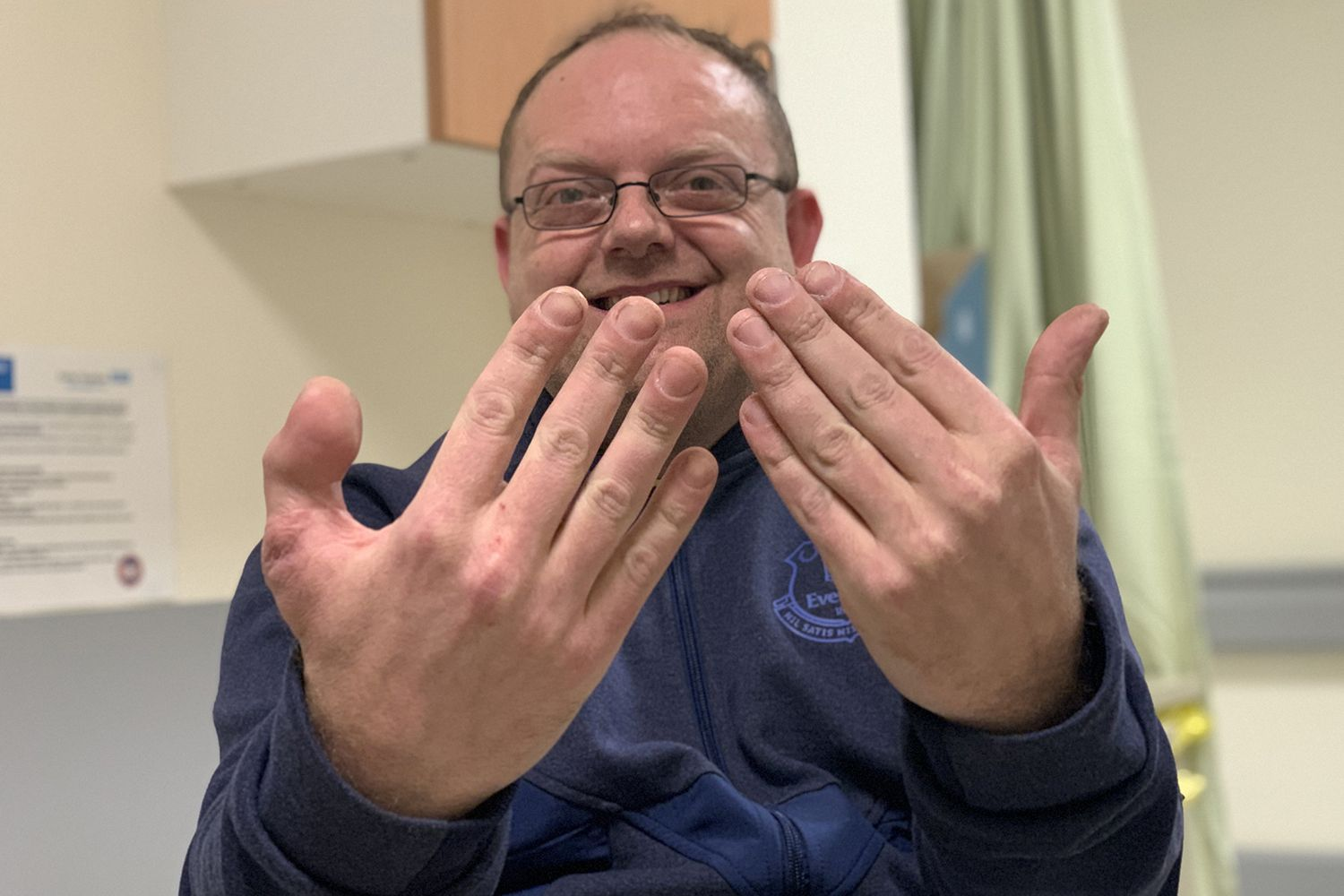
In the modern history of reconstructive surgery, few stories capture both the shock of sudden injury and the quiet triumph of medical ingenuity as vividly as that of David Lee, a cobbler from England whose right thumb was replaced with his own big toe. What began as a routine day at work in a small shoe repair shop in Nottinghamshire turned into a life-altering moment that forced Lee to confront the fragility of the human body and the extraordinary possibilities of modern medicine.
The incident, which occurred in 2019, resulted in the complete loss of his thumb, a digit so central to daily function that its absence reshapes even the simplest of tasks. Yet through an uncommon but well-established surgical procedure, Lee regained the use of his hand and returned to his profession, albeit with a thumb that now carries an unusual origin.
Lee’s experience has since drawn public attention not because of sensationalism alone, but because it illustrates the depth of adaptation required after catastrophic injury. From the immediate trauma of the accident to months of rehabilitation and the long-term physical consequences affecting both hand and foot, his story offers a detailed look at what recovery truly entails. It also underscores how reconstructive surgery is not merely about restoring appearance, but about reclaiming independence, livelihood, and personal identity in the aftermath of sudden loss.
The Accident That Changed Everything
David Lee had spent years working as a cobbler, a profession that demands precision, dexterity, and constant use of the hands. In 2019, while replacing the heel on a shoe, a routine task he had performed countless times before, Lee accidentally sliced off his right thumb. The injury was immediate and severe. According to his own account, the reality of what had happened did not fully register until the thumb fell to the floor, at which point it became unmistakably clear that the damage was irreparable through simple means.
The thumb plays a uniquely critical role in hand function. It enables grip strength, opposition, and fine motor skills that allow humans to manipulate tools, write, eat, and perform countless other tasks. Losing it is not comparable to losing any other finger, and in many professions, particularly manual trades, it can be career-ending. Lee was rushed to King’s Mill Hospital and later referred to the Royal Derby Hospital’s Pulvertaft Hand Centre, a specialist unit known for complex hand and reconstructive surgeries.
At the center, Lee was presented with several treatment options. These included partial reconstruction, prosthetic alternatives, or a more radical solution known as toe-to-thumb transfer. This procedure involves removing a toe, typically the big toe, and surgically attaching it to the hand to function as a thumb. While the idea may seem extreme, it has been performed for decades and is considered one of the most effective ways to restore thumb function when replantation of the original digit is impossible.
Read : Top 10 Most Peaceful Countries in the World According to Forbes
Faced with the reality of his profession and the need to regain as much hand function as possible, Lee opted for the toe transfer. The decision was not taken lightly. It meant accepting permanent changes not only to his hand but also to his foot, along with a long and demanding recovery process. However, for Lee, the possibility of returning to work and regaining independence outweighed the drawbacks.
The Surgery and the Long Road to Recovery
The surgical procedure to replace a thumb with a toe is among the most complex forms of reconstructive microsurgery. It requires the precise connection of bones, tendons, blood vessels, and nerves to ensure that the transplanted toe survives and functions as a thumb. In Lee’s case, surgeons detached his right big toe and reattached it to his hand, reshaping it to better resemble a thumb while preserving as much functionality as possible.
Read : Beijing Man Has Thumb Amputated After Hand-Feeding Ill Pet Snake
Immediately after surgery, Lee faced significant limitations. His right hand was immobilized during the healing process, forcing him to rely entirely on his left hand for daily activities. As someone who was not ambidextrous, this presented constant challenges. Simple tasks such as holding cutlery, preparing drinks, or dressing became frustrating exercises in patience and adaptation. The loss of grip strength and coordination in his injured hand compounded these difficulties, as the muscles and internal structures had been extensively disrupted during surgery.
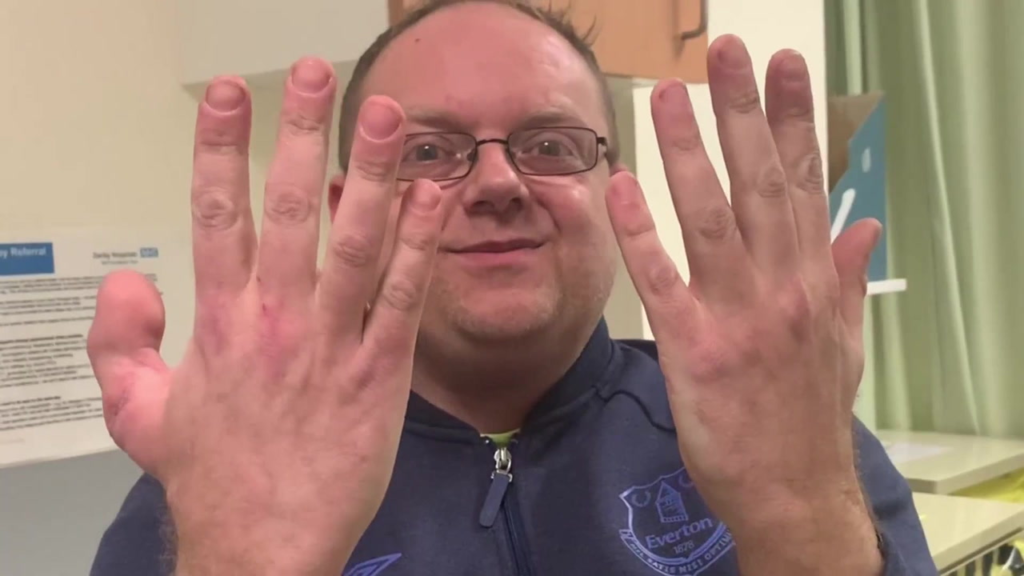
Physical therapy became a central part of Lee’s recovery. Over many months, he worked to rebuild strength, flexibility, and coordination in his reconstructed hand. He had to relearn how to use scissors, manipulate tools, and perform fine motor tasks essential to his trade. Therapy was not limited to the hand alone. Adjustments were also required to accommodate the loss of the big toe, which plays a key role in balance and weight distribution while walking and standing.
Beyond the physical challenges, there were psychological hurdles. Lee has acknowledged that there was a period during which he felt self-conscious about the appearance of his new thumb. Despite the surgeons’ skill, a toe does not perfectly replicate the look of a natural thumb. Coming to terms with this visible reminder of his injury required time and emotional adjustment. Eventually, Lee reached a point of acceptance, viewing the thumb not as a curiosity or flaw, but as an integral part of who he is now.
Remarkably, the functional outcome of the surgery has been highly successful. Lee has returned to fixing shoes, a testament to both his determination and the effectiveness of the procedure. He has noted that, at a glance, most people would not realize his thumb was once a toe, underscoring how seamlessly the reconstruction blends into everyday life.
Life Five Years Later and an Unusual Everyday Problem
More than five years after the accident, the most significant ongoing effects of the surgery are felt not in Lee’s hand, but in his foot. The absence of the big toe has altered how his right foot bears weight, leading to fatigue and tenderness after long days of standing and working. While this discomfort is manageable, it serves as a constant reminder that restoring one part of the body often comes at the cost of another.
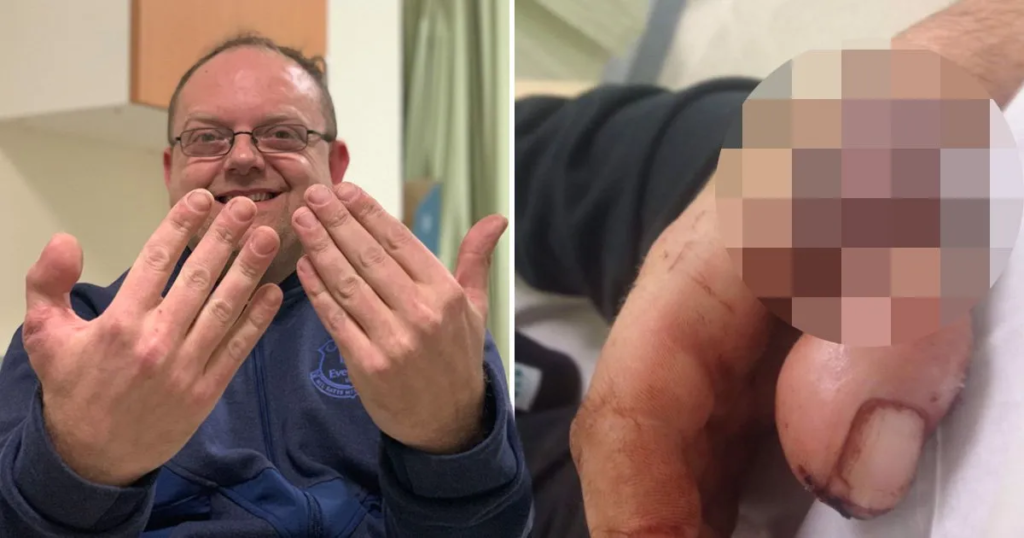
From a functional standpoint, Lee’s hand allows him to live what he describes as a relatively normal life. He can work, perform daily tasks, and engage with others without major limitations. The trade-off between hand function and foot comfort is one he has learned to accept as part of the broader outcome of his injury and recovery.
The most peculiar consequence of his surgery, however, is a small but persistent practical issue. Because his thumb is, anatomically speaking, a big toe, it is larger than a typical thumb. This has led to the oddly specific problem of needing larger gloves to accommodate his hand. While minor in comparison to the trauma of the accident and the complexity of the surgery, this detail has captured public attention for its symbolic weight. It highlights how even successful medical interventions can introduce unexpected quirks into everyday life.
Lee recently reunited with Jill Arrowsmith, the surgeon who performed his operation, during a radio interview. Arrowsmith reflected on the profound impact that hand injuries can have, emphasizing how deeply hands are tied to personal identity, communication, and livelihood. Her remarks underscore why procedures like toe-to-thumb transfer, despite their dramatic nature, are so vital for patients whose lives and careers depend on manual ability.
David Lee’s story stands as a compelling example of resilience in the face of sudden loss and of the remarkable lengths to which modern medicine can go to restore function. It also serves as a reminder that recovery is not a single event but an ongoing process, shaped by adaptation, acceptance, and the willingness to live with imperfections in exchange for independence and purpose.
After all, what a great site and informative posts, I will upload inbound link – bookmark this web site? Regards, Reader.