

A former daycare teacher in Concord is serving jail time after pleading guilty to charges stemming from an incident that left a 3-year-old child with second-degree burns. The case has ignited widespread concern among childcare safety advocates and parents, raising questions about supervision, accountability, and the standards expected of individuals entrusted with the care of young children. Court records outline a disturbing sequence of events that occurred inside a licensed daycare facility, prompting renewed scrutiny of oversight practices within early childhood education settings.
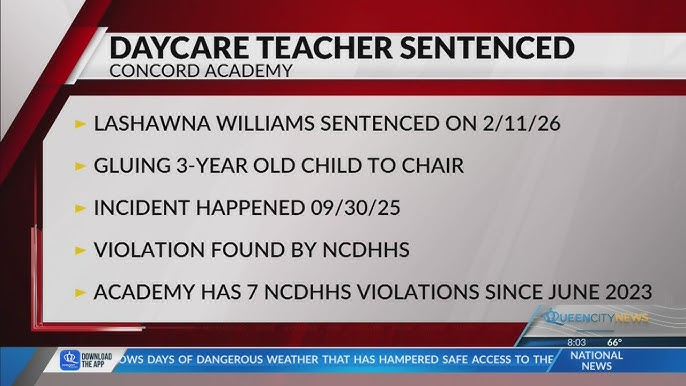
The incident took place on September 30, 2025, at Concord Academy, where 42-year-old Lashawna Williams was employed as a teacher. According to state and court records, the child sustained significant burns after Williams used a hot glue gun during a classroom incident. The case has since moved through the Cabarrus County District Court system, culminating in a guilty plea and a sentence that some advocates argue does not adequately reflect the seriousness of the harm inflicted.
Details of the Incident and Court Proceedings
Investigators determined that the child suffered second-degree burns to the upper thighs after Lashawna Williams allegedly used a hot glue gun to apply glue to a chair when the child would not sit down. Police reports state that she then forced the child into the chair, causing the burns. The injuries required medical attention and were formally classified as second-degree burns, indicating damage beyond the superficial layer of skin.
Following an investigation, Williams was charged and later pleaded guilty in Cabarrus County District Court to misdemeanor child abuse and contributing to the delinquency of a juvenile. As part of a plea agreement, she received a sentence of 10 days in jail, followed by six months of supervised probation. In addition, the court ordered her to complete 24 hours of community service and to have no contact with the child or the child’s family.
Court records indicate that Williams is currently serving her jail sentence. The resolution of the case through a plea agreement avoided a prolonged trial, but it also drew criticism from some members of the community who believe the punishment does not match the gravity of the offense. The fact that the charge was classified as a misdemeanor, rather than a felony, has become a focal point in public discussions surrounding the case.
Legal experts note that plea agreements often reflect negotiations that consider various factors, including prior criminal history, cooperation with authorities, and evidentiary considerations. However, in cases involving harm to young children, public reaction can be particularly strong, as daycare providers are expected to uphold high standards of care and protection.
Read : Ukrainians Treated Better Than Other Refugees: Council of Europe
The judicial outcome has prompted broader debate about how child abuse cases within childcare facilities are prosecuted and sentenced. While the court imposed probationary supervision and restrictions designed to prevent further contact with the victim, critics argue that the sentence may not serve as a sufficient deterrent to others working in similar settings.
Community Reaction and Advocacy Concerns
The case has sparked outrage among childcare safety advocates, who argue that incidents of abuse within daycare environments erode public trust in institutions meant to provide safe and nurturing care. Behavioral therapist Tara Robertson of Eagles Will ABA Therapy voiced strong concerns about the circumstances and the broader implications for the childcare industry.
“If we can’t have a little bit of compassion, then we need to find another job,” Robertson said in response to the case. She emphasized that patience and empathy are fundamental qualities for anyone working with young children. According to Robertson, the incident highlights systemic issues that extend beyond a single individual’s actions.
Advocates point out that children in daycare settings are particularly vulnerable due to their age and limited ability to communicate or defend themselves. As a result, parents rely heavily on regulatory systems, background checks, and professional training standards to ensure their children’s safety. When those safeguards appear to fail, it can create lasting anxiety within the community.
Read : Brooklyn Daycare Teacher Devonte Brown Charged With Abusing Young Girls
Robertson also stressed the importance of proper oversight and accountability in childcare facilities. “We need better people in charge, and if you don’t like kids, don’t have patience, and don’t have compassion – don’t work in a daycare,” she said. Her comments reflect a broader call for stricter hiring practices, enhanced training requirements, and consistent monitoring of daycare staff.

Parents and advocates alike have questioned whether current regulatory frameworks provide adequate inspection and reporting mechanisms. Some argue that stronger penalties for confirmed cases of abuse would send a clearer message about zero tolerance for misconduct involving children. Others believe that systemic reform should focus equally on prevention, including mental health support for childcare workers, improved staff-to-child ratios, and ongoing professional development.
The emotional toll on families affected by such incidents cannot be understated. While specific details about the child’s recovery have not been publicly disclosed, second-degree burns can be painful and traumatic, particularly for a toddler. Child development specialists note that beyond physical healing, emotional reassurance and a stable environment are crucial for recovery after a distressing event.
The broader childcare community is also grappling with reputational damage. Incidents like this can undermine confidence in daycare providers as a whole, even though the vast majority of educators adhere to professional and ethical standards. Industry leaders emphasize the importance of transparency and swift corrective action when violations occur.
Oversight, Accountability, and the Path Forward
The case has renewed calls for comprehensive review of daycare oversight procedures at both local and state levels. Childcare facilities typically operate under licensing requirements that include periodic inspections, staff background checks, and compliance with safety regulations. However, advocates argue that enforcement mechanisms must be consistently robust to prevent abuse.
One area of focus is staff training. Experts suggest that individuals working in early childhood education should receive mandatory instruction in child development, behavioral management, and non-violent discipline strategies. The use of punitive or coercive measures, particularly those involving physical harm, is widely condemned within professional guidelines.
Read : Outrage! Daycare Aide Caught Throwing Shoe at 5-Year-Old Girl with Autism
Additionally, some advocates recommend increased use of surveillance systems within daycare classrooms, combined with clear policies governing their use. While privacy considerations must be addressed, proponents argue that monitored environments can deter misconduct and provide crucial evidence if allegations arise.
Another key issue is reporting protocols. Ensuring that employees understand mandatory reporting laws and that concerns are escalated promptly to authorities can make a significant difference in preventing harm. Clear communication channels between parents, staff, and regulatory agencies are also seen as essential components of an effective oversight system.
The sentencing outcome in this case may prompt legislative discussions about whether penalties for abuse within childcare settings should be reevaluated. Lawmakers sometimes respond to high-profile cases by reviewing existing statutes to determine whether amendments are warranted to better reflect public expectations regarding child protection.
At the institutional level, daycare operators face pressure to review internal policies and reinforce a culture of accountability. Transparent communication with families, thorough staff evaluations, and proactive safety audits are measures that can help rebuild trust after incidents that shake public confidence.
For parents, the case serves as a reminder of the importance of vigilance when selecting childcare providers. Experts advise families to research licensing status, review inspection reports, ask about disciplinary policies, and maintain open communication with caregivers. While no system can eliminate risk entirely, informed decision-making can contribute to safer environments for children.
As Lashawna Williams serves her sentence and the legal chapter of the case concludes, the broader conversation about childcare safety continues. The incident at Concord Academy has become a focal point for discussions about compassion, professionalism, and the responsibilities carried by those entrusted with the care of society’s youngest members. Advocates maintain that meaningful reform requires not only accountability after harm occurs, but sustained commitment to prevention, oversight, and ethical standards within every daycare setting.