
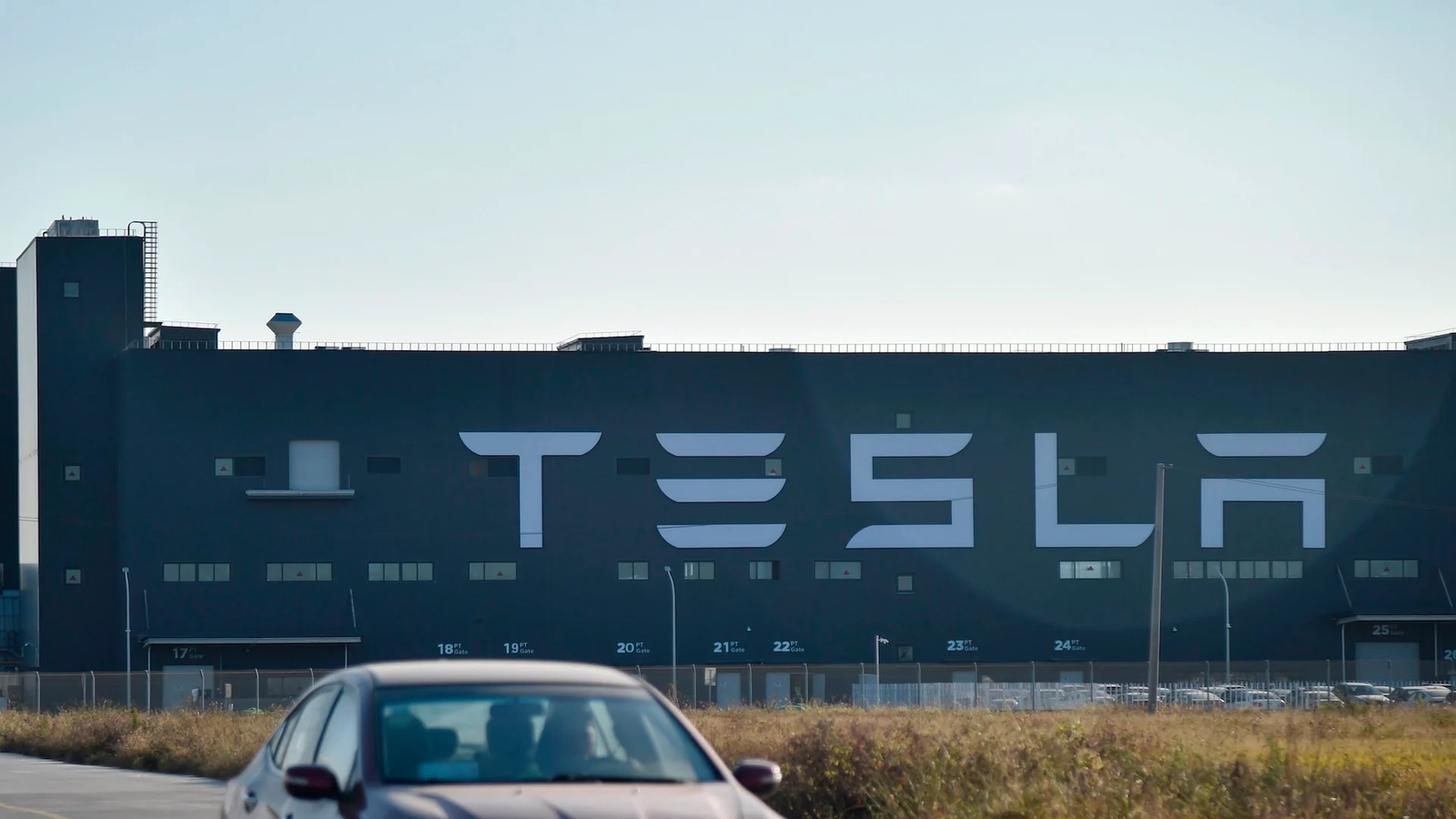
A lawsuit filed against Tesla has brought renewed scrutiny to the electric carmaker’s treatment of disabled employees, after a deaf technician alleged that he was terminated for requesting a reasonable workplace accommodation. The complaint, filed in federal court on November 10, accuses Tesla of violating the Americans with Disabilities Act (ADA) and Texas labor laws by firing Hans Kohls, a 36-year-old deaf worker at its Gigafactory in Austin, shortly after he asked to be reassigned from a department where extreme heat damaged his hearing aids.
The case highlights questions about the company’s compliance with federal disability regulations and its broader workplace culture, already under fire from a string of previous lawsuits. Hans Kohls’s account details how the oppressive heat in Tesla’s aluminum casting area, which reaches up to 1,220°F, caused his medically prescribed hearing aids to malfunction, leaving him unable to hear crucial safety signals.
Despite excelling in training and demonstrating competence across several departments, he was reportedly dismissed within days of seeking a transfer to a safer environment. The lawsuit claims that Tesla refused to consider alternative measures or reassignments that could have accommodated his disability, opting instead to terminate him under the label of “medical separation.”
A Promising Start at Tesla’s Prestigious Training Program
According to court filings, Hans Kohls joined Tesla through the Tesla START program in early 2024, an intensive ten-week internship designed to train participants for full-time equipment technician roles. Despite his hearing impairment, Hans Kohls’s hearing aids allowed him to function effectively in industrial environments, as evidenced by his previous year-long employment at GST America, where he worked under loud and hot conditions without incident.
His application to Tesla accurately stated that he could perceive necessary auditory signals, a claim that was fully supported by his subsequent performance in the company’s training modules.
After his acceptance into the START program on March 11, 2024, Tesla enrolled Hans Kohls in advanced technical coursework at Austin Community College. The curriculum emphasized robotics, electronics, and manufacturing systems. Kohls not only completed the program successfully but did so with distinction—achieving a final grade of 95.7 percent, placing him among the top-tier graduates. This strong performance led to his assignment at Tesla’s Gigafactory in Austin, a vast manufacturing facility roughly the size of 100 soccer fields.
Initially, Hans Kohls thrived at the plant. He was rotated through multiple departments, including vehicle validation and drive unit assembly. Both roles involved moderate environmental conditions, and his hearing aids functioned properly, allowing him to communicate and respond to safety signals without an interpreter. Supervisors reportedly praised his performance, and there was no indication of any safety risk or communication difficulty.
Read : Tesla Driver Stabs Cyclist Multiple Times After Altercation Near Golden Gate Bridge
The trouble began only after Tesla transferred him to the casting department—a section of the Gigafactory known for its extreme heat, where aluminum is melted and molded into critical vehicle components. In this environment, temperatures around the die-casting machinery often exceeded 1,200°F.
Read : Tesla vs Tesla: Elon Musk’s Company Sues Indian Namesake for Copying Trademark
The lawsuit argues that Tesla failed to disclose the full extent of these conditions during the interview process, leaving Kohls unaware that such heat levels could compromise his medical devices. Once on-site, his hearing aids began to malfunction due to the heat and humidity, effectively cutting him off from auditory cues essential for worker safety. This situation, Kohls maintains, created an immediate hazard not only for him but also for his colleagues, since his ability to respond to alarms and alerts was compromised.
Request for Accommodation and Abrupt Termination
Upon realizing that the extreme conditions were incompatible with his medical needs, Hans Kohls submitted a formal accommodation request to Tesla’s Human Resources department in mid-June 2024. His request was straightforward: a transfer to any other department where heat would not interfere with his hearing aids. The filing states that Kohls complied fully with Tesla’s internal procedures, including providing medical documentation that verified his condition and explained the impact of excessive heat on his assistive devices.
Rather than engage in what the ADA terms an “interactive process” to explore reasonable accommodations, Tesla allegedly rejected Kohls’s request outright. The complaint asserts that the company failed to even discuss potential alternative placements or the use of supplementary safety measures such as visual alarms, vibrating alerts, or a buddy system—tools commonly used in industrial environments to accommodate workers with hearing impairments.
Tesla representatives reportedly informed Hans Kohls that the START program “prohibited transfers” and that there were no other open positions available for reassignment. However, the lawsuit contends that this statement was false. It alleges that multiple technician positions suitable for Kohls’s skills were open at the time, and that Tesla continued to post “help wanted” listings for these roles even after his dismissal.

Only nine days after filing his accommodation request, on June 20, 2024, Hans Kohls was terminated. According to his legal team, Tesla managers told him that he was being “medically separated,” effectively acknowledging that his termination was directly related to his disability. The complaint cites an audio recording of the termination meeting as evidence. By framing the dismissal as a medical issue, Tesla “revealed that it was terminating Mr. Kohls because he had a disability that required accommodation,” the suit states, rather than for any legitimate business reason.
Following his termination, Kohls applied for two other technician openings that Tesla advertised but was rejected without explanation. The lawsuit argues that this shows a pattern of deliberate exclusion, rather than an administrative misunderstanding.
Attorney Andrew Rozynski, who represents Kohls, described the company’s actions as “stark and troubling,” emphasizing that Tesla had a clear legal obligation under the ADA to provide reasonable accommodations or consider reassignment. “Tesla had a highly qualified employee who requested the most basic accommodation—reassignment to a vacant position where he’d already demonstrated success,” Rozynski told The Independent. “Instead of complying with the law, they fired him within nine days.”
The consequences for Kohls were severe. His firing not only deprived him of his job but also of his health insurance—an especially difficult blow since his wife was pregnant at the time. The lawsuit seeks compensatory and punitive damages for emotional distress, financial loss, and damage to his professional reputation, along with back pay, front pay, and reinstatement to a suitable position.
A Pattern of Workplace Complaints at Tesla
The case against Tesla comes amid a growing number of lawsuits alleging workplace discrimination, unsafe conditions, and retaliatory practices within the company’s manufacturing facilities. In recent years, Tesla has faced multiple complaints from employees claiming mistreatment based on race, gender, or disability, as well as accusations that the company ignored serious safety violations.
Just months before Kohls’s lawsuit, workers at Tesla’s Fremont, California, factory filed a wide-ranging legal action accusing the company of tolerating physical assaults, rampant substance abuse, and pervasive racial slurs on company property. Another case filed in September 2024 involved a robotics technician who claimed he was permanently injured after being struck by an out-of-control robotic arm. That lawsuit sought $51 million in damages and alleged that Tesla had failed to enforce adequate safety protocols.
In yet another instance, a former executive accused Tesla of reneging on a remote-work agreement and threatening termination if he refused to relocate to Texas. The abrupt reversal, according to that complaint, caused a relapse of his Crohn’s disease and significant personal hardship.
Read : Andrew and Jo Melville-Smith’s Brand-New Tesla Struck by Suspected Meteorite
The pattern reflected across these lawsuits suggests that Tesla’s internal culture may be struggling to adapt to the requirements of a rapidly expanding workforce. Its Gigafactory in Austin alone spans over 10 million square feet, employing thousands of workers across complex, high-temperature industrial processes. Yet former and current employees have repeatedly accused the company of prioritizing production speed over employee welfare.

For disability rights advocates, the Kohls case underscores a broader issue: that many major corporations still fail to take the ADA’s interactive accommodation process seriously. The ADA, enacted in 1990, requires employers to provide reasonable accommodations to qualified employees with disabilities unless doing so would cause undue hardship. Common examples include job transfers, modified schedules, assistive technologies, or environmental adjustments. Tesla’s alleged refusal to even explore such options may therefore constitute a textbook violation of the law.
Legal experts note that if Kohls’s claims are substantiated, the case could have significant implications for how major industrial employers manage accessibility in hazardous environments. Manufacturing plants like Tesla’s involve unique challenges where sensory disabilities must be addressed through engineering controls and safety modifications, not exclusion. The question before the court will be whether Tesla made any good-faith effort to accommodate Kohls or whether its swift termination decision was discriminatory by design.
Tesla has yet to file its formal response to the lawsuit, and the company did not provide comment when contacted by reporters. Elon Musk, who has frequently courted controversy over labor practices at his companies, has not publicly addressed Kohls’s allegations. If successful, the lawsuit could force Tesla to reinstate Kohls and implement broader reforms to its accommodation policies.
Kohls’s legal team is asking the court for a declaratory judgment that Tesla violated the ADA and the Texas Commission on Human Rights Act, along with financial compensation for damages and lost income. The case may also prompt the U.S. Equal Employment Opportunity Commission (EEOC) to investigate whether similar violations have occurred at other Tesla facilities. For now, Kohls’s dismissal remains a potent symbol of the tension between technological progress and human rights in the workplace.
The image of a deaf technician excelling in one of the world’s most advanced factories, only to lose his job over a preventable issue with hearing aid safety, underscores the challenges of ensuring that rapid innovation does not come at the expense of basic employee protections. Whether Tesla ultimately faces legal consequences or not, the case has already sparked a broader conversation about disability inclusion in high-tech manufacturing—and about the duty of employers to make sure that no worker is left behind in the pursuit of efficiency and speed.