
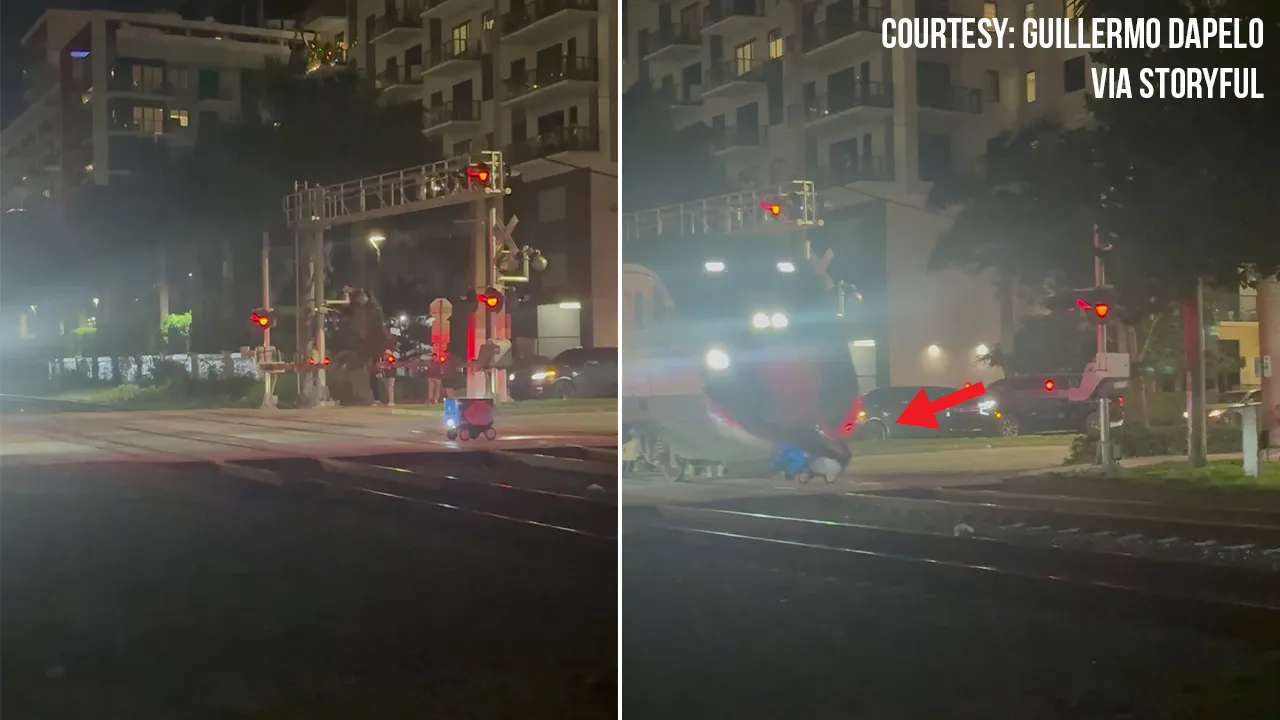
A dramatic video showing a small autonomous food Delivery Robot Crushed by Brightline Train in Miami has rapidly spread across social media, drawing global attention to the expanding role of autonomous technology in dense urban environments. The incident, involving a robot operated by delivery company Coco, occurred on the evening of January 15 and has since become a focal point in ongoing debates about the safety, oversight, and real-world reliability of self-driving and semi-autonomous systems.
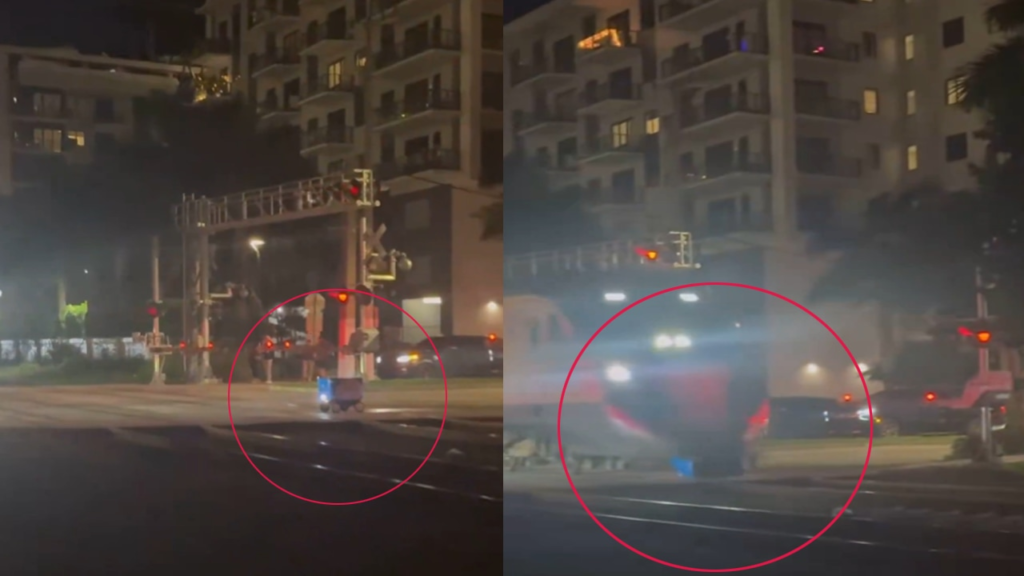
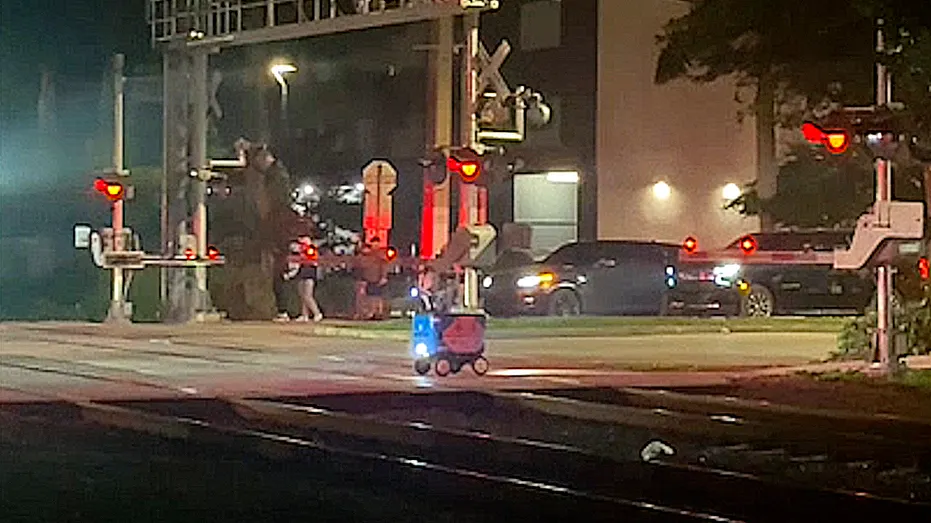
While no people were injured, the visual impact of the collision and the circumstances leading up to it have raised serious questions for city officials, technology firms, and the public alike. The footage, recorded by a local resident, shows the compact, box-shaped robot stationary on active railway tracks moments before a Brightline train approaches at speed.
Despite the presence of pedestrians nearby and attempts by an Uber Eats delivery worker to alert the company operating the robot, no intervention occurred before the train passed through and crushed the device. The robot was left mangled on the tracks, its contents scattered, offering a stark image that many have interpreted as a warning sign about the limits of current autonomous navigation systems.
Delivery Robot Crushed by Brightline Train
According to eyewitness accounts, the robot had been immobilized on the tracks for several minutes before the collision occurred. Guillermo Dapelo, a Miami resident who captured the incident on video while walking his dogs, said the device appeared unable to move or reroute itself away from the danger. The robot was reportedly attempting to cross the railway line when it encountered what the operating company later described as a rare technical malfunction. During this time, trains continued to operate on the line as scheduled.
An Uber Eats delivery worker who noticed the robot on the tracks reportedly contacted the delivery company to report the hazard. However, before any corrective action could be taken remotely, a Brightline train entered the area and struck the robot. The impact destroyed the device instantly, highlighting the speed and power differential between full-sized rail transport and small pedestrian-scale delivery robots.
Coco, the company behind the robot, acknowledged the incident shortly after the video went viral. In a public statement, the firm explained that the robot had experienced an unusual hardware failure while crossing the tracks. The company emphasized that its robots are designed to operate at pedestrian speeds, yield to people, and are monitored in real time by human safety pilots who can intervene when necessary. Coco also noted that all hardware systems are susceptible to unexpected failures and stated that it was reviewing the incident to prevent a recurrence.
ORDER CANCELLED: A food delivery robot doesn't stand a chance after stopping on the railroad tracks in Miami. pic.twitter.com/hzmvAUNeQe
— Fox News (@FoxNews) January 17, 2026
While the company expressed relief that the malfunction involved a small delivery robot rather than a larger autonomous vehicle, the explanation did little to calm broader concerns. Critics pointed out that even short periods of immobility can be catastrophic in environments that intersect with high-speed infrastructure such as railways. The Miami incident has therefore become a case study in how edge cases, rare failures, and urban complexity can combine with serious consequences.
Autonomous Technology Meets Urban Infrastructure
Food delivery robots have become an increasingly common sight in parts of South Florida, including Fort Lauderdale, Brickell, downtown Miami, and Miami Beach. These robots are typically designed to travel along sidewalks, cross streets at pedestrian crossings, and navigate complex environments using a combination of sensors, cameras, mapping data, and remote human oversight. Their appeal lies in reduced delivery costs, lower emissions, and the promise of faster, contactless service.
However, the Miami crash underscores the challenges of deploying autonomous systems in cities that were not originally designed with such technology in mind. Rail crossings, in particular, represent a unique hazard. Unlike roads with traffic signals and clear lane markings, railway tracks often intersect pedestrian pathways with minimal physical barriers. Human pedestrians rely on situational awareness, auditory cues, and judgment to assess whether it is safe to cross. Replicating that level of contextual understanding in machines remains a significant technical challenge.
Read : Futuristic!! Wang Leehom Performs with Robot Backup Dancers at Chengdu Concert
The incident also raises questions about responsibility and response time. If a robot becomes stuck in a hazardous location, how quickly can remote operators intervene, and what authority do they have to alert local infrastructure operators such as rail companies? In the Miami case, the robot was reportedly visible on the tracks for several minutes, suggesting a window during which preventative action might have been possible. Whether existing protocols adequately address such scenarios is now under scrutiny.
The Brightline collision is not an isolated case. Earlier in January, a separate viral video showed a Waymo self-driving taxi stopped on active light rail tracks in Phoenix, Arizona. In that incident, a passenger exited the vehicle as a train approached, narrowly avoiding a potentially dangerous situation. The Phoenix episode occurred in a construction zone where new light rail tracks had been added within the past year, possibly confusing the vehicle’s navigation system. Valley Metro, the regional transit operator, confirmed the incident and noted that an employee observed the autonomous vehicle on the tracks.
Taken together, these events suggest that interactions between autonomous systems and rail infrastructure represent a recurring vulnerability. Construction changes, temporary layouts, and unconventional crossings can introduce discrepancies between digital maps and physical reality, increasing the risk of navigation errors. As cities continue to evolve, keeping autonomous systems accurately updated and responsive becomes an ongoing challenge rather than a one-time technical fix.
Safety, Regulation, and the Future of Delivery Robots
The renewed attention on autonomous delivery safety is likely to intensify regulatory discussions at both the municipal and state levels. While delivery robots are generally classified differently from full-sized autonomous vehicles, they still operate in public spaces shared with pedestrians, cyclists, and heavy infrastructure such as trains. The Miami incident demonstrates that even low-speed machines can create dangerous situations when they intersect with high-speed systems.
Read : IShowSpeed Sued for Assaulting Gay Robot During Livestream
Supporters of autonomous delivery technology argue that such incidents are statistically rare and that robots, when functioning as designed, pose less risk than human-operated vehicles. They point to the potential benefits of reduced traffic congestion, lower carbon emissions, and improved efficiency in last-mile delivery. Companies like Coco emphasize human monitoring, conservative operating speeds, and continuous improvement based on real-world data.
Skeptics, however, argue that rare failures are precisely what make autonomous systems risky in complex environments. Unlike human operators, machines may lack the intuition to recognize when they are in an unusual or dangerous situation that requires immediate and unconventional action. They also note that accountability becomes blurred when responsibility is shared between software, hardware, remote operators, and local infrastructure.
Public perception plays a crucial role in determining the future of such technology. Viral videos like the one from Miami have a disproportionate impact on how people perceive risk, often overshadowing broader safety records. For policymakers, the challenge lies in balancing innovation with caution, ensuring that deployment does not outpace the development of robust safety frameworks.
Possible regulatory responses include stricter operating zones that limit where delivery robots can travel, mandatory fail-safe mechanisms for high-risk areas such as rail crossings, and clearer communication protocols between robot operators and city infrastructure managers. There may also be increased pressure for transparency, requiring companies to disclose incident data and safety performance metrics.
As autonomous delivery and self-driving technologies continue to expand, the Miami Brightline incident serves as a reminder that integration into real-world environments is rarely seamless. Each new deployment introduces novel interactions with existing systems, some of which only become apparent through failure. Whether these incidents lead to meaningful changes in design, oversight, and regulation will shape the trajectory of autonomous technology in cities for years to come.
Hello There. I discovered your weblog the use of msn. That is a very neatly written article. I will be sure to bookmark it and come back to learn more of your useful information. Thank you for the post. I will definitely return.