

Warren Benton, a 72-year-old resident of Idle in Bradford, has been ordered to pay a total of £16,000 in fines and court costs after failing to comply with an enforcement notice issued 15 years ago. The case revolves around a third-storey Illegal Roof Extension that Benton constructed on his property, located within a designated Conservation Area.
The white extension was found to exceed the approved height and did not conform to the architectural harmony of the surrounding terraced houses. Despite the planning permission initially granted in 2009 for converting the property into flats, the structure Warren Benton built deviated significantly from the approved plans.
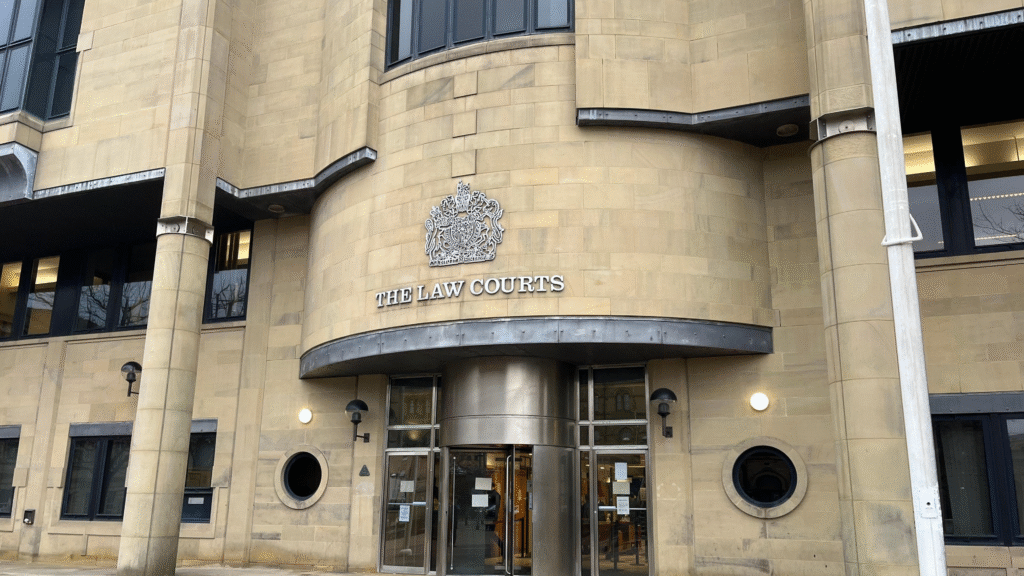
Bradford Crown Court heard that the extension, which has been Benton’s residence for many years, was built 60 centimetres too high and clashed with the aesthetic character of the neighbourhood. Judge Colin Burn, while passing the judgment, remarked that the extension appeared “jarring” and undermined the principles of planning control in not just the local area but more broadly.
He imposed a fine of £12,000 and ordered Warren Benton to pay an additional £4,000 in legal costs. Importantly, the court ruled that the extension must still be demolished, despite the long passage of time and the homeowner’s personal circumstances.
The Origins of the Dispute and Non-Compliance
The roots of the dispute date back to 2009, when Benton secured planning permission to convert 12 High Street, Idle, a former 19th-century office building, into residential flats. As part of this conversion, he was allowed to build a third storey on the structure.
However, the construction that followed did not align with the approved design. It was not just marginal changes; the extension was visibly taller and architecturally out of sync with the conservation area’s historic appearance. When Bradford Council officials inspected the site, they quickly flagged the discrepancy.
In August 2010, a formal enforcement notice was issued by the council, demanding the removal of the non-compliant extension by November of the same year. Council officers described the addition as an “obtrusive feature” that negatively impacted the overall appearance and integrity of the conservation area. Instead of complying, Warren Benton lodged a new planning application, which was subsequently rejected.
Read : Over 6 Lakh Olive Ridley Turtles Arrive for Mass Nesting at Odisha’s Rushikulya Beach
This marked the beginning of a prolonged stalemate, during which the extension remained intact and in use. Over the following years, there were multiple communications and site visits by the council. Benton occasionally responded by promising to take action or by submitting revised proposals, none of which were successful.
Read : Tajikistan is Set to Ban Hijab and Other Islamic Clothes
The council granted him some leeway, perhaps out of empathy or in anticipation of eventual cooperation. But as the years passed and the extension remained unchanged, it became clear that Warren Benton had little intention of complying voluntarily.
Health, Personal Circumstances, and Legal Consequences
In his defence, Benton cited a number of personal and health-related challenges that contributed to the delay in compliance. His lawyer, Mr Milligan, explained that Benton had no previous convictions and had spent part of the last decade caring for his ailing wife, who has since passed away.
During this period, he did not inform his family about the enforcement issues, choosing instead to shoulder the burden alone. Mr Milligan acknowledged the prolonged breach and admitted that the longer the situation dragged on, the more costly the remediation became.
Despite these mitigating factors, the court was unsympathetic to the continued defiance of planning law. Judge Colin Burn made it clear that the homeowner’s actions—or lack thereof—posed a threat to the planning system as a whole. The court’s role, he said, was to uphold the integrity of local governance and urban planning frameworks.

The judge also noted that the fine would have been steeper, up to £18,000, had Benton not pleaded guilty at the first opportunity. The final amount—£12,000 in fines plus £4,000 in court costs—reflected a measure of leniency in light of Benton’s age and health but still served as a strong deterrent.
The council’s estimation that demolition would cost between £15,000 and £25,000 further complicated Benton’s position. Not only does he now face financial penalties, but he must also find a way to remove the structure without external support.
The council justified the fine by pointing out that Benton had effectively saved this amount by avoiding demolition for 15 years. Moreover, the council spent over £4,300 pursuing the case, which could have been avoided had the homeowner complied with the original order.
The Broader Implications for Planning Enforcement
This case serves as a cautionary tale for homeowners and developers across the UK. While planning permission provides a legal framework for property modifications, deviations from those permissions can carry serious consequences, especially in conservation areas. Such zones are protected specifically because of their historic or architectural significance, and any alterations are expected to maintain, if not enhance, the character of the environment.
By refusing to comply for 15 years, Benton not only disregarded the law but also challenged the very mechanisms designed to preserve community aesthetics and historical integrity. Judge Burn emphasised that failing to enforce planning control in one case could lead to a broader weakening of public trust in the system. The judgment thus reinforces the importance of timely compliance and accountability.
The case also highlights the difficulties councils face in executing long-term enforcement. While local authorities often try to resolve such matters amicably and allow for reasonable delays, extended periods of non-compliance can place a financial and administrative strain on public resources. This ruling could serve as a precedent encouraging other councils to adopt a firmer stance against similar violations.

It’s worth noting that many homeowners find the planning system complex and intimidating. Yet this complexity does not exempt them from following the rules. If there are changes to be made mid-construction, new applications must be filed and approved. Building first and seeking permission later is not only illegal but also undermines community trust and planning efficacy.
The Benton case may also prompt discussions around how to balance compassion with enforcement. Given his age and health issues, some may argue that a less punitive approach could have been considered. However, the consistent defiance over 15 years made it difficult for the council and the court to justify any further leniency.
Warren Benton’s decision to continue living in the illegal extension despite multiple warnings demonstrates how difficult it can be to untangle personal interests from public policy. While his reasons—personal loss, health problems, and isolation—evoke sympathy, they do not absolve him of legal responsibility. The law, as Judge Burn pointed out, must be upheld consistently if it is to retain its authority and purpose.
Now, with the court’s ruling in place, Warren Benton faces not only the immediate burden of the fine and costs but also the more daunting prospect of removing the structure he has called home for more than a decade. This outcome, though harsh, reiterates the enduring power of the law and the responsibility of every citizen to respect it, regardless of personal circumstances.
Council Enforcement and the Message to the Public
For Bradford Council, this case is a significant, if belated, victory in the battle to enforce planning laws and protect the character of its historic neighbourhoods. The message to the public is unequivocal: planning violations will not be tolerated, no matter how much time has passed. The council’s patience over the years shows its commitment to fair process, but the eventual prosecution demonstrates a willingness to act decisively when necessary.
Council officers involved in the case noted that they had exhausted all reasonable avenues before taking legal action. The multiple site visits, written communications, and attempts at dialogue show that enforcement is not just about penalties, but also about seeking cooperation and compliance. When that fails, legal avenues remain the only option.
As communities continue to evolve and urban spaces become increasingly contested, adherence to planning law is more important than ever. This case should serve as a stark reminder that cutting corners, even with good intentions, can lead to long-term consequences that far outweigh the initial convenience.
Ultimately, Benton’s story is not just about an illegal extension. It’s about the complex interplay between individual agency, community standards, legal enforcement, and the responsibilities of home ownership. The judgment handed down by Bradford Crown Court marks the end of a 15-year standoff and reinforces a foundational principle: in matters of public interest, the rules must apply to all—equally and without exception.