

In a heartbreaking turn of events that has left a community in mourning, Derek Michael D’Arcy, a 64-year-old pastor, painter, and devoted family man from Tampa, Florida, has passed away after contracting a rare and aggressive flesh-eating bacteria during a family vacation at Virginia Beach. What began as a joyful escape to one of the couple’s favorite destinations ended in tragedy just 13 days later, when the infection overwhelmed his body. D’Arcy’s story serves as a stark reminder of the hidden dangers lurking in warm coastal waters, especially for those with compromised health.
As news of his death spreads, friends, family, and fellow educators are grappling with the loss of a man whose life was defined by creativity, faith, and quiet resilience. Derek’s passing, confirmed through family statements and medical reports, occurred in early September 2025, following a routine wade into calf-deep waters at the popular Virginia Beach shoreline in late August.
His wife, Joyce D’Arcy, a teacher in Newport News, Virginia, has bravely shared the details of their ordeal, hoping to raise awareness about the perils of Vibrio vulnificus, the bacterium responsible for his rapid decline. This incident is not isolated; health officials have noted an uptick in Vibrio-related cases along the East Coast this summer, underscoring the need for vigilance during beach season.
A Beloved Life Cut Short: Who Was Derek Michael D’Arcy?
Derek Michael D’Arcy was more than just a victim of a rare infection; he was a pillar of strength and inspiration to those around him. Born on September 12, 1960, in Lourdes Hospital as the youngest in his family, Derek grew up with a spirit that blended artistic passion with spiritual depth. He pursued a career in education, becoming a respected teacher in Virginia before transitioning into pastoral work, where he touched countless lives through sermons that emphasized compassion and perseverance. Colleagues remember him as a gentle soul who could illuminate a classroom or a congregation with his insights, often drawing from his own battles with illness to encourage others.
Painting was Derek’s true outlet, a way to channel the colors of his faith and experiences onto canvas. His works, vibrant and introspective, adorned the walls of his home and were shared with friends as gifts of encouragement. Despite facing prostate cancer in 2015, which led to kidney failure and seven years of home dialysis, Derek never let adversity dim his light. “He fought every battle with grace,” Joyce recounted in interviews following his death, her voice steady but laced with sorrow. The dialysis had weakened his immune system, a factor that would later prove fateful, but it never dulled his enthusiasm for life’s simple joys—like family trips to the beach.
Derek and Joyce’s marriage was a testament to enduring love. Married for decades, they built a life together that revolved around their shared values and adventures. Virginia Beach held a special place in their hearts; it was their “absolute favorite” spot, a haven where they could escape the rigors of daily life and reconnect. Derek, ever the optimist, planned the August getaway as a celebration of summer’s end, unaware it would be their last together. His daughter and extended family joined sporadically, creating memories filled with laughter and seaside strolls.
Read : Louisiana Resident Dies from Infection Caused by Waterborne Bacterium Known As Vibrio vulnificus
Obituaries published in local papers, such as those from Whiting’s Funeral Home in Williamsburg, Virginia, paint a portrait of a man whose legacy endures through the lives he nurtured—students who credit him with igniting their curiosity, parishioners who found solace in his words, and a family forever changed by his unwavering presence. The viewing for Derek, held from 5:00 p.m. to 7:00 p.m. on Wednesday, September 3, 2025, at Whiting’s Funeral Home, drew a crowd that spilled into reflection and shared stories.
Read : The Truth Behind the Viral Instagram Reel Claiming Electric Shock Treatment Will Cure Acne Overnight
Professional services were entrusted to the caring staff there, located at 7005 Pocahontas Trail in Williamsburg. In the wake of his death, a GoFundMe campaign was established to support Joyce and the family, highlighting the financial and emotional toll of his prolonged illness. Derek’s story resonates because it mirrors the quiet heroism of so many who face chronic conditions with dignity. His artistic soul and pastoral heart left an indelible mark, reminding us that even in brevity, a life can be richly lived.
The Swift and Silent Onslaught: How a Simple Wade Turned Deadly
The fateful day at Virginia Beach unfolded like any other idyllic summer outing. Derek and Joyce arrived in late August 2025, the sun warming the sands and the ocean beckoning with its gentle waves. Eager to feel the water, Derek waded in only knee-deep—or more precisely, calf-high—his legs brushing against the salty surf. Unbeknownst to him, a small, seemingly insignificant cut on his leg provided an entry point for Vibrio vulnificus, a naturally occurring bacterium that thrives in warm, brackish coastal waters. At the time, there were no signs of danger; the couple enjoyed their time, snapping photos and savoring the moment.
Four days later, back home, the first red flag appeared: a purple stripe snaking across Derek’s leg, a telltale sign of infection. Joyce, ever vigilant, urged him to seek medical attention. Blood tests were ordered, but results take time, and in those critical three days, the bacterium waged war on his body. By the time the diagnosis confirmed Vibrio vulnificus, the infection had spread aggressively to both legs, ravaging tissue and overwhelming his already compromised system. Doctors described it as a “flesh-eating” onslaught, where the bacteria produce toxins that destroy skin, muscle, and even deeper structures, leading to sepsis—a life-threatening cascade of organ failure.
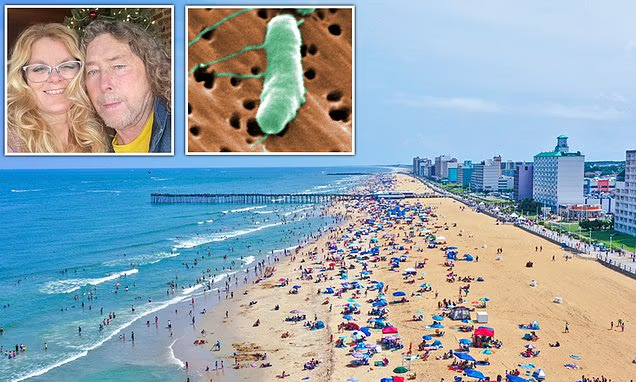
Derek’s history of cancer and dialysis played a cruel role here. The treatment had left his immune defenses low, making him particularly susceptible to severe outcomes from Vibrio, as noted by health experts. What might have been a manageable wound for a healthier individual escalated into a medical emergency, requiring hospitalization and aggressive interventions. Despite the best efforts of medical teams, the infection proved too rapid and relentless. Thirteen days after that innocent dip, Derek succumbed, leaving Joyce to navigate a world without him.
This timeline is chilling in its speed. Vibrio vulnificus doesn’t always announce itself dramatically; it can lurk silently, entering through minor breaks in the skin during exposure to contaminated water. In Derek’s case, the warm waters of Virginia Beach—ideal for vacationers—created the perfect breeding ground. Health reports from the Centers for Disease Control and Prevention emphasize that while infections are rare, they are on the rise with warming oceans due to climate change. Derek’s experience highlights how quickly joy can pivot to crisis, a narrative echoed in Joyce’s poignant words: “It came from our favorite place… It’s just so sad.”
Hidden Dangers in Paradise: Raising Awareness About Vibrio Vulnificus
Joyce D’Arcy’s grief has transformed into a mission, as she shares her husband’s story to warn others about the invisible risks of beach outings. As a teacher in Newport News, she knows the power of education, and her message is clear: Knowledge can save lives. Vibrio vulnificus, often called the “flesh-eating bacteria,” is a naturally occurring microbe found in warm seawater and brackish estuaries along the Atlantic and Gulf coasts. It causes two main types of infections: wound infections, like Derek’s, where it enters through cuts and multiplies rapidly, and gastrointestinal illness from consuming raw or undercooked shellfish. The wound variety is the deadliest, with a mortality rate of up to 20% in severe cases, particularly for those over 50 or with underlying conditions.
Public health officials stress prevention as the key defense. Simple steps include covering all cuts or abrasions with waterproof bandages before entering the water, avoiding swimming in areas with posted warnings, and steering clear of raw oysters if immunocompromised. The Virginia Department of Health has ramped up monitoring this season, reporting several cases linked to local beaches, though Derek’s is among the most tragic. Joyce urges, “Check for wounds, no matter how small,” emphasizing that even shallow wades can pose risks during peak summer temperatures.
This incident fits into a broader pattern. In 2025 alone, outbreaks have claimed lives in states like Louisiana, where five deaths and dozens of hospitalizations were linked to Vibrio exposure. Climate-driven warmer waters are expanding the bacterium’s range, making awareness campaigns more urgent. Derek’s death, while devastating, amplifies these efforts, turning personal loss into public good. As Joyce reflects, “We lost the fight, but we can help others win theirs.” Families heading to the shore this fall and beyond would do well to heed her call, ensuring that beaches remain places of joy, not sorrow.
In remembering Derek, we honor a man whose brief encounter with danger underscores life’s fragility. His story, woven with love and loss, calls us to cherish moments while staying informed. May his memory inspire safer shores for all.