
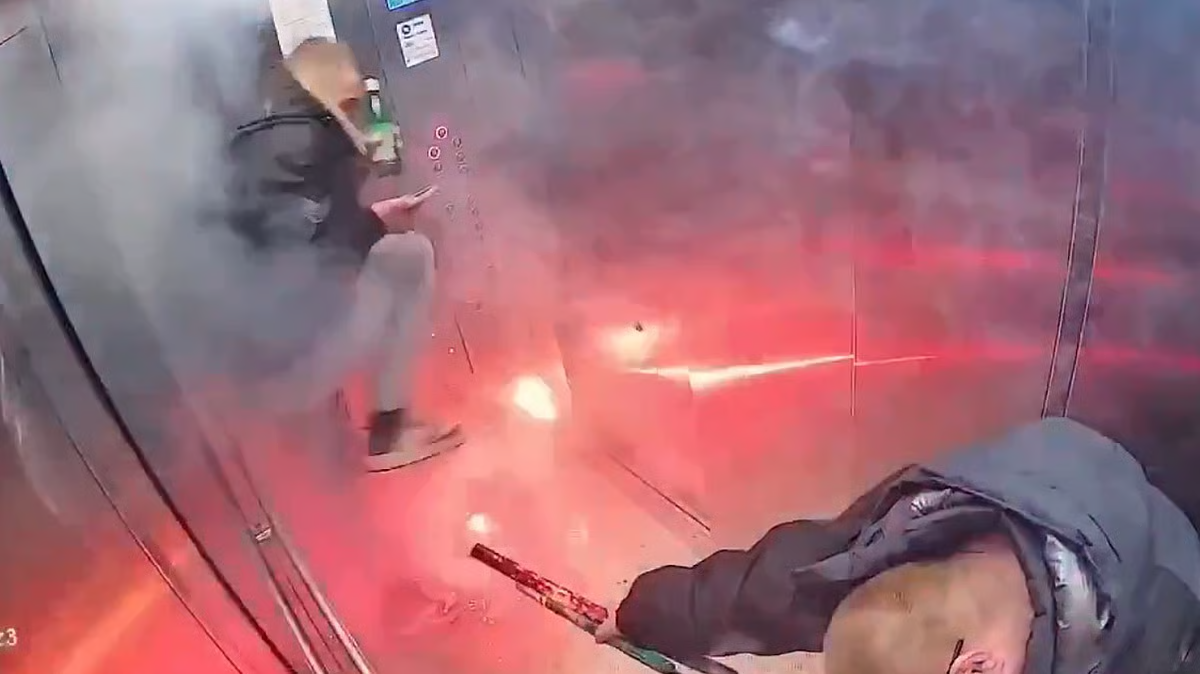
A disturbing incident from Russia has drawn widespread attention after a video surfaced showing two men detonating fireworks inside a residential elevator in Murino, a suburb near Saint Petersburg. The episode, recorded on December 27 at approximately 8 pm, unfolded inside a functioning apartment building and quickly escalated into a dangerous situation involving fire, smoke, and panic within a confined space.
Although no fatalities or serious injuries were reported, the reckless act caused damage to shared property and alarmed residents, prompting forced apologies and cleanup by those responsible. The incident has since gone viral across social media platforms, renewing concerns about public safety, misuse of fireworks, and the growing trend of hazardous stunts performed for online attention.
Murino is a densely populated residential area, characterized by high-rise apartment complexes where elevators are essential for daily movement. In such environments, safety standards are particularly critical, as any malfunction or accident can place dozens of residents at risk. The decision to ignite fireworks inside an elevator cabin, a sealed metal enclosure with limited ventilation, introduced multiple dangers, including fire, smoke inhalation, and mechanical failure. The fact that the incident did not end in serious injury has been widely described as a matter of luck rather than precaution.
The Incident and What the Video Reveals
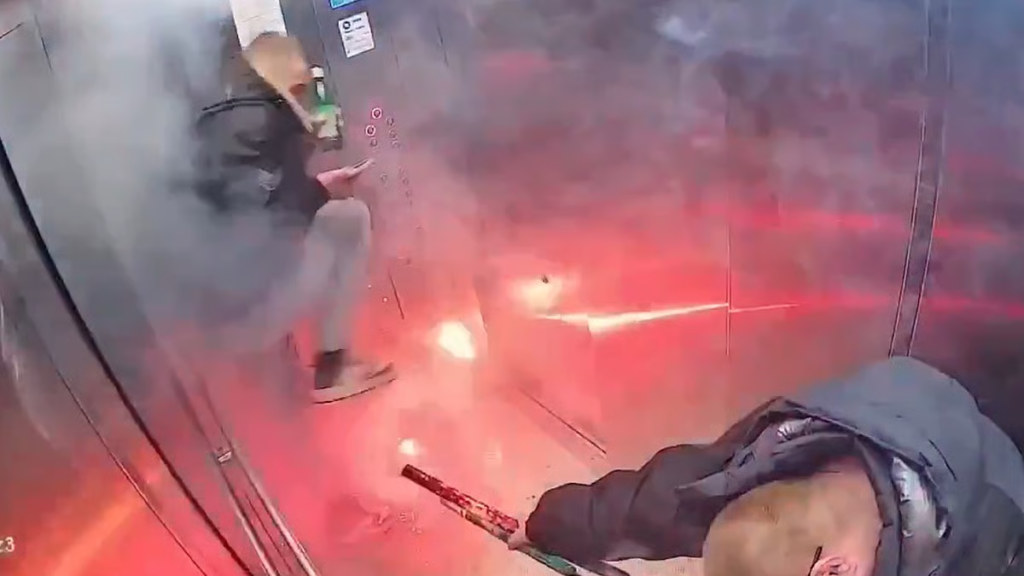
According to footage circulating online, the two men entered the elevator together and positioned a firework device inside the cabin. One of them appeared to record the act on a mobile phone while the other prepared the firework. Moments after ignition, sparks and flames erupted, rapidly filling the elevator with smoke. The confined space amplified the intensity of the blast, causing visible panic as the men recoiled and attempted to shield themselves.
The video captures burn marks appearing on the elevator walls and debris scattering across the floor. Smoke quickly obscured visibility, underscoring the risk of suffocation or disorientation had the elevator been in motion or stalled between floors. Elevators are not designed to withstand open flames or explosive devices, and even small fireworks can generate temperatures high enough to damage wiring, control panels, and safety sensors.
Residents later reported hearing a loud bang and smelling smoke in the building, which led to confusion and concern about a possible fire. In residential towers, such alarms can trigger evacuations and emergency responses, potentially endangering vulnerable occupants such as elderly residents or children. The timing of the incident, during evening hours when many people are returning home, further increased the risk that others could have been exposed.
🎆Two geniuses in Russia set off fireworks inside an elevator
— NEXTA (@nexta_tv) December 28, 2025
Of course, they filmed the whole thing on their phones.
After the fiery “show,” they had to apologize to the residents and clean up the mess themselves. pic.twitter.com/FOy1mykGR5
Despite the alarming visuals, both men emerged from the elevator without visible injuries. Officials and commentators alike have noted that the absence of serious harm does not diminish the severity of the act. Fireworks are classified as hazardous materials in many jurisdictions, and their use is typically restricted to open, outdoor spaces precisely because of the dangers demonstrated in this incident.
Damage, Resident Reaction, and Immediate Consequences
Although no one was physically harmed, the elevator cabin sustained minor but noticeable damage. Scorch marks were visible on interior panels, and fragments from the firework littered the floor. Elevators are complex systems, and even superficial damage can compromise safety mechanisms or require costly inspections and repairs before the unit can be deemed safe for use again.
Residents of the building reportedly expressed anger and frustration upon learning what had occurred. Elevators are shared infrastructure, relied upon daily by families, elderly residents, and individuals with mobility challenges. Any disruption not only causes inconvenience but also raises concerns about long-term safety. An elevator taken out of service for repairs can significantly affect daily life in high-rise buildings, especially for those unable to use stairways.
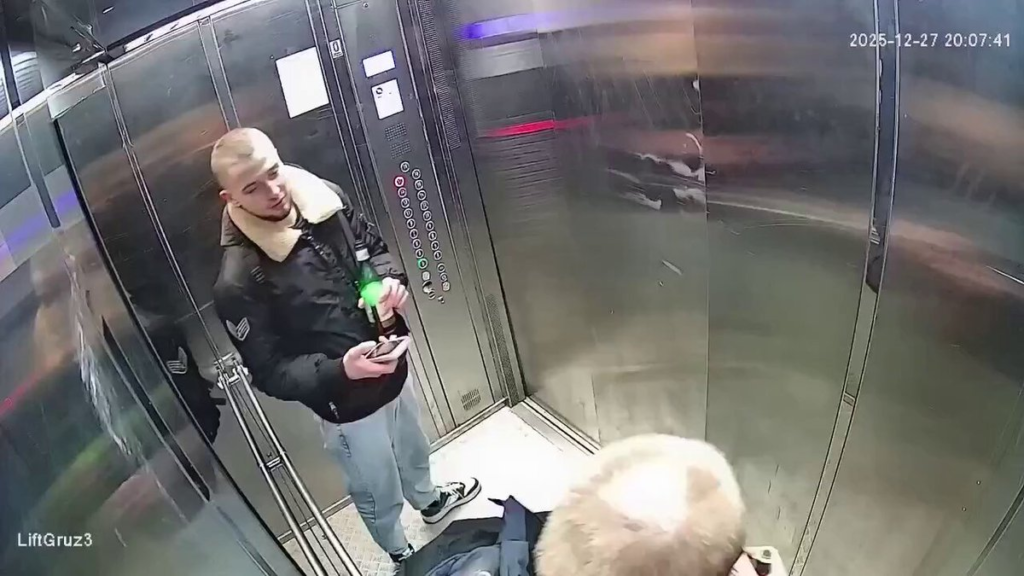
Following the incident, the two men were reportedly compelled to apologise to the residents. They were also made to participate in cleaning the elevator, removing debris and attempting to restore the cabin to a usable condition. While these actions were seen by some as an immediate form of accountability, others questioned whether such measures were sufficient given the potential consequences of the stunt.
At the time of reporting, authorities had not released a detailed statement outlining whether formal charges or penalties would follow. However, under Russian law, misuse of pyrotechnics and damage to communal property can carry administrative or criminal penalties depending on severity and intent. The lack of immediate legal clarity has fueled debate online about enforcement and deterrence in cases involving dangerous pranks.
Public Response, Online Backlash, and Broader Safety Concerns
The video spread rapidly across social media, attracting millions of views and a wave of criticism. Many viewers condemned the act as reckless and irresponsible, describing it as a near-fatal prank that could have easily resulted in severe burns, smoke inhalation, or even an explosion capable of trapping occupants inside the elevator. Comments frequently highlighted that the confined space dramatically increased the danger, turning what might be a controlled outdoor firework into a potentially deadly device.
The incident has also been framed within a broader discussion about social media culture and the pursuit of viral content. In recent years, authorities in multiple countries have warned about dangerous stunts performed for online recognition, noting that such acts often underestimate risk while prioritizing shock value. The Murino elevator incident has been cited as an example of how these behaviors can threaten not only the individuals involved but also unsuspecting members of the public.
Fire safety experts have pointed out that fireworks consume oxygen rapidly and release toxic fumes, making them particularly hazardous in enclosed environments. Elevators, with limited airflow and emergency escape options, represent one of the worst possible settings for such devices. Even a brief detonation can cause panic-induced injuries if occupants attempt to escape or lose balance during sudden movement.
Beyond the immediate outrage, the incident has renewed calls for stricter regulation and public education regarding fireworks. While fireworks are often associated with celebration, their misuse remains a significant cause of injuries and property damage worldwide. The Murino case illustrates how a moment of poor judgment can escalate into a situation with potentially catastrophic outcomes.
As the video continues to circulate, it serves as a stark reminder of the risks associated with reckless behavior in shared spaces. The lack of serious injuries does not erase the gravity of what occurred, nor does it lessen the responsibility borne by those involved. The incident remains under scrutiny as residents, authorities, and online audiences continue to debate accountability, safety, and the consequences of seeking attention at the expense of public well-being.
Hi my friend! I wish to say that this post is awesome, nice written and include almost all significant infos. I would like to see more posts like this.
very good publish, i actually love this website, carry on it