
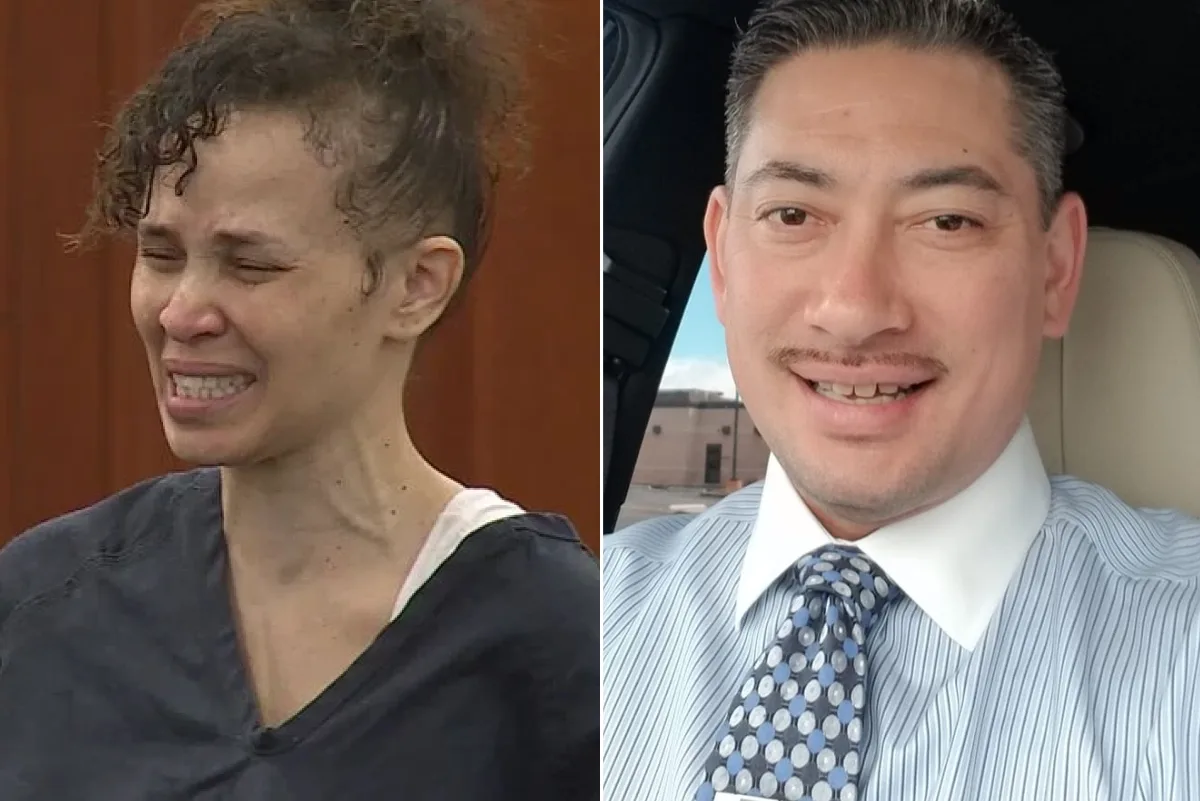
The sentencing of Devyn Michaels to 28 years to life in a Nevada prison closes one of the most disturbing homicide cases to reach a Clark County courtroom in recent years. Michaels, a former adult film actress who later worked as a realtor, was convicted of first-degree murder with a deadly weapon for the killing of her former boyfriend, Johnathan Willette, whose decapitated body was discovered in his Henderson home in August 2023. The crime shocked investigators and the community alike, not only because of its brutality but also because of the complex personal relationships surrounding the case.
Following a two-week jury trial, the court imposed a sentence reflecting both the severity of the offense and the irreversible harm caused to Willette’s family. The case drew sustained public attention as prosecutors detailed how Willette was beaten with a wooden stick and later beheaded, with his head discarded and never recovered.
Testimony, video evidence, and Devyn Michaels’ own statements to police formed the basis of the prosecution’s case, ultimately persuading jurors that the killing was intentional and carried out with extreme violence. The sentencing hearing marked the final chapter in a legal process that included a withdrawn plea deal, a full trial, and emotional statements from family members of the victim.
The Crime and Investigation
Johnathan Willette, 46, was found dead by his mother inside the Henderson home they shared, after she became concerned when his truck remained parked outside and he failed to respond. When she entered a downstairs bedroom, she discovered his body wrapped in blankets, covered in blood, and missing his head. Bottles of bleach and ammonia were found nearby, leading investigators to believe efforts had been made to clean or conceal the crime scene. From the outset, the circumstances pointed to a violent and deliberate killing.
Police quickly focused on Devyn Michaels, then 47, who had been present at the home on the night of August 6, 2023. Michaels and Willette had a long and complicated history. The two were married in 2012 and divorced in 2018, but they remained connected through family ties and shared responsibilities. In a further twist that drew attention during the trial, Michaels later married Willette’s adult son, a relationship she described in court as a marriage of convenience.
During questioning, Devyn Michaels admitted to striking Willette in the head with a wooden object while he lay on the bed. In recorded interviews shown to jurors, she told police she had been massaging his back when she hit him with what she described as a “candlestick-like” stick. She said his arms went limp after the blow but maintained that she did not intend to kill him. Investigators, however, concluded that the violence did not stop with a single strike. Prosecutors argued that Willette was beaten and then decapitated, an act requiring time, force, and intent.
Read : 53-Year-Old Robin Todd Arrested for Allegedly Stabbing Boyfriend
The missing head became one of the most haunting aspects of the case. Police believe Devyn Michaels disposed of it in the trash in her northwest Las Vegas neighborhood. Despite extensive searches, it was never recovered. This detail underscored the prosecution’s argument that the killing was not a momentary loss of control but an act followed by deliberate steps to conceal evidence.
Read : Chinese Teen Diagnosed with ‘Love Brain’ after Calling Boyfriend Hundreds of Times Daily
Devyn Michaels was arrested on August 15, 2023, and charged with murder. Her statements to police included claims that Willette had attempted to coerce her into a sexual act shortly before the attack and that she wanted to injure him severely enough to send him to the hospital so she could “figure out what to do with her children.” Prosecutors challenged these assertions, emphasizing the extent of the injuries and the subsequent dismemberment as incompatible with her version of events.
Trial, Conviction, and Sentencing
The legal path to Michaels’ sentencing was marked by several significant turns. In 2024, she initially pleaded guilty to second-degree murder under a deal that would have made her eligible for parole after 15 years. That plea suggested an acceptance of responsibility and appeared to spare both sides the ordeal of a trial. However, Devyn Michaels later sought to withdraw the plea, a move the judge rejected, finding that it had been entered voluntarily and knowingly. Despite this, the case ultimately proceeded to trial after Michaels proclaimed her innocence during an initial sentencing hearing in July 2025.
At trial, jurors were not informed of the earlier plea agreement. Instead, they focused on the evidence presented in court, including forensic findings, police testimony, and video of Michaels’ interviews. Prosecutors portrayed the killing as a calculated act of extreme violence, arguing that Devyn Michaels used a deadly weapon and took deliberate steps afterward to dispose of evidence. The defense emphasized Michaels’ claims that she did not intend to kill Willette and highlighted her assertions about events leading up to the attack.
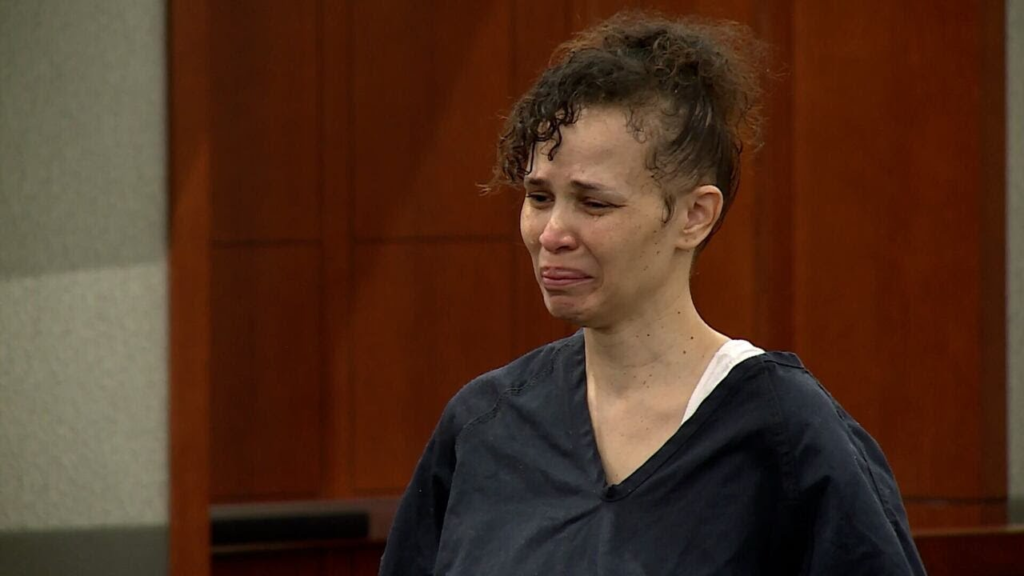
After two weeks of testimony in November, the jury returned a guilty verdict on first-degree murder with a deadly weapon. Under Nevada law, that conviction carried the possibility of a lengthy prison sentence, including life imprisonment. Clark County District Court Judge Tierra Jones ultimately sentenced Devyn Michaels to 28 years to life, meaning she will not be eligible for parole until she has served at least 28 years.
Before sentencing, Devyn Michaels addressed the court briefly. “I cannot deliver what the family is hoping for,” she said, a statement that drew attention for its ambiguity and lack of direct apology. The judge, in handing down the sentence, noted the seriousness of the crime and the permanent loss suffered by the victim’s family. The punishment reflected both the jury’s findings and the statutory framework governing first-degree murder convictions in Nevada.
Impact on the Victim’s Family and Broader Context
For the Willette family, the sentencing brought a measure of legal closure but could not undo the trauma of the loss. Johnathan Willette was remembered as a businessman and a person known for helping others find employment. He founded JW Marketing and The Vegas Moving Guy, ventures that, according to those who knew him, reflected his entrepreneurial spirit and willingness to support people in need of work. His sudden and violent death left a void that extended beyond his immediate family.
Read : 27-Year-Old Nikitha Godishala Found Dead Inside Ex-Boyfriend’s Apartment in Maryland
In the aftermath of the murder, Willette’s father and stepmother took custody of his two children, assuming responsibility for their care amid circumstances no family anticipates facing. During sentencing proceedings, Valerie Willette, his stepmother, spoke about the family’s grief and faith, stating that while Johnathan could not be brought back, they believed he was watching over them and his daughters. Her remarks reflected a combination of sorrow, resilience, and an effort to find meaning in the aftermath of tragedy.

The case also drew attention because of Michaels’ background and the unusual personal dynamics involved. Media coverage frequently noted her former career in the adult film industry and her later work as a realtor, as well as her marriages to both Willette and his son. While such details were not central to the legal determination of guilt, they contributed to public fascination with the case and underscored the complexities that sometimes surround violent crimes.
From a broader perspective, the case illustrates how violent offenses rooted in personal relationships can escalate with devastating consequences. Prosecutors emphasized that regardless of personal history or alleged provocations, the law draws a clear line at lethal violence. The jury’s verdict and the judge’s sentence reinforced that acts involving extreme brutality and attempts to conceal a crime will be met with severe punishment.
The sentencing of Devyn Michaels closes a chapter in the court system but leaves enduring questions about prevention, accountability, and the ripple effects of violent crime. For investigators and prosecutors, the case underscored the importance of thorough evidence collection and careful presentation to ensure that jurors could fully understand the scope of what occurred. For the Willette family, it marked the end of a legal process but not the end of grief.
As Michaels begins her prison term, she will spend decades incarcerated, with the possibility of parole only after serving a substantial portion of her sentence. For Johnathan Willette’s family and children, life continues in the shadow of a loss defined not only by death but by the manner in which it occurred. The court’s decision stands as a formal acknowledgment of that loss and a declaration of society’s condemnation of the violence that caused it.