
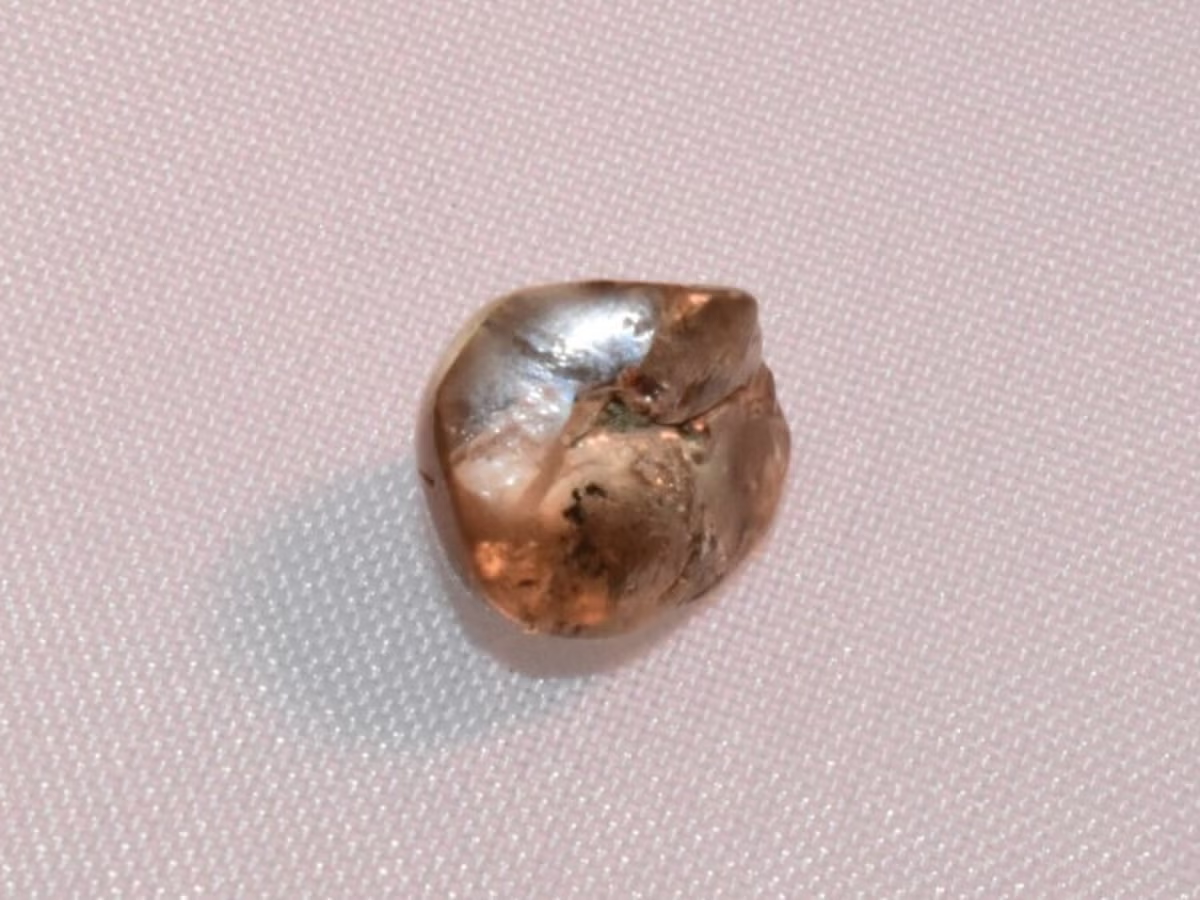
In a stroke of remarkable fortune, Dewy White, a resident of Paoli, Indiana, unearthed a 2.71-carat white diamond at Arkansas’s Crater of Diamonds State Park on October 2, 2025. Accompanied by his wife, White’s discovery marks the fourth-largest gem registered at the park this year, underscoring the site’s enduring allure as one of the world’s few public diamond mines. Park officials confirmed the find, noting its round shape and pea-like size, which has since been named the “Hope Diamond” by its finder.
This event highlights the unpredictable thrill of diamond hunting, where visitors retain full ownership of their discoveries under the park’s unique policy. As of early October 2025, the park has recorded 414 diamonds unearthed by guests, reflecting a robust season for gem enthusiasts. The Crater of Diamonds State Park in Murfreesboro, Arkansas, spans 37.5 acres of plowed field where visitors can search for diamonds on a pay-per-day basis. Established as a state park in 1972, it attracts over 150,000 visitors annually, drawn by the chance to find genuine gems formed deep within the Earth’s mantle.
White’s diamond, a flawless white specimen with a metallic luster, exemplifies the park’s geological bounty, which stems from a volcanic eruption over 100 million years ago that scattered diamonds across the site. Officials emphasize that while most finds are small, larger stones like this one surface periodically, often after recent rains that expose new material. White’s success follows a pattern of out-of-state visitors striking it rich, contributing to the park’s reputation as an accessible adventure for families and solo prospectors alike.
This latest find arrives amid a competitive 2025 season, with several notable diamonds already registered. Park Superintendent officials report heightened activity, attributing it to favorable weather and targeted searching techniques shared among regulars. White’s story, verified through the park’s on-site identification process, serves as a timely reminder of the site’s operational rigor, including mandatory registration and cleaning services for keepers. As news spreads, it bolsters Arkansas’s tourism economy, with the park generating millions in annual revenue while preserving its status as a natural wonder.
The Thrilling Discovery: A Road Trip Turns to Treasure
Dewy White and his wife set out from Paoli, Indiana, on a cross-country road trip described by White as “the trip of a lifetime.” Their itinerary included stops at various attractions, but the Crater of Diamonds State Park stood out as a bucket-list destination. Arriving in Murfreesboro on October 2, the couple paid the $10 adult entry fee—standard for visitors over 13—and received rental tools: a bucket, sifting screen, and shovel. The park’s 37.5-acre search field, freshly plowed to aerate the soil, awaited them under clear skies.
Eager but methodical, White and his wife spent their first two days methodically breaking up clay-heavy dirt by hand and sifting through mesh screens for heavy minerals. They covered sections near the field’s edges, where diamonds often accumulate after plowing. Despite sore backs and empty buckets, no gems surfaced. “We were disappointed but not defeated,” White later recounted to park staff. On the morning of their third day, as they prepared to depart and resume their journey, a sudden impulse led them back for one final push. White targeted an area suggested by a fellow visitor—a shaded spot near a cluster of Bois d’Arc trees on Beatty’s Hill, known for occasional surface finds post-rain.
Kneeling in the cool Arkansas soil, White scooped a shovelful of gravel and mud. As he sifted it over his screen, a glint caught his eye amid the black sand and quartz pebbles. “It looked like a metal piece of glass,” he said. The stone, smooth and rounded, tumbled into his palm—approximately pea-sized and heavier than surrounding debris. Heart racing, White examined it under natural light, noting its octahedral crystal habit, a hallmark of raw diamonds. “The minute I saw it in my shovel, I knew,” he added. Overcome with emotion, White leapt to his feet, exclaiming, “Thank you, Jesus!” before embracing his wife. The couple hurried to the park’s Diamond Discovery Center, where staff use loupes, scales, and UV lights for verification.
Within minutes, the gem was confirmed as a 2.71-carat white diamond, weighing precisely 0.542 grams. Its clarity and luster suggested high quality, though full grading awaits professional appraisal. White opted to name it the “Hope Diamond,” a nod to the optimism that fueled their persistence. “We just hoped we’d find one,” he explained simply. Park attendants cleaned the stone on-site, removing encrustations to reveal its brilliant facets. The entire process, from dig to registration, took under 30 minutes, exemplifying the park’s efficient system designed to handle multiple daily finds.
Read : Why is De Beers, the Biggest Diamond Company in the World is in Trouble?
This discovery wasn’t White’s first brush with the park; it marked his second visit, having explored it years prior without success. His wife’s involvement added a personal layer, turning a hobby into a shared milestone. Officials noted the couple’s gratitude toward fellow searchers, particularly an unnamed man whose tip on the Beatty’s Hill location proved pivotal. White expressed a wish to thank him personally, underscoring the communal spirit among diamond hunters. As they left the park, diamond in hand, the Whites carried not just a gem but a story of perseverance amid the 2,000 pounds of soil processed annually by avid visitors.
The “Hope Diamond”: Characteristics and Value Insights
The 2.71-carat white diamond, now dubbed the “Hope Diamond” by Dewy White, stands out for its rarity and appeal in the world of uncut gems. Measuring about 0.5 inches in diameter, the stone’s round, pea-like form is typical of Crater diamonds, which often exhibit a greasy luster due to surface coatings of clay and iron oxides. Under magnification, it reveals classic diamond traits: high refractive index for sparkle, hardness of 10 on the Mohs scale, and a specific gravity that separates it from mimics like quartz or glass during sifting.
Park geologists classify it as a Type Ia diamond, formed under intense pressure 90-150 miles beneath the Earth’s surface before being thrust upward by kimberlite pipes. Its white hue indicates low nitrogen content, potentially yielding a near-colorless cut stone upon faceting. While not appraised yet, comparable 2.71-carat rounds from the park have fetched $9,000 to $116,000 at auction, depending on cut, clarity, and certification. Factors like inclusion-free interiors could elevate its value toward the higher end, making it a candidate for jewelry or collector pieces.
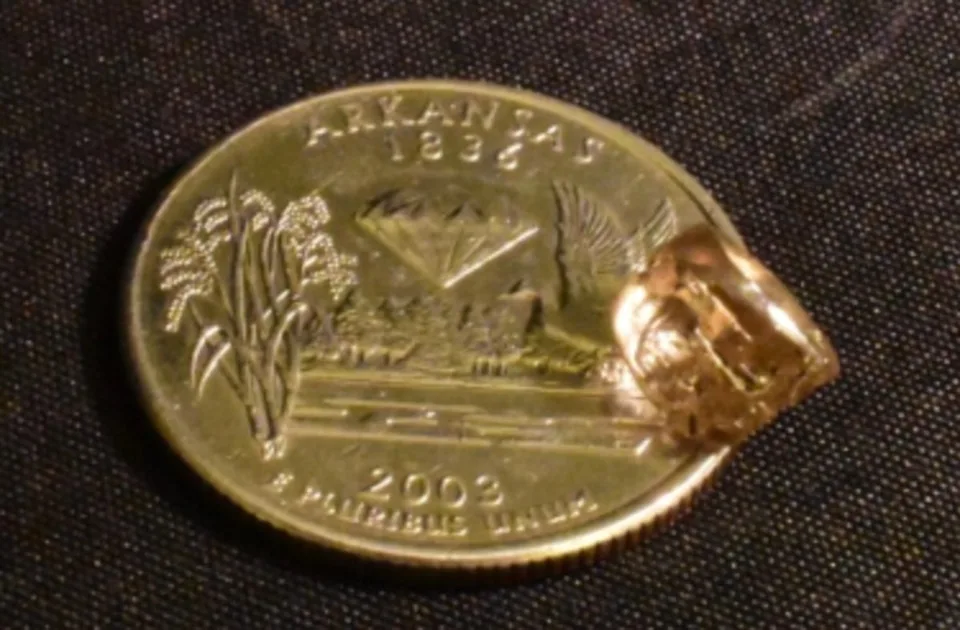
White plans to have it cut locally in Arkansas, supporting the state’s gem industry, which includes facilities like the Little Rock Gemological Institute. The naming convention—visitor-chosen and non-binding—adds whimsy; past examples include the 16.37-carat Amarillo Starlight and the flawless 1.09-carat Strawn-Wagner. This “Hope” joins over 33,000 registered finds since 1972, with whites comprising 80% of recoveries. Its size edges out the 2.37-carat Star of Thelma found earlier in 2025, solidifying its status as a season highlight.
Beyond aesthetics, the diamond’s provenance enhances its allure. Sourced from a public site, it carries ethical appeal—no conflict mining concerns—and traceability from field to finder. Experts advise professional grading via the Gemological Institute of America before sale, a step White intends to take. In essence, this gem encapsulates the Crater’s magic: a raw treasure transformed by human hope into enduring value.
Crater of Diamonds in 2025: A Banner Year for Finds
Crater of Diamonds State Park’s 2025 season has proven exceptionally fruitful, with Dewy White’s 2.71-carat gem ranking as the fourth-largest registered to date. Year-to-date figures show 414 diamonds recovered, surpassing last year’s tally by 15% and signaling robust visitor engagement. Larger finds include a 3.5-carat brown specimen in July and a 2.9-carat yellow in May, both by out-of-state families. Officials credit seasonal plowing—conducted bi-weekly—and mild weather for exposing more volcanic ejecta.
The park’s operations remain visitor-centric: daily fees fund maintenance, while amenities like the Diamond Springs water park and interpretive center educate on geology. Safety protocols, including hydration stations and shaded rest areas, mitigate the physical demands of searching. Assistant Superintendent Waymon Cox noted, “Luck plays a role, but preparation and the right spot matter too.” Repeat visitors like White embody this, with 20% of finders returning annually.
Historically, the site boasts the U.S.’s largest diamond, the 40.23-carat Uncle Sam from 1924, alongside state park-era giants like the 16.37-carat Amarillo Starlight. Over 600 carats have been unearthed in 2025 alone, fueling economic impacts: tourism supports 200 local jobs and $20 million in spending. Challenges persist, such as soil erosion, addressed via sustainable farming practices. Future plans include expanded educational programs on ethical sourcing.
White’s find amplifies the park’s narrative of democratized discovery, where everyday adventurers claim extraordinary prizes. As fall rains approach, officials anticipate more surface gems, inviting prospectors to test their luck. This event reaffirms Crater of Diamonds as a cornerstone of Arkansas heritage, blending science, serendipity, and sparkle in equal measure.