
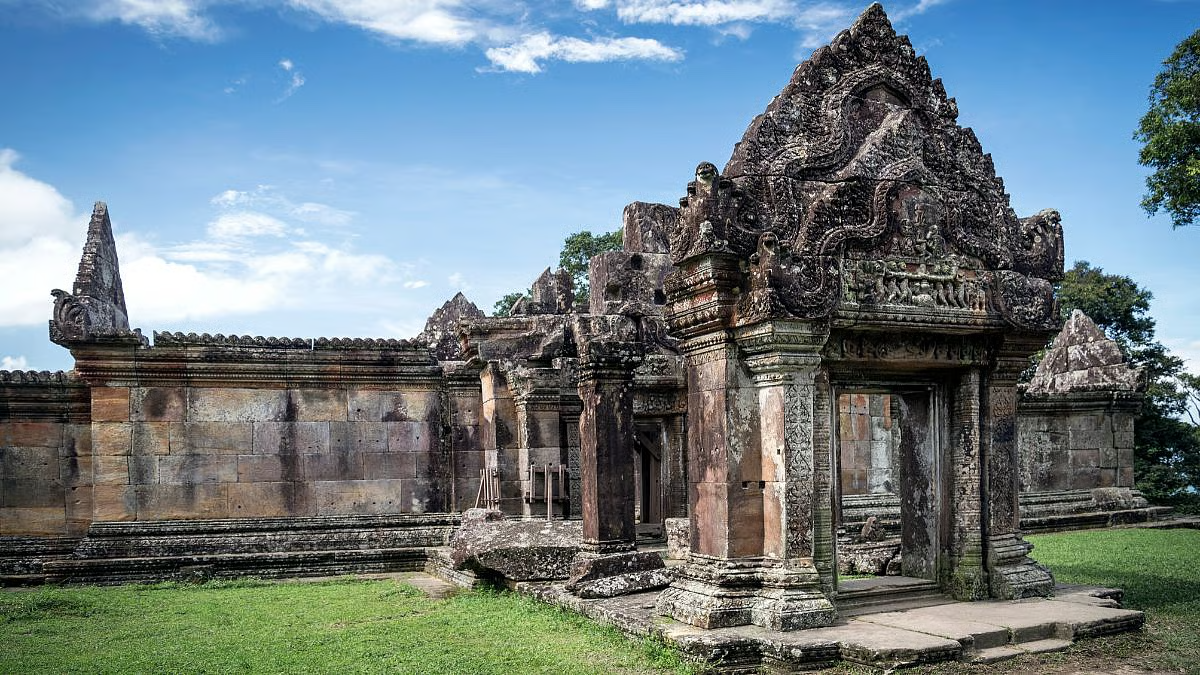
Nestled in the Dângrêk Mountains, where jagged cliffs mark the border between Thailand and Cambodia, the Preah Vihear Temple stands as a testament to the Khmer Empire’s 11th-century grandeur. Dedicated to Lord Shiva, this UNESCO World Heritage site, built under King Suryavarman II, is a masterpiece of Hindu architecture, blending intricate sandstone carvings with a dramatic 525-meter-high promontory. Yet, for over a century, it has been a flashpoint in a territorial dispute rooted in colonial-era mapping errors, nationalist fervor, and sporadic violence. As of September 2025, renewed clashes have displaced over 120,000 people, reigniting tensions and threatening regional stability.
Historical Roots: From Khmer Glory to Colonial Cartography
The Preah Vihear Temple, constructed between the 9th and 12th centuries, was a spiritual and political hub of the Khmer Empire, which once spanned much of Southeast Asia, including parts of modern Thailand. Its unique north-south axis, unlike the typical east-facing Khmer temples, aligns with the cliffs’ natural contours, symbolizing Shiva’s cosmic dominion. The temple’s lintels, adorned with depictions of Shiva’s dance and Vishnu’s avatars, reflect the empire’s Hindu devotion, later blended with Buddhist practices.
For Cambodians, it is a cultural cornerstone, embodying their ancestral legacy. For Thais, known locally as Phra Viharn, it represents a shared heritage, accessible primarily from Thailand’s Sisaket province. The dispute’s origins lie in the early 20th century, during French colonial rule over Cambodia. In 1904 and 1907, French-Siamese treaties aimed to delineate the border, placing Preah Vihear in Cambodia based on a watershed line.
However, a 1907 French survey map, accepted by Siam (modern Thailand), inexplicably placed the temple on Cambodian soil, deviating from the agreed boundary. Thailand later argued the map was inaccurate, claiming the temple sat on their side of the natural watershed. This cartographic ambiguity sowed the seeds of conflict, as Siam’s acquiescence at the time clashed with rising nationalist sentiments post-independence.
Read : Temples and Tranquility: Must-Visit Places in Tamil Nadu
By the 1950s, as both nations gained independence—Cambodia from France in 1953 and Thailand navigating its post-monarchical identity—the temple became a symbol of sovereignty. Thailand occupied the site in 1954, prompting Cambodia to appeal to the International Court of Justice (ICJ) in 1959. The 1962 ICJ ruling awarded Preah Vihear to Cambodia, citing Thailand’s acceptance of the 1907 map. However, the court did not clarify the surrounding 4.6 square kilometers, leaving a contested buffer zone that has fueled intermittent skirmishes ever since.
Legal Battles and UNESCO’s Role: A Catalyst for Conflict
The ICJ’s 1962 decision was a legal victory for Cambodia but did little to quell Thai resentment. The ruling focused narrowly on the temple itself, leaving the surrounding land’s ownership ambiguous. This gray area became a rallying point for Thai nationalists, who viewed the temple as part of their historical territory, lost to colonial-era concessions. Cambodia, meanwhile, saw the verdict as affirming its cultural heritage, with Preah Vihear symbolizing Khmer resilience against external pressures.
Tensions escalated in 2008 when UNESCO inscribed Preah Vihear as a World Heritage site under Cambodian stewardship. The decision, celebrated in Phnom Penh, sparked outrage in Bangkok, where ultranationalist groups like the People’s Alliance for Democracy staged protests, decrying the “loss” of Thai territory. Clashes erupted along the border, with both sides deploying troops. Between 2008 and 2011, sporadic fighting killed dozens, including soldiers and civilians, and damaged the temple’s ancient structures. A 2011 ICJ order mandated a demilitarized zone, but Thailand’s partial compliance left the situation volatile.
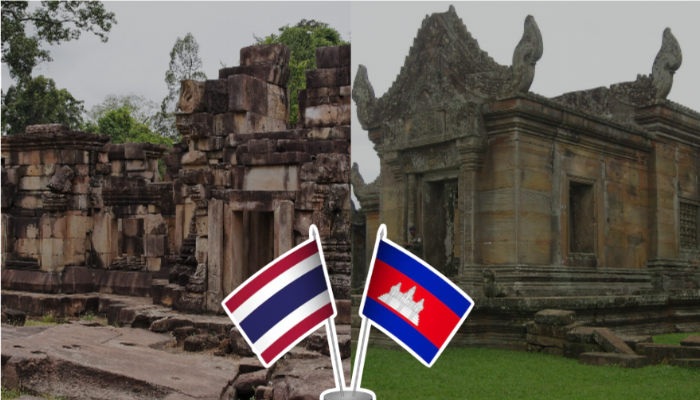
In 2013, Cambodia sought further ICJ clarification on the disputed 4.6 square kilometers. The court reaffirmed Cambodia’s sovereignty over the temple and its immediate vicinity but avoided a definitive ruling on the broader area, urging bilateral negotiations. These talks have repeatedly stalled, hampered by domestic politics. In Thailand, military coups and populist movements have leveraged the dispute to stoke nationalism. In Cambodia, Prime Minister Hun Sen’s government has used the temple as a unifying symbol, deflecting criticism of its authoritarian rule. The result is a diplomatic stalemate, with neither side willing to concede ground—literal or figurative.
Current Developments: Escalation and Humanitarian Toll
As of September 2025, the Preah Vihear dispute has flared anew, with devastating consequences. In early August, reports emerged of cross-border shelling near the temple, triggered by Thai military exercises perceived as provocative by Cambodia. Cambodian forces responded, leading to clashes that have killed at least 15 soldiers and displaced over 120,000 villagers from border communities in Cambodia’s Preah Vihear province and Thailand’s Sisaket province. The fighting has disrupted local economies, with farmers abandoning fields and schools closing amid safety fears.
Both governments have traded accusations, with Cambodia alleging Thai incursions into its territory and Thailand claiming Cambodian troops fired first. The temple itself, though undamaged in recent fighting, remains a potent symbol, with both sides accusing the other of exploiting its cultural significance. ASEAN, the regional bloc, has called for dialogue, but its non-interference policy limits its influence. International mediators, including the United Nations, have urged restraint, yet the lack of a clear enforcement mechanism leaves the situation precarious.
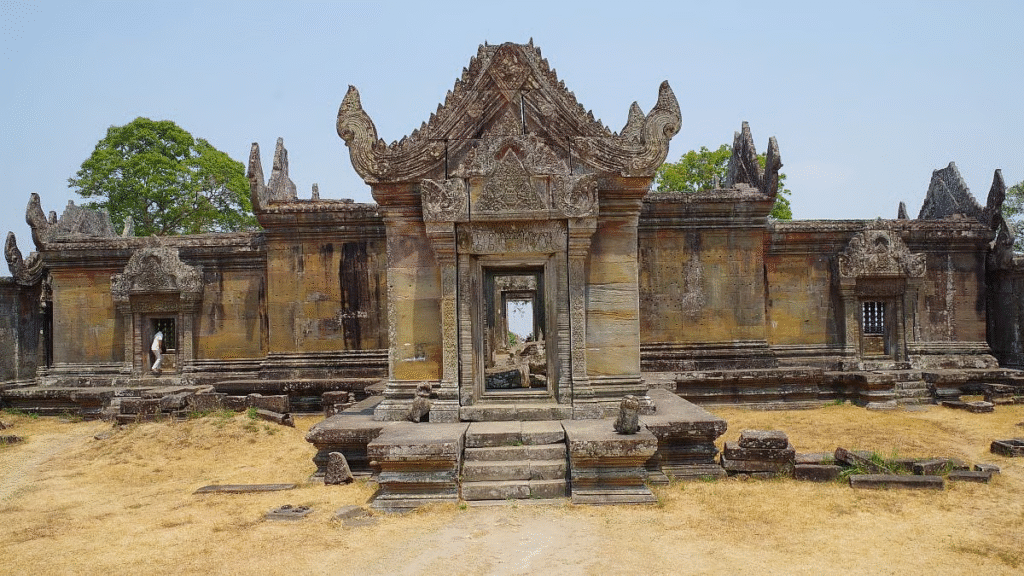
The humanitarian crisis is stark. Displaced families, many living in temporary shelters, face food shortages and limited access to healthcare. Local NGOs report rising cases of malnutrition among children, while cross-border trade, vital to the region’s economy, has plummeted. The temple, once a pilgrimage site, is now inaccessible to tourists, further straining local livelihoods. Both governments have pledged aid, but political posturing has delayed effective relief efforts.
Diplomatically, the path forward is fraught. Cambodia has appealed to the ICJ for an emergency session, while Thailand insists on bilateral talks, wary of international rulings that might favor Cambodia. Domestic pressures exacerbate the impasse: Thailand’s coalition government faces nationalist backlash for any perceived concessions, while Cambodia’s leadership uses the dispute to rally public support ahead of elections. Meanwhile, the temple’s stones, weathered by centuries, stand silent amid the chaos, a reminder of a shared heritage that could unite rather than divide.
The Preah Vihear dispute is more than a border conflict; it is a clash of histories, identities, and aspirations. For Cambodia, the temple is a sacred link to its Khmer past, a symbol of endurance against colonial and regional pressures. For Thailand, it represents a historical grievance, tied to territories lost and national pride. The 1962 ICJ ruling and UNESCO’s 2008 designation, intended to clarify and celebrate, have instead deepened divisions, exposing the limits of international law in resolving emotionally charged disputes.
As fighting continues, the human cost mounts, with thousands uprooted and a cultural treasure at risk. The international community faces a challenge: how to mediate a conflict where both sides claim rightful ownership, not just of land but of history itself. For now, the temple remains a paradox—a site of divine serenity caught in human strife, its future as uncertain as the border it straddles. Until Thailand and Cambodia find common ground, Preah Vihear will remain a poignant symbol of unity and division, its ancient stones bearing witness to a modern tragedy.