
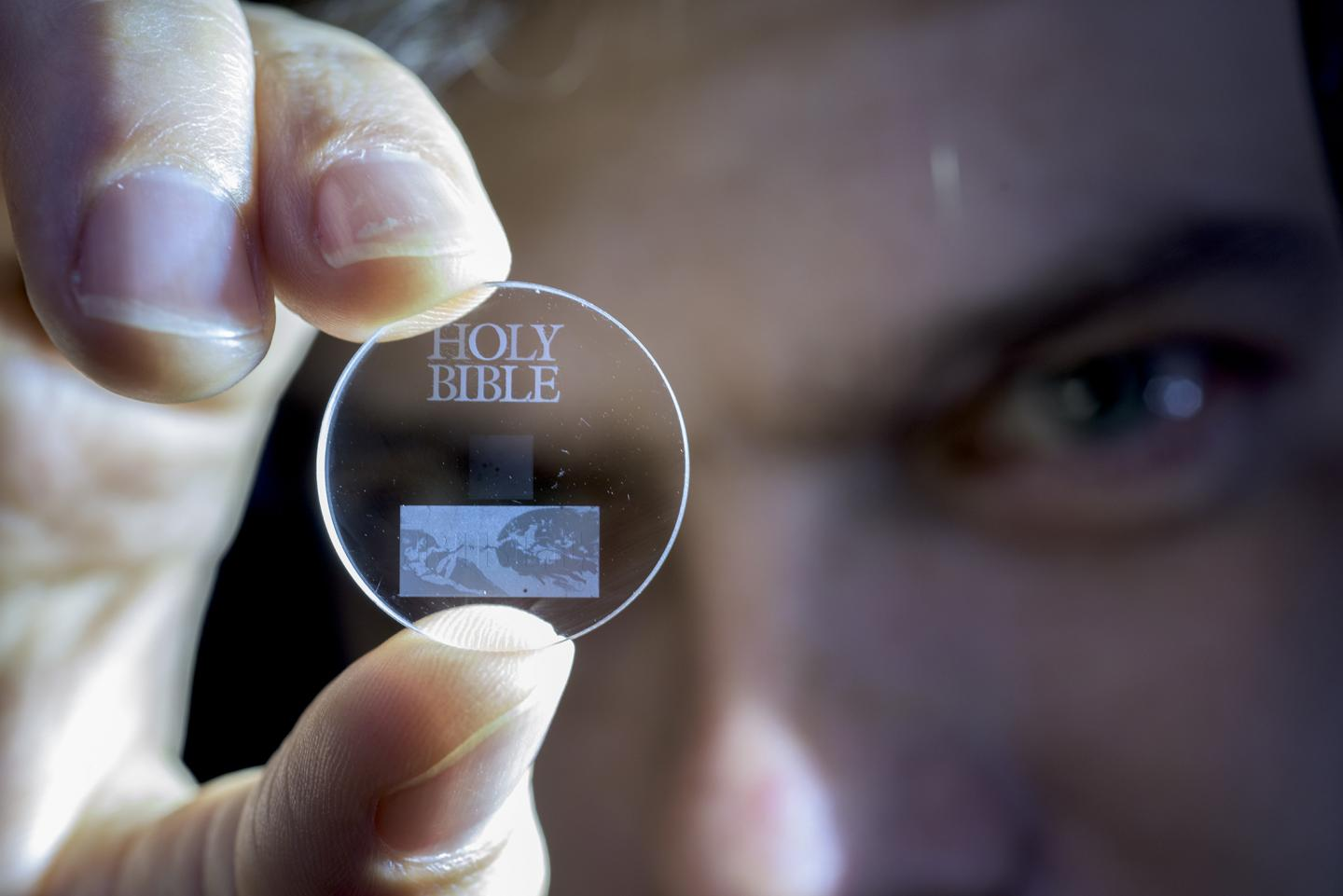
DNA Stored in Memory Crystal to Bring Humans Back to Life if They Go Extinct. Scientists have developed a remarkable solution to safeguard human identity for future species: a coin-sized crystal that stores the entire human genome.
This futuristic technology, capable of lasting billions of years, has emerged as a potential method to recreate humanity, even millions or billions of years after extinction.
The innovation, known as a 5D memory crystal, has captured the attention of researchers worldwide due to its extraordinary durability and data storage capacity.
Developed by a team from the University of Southampton in England, the Memory Crystal holds a staggering 360 terabytes of information, inscribed into fused quartz—a type of ultra-durable glass. This project represents not only a monumental leap in data storage but also a potential backup plan for humanity’s survival, offering the possibility of bringing humans back to life long after extinction.
The Birth of the 5D Memory Crystal
The idea behind the 5D memory crystal originated from the need for ultra-durable, high-density data storage that could withstand the harshest environmental conditions.
Read : China’s Wuhan Lab Once Blamed for COVID-19 Creates Nasal Vaccine for Future Pandemics
The project was led by Peter Kazansky, an expert in optoelectronics at the University of Southampton. Kazansky and his team sought to leverage the properties of 5D memory technology to ensure that the genetic blueprint of humanity could be preserved for billions of years.
“We were inspired by the potential of 5D memory crystals to provide ultra-durable, high-density storage that can last billions of years,” Kazansky explained in a statement.
Read : Billionaires in the US Are Freezing Themselves for Future Revival
The significance of this technology goes beyond its capacity to store vast amounts of information. It opens the door to the possibility that future intelligent species or even machines might one day use this genetic data to reconstruct humans. This prospect of “information immortality” ensures that human identity can be safeguarded long into the future.
How 5D Memory Crystals Work
The process of inscribing data into the crystal involves ultra-fast lasers that etch the human genome into tiny voids within silica, a material as small as 20 nanometers.
The genetic data is encoded into five distinct dimensions: height, length, width, orientation, and position of the nanostructures within the crystal. This sophisticated process gives rise to the name “5D memory crystal.”
Our @orctweets researchers have stored the full human genome on an ‘everlasting’ memory crystal.
— University of Southampton (@unisouthampton) September 19, 2024
They hope it could provide a blueprint to bring humanity back from extinction billions of years into the future, should science allow.
Read more 👉 https://t.co/DUBBaknPd7 pic.twitter.com/weiXTAdXPe
What makes this technology even more groundbreaking is its resilience. The crystal can survive cosmic radiation, withstand extreme temperatures ranging from freezing to 1,832 degrees Fahrenheit, and endure direct impact forces of up to ten tons per square centimeter.
It can also remain stable at room temperature for a mind-boggling 300 quintillion years—more than 21 billion times the current age of the universe. This unprecedented durability makes the crystal an ideal vessel for preserving the human genome across unimaginable spans of time.
Inscribing the Key to Human Life
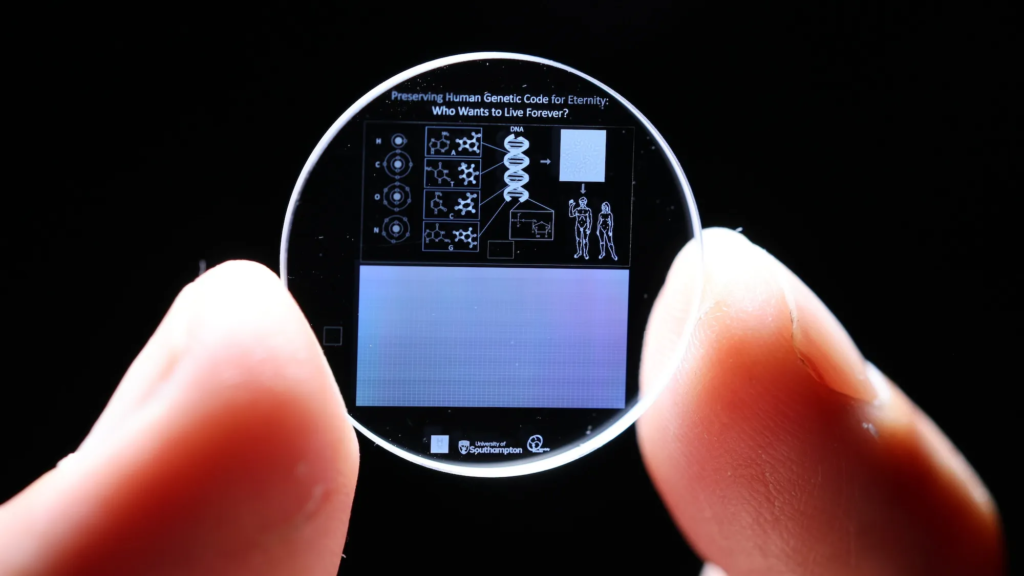
In addition to storing the human genome, the researchers etched a visual key onto the crystal’s surface to assist future finders in understanding its contents.
This key includes depictions of essential atoms like hydrogen, oxygen, carbon, and nitrogen, which make up the building blocks of life. The crystal also features representations of the DNA double helix and its four nucleotide bases, along with a breakdown of a chromosome’s molecular structure and its relationship within a human cell.
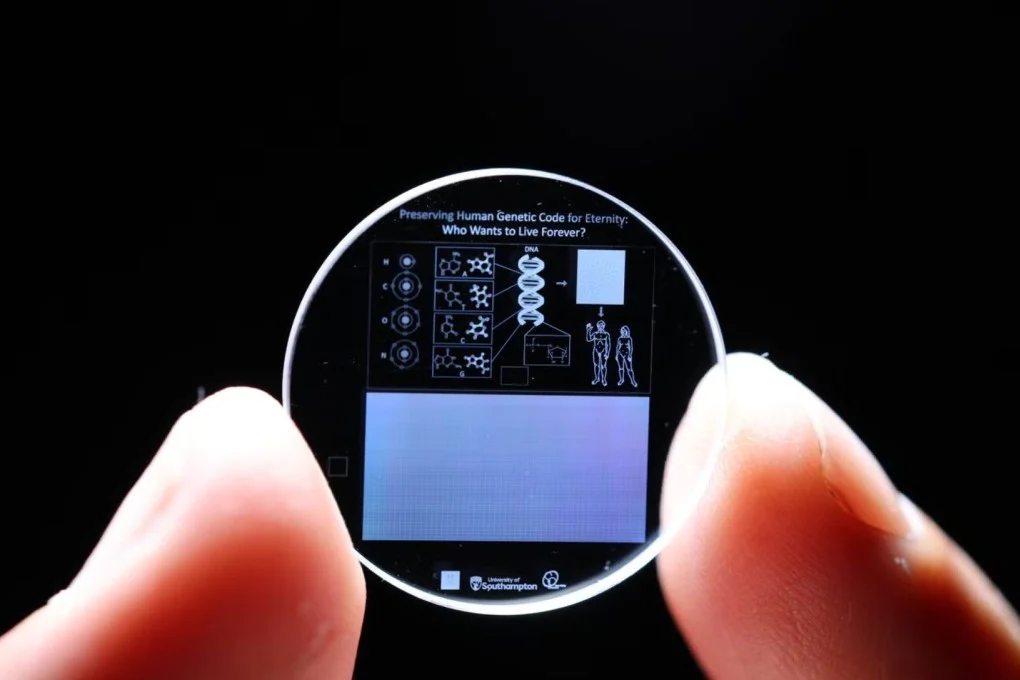
Kazansky elaborated, “The visual key inscribed on the crystal gives the finder knowledge of what data is stored inside and how it could be used.” In essence, the key serves as an instructional guide for any future intelligent beings, providing them with the knowledge needed to decode and potentially use the stored information.
Challenges of Future Interpretation
While the crystal may hold the key to humanity’s genetic information, there are challenges to consider. One of the most pressing issues is whether any future species or machines will have the ability to interpret the data inscribed within the crystal.
Thomas Heinis, a data researcher at Imperial College London who was not involved in the study, expressed his admiration for the project, calling it “super impressive.” However, he also voiced concerns about its practicality.
“How will they know how to read the Memory Crystal? How will they know how to build the device to read the Memory Crystal? Will the device be available in hundreds of years?” Heinis questioned.
His concerns highlight the uncertainty surrounding the ability of future civilizations to access and utilize the stored information. In today’s world, technological obsolescence is a significant issue—people often struggle to connect with devices that are just a few decades old, let alone billions of years into the future.
Although scientists are not currently capable of creating humans, plants, or animals from genetic data alone, recent advances in synthetic biology suggest that such achievements may be possible in the future.
The potential to one day reconstruct a person using stored genetic information is tantalizing. While this capability remains speculative, it reinforces the importance of safeguarding the human genome for future generations—or species.
For now, scientists are exploring other ways to protect biological information from potential disasters. One of the ideas being considered is storing frozen animal cells in lunar craters as a form of backup biodiversity.
These forward-thinking projects underscore the value of preparing for unforeseen events and ensuring that life on Earth can be preserved in various forms.
Preserving the Human Genome in Hallstatt
The 5D memory crystal that stores the human genome now resides in the Memory of Mankind archive, located in the world’s oldest salt mine in Hallstatt, Austria. This underground vault serves as a repository for some of humanity’s most important information, ensuring its protection for generations to come.
The hope is that the crystal will remain undisturbed and unneeded for the foreseeable future, yet its existence offers a unique insurance policy for the continuity of the human species. If humanity ever faces extinction, this Memory Crystal could hold the key to our revival.
The development of the 5D memory crystal represents an extraordinary achievement in both data storage and human preservation.
By storing the entire human genome in a crystal that can last billions of years, scientists have provided a backup plan for humanity’s future—one that could potentially allow future civilizations or species to reconstruct human beings long after we are gone.
While the ability to recreate humans from genetic data is still a distant possibility, the fact that such a plan exists demonstrates the far-reaching ambitions of modern science. As advances in synthetic biology continue to push the boundaries of what is possible, the idea of bringing humans back to life through stored DNA may one day move from science fiction to reality.
In the meantime, the 5D memory crystal remains a testament to human ingenuity, resilience, and the desire to leave a lasting legacy—one that could stretch across time, space, and the vast unknown future.