
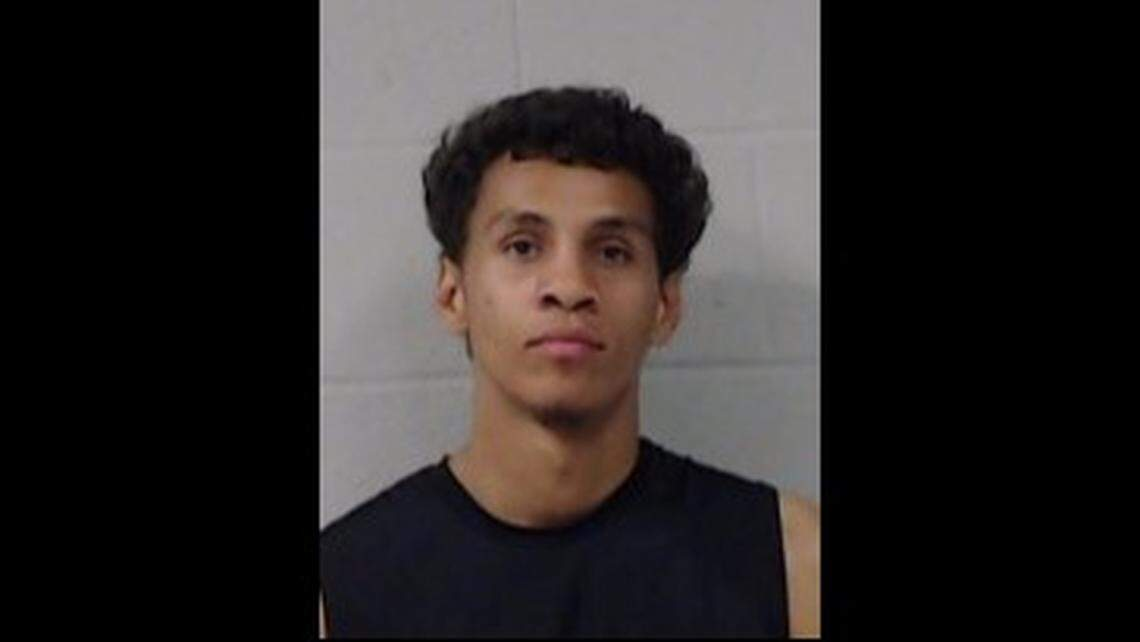
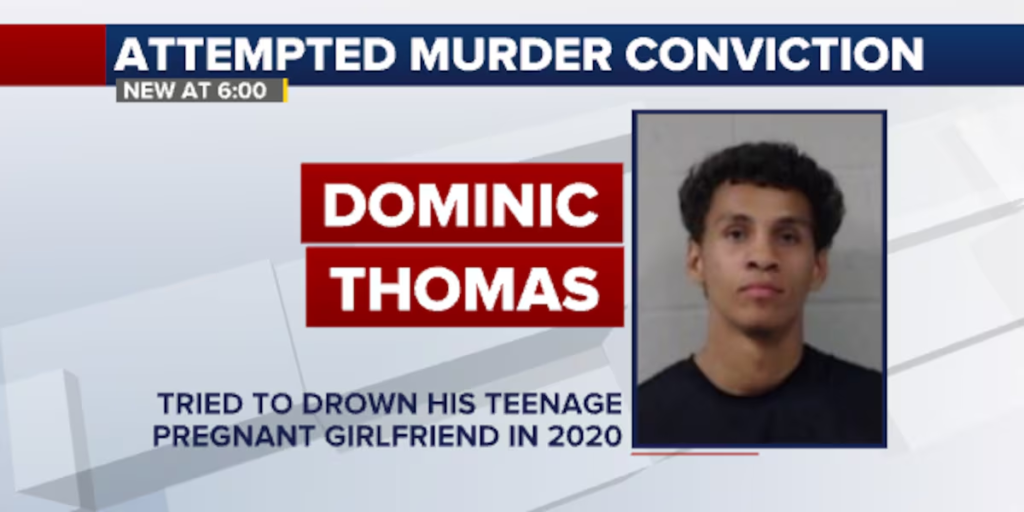
A violent incident that unfolded in Wichita in September 2020 culminated this week in a significant prison sentence, bringing renewed attention to the case of Dominic Thomas and the attempted killing of his pregnant teenage girlfriend. On Wednesday, a Sedgwick County judge sentenced Thomas to 15 years in prison for attempting to drown the 17-year-old girl, who was 35 weeks pregnant at the time of the attack. The sentencing followed a jury conviction in 2024 after a four-day trial, closing a case that has lingered for more than four years in the local justice system.
The facts presented in court outlined a calculated and brutal assault driven by jealousy, fear of exposure, and threats that nearly cost both the young woman and her unborn child their lives. The case underscores the dangers of intimate partner violence, particularly when it intersects with pregnancy and power dynamics involving minors.
Prosecutors described Thomas’s actions as deliberate and life-threatening, while the victim’s survival was attributed largely to chance and her appeal to the life of the unborn child. The sentence reflects the gravity of the offense, as well as the lasting trauma inflicted by the attack, even though it occurred in relatively shallow water. Through court testimony, police affidavits, and prior reporting, a disturbing picture emerged of how quickly threats escalated into attempted murder.
The September 2020 Attack and Events Leading Up to It
The attack occurred on September 21, 2020, near a pond located close to 37th Street North and Sullivan in Wichita. At the time, Dominic Thomas was 19 years old, and his girlfriend was 17 and in the final weeks of pregnancy. According to a probable cause affidavit and reporting based on police interviews, tensions had been building in the days before the incident due to Thomas’s reaction to social media posts made by the teen.
The pregnant teenager had posted photos from her baby shower on Facebook, which reportedly angered Thomas. Investigators later learned that Thomas was romantically involved with another woman and had not disclosed the full extent of his relationship with the pregnant teen. When the baby shower photos appeared online, the other woman became aware of the pregnancy and the overlapping relationships. Police said this discovery triggered a series of threatening text messages from Thomas to the pregnant teen, including messages in which he threatened to kill her.
Despite the threats, Thomas contacted the teenager and persuaded her to meet him in person. He reportedly framed the meeting as an opportunity to walk together and talk through their issues. The victim agreed, and the two went to a pond in a relatively secluded area. According to court records, once they reached the pond, Thomas made a chilling statement, telling her that he was “going to jail.”
Read : Pregnant Teen Katelynn Strate Fatally Shot in Head by Pickup Truck Driver
Moments later, the situation escalated into violence. Thomas placed the teenager in a headlock and dragged her by her feet toward the water. He then forced her into the pond and held her head underwater with both hands. Police later noted that the water was approximately two feet deep, but the depth did not reduce the danger, as Thomas was restraining her ability to breathe.
Read : In the Heart of the Barren: Ranking the Top 10 Largest Deserts Worldwide
In statements to investigators, Thomas admitted to holding her head underwater. He told police that he stopped only after the teenager mentioned their unborn baby. After releasing her, Thomas left the scene and went home. The victim was later taken to a hospital for treatment, where doctors evaluated both her and the fetus. Medical staff determined that the 35-week-old fetus was still moving in utero and had a heartbeat, indicating that the unborn child survived the attack.
Investigation, Charges, and Trial Proceedings
Following the incident, law enforcement launched an investigation that led to Thomas’s arrest on suspicion of attempted first-degree murder. The seriousness of the charge reflected the intent prosecutors believed Thomas demonstrated during the attack, particularly given the prior threats documented in text messages and his own statements to police. The probable cause affidavit played a critical role in establishing the sequence of events and Thomas’s state of mind. Investigators emphasized that the attack was not spontaneous but followed explicit threats and a planned meeting.
Prosecutors argued that Thomas lured the victim to the pond under false pretenses, fully intending to harm or kill her. The case proceeded through the court system over several years, a timeline influenced by procedural delays and the complexity of preparing for trial. In 2024, the case finally went before a jury in a four-day trial. During the proceedings, jurors heard testimony about the relationship between Thomas and the victim, the threatening messages sent prior to the meeting, and the details of the assault itself.
Evidence included police interviews, medical findings, and prior reporting that outlined Thomas’s admissions following his arrest. The defense did not dispute that the incident occurred but sought to challenge the degree of intent, an argument that ultimately failed to persuade the jury. Prosecutors maintained that holding someone’s head underwater, even in shallow water, constituted a clear attempt to kill, especially when combined with prior threats and statements indicating awareness of the consequences.
After deliberation, the jury found Thomas guilty of attempted first-degree murder. The conviction marked a pivotal moment in the case, shifting focus from establishing guilt to determining an appropriate sentence. Sentencing guidelines and judicial discretion both came into play as the court considered the severity of the crime, the vulnerability of the victim, and Thomas’s age at the time of the offense.
Sentencing and Broader Implications of the Case
On Wednesday, Judge William Woolley sentenced Dominic Thomas to 180 months in prison, the equivalent of 15 years. By the time of sentencing, Thomas was 24 years old, having spent several years awaiting trial and resolution of the case. The judge’s decision reflected the seriousness of the offense and the fact that the victim was both a minor and pregnant at the time of the attack.
Read : 13-Year-Old Jaleeyah Tune Fatally Shot by Three Teenagers While Walking Home with Sister
In imposing the sentence, the court considered the near-fatal nature of the assault and the psychological and physical harm inflicted on the victim. Attempted murder carries significant penalties under Kansas law, particularly when aggravating factors such as prior threats and the vulnerability of the victim are present. The judge’s ruling signaled that acts of extreme violence within intimate relationships would be met with substantial punishment.
The case has drawn attention not only because of its disturbing facts but also because of the role social media, jealousy, and secrecy played in triggering the violence. Prosecutors emphasized that the attack stemmed from Thomas’s anger over being exposed rather than any immediate confrontation, highlighting how possessiveness and fear of accountability can escalate into life-threatening actions. For the victim, the sentencing represents a measure of accountability, though it cannot undo the trauma of the attack.
She survived an attempt on her life at a time when she was close to giving birth, an experience that will likely have long-term emotional consequences. The survival of her unborn child was a critical aspect of the case, underscoring how close the incident came to resulting in multiple fatalities. From a broader perspective, the case reinforces ongoing concerns about domestic and dating violence among young people. Advocacy groups often note that pregnancy can increase the risk of severe violence in abusive relationships, a pattern reflected in this incident.
The age difference, combined with the victim’s minor status, also raised questions about power imbalance and coercion. The conclusion of the case with a 15-year prison sentence closes a chapter in the legal process, but it also serves as a reminder of the importance of early intervention when threats and warning signs emerge. Text messages threatening violence, manipulative tactics to arrange private meetings, and escalating control are all red flags that were present in the days leading up to the attack.
As Dominic Thomas begins his prison term, the case remains a stark example of how interpersonal conflicts can turn deadly and how the justice system responds when violence reaches that level. The sentence handed down by Judge Woolley reflects not only the facts of what happened at a Wichita pond in 2020 but also the broader imperative to protect vulnerable victims and hold perpetrators of extreme violence accountable under the law.
I like this weblog so much, saved to fav. “I don’t care what is written about me so long as it isn’t true.” by Dorothy Parker.
Great post but I was wondering if you could write a litte more on this subject? I’d be very thankful if you could elaborate a little bit further. Thank you!