
The Gaza Strip, long marked by conflict and suffering, has once again witnessed a tragedy that epitomizes the human cost of war. Dr. Alaa al-Najjar, a dedicated pediatrician who has devoted her life to caring for the sick and wounded children of Gaza, suffered a devastating personal loss when an Israeli airstrike struck her home in Khan Younis.
In a heart-wrenching blow, nine of her ten children were killed in the attack, leaving the community and the world to grapple with the unbearable grief of a family shattered amid an ongoing conflict. This tragedy highlights the deep and growing crisis in Gaza, where civilian casualties mount daily amid escalating violence and political turmoil.
A Life Dedicated to Healing — And Then Heartbreak
Dr. Alaa al-Najjar has been a symbol of hope and compassion in Gaza. As a pediatric specialist at al-Tahrir Hospital, she spent her days caring for the most vulnerable — children wounded and sick in a region caught in perpetual strife. Her work was a lifeline for many families, and she herself was a mother to ten children, nurturing her family with love and care.
The tragedy struck on a Friday, when an Israeli airstrike targeted her home in Khan Younis, a city in the southern Gaza Strip. The strike claimed the lives of nine of her children: Yahya (12), Eve (9), Rival (5), Sadeen (3), Rakan (10), Ruslan (7), Jibran (8), Luqman (2), and Sedar, who was less than a year old. The youngest child’s remains were never found, adding an agonizing layer to the family’s suffering.
According to Gaza’s Civil Defense, a video showed a small, charred body zipped in a bag — a stark image that encapsulates the brutal reality faced by families in Gaza. The loss is almost incomprehensible, not only for Dr. Najjar but for the entire Gaza community, which endures such grief repeatedly as violence continues unabated.
Read : Gaza Journalist Fatima Hassouna Along With Seven Family Members Killed in Israeli Strike
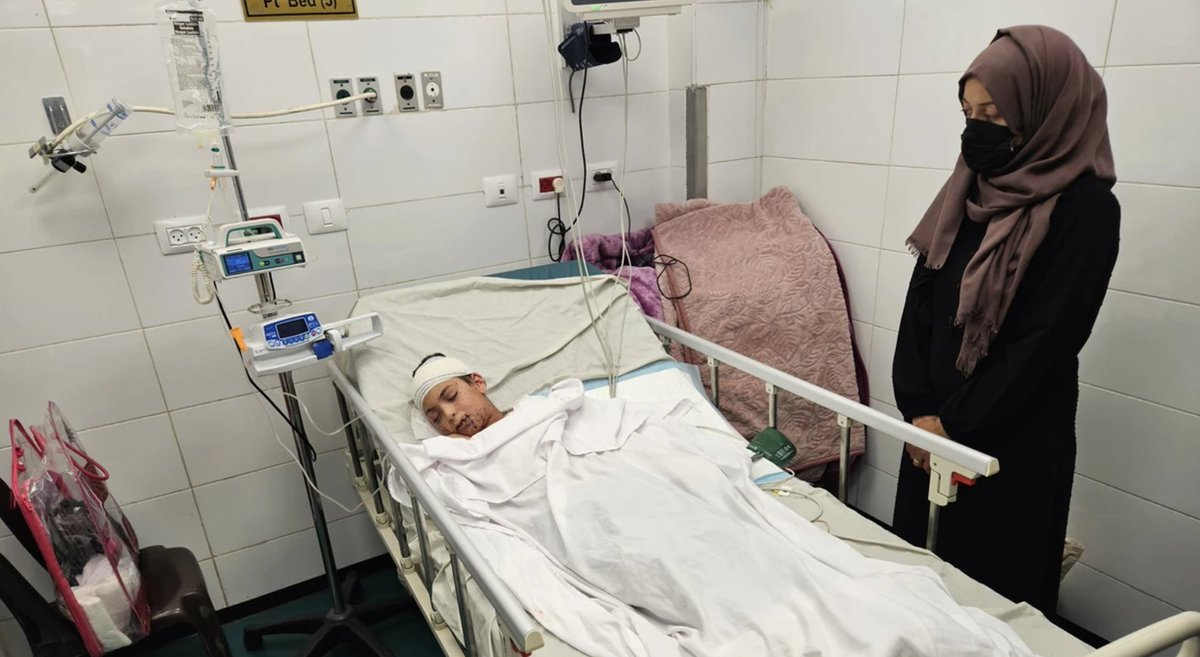
One child, Adam, aged 11, and Dr. Najjar’s husband, also a physician, survived but were seriously injured. British surgeon Dr. Graeme Groom, working at al-Tahrir Hospital, spoke to the BBC about operating on Adam, expressing cautious hope that the boy would survive while uncertainty loomed over the father’s condition. This single ray of hope contrasts sharply with the overwhelming devastation of losing nearly an entire family in one strike.
The Context of Violence in Gaza
The tragedy of Dr. Najjar’s family cannot be viewed in isolation. It comes amid a fierce escalation of the Israeli-Palestinian conflict, particularly in the Gaza Strip. Israeli Prime Minister Benjamin Netanyahu has reiterated Israel’s intent to seize “full control” of Gaza, framing military operations as a necessary response to the attacks by Hamas, the Islamist militant group that controls the territory.
On October 7, 2023, Hamas launched a deadly assault on Israel, killing approximately 1,200 people and taking 250 hostages. This attack has prompted a harsh Israeli military response, including widespread airstrikes on Gaza. According to the Palestinian Health Ministry, more than 53,000 people have been killed in Gaza since the conflict escalated, with many more wounded or displaced.
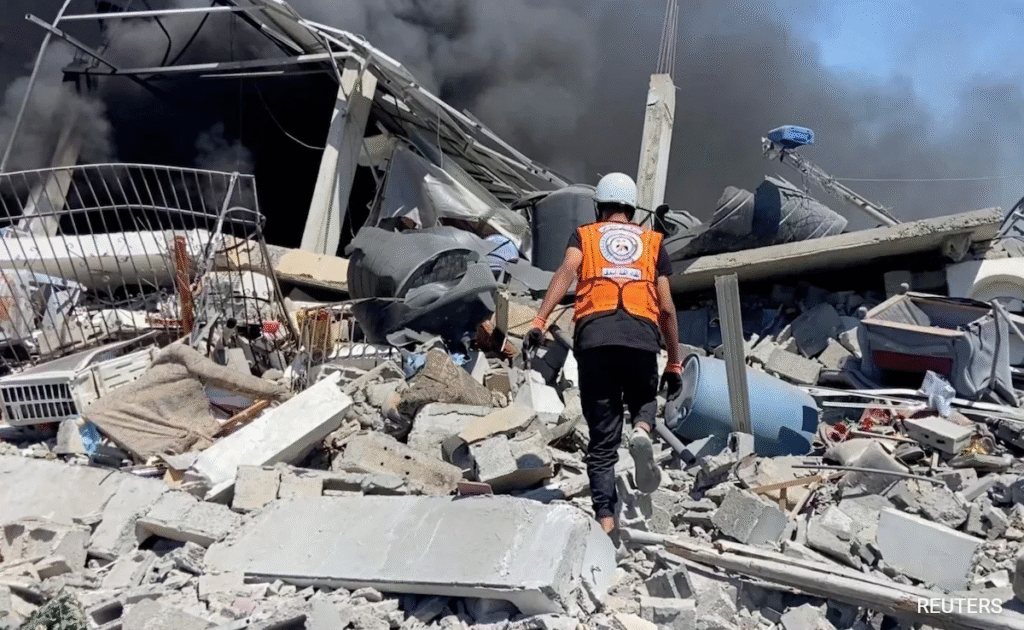
The Israeli military stated that the airstrike on Dr. Najjar’s home was aimed at “suspects operating from a structure adjacent to IDF troops” in Khan Younis, and claimed civilians were evacuated from the area. However, independent verification is difficult in the chaos of war, and the death of nine children in a single strike starkly illustrates the catastrophic human cost of military actions in densely populated areas.
9 Gone, 1 Left: Whole Family Nearly Erased by Israeli Strike in Gaza
— Frontline (@Frontlinestory) May 26, 2025
While Dr. Alaa al-Najjar was at work saving lives in Khan Younis, an Israeli airstrike hit her home — killing 9 of her 10 children and setting the house ablaze. Gaza health officials say the pediatrician, based… pic.twitter.com/klmktSi5Q3
This situation is further complicated by the international community’s divided response. While Israel asserts its right to defend itself and dismantle Hamas, many countries have condemned the scale and impact of the offensive on civilians.
The United Kingdom, France, and Canada called Israel’s renewed attacks “wholly disproportionate” and criticized inflammatory rhetoric from Israeli officials threatening forced relocation of Gaza’s population.
United Nations Secretary-General António Guterres has warned that despite Israel allowing some humanitarian aid into Gaza, what is permitted so far is only a “teaspoon of aid” compared to what is desperately needed.
The blockade and destruction have left millions facing starvation, lack of medical supplies, and inadequate shelter — conditions exacerbated by continued bombardment and the absence of sustained, safe access for aid organizations.
The Wider Impact and International Response
The loss suffered by Dr. Alaa al-Najjar has reverberated beyond Gaza’s borders, striking a chord worldwide. It has intensified pressure on Israeli leadership, including Netanyahu’s government, to reconsider its approach amid mounting civilian casualties and worsening humanitarian conditions.
Inside Israel, too, the conflict has triggered unrest, with thousands gathering to demand action for the release of hostages held by Hamas and to voice concerns over the ongoing violence.
Fifty-eight hostages are believed to remain in Gaza, with 35 deaths publicly confirmed by Israel, while 23 are thought to still be alive. Relatives of these captives have pleaded with the government to negotiate for their safe return. The trauma of the hostages and the continuing cycle of violence fuel tension on both sides, deepening the crisis.
The Israeli government, meanwhile, has condemned criticism from Western allies, framing it as support for the terrorist attacks on Israel. Foreign Minister Gideon Sa’ar linked such criticisms to violent incidents abroad, including the killing of Israeli Embassy officials in Washington, D.C., framing these as consequences of “blood libels” and incitement by international leaders.
In Gaza, the situation remains desperate. Hospitals like al-Tahrir, where Dr. Najjar works, struggle to cope with the influx of wounded civilians, including children like Adam who survive against all odds. Medical personnel are overwhelmed, often themselves victims of the violence, yet continue to provide care under harrowing conditions.
The death of Dr. Najjar’s children — young lives cut short amid the rubble of their home — embodies the immense suffering inflicted on innocent civilians by this conflict. It reminds the world that beyond political calculations and military objectives, real families endure unimaginable pain.
Dr. Alaa al-Najjar’s story is a heartbreaking testament to the tragic human toll of the Israeli-Palestinian conflict. As a doctor who has dedicated her life to healing Gaza’s children, losing nine of her own children in a single airstrike is a profound tragedy that speaks to the broader suffering faced by millions caught in this cycle of violence.
The conflict’s continuation threatens countless more lives, while international calls for restraint, humanitarian aid, and renewed efforts for peace remain urgent and vital.
The world watches as Gaza endures not only destruction and loss but a humanitarian crisis with far-reaching consequences. Dr. Najjar’s loss is a painful reminder that beyond politics and military strategies, the faces of grief are real and relentless — children, families, and communities yearning for peace and security amid the shadows of war.