
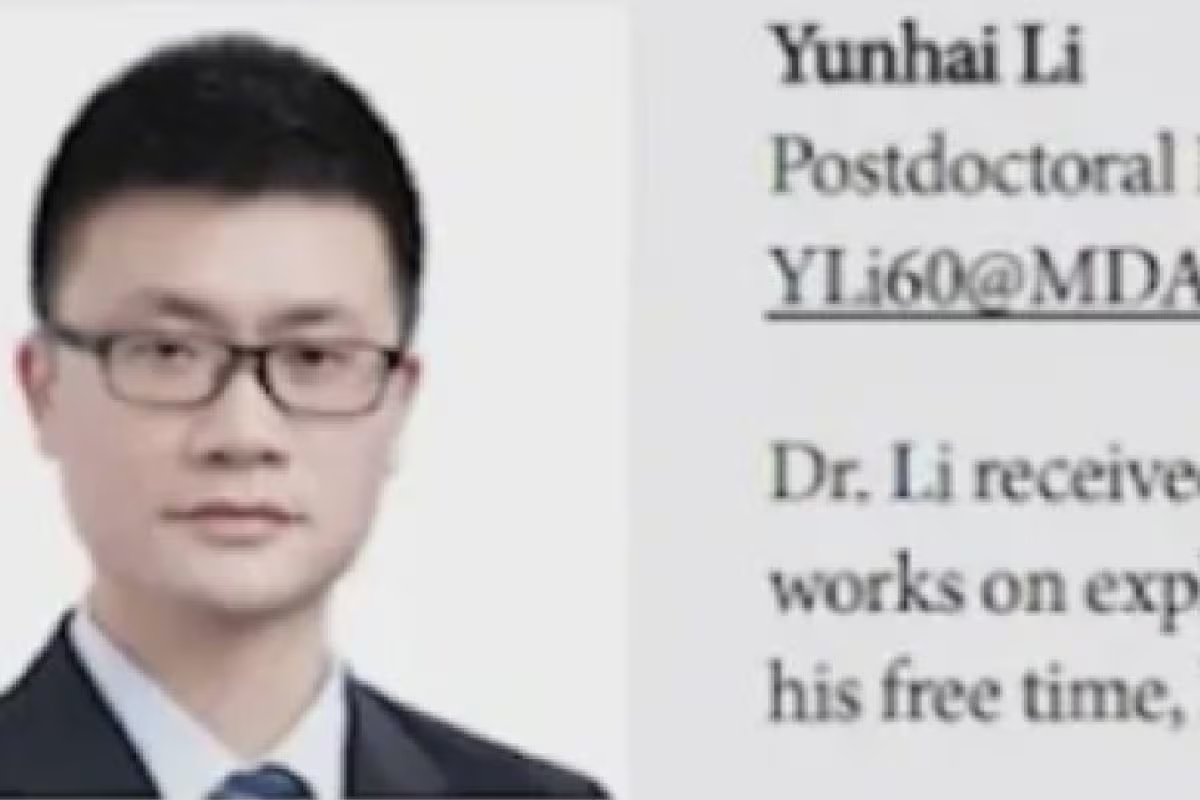
On July 9, 2025, a significant breach of intellectual property shook the medical research community in Houston, Texas, when Dr. Yunhai Li, a 35-year-old Chinese national and former postdoctoral researcher at the University of Texas MD Anderson Cancer Center, was apprehended at George Bush Intercontinental Airport.
Authorities allege that Li attempted to smuggle sensitive, US-funded breast cancer research data to China, raising serious concerns about national security, academic integrity, and the protection of proprietary medical advancements.
This incident has sparked widespread debate about the balance between international collaboration in science and safeguarding critical research. Li faces state charges of theft of trade secrets and tampering with a government record, with the possibility of additional federal charges looming.
The Alleged Theft and Arrest
Dr. Yunhai Li joined MD Anderson Cancer Center in 2022 under a U.S. Department of State research scholar exchange visa, working on a groundbreaking breast cancer vaccine project funded by the National Institutes of Health (NIH) and the Department of Defense (DoD). The research aimed to develop a vaccine to prevent breast cancer from metastasizing, a critical advancement with the potential to save countless lives. According to court documents, the project was approximately 70% complete when Li resigned from his position on July 1, 2025, under suspicious circumstances.
Prosecutors allege that Li downloaded approximately 90 gigabytes of confidential research data, including unpublished studies, laboratory notes, scientific drawings, and models, onto his personal devices. To cover his tracks, he initially uploaded the data to his personal Google Drive and later transferred it to a Chinese cloud service, Baidu, without authorization.
When confronted by MD Anderson officials about the unauthorized downloads, Li reportedly convinced them that he had deleted the material, while secretly retaining it on the Baidu server. His actions violated confidentiality agreements he had signed as part of his employment, which explicitly prohibited the unauthorized storage or sharing of research data.
On July 9, 2025, as Li attempted to board a flight to China, U.S. Customs and Border Protection (CBP), in coordination with Homeland Security Investigations (HSI), conducted a routine inspection of his belongings. Authorities discovered the sensitive medical data on his laptop and two phones, prompting his detention.
Read : Bizarre! Fox ‘Wanted’ for Stealing 32 Shoes from Grand Teton National Park
In a sworn statement, Yunhai Li admitted to taking the research, claiming he believed he had a right to possess it because it was a product of his efforts over three years. He further stated that he felt the research was “going to waste” after his contract ended and intended to continue the project at the First Affiliated Hospital of Chongqing Medical University in China.
Former MD Anderson cancer researcher Yunhai Li charged with Theft of Trade Secrets (third degree felony) and Tampering with a Government Record (class A misdemeanor).
— Harris County District Attorney (@HarrisCountyDAO) August 25, 2025
Theft of Trade Secrets carries a penalty of two to ten years in prison and fines up to $10,000. Tampering with… pic.twitter.com/q2NdtbYcVt
Yunhai Li was not immediately arrested at the airport but was later taken into custody on August 22, 2025. He faces a third-degree felony charge of theft of trade secrets, which carries a potential penalty of two to ten years in prison and fines up to $10,000, and a misdemeanor charge of tampering with a government record, punishable by up to one year in jail and a $4,000 fine.
Harris County District Attorney Sean Teare emphasized the gravity of the situation, stating, “Houston is proudly home to some of the most groundbreaking medical institutions in the world—publicly funded centers that are saving lives each day thanks to their innovative research. We have zero tolerance for any attempts that hurt our nation and our community’s ability to pioneer critical medical breakthroughs.”
Undisclosed Conflicts of Interest and National Security Concerns
The case has raised significant concerns about undisclosed conflicts of interest and potential national security risks. Court documents reveal that Li maintained active ties with Chinese institutions, including receiving grant funding from the National Natural Science Foundation of China and conducting research for the First Affiliated Hospital of Chongqing Medical University, both before and during his tenure at MD Anderson. These relationships were not disclosed to his U.S. employer, despite Li signing agreements affirming that he had no conflicting foreign affiliations or additional financial compensation.
Li’s actions have drawn scrutiny amid heightened U.S. concerns about intellectual property theft by foreign nationals, particularly in sensitive fields like medical research. The breast cancer vaccine project was funded by U.S. taxpayers through the NIH and DoD, making Li’s alleged attempt to transfer the data to China a matter of both economic and national security significance.
Legal analyst Steve Shellist, who is not affiliated with the case, suggested that the state charges may serve as “placeholders” while federal authorities investigate more serious charges, such as wire fraud, theft of federal funds, or abuse of official capacity. The involvement of federal agencies like CBP and HSI underscores the case’s broader implications. Li claimed that his supervisor at MD Anderson had contacted the NIH and MD Anderson administrators to seek permission for him to continue the research in China, but he had not received a response before his resignation.
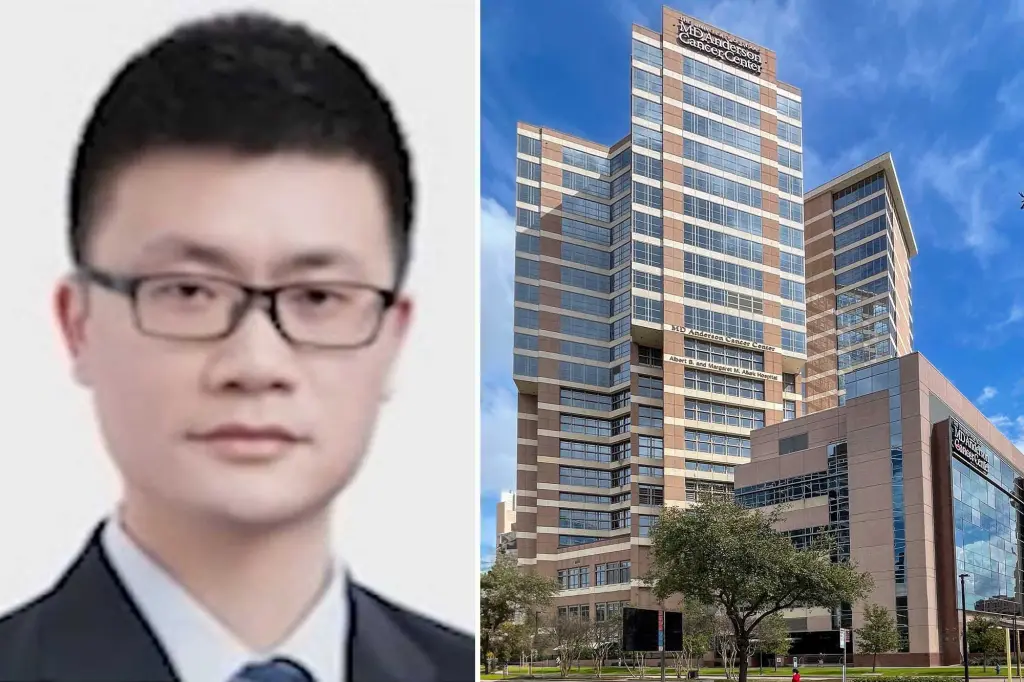
This assertion has not been corroborated by MD Anderson, which issued a statement confirming that Li is no longer employed at the institution as of July 1, 2025, and that it is cooperating with relevant authorities. The case highlights the challenges of managing international research collaborations, where the free exchange of ideas must be balanced against the need to protect proprietary and federally funded work.
Li was released on a $5,100 bond after surrendering his passport, a condition reflecting prosecutors’ concerns about his status as a flight risk. Court documents note that he has no ties to the Houston community, and his address is listed as an Immigration and Customs Enforcement (ICE) facility in Conroe, Texas, though he was transferred to Harris County custody in August 2025. The ongoing investigation may lead to additional charges, as authorities continue to examine the full extent of Li’s actions and any potential accomplices.
Broader Implications for Medical Research and International Collaboration
The arrest of Dr. Yunhai Li has ignited a heated debate about the security of U.S.-funded research and the role of international scholars in American institutions. Houston, home to world-class medical facilities like MD Anderson, has long been a hub for cutting-edge research, much of which is supported by public funds. The alleged theft of nearly completed breast cancer vaccine research underscores the vulnerability of intellectual property in an era of globalized science.
As Harris County District Attorney Sean Teare noted, protecting the integrity of these institutions is critical to maintaining their ability to lead in medical advancements. This incident is not isolated. In recent years, U.S. authorities have increased scrutiny of Chinese nationals involved in research programs, citing concerns about espionage and intellectual property theft. Earlier in 2025, two Chinese researchers affiliated with the University of Michigan were arrested for allegedly smuggling toxic biological material into the United States, prompting a federal investigation.
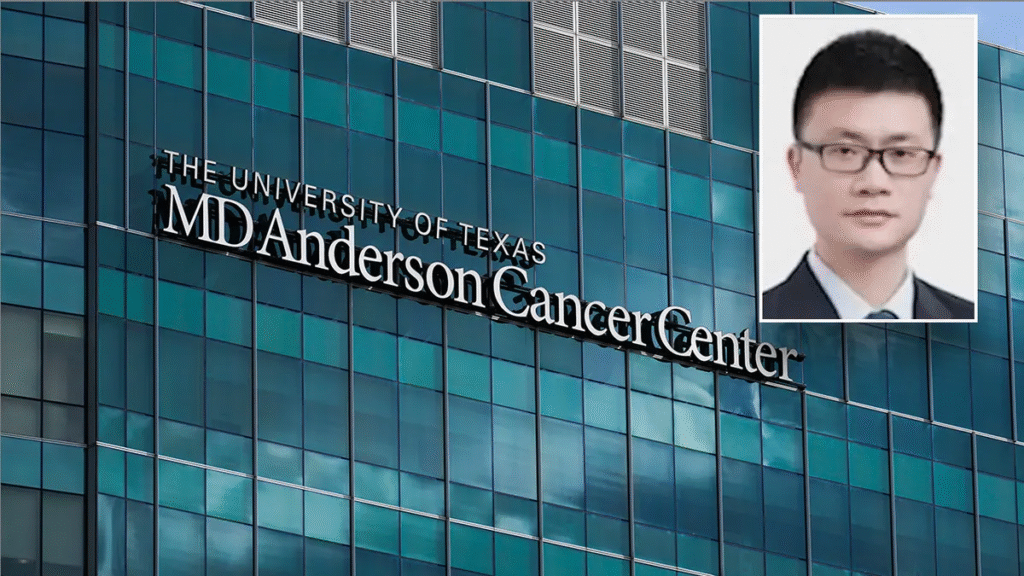
Similarly, in July 2025, federal prosecutors indicted two Chinese men for hacking into research institutions, including the University of Texas Medical Branch, in search of COVID vaccine data. These cases reflect growing tensions between the U.S. and China over the protection of sensitive research. The Li case also raises questions about the vetting and oversight of international researchers.
While programs like the U.S. Department of State’s research scholar exchange visa facilitate global collaboration, they also create opportunities for conflicts of interest and unauthorized data transfers. Institutions like MD Anderson may need to strengthen their protocols for monitoring data access and ensuring compliance with confidentiality agreements. At the same time, the scientific community must grapple with how to foster international cooperation without compromising the security of taxpayer-funded research.
Public reaction to Li’s arrest has been marked by outrage, with many emphasizing the importance of safeguarding research that could lead to life-saving treatments. The breast cancer vaccine project, in particular, represents years of investment and effort by a team of researchers, and its potential loss to a foreign entity has sparked calls for stricter regulations on data handling and international partnerships. However, some experts caution against overgeneralizing the issue, noting that the vast majority of international researchers contribute positively to U.S. science without incident.
As the investigation into Dr. Yunhai Li continues, the case serves as a stark reminder of the high stakes involved in medical research. The balance between fostering global scientific collaboration and protecting intellectual property remains a complex challenge, one that requires careful policy decisions and robust safeguards. For now, Li’s fate rests in the hands of the legal system, with potential consequences that could resonate far beyond the courtroom, shaping the future of research security in the United States.