
The favelas of Rio de Janeiro have long been battlegrounds between law enforcement and organized crime, with drug trafficking operations deeply embedded in many of these communities.
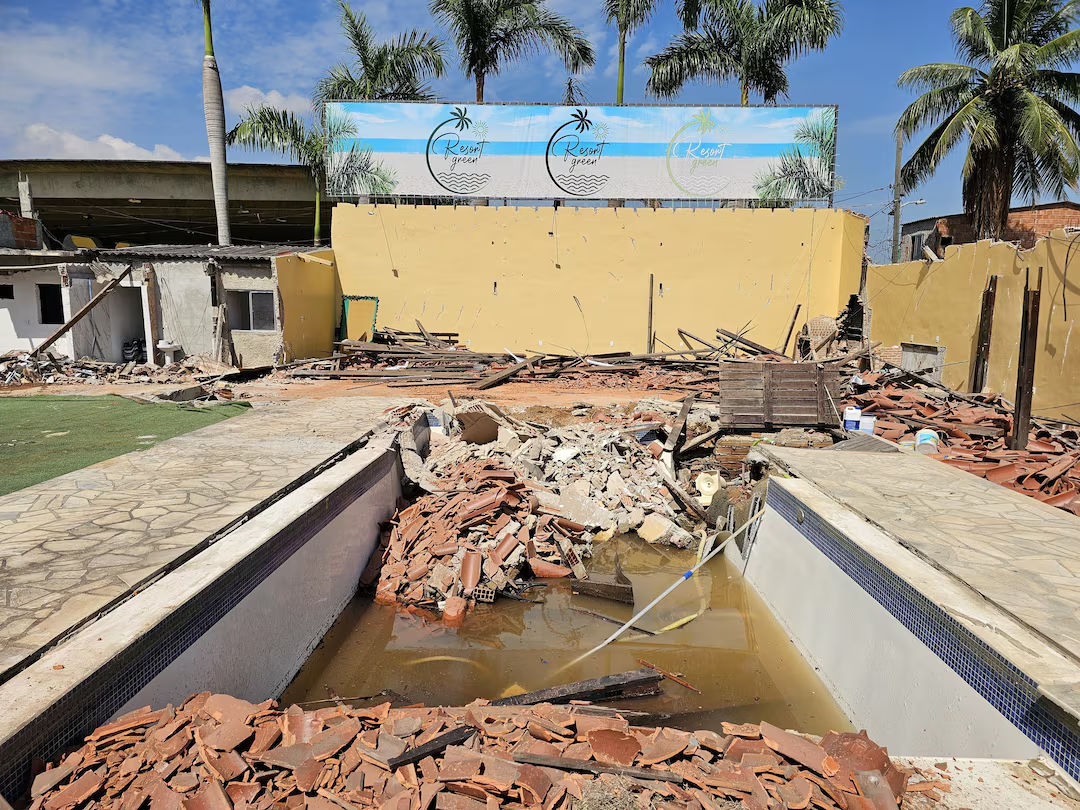
In a recent high-profile operation, Rio de Janeiro police dismantled what they described as a “drug trafficking resort” in the Israel Complex, a cluster of favelas controlled by one of the city’s most dangerous criminals, Alvaro Malaquias, also known as “Peixao” (Big Fish).
The facility, which featured luxurious amenities including a swimming pool, gym, and barbecue area, served as a meeting place for drug traffickers. The operation, which involved armed confrontations, road closures, and arrests, marked another chapter in the city’s ongoing struggle against organized crime.
The Rise of Drug Trafficking Resorts in Rio’s Favelas
For decades, Rio de Janeiro’s favelas have been plagued by drug cartels and criminal factions that exert control over entire neighborhoods.
These groups establish their own governance structures, enforce their own rules, and often provide social services in the absence of government intervention. However, their primary business remains the drug trade, which generates billions in illicit revenue.
In recent years, criminal organizations have expanded their operations beyond traditional drug distribution networks, developing sophisticated infrastructure to support their illicit activities. One of the most alarming developments has been the creation of so-called “drug trafficking resorts.”
These facilities serve as hideouts for gang leaders, meeting points for criminal negotiations, and recreational spaces for traffickers. They are often built with funds obtained from drug sales and designed to operate outside the reach of law enforcement.
Read : UCL PhD Student Zhenhao Zou From China Guilty of Drugging and Raping 10 Women
The resort in the Israel Complex was a prime example of this trend. Built under the leadership of Peixao, one of Rio’s most wanted criminals, the facility was lavish by favela standards.
OPERAÇÃO POLICIAL DESMANTELA RESORT DE PROPRIEDADE DO NARCOPENTECOSTAL PEIXÃO, LÍDER DO COMPLEXO DE ISRAEL, NA ZONA NORTE DO RIO DE JANEIRO RJ. pic.twitter.com/jIsggrKEgY
— Popular News (@PopularNewsBR) March 11, 2025
It boasted an artificial lake, a swimming pool, a gym, and a barbecue area—amenities typically associated with luxury resorts rather than criminal hideouts. The existence of such a site underscores the extent to which organized crime has entrenched itself in certain areas of Rio de Janeiro.
Police Operation and the Destruction of the Resort
The police operation to dismantle the drug trafficking resort was both complex and dangerous. Law enforcement agencies had been monitoring the Israel Complex for some time, gathering intelligence on the activities of Peixao and his gang.
Early on Tuesday morning, police units moved into the area, facing immediate resistance from armed criminals. Gunfire erupted as traffickers attempted to defend their stronghold, forcing police to engage in a shootout.
In response to the heightened threat, Avenida Brasil, one of Rio de Janeiro’s busiest expressways, was temporarily shut down. Public transportation, including buses and trains operating in nearby areas, was also suspended as a precautionary measure. Such disruptions highlighted the scale of the operation and the level of security risk posed by these criminal networks.
Once law enforcement secured the site, heavy machinery was brought in to demolish the resort. The destruction of the facility was not just symbolic but also strategic—it prevented traffickers from using the space as a base for further operations.
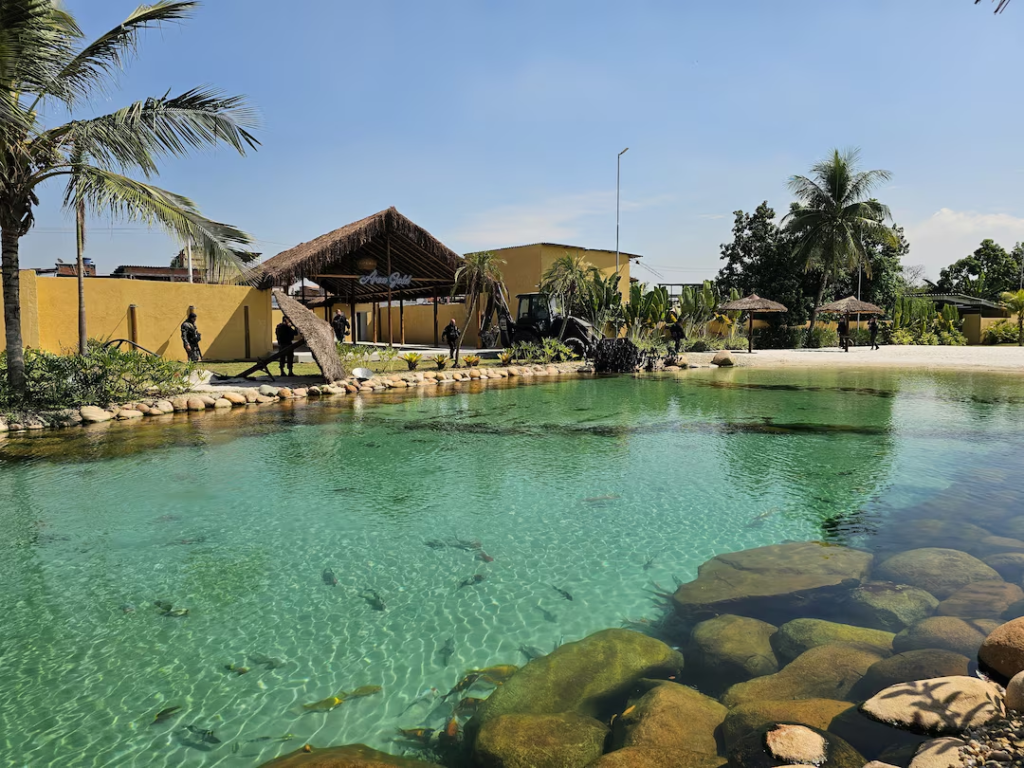
Additionally, authorities revealed that the resort had been built illegally in an environmental preservation area, further justifying its demolition. The facility had even altered the course of a local river, demonstrating the disregard criminals had for both the law and the environment.
During the operation, police arrested three individuals linked to the criminal organization. Arrest warrants were also issued for several members of the gang, including Peixao, who remains at large. His continued evasion of law enforcement highlights the challenges police face in bringing top criminals to justice, given their deep-rooted networks and access to resources.
The Influence of Peixao and the Role of Religion in Organized Crime
Peixao is not just another drug trafficker; he is a powerful figure who commands significant influence in the Israel Complex. His gang, Terceiro Comando Puro, is one of the leading criminal factions in Rio de Janeiro.
Unlike many other criminal leaders, Peixao has integrated religion into his operations, requiring members of his organization to adopt evangelical Christianity. This blending of crime and religion presents a unique dynamic, as it provides a sense of ideological unity among his followers while simultaneously serving as a tool for control.
The use of religious symbols and rhetoric by organized crime groups is not new. In many parts of Latin America, criminal factions have co-opted religious imagery to justify their actions, gain legitimacy within communities, and instill discipline among their members.
The Star of David, used by Terceiro Comando Puro, is an example of this phenomenon. While the symbol is traditionally associated with Judaism, its use by the gang reflects the broader trend of criminal groups adopting religious iconography for their own purposes.
The intersection of crime and faith in the Israel Complex raises questions about the role of religion in criminal enterprises. While some members may genuinely adhere to evangelical beliefs, others may see it as a way to gain favor within the organization or maintain loyalty.
This fusion of faith and violence complicates law enforcement efforts, as it adds an additional layer of ideological motivation to criminal activities. Despite the destruction of the drug trafficking resort, the broader battle against organized crime in Rio de Janeiro is far from over. The city’s favelas remain hotspots for drug trafficking, and groups like Terceiro Comando Puro continue to wield significant power.
While police operations like this one can disrupt criminal networks temporarily, the underlying socio-economic conditions that allow such groups to thrive remain unaddressed. High levels of poverty, unemployment, and lack of government services in the favelas create an environment where criminal organizations can easily recruit members and establish control.
Moving forward, a multi-faceted approach will be necessary to combat organized crime in Rio de Janeiro. This includes not only police crackdowns but also long-term strategies aimed at improving economic opportunities, increasing access to education, and strengthening social services in the city’s most vulnerable communities.
Without addressing these root causes, the cycle of violence and criminality is likely to persist, with new figures emerging to replace those taken down by law enforcement.
The destruction of Peixao’s drug trafficking resort was a significant victory for Rio de Janeiro’s police force, but it was just one battle in an ongoing war against organized crime.
As authorities continue their pursuit of Peixao and his associates, the people of Rio de Janeiro remain caught in the middle of a conflict that has shaped their city for decades.