
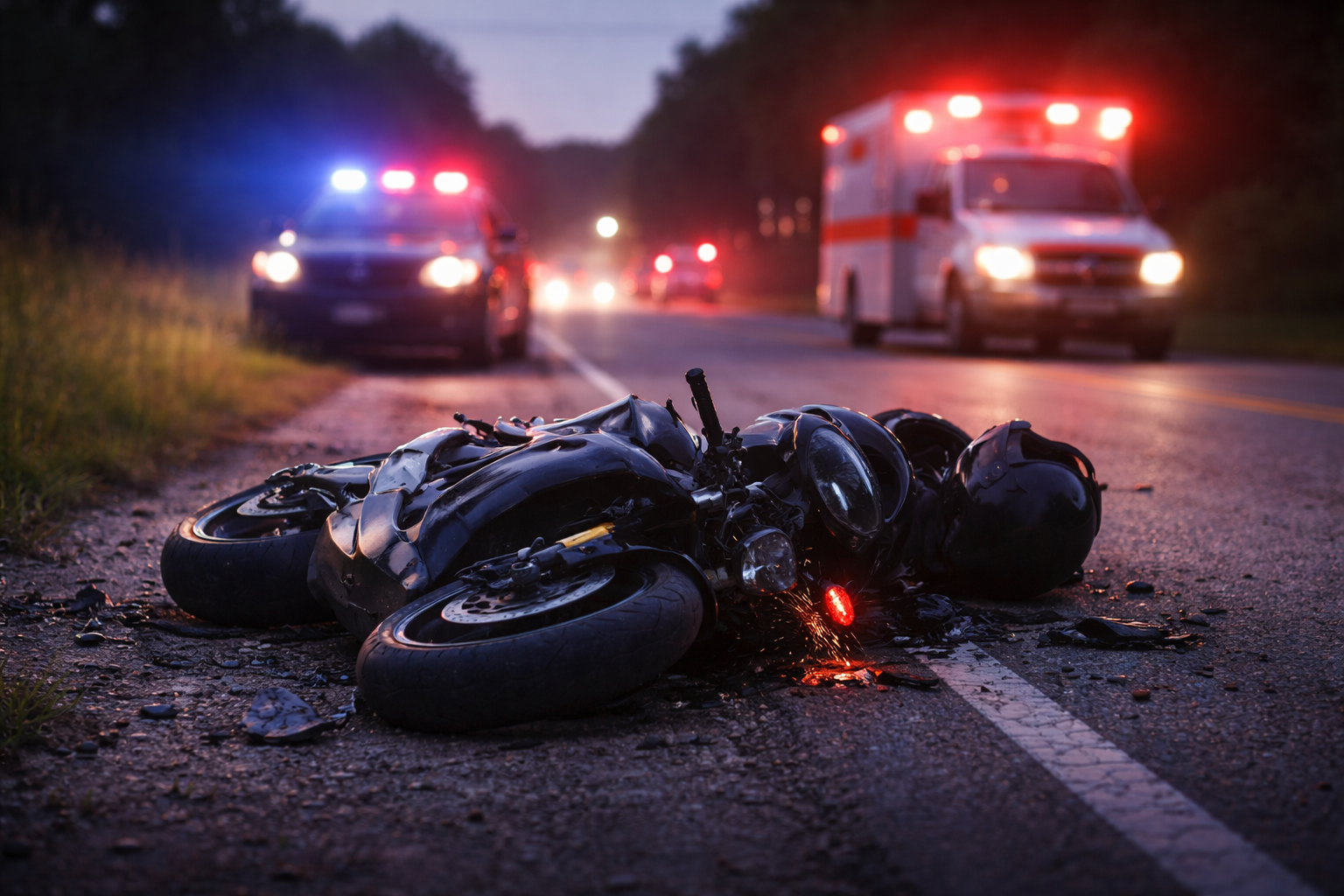
A tragic motorcycle crash has claimed the life of 22-year-old Dylan Adkins, leaving a community in mourning and raising renewed concerns about road safety and the risks faced by motorcyclists. The incident, which occurred in Marion County, has drawn attention not only because of the young age of the victim but also due to the circumstances surrounding the crash.
Authorities responded promptly, and emergency medical efforts were made at the scene, but despite those efforts, Adkins later succumbed to his injuries. As investigations continue, the incident underscores the complex and often dangerous nature of motorcycle travel, particularly on high-speed roads where multiple vehicles are involved.
Details of the Crash and Emergency Response
According to officials, deputies were dispatched to the scene of a motorcycle crash in the 1200 block of County Highway T17 at approximately 7:15 p.m. on Saturday. Upon arrival, law enforcement officers, along with local police and emergency medical personnel, discovered Dylan Adkins suffering from serious injuries sustained during the crash. First responders immediately initiated life-saving measures at the scene, working to stabilize him before arranging for emergency air transport to a hospital in Des Moines.
Despite the rapid response and medical intervention, Dylan Adkins later died from the injuries he sustained. The loss has deeply affected both his family and the wider community, with authorities expressing condolences to those grieving. While initial reports confirm the severity of the crash, investigators have not yet released a complete account of what led to the incident, and the case remains under active investigation.
In a separate but similarly tragic event in Marion County, another fatal motorcycle crash involving multiple vehicles further illustrates the dangers associated with such accidents. This incident occurred on a major interstate and involved a chain reaction collision in which a motorcyclist was rear-ended and thrown into the path of another vehicle. The rider was subsequently struck again, leading to fatal injuries. Though the details differ, both cases highlight how quickly motorcycle crashes can escalate into life-threatening situations.
Read : Man’s Body Frozen at -196°C in Hope of Future Revival in Australia
Emergency responses in such scenarios are often swift and coordinated, but the nature of motorcycle accidents frequently results in severe trauma. Unlike occupants of enclosed vehicles, motorcyclists have minimal physical protection, making them especially vulnerable in high-impact collisions. Even with protective gear, the forces involved in multi-vehicle crashes can lead to catastrophic outcomes.
Risks Associated with Motorcycle Travel
Motorcycle travel offers a sense of freedom and efficiency that appeals to many riders, but it also comes with inherent risks that are significantly higher than those faced by drivers of other vehicles. One of the most critical factors is visibility. Motorcycles are smaller and less noticeable on the road, which can lead to other drivers misjudging distances or failing to see them altogether. This becomes particularly dangerous in conditions of heavy traffic or low visibility, such as nighttime driving.
Rear-end collisions, like the one described in the multi-vehicle crash, are especially hazardous for motorcyclists. When a motorcycle is struck from behind, the rider can be thrown off the bike and into surrounding traffic, creating the possibility of additional impacts. These secondary collisions are often the most deadly, as the rider may be struck by other vehicles with little chance to react or avoid further harm.
Read : Australian Tourist Alivia Jane Campbell Hospitalised in Bali After Motorcycle Collision with Truck
High-speed roadways add another layer of danger. On highways, vehicles travel at greater speeds, leaving less time for drivers to respond to sudden changes in traffic conditions. If a motorcyclist is involved in an accident under these circumstances, the severity of injuries is likely to be much higher. Reduced visibility at night, combined with driver fatigue or distraction, further increases the risk of collisions.
Another contributing factor is driver behavior. Distracted driving, including the use of mobile devices, can prevent drivers from noticing motorcycles in time to avoid a crash. Failure to maintain a safe following distance is also a common cause of rear-end collisions. In some cases, drivers may not anticipate the speed or maneuverability of a motorcycle, leading to miscalculations that result in accidents.
Environmental factors can also play a role. Road conditions, lighting, and signage all influence driver awareness and reaction times. Poorly maintained roads or inadequate lighting can make it more difficult for drivers to see motorcycles, increasing the likelihood of accidents. Weather conditions, such as rain or fog, can further reduce visibility and road traction, compounding the risks for motorcyclists.
Legal and Investigative Considerations
Fatal motorcycle crashes often involve complex investigations aimed at determining the sequence of events and identifying any contributing factors. In cases where multiple vehicles are involved, establishing liability can be particularly challenging. Investigators typically examine physical evidence from the scene, including vehicle damage, skid marks, and the positions of the vehicles after the crash. Witness statements and, when available, video footage may also be used to reconstruct the incident.
Several parties may be considered when determining liability in a multi-vehicle crash. Drivers who fail to maintain a safe distance or who engage in negligent behavior, such as distracted or impaired driving, may be held responsible for initiating the collision. In situations where a second or third vehicle strikes a motorcyclist after the initial impact, those drivers may also be evaluated to determine whether they had the opportunity to avoid the collision.
Vehicle ownership can also be a factor, particularly if the driver was operating someone else’s vehicle at the time of the crash. In certain circumstances, employers or commercial entities may be held liable if a vehicle involved in the accident was being used for work-related purposes. Additionally, roadway conditions may come under scrutiny. If poor maintenance, inadequate signage, or faulty design contributed to the crash, the responsible government agency could share liability.
In some cases, mechanical failure may be investigated as a potential cause. Defective parts, such as brakes or tires, can lead to loss of control and increase the likelihood of a crash. If such defects are identified, manufacturers may face legal claims related to product liability.
For families affected by fatal motorcycle crashes, legal options may include pursuing a wrongful death claim. These claims are typically filed by a representative of the deceased’s estate on behalf of surviving family members. Compensation may cover a range of damages, including funeral and burial expenses, loss of financial support, and the emotional impact of losing a loved one. The process can be complex, particularly when multiple parties are involved, and often requires a thorough investigation to establish fault.
As authorities continue to investigate the circumstances surrounding Dylan Adkins’ death, the case serves as a reminder of the importance of road safety and awareness. Each accident brings with it not only a loss of life but also a broader reflection on the factors that contribute to such tragedies. Understanding these factors is essential in efforts to reduce the number of similar incidents in the future.