
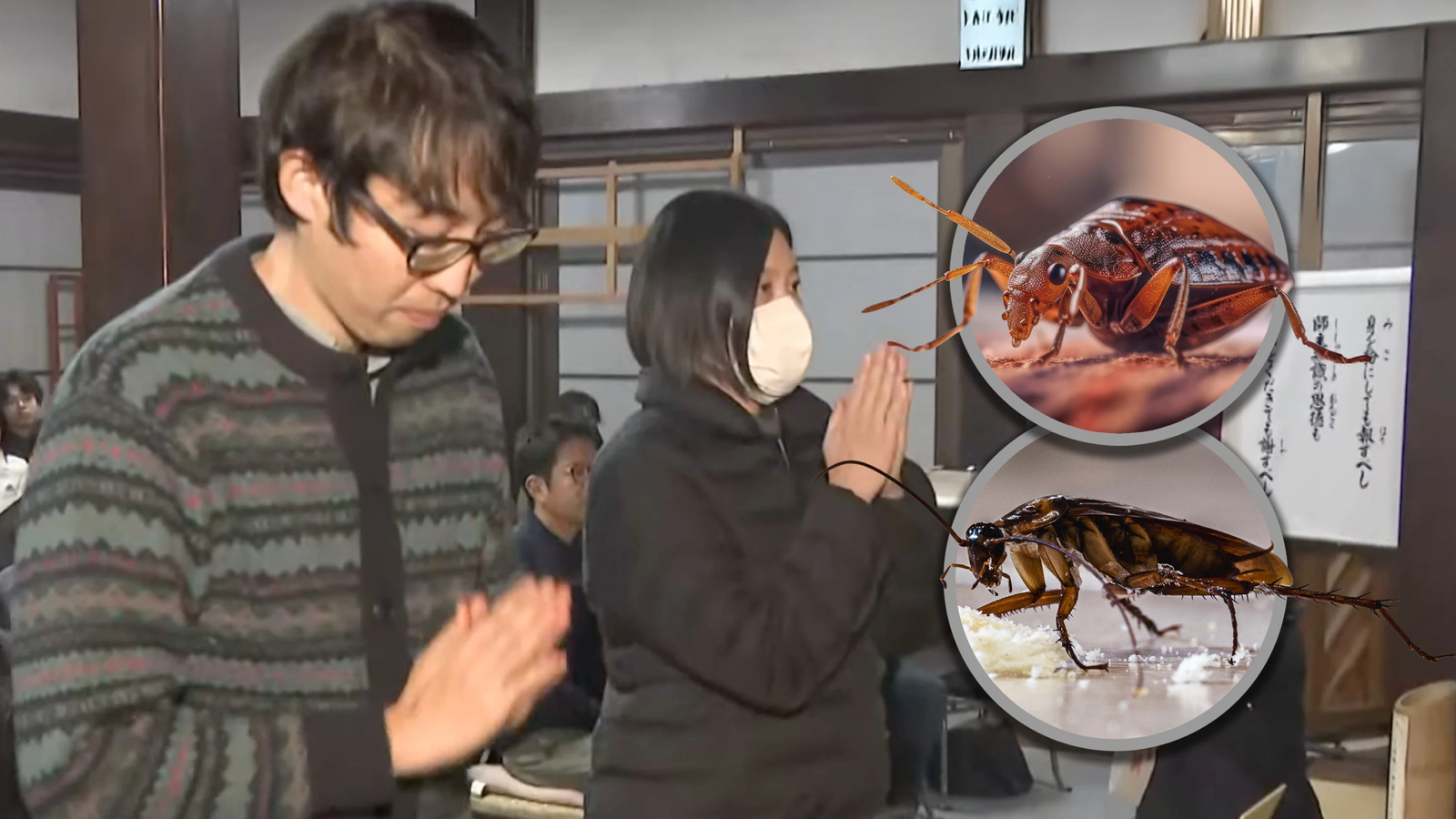
In December, a quiet Buddhist temple in Japan’s Hyogo prefecture hosted a ceremony that drew international attention for its unusual subject: insects. The service was organised by Earth Corporation, one of Japan’s largest manufacturers of insect control products, to honour the countless insects used and killed during laboratory research. Around 100 employees gathered at Myohoji Temple, where photographs symbolising cockroaches, mosquitoes, fleas and mites were placed before a Buddhist altar.
One by one, staff members lit incense, bowed, and offered prayers, participating in a ritual that blended corporate research culture with religious reflection. While the idea of holding funerary rites for insects may strike many observers as strange or even ironic, the ceremony reflects long-standing traditions within Japanese society and raises broader questions about ethics, responsibility, and humanity’s relationship with other forms of life.
A Corporate Ritual Rooted in Tradition
Earth Corporation’s memorial service for insects is not a recent or symbolic gesture adopted in response to public scrutiny. According to reports, the company has observed this ritual annually for more than forty years, making it a deeply embedded part of its institutional culture. Founded in Osaka in 1892, Earth Corporation has grown into a major player in the global insecticide market. Its research facilities reportedly maintain over one million cockroaches and more than 100 million other insects at any given time for experimental purposes.
These insects are used to test the effectiveness and safety of products designed to control pests and prevent insect-borne diseases. The ceremony itself is conducted in accordance with Buddhist practices. A monk leads the service, chanting sutras and delivering a sermon, while participants offer incense and prayers. The service typically lasts about an hour and has, in previous years, focused on Buddhist concepts such as “Six Roots Purification,” which relates to the six senses and the idea that liberation from sensory illusions can lead to moral clarity and a better life.
Within this framework, the ritual is intended not as an expression of guilt alone but as a moment of contemplation, encouraging participants to reflect on the interconnectedness of life and the consequences of their work. For company leaders, the ceremony serves both a moral and educational function. Tomohiro Kobori, who headed Earth Corporation’s research and development division, described it as a valuable opportunity for reflection and gratitude.
Read : Barcelona’s Disfrutar Has Officially Been Crowned the 2024 Best Restaurant in the World
By acknowledging the insects used in research, the company signals an awareness that scientific and commercial progress often comes at the cost of other lives, even those considered insignificant by many societies. This perspective aligns with broader Japanese cultural practices in which memorial services are sometimes held for animals used in medical research, agriculture, or even for tools and objects that have served a long purpose.
Ethics, Irony, and the Language of Coexistence
The memorial service has sparked debate precisely because of the apparent contradiction it embodies. Earth Corporation’s core business involves developing products that kill insects, yet the company takes time to mourn those same creatures. Critics argue that this juxtaposition is inherently ironic, with some online commentators suggesting that the presence of those responsible for killing insects at a memorial service could be seen as insincere or even offensive from a symbolic standpoint.
One sceptical social media user remarked that, from the insects’ perspective, having their killers attend their funeral would hardly be comforting. However, supporters of the practice see it differently. They argue that the ritual does not negate the company’s work but instead contextualises it within a broader ethical framework. Several employees have spoken about their evolving views on the ceremony. While some initially found the experience uncomfortable or even humorous, others later came to appreciate its intent.
Read : Playwright Jeremy O. Harris Arrested at Japan’s Naha Airport on Suspicion of Smuggling MDMA
Mika Kawaguchi, an employee, explained that the insects used in research contributed to the development of products that save human lives and help control diseases such as malaria or dengue fever. From this standpoint, the memorial service is less about contradiction and more about acknowledging a moral trade-off inherent in modern life. Earth Corporation’s corporate philosophy further shapes this interpretation.
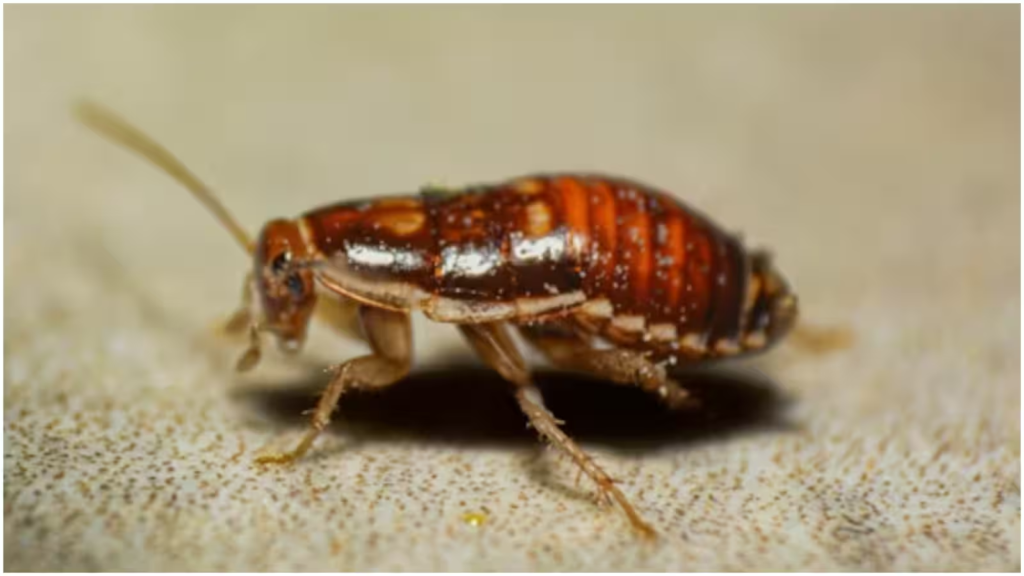
The company publicly emphasises coexistence with nature, describing its guiding principle as living in harmony with life and achieving coexistence with the Earth. In line with this approach, it has reclassified many of its products as “insect care products” rather than simple extermination tools, framing them as instruments of disease prevention and public health. This language reflects an effort to move away from a purely adversarial view of insects and towards a more nuanced understanding of their role in ecosystems, even as they pose risks to human health.
Within this context, the memorial service can be seen as a symbolic acknowledgement of responsibility rather than an attempt to absolve guilt. It reinforces the idea that taking life, even for practical or protective reasons, should not be treated lightly. For researchers like Takayuki Nagamatsu, mourning experimental subjects is a natural act, regardless of their size or perceived importance. His assertion that “even the smallest life is still a life” captures a sentiment that resonates with Buddhist teachings and challenges more utilitarian perspectives prevalent in industrial research environments.
Cultural and Global Reactions to an Unusual Practice
The international reaction to Earth Corporation’s insect memorial service highlights stark differences in cultural attitudes toward life, death, and ritual. In Japan, Buddhism remains one of the country’s major belief systems, with government statistics from 2013 estimating that approximately 84.7 million people identify as Buddhist. While levels of formal religious observance vary, Buddhist concepts often permeate cultural practices, including memorial rites for humans, animals, and even inanimate objects.
Read : Bizarre ! 32-Year-Old Japanese Woman Holds Symbolic Wedding Ceremony with ChatGPT-Created AI Persona
Within this cultural framework, the idea of expressing gratitude or remorse for lives taken during one’s work is not entirely alien. Outside Japan, however, the practice has been widely described as bizarre or surreal. Media coverage in international outlets often emphasised the contrast between the company’s role as an insecticide manufacturer and its participation in religious mourning. Social media reactions ranged from admiration to ridicule. Some users expressed respect for what they saw as a compassionate mindset, acknowledging that even disliked creatures such as insects are part of life.
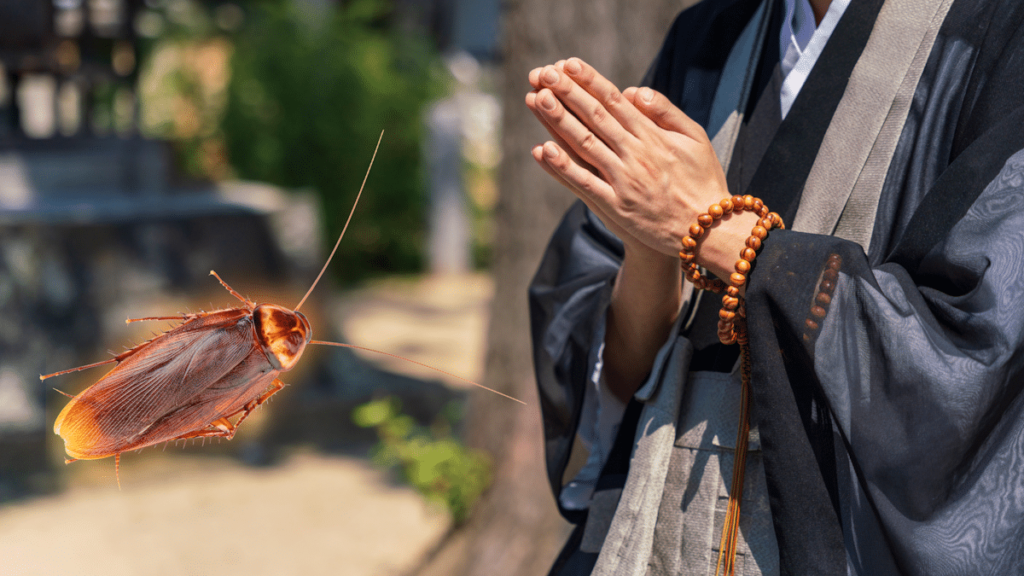
Others interpreted the ceremony as a meaningful reminder that human comfort and safety often come at the expense of other beings. At the same time, the criticism underscores broader ethical questions about how modern societies justify harm to animals and insects. Some Buddhist adherents argue that in contemporary life, animals and insects are frequently killed out of fear or convenience rather than immediate necessity.
From this perspective, rituals like Earth Corporation’s memorial service serve as a counterbalance to human-centred decision-making, encouraging reflection on whether all acts of killing are truly justified. By institutionalising such reflection, the company places ethical considerations alongside scientific efficiency, at least symbolically. Japanese broadcasters, including Asahi Broadcasting Television, have confirmed that the ceremony has been held continuously for decades, suggesting that it is not merely a publicity exercise but a sustained tradition.
Whether this practice genuinely influences corporate behaviour or research methods is more difficult to assess. Nonetheless, its longevity indicates that it holds meaning for those involved. In an era when corporations are increasingly scrutinised for their environmental and ethical impact, Earth Corporation’s ritual stands out as an unconventional expression of corporate conscience. Ultimately, the memorial service for insects challenges simple narratives about right and wrong, hypocrisy and sincerity.
It forces observers to confront uncomfortable realities about the costs of modern living and scientific progress. While many may continue to view the practice as strange or contradictory, others see it as a rare acknowledgment of the moral complexities inherent in controlling nature. In that sense, the ceremony’s significance lies less in its religious form and more in the questions it provokes about how societies value life, responsibility, and coexistence in an increasingly industrialised world.
Aw, this was a really nice post. In thought I want to put in writing like this moreover – taking time and precise effort to make an excellent article… however what can I say… I procrastinate alot and by no means seem to get something done.
I like what you guys are up too. Such clever work and reporting! Carry on the excellent works guys I have incorporated you guys to my blogroll. I think it’ll improve the value of my website 🙂
I am impressed with this website , really I am a fan.