
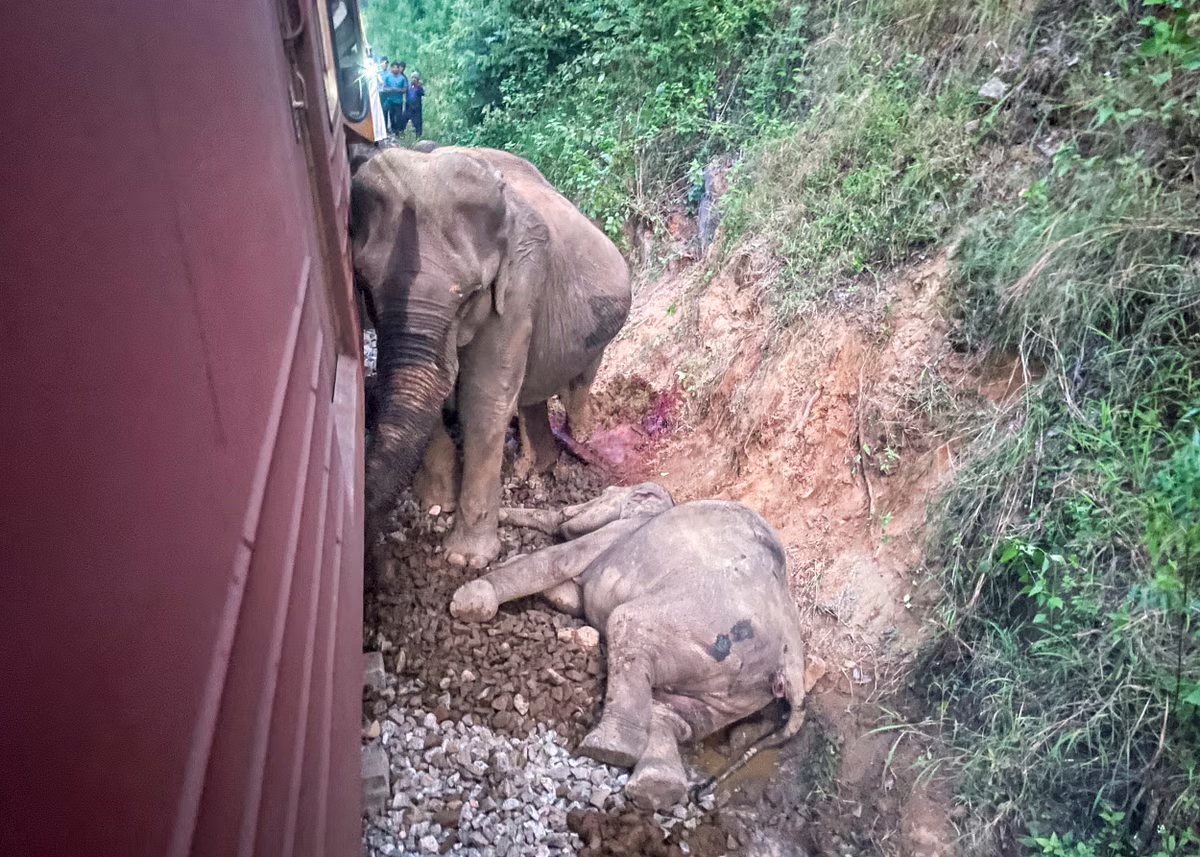
The tragic collision of a passenger train with a herd of elephants near Minneriya, Sri Lanka, has once again highlighted the escalating conflict between wildlife and human infrastructure.
The accident, which resulted Six Elephants Killed After Passenger Train Collides with Wild Herd, including four calves, has raised concerns over railway safety, habitat destruction, and the urgent need for conservation measures to protect Sri Lanka’s dwindling elephant population.
Elephants Killed After Passenger Train Collides With Herd
The fatal accident took place near Minneriya, about 200 kilometers from Colombo, an area renowned for its national park and thriving elephant population.
The train, traveling through this region, collided with the herd as they attempted to cross the railway tracks. The impact was so severe that the locomotive and several compartments derailed, though no human passengers were injured.
Eyewitnesses described the harrowing scene of injured and lifeless elephants scattered along the railway line. For locals and conservationists, it was a painful reminder of the ongoing struggles that wild Herd face due to human encroachment into their natural habitat.
Read : Group of Masked Teens Steals NYC Subway Train for Joyride in Queens: Watch
Hasini Sarathchandra, a spokesperson for the wildlife department, confirmed that an investigation had been launched to determine the circumstances of the collision and to explore measures to prevent similar incidents in the future.
The Rising Toll of Train-Elephant Collisions
Sri Lanka’s railway network, originally designed during the colonial era, now runs through many protected areas and elephant corridors, creating a dangerous overlap between human transportation and wildlife movement.
The increase in train-elephant collisions is an alarming trend, with government data revealing that nine elephants have already perished in train accidents in 2024. In comparison, 24 elephants were killed in similar incidents in 2023.
The Batticaloa-Colombo train, ‘Meenagaya’, collided with a herd of elephants at Gal Oya, killing six of them, according to Sri Lanka Railways.
— NoComment (@nocomment) February 20, 2025
The collision also caused the train to derail, disrupting services on the line.#NoComment pic.twitter.com/vFnPEAl0TU
Experts attribute the rise in such accidents to habitat fragmentation and degradation. As natural forests are cleared for agriculture and human settlements, elephants are forced to venture beyond their usual territories in search of food and water.
This puts them at higher risk of encountering railway tracks, roads, and farmlands. Many elephants also fall victim to poaching and retaliatory killings by farmers whose crops are damaged by wandering herds.
To address this issue, conservationists have suggested various measures, including the construction of underpasses or overpasses for wildlife, increased monitoring of railway tracks near national parks, and setting up early warning systems to alert train drivers when herd spotted near the tracks. However, implementation has been slow due to budgetary constraints and bureaucratic delays.
Sri Lanka’s Endangered Elephants and the Path Forward
Elephants hold a revered status in Sri Lanka, deeply embedded in the nation’s culture and religious traditions. Despite this, the country’s wild elephant population has suffered a significant decline over the past two centuries.
According to Sri Lanka’s first official elephant census in 2011, the population had dwindled to around 6,000, a stark contrast to the estimated 14,000 elephants that roamed the island in the 19th century.

The primary threats to Sri Lanka’s elephants include habitat loss, human-wildlife conflict, and illegal poaching. Conservationists have long called for stricter protections and better land-use planning to ensure the survival of this iconic species.
Establishing well-maintained elephant corridors connecting major national parks, enforcing stricter penalties for poachers, and promoting community-based conservation efforts are crucial steps in safeguarding the future of these gentle giants.
In the wake of the recent train tragedy, there is renewed urgency to find sustainable solutions to prevent further loss of elephant lives.
The Sri Lankan government, along with environmental organizations, must take immediate action to mitigate these conflicts. If timely and effective measures are not implemented, the country risks losing one of its most treasured wildlife species, further diminishing its rich biodiversity and natural heritage.
The tragic death of six elephants in Minneriya is a somber reminder of the fragile balance between human development and wildlife conservation. Only through collective effort and a commitment to coexistence can Sri Lanka hope to preserve its majestic herd for future generations.