
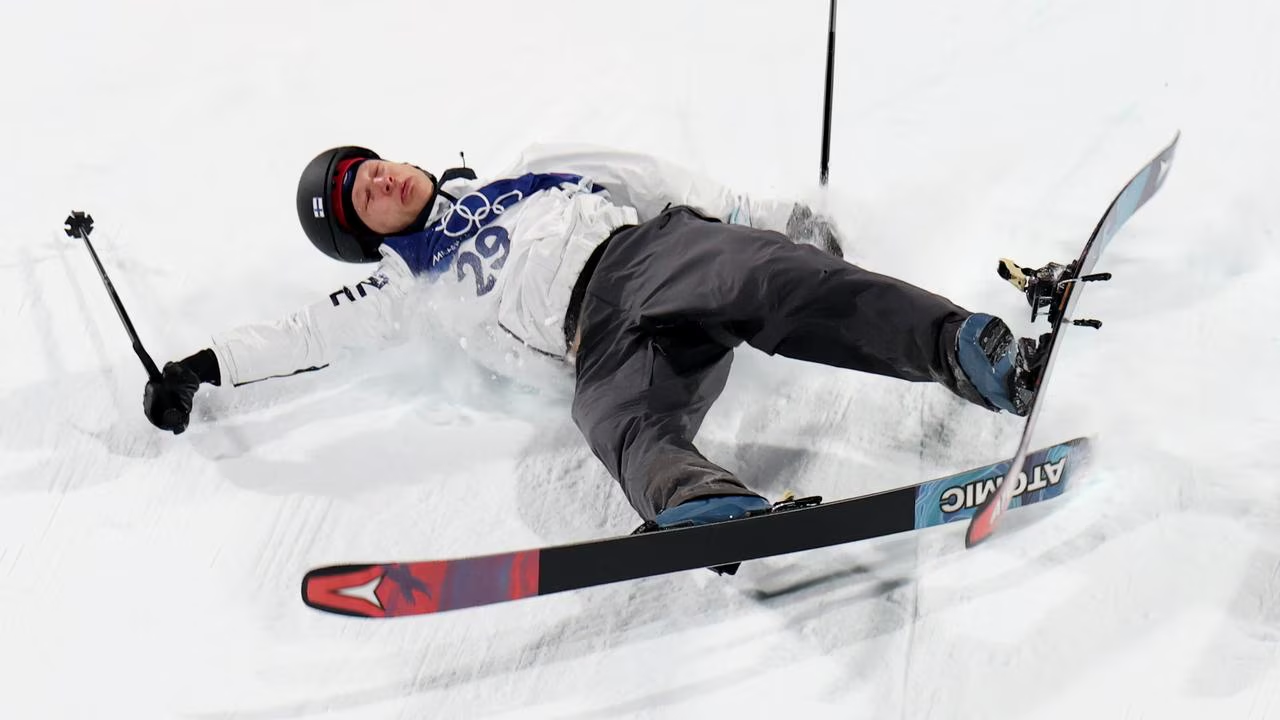
The 2026 Winter Olympics delivered another moment of high drama when Finnish freeski athlete Elias Lajunen suffered a frightening crash during the big air qualification round. Spectators watched in stunned silence as the young skier landed heavily on his back, lost consciousness, and slid down the slope before coming to a stop facedown on the icy surface. For several tense seconds, he remained motionless while medical staff rushed toward him, creating a scene that quickly spread across social media and triggered widespread concern among fans around the world.
Although the incident looked severe, Lajunen later regained awareness, sat up on his own, and signaled to the crowd with a thumbs up before being stretchered away for medical evaluation. The crash not only marked a dramatic moment in Olympic competition but also introduced many viewers to a rising Finnish athlete making his debut on the sport’s biggest stage.
At just 18 years old, Lajunen arrived at the Games carrying both promise and expectation, shaped by his athletic background and family legacy. His accident brought sudden attention to his career, his journey to elite competition, and the risks inherent in modern freestyle skiing. Understanding who he is requires looking beyond the viral footage to the broader story of a young competitor navigating early Olympic pressure while representing a proud winter sports nation.
A Young Talent with a Powerful Sporting Legacy
Elias Lajunen entered the Olympic arena as one of Finland’s most closely watched emerging freestyle skiers. His presence at the Games represented the culmination of years of training, competition, and steady progression through junior and international events. For many athletes, Olympic participation is the defining milestone of a career. For Lajunen, it arrived at an age when many competitors are still developing their skills and gaining experience at the highest level. His qualification alone reflected both technical ability and competitive potential.
Part of the attention surrounding him stems from his family background. Lajunen is the son of a celebrated Olympic champion, a connection that inevitably brings both recognition and expectation. Growing up in a household shaped by elite athletic achievement can influence everything from early exposure to sport to the mindset required for high-level competition. Such an environment often encourages discipline, resilience, and familiarity with the pressures that accompany international performance.
While each athlete must build an independent identity, family legacy can shape the narrative that follows them into major events. Finland has long maintained a strong tradition in winter sports, producing accomplished athletes across disciplines ranging from Nordic skiing to biathlon. For young competitors, representing the country carries a sense of national pride rooted in decades of sporting achievement.
Read : Skier Dies After Fall on Dropout 2 Expert Run at California’s Mammoth Mountain
Lajunen’s emergence in freestyle skiing reflects both the evolution of winter sport and Finland’s ongoing investment in new generations of talent. Freeski disciplines such as slopestyle and big air demand a unique combination of technical precision, creativity, and aerial control, qualities that have become increasingly central to modern Olympic competition.
😱 Finnish Skier Crashes in Olympic Big Air
— NEXTA (@nexta_tv) February 16, 2026
The crash of Elias Lajunen occurred on February 15, 2026, during the men’s big air qualifiers at the Milan-Cortina Winter Olympics.
As of February 16, Lajunen was reported conscious and alert after the fall. pic.twitter.com/paCbTy75ES
His Olympic debut also came after earlier participation in slopestyle qualification, where he placed 18th and did not advance. While not a podium-contending result, it demonstrated his ability to compete among some of the world’s best riders. For young athletes, such experiences often serve as essential learning opportunities rather than final measures of success. Exposure to Olympic-level courses, judging standards, and competitive intensity can shape performance for years to come.
By the time he entered the big air qualification round, Lajunen represented more than just a newcomer. He symbolized Finland’s future presence in freestyle skiing and the continuation of a sporting lineage defined by determination and high achievement. That context made the crash all the more striking, transforming a routine competition run into a moment of global attention.
The Crash That Shocked Olympic Viewers
The incident occurred during a big air qualification run, a format designed to reward athletes who perform highly technical aerial tricks after launching from a steep ramp. Big air skiing involves extraordinary height, speed, and rotational complexity. Competitors must execute precise movements while maintaining control through takeoff, flight, and landing. Even minor miscalculations in timing or body positioning can result in severe falls, which is why the discipline is widely recognized as one of the most visually spectacular yet physically demanding events in winter sport.
During his run, Lajunen lost control during landing and struck the slope forcefully on his back. The impact caused him to lose consciousness, and he slid down the course without movement before coming to rest facedown. The stillness that followed intensified the alarm among spectators and officials. Medical teams responded immediately, moving quickly to assess his condition on the slope.
Read : 61-Year-Old Female Skier Dies at Park City Mountain Resort
Moments later, relief spread through the crowd when Lajunen regained awareness and was able to sit upright under his own power. His gesture of reassurance toward the audience became one of the defining images of the incident. Even so, medical staff took precautionary measures, transporting him from the venue on a stretcher for further examination. Reports later indicated he sustained injury to the right side of his face but showed no major internal damage. He remained under observation in hospital overnight as a safety measure.
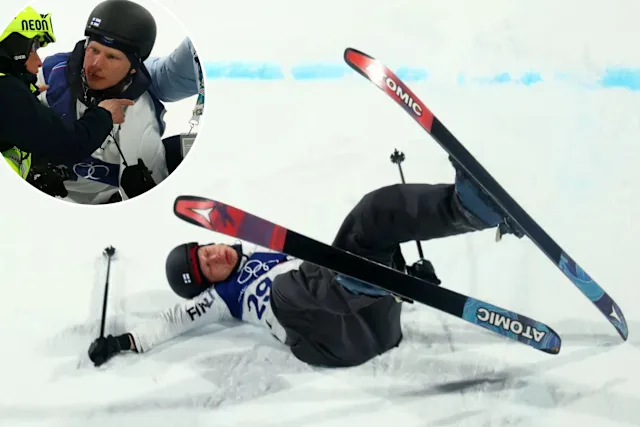
The visual severity of the crash contributed to its rapid circulation online. Viewers who watched the footage repeatedly expressed disbelief that he avoided more serious harm. The combination of high speed, apparent loss of consciousness, and prolonged stillness created an unsettling spectacle. In modern Olympic coverage, dramatic moments can reach global audiences almost instantly, amplifying emotional responses and generating intense public concern.
The crash also had direct competitive consequences. Because he did not participate in the third qualifying run, Lajunen was unable to continue in the big air event or pursue a medal opportunity. For an athlete making his Olympic debut, such an outcome represents a significant disappointment. Qualification rounds are critical stages where every attempt contributes to advancement, and missing a run effectively removes any chance of progression.
Beyond personal impact, the incident highlighted the inherent risks of freestyle skiing. Big air competitions reward innovation and technical progression, pushing athletes to attempt increasingly complex maneuvers. With higher difficulty comes greater danger, and even experienced competitors face unpredictable outcomes. While safety measures and medical response systems are extensive, the sport remains physically unforgiving when mistakes occur.
What the Incident Means for His Olympic Journey and Finland’s Performance
Lajunen’s crash unfolded within a broader competitive context for Finland’s Olympic team. In the big air qualification, multiple Finnish skiers participated but did not advance to the final round. The absence of Finnish finalists underscored the challenges faced by the national team in freestyle events during these Games. Without representation in the final, medal prospects in big air disappeared entirely.
At the time of the competition, Finland’s overall medal tally remained modest, consisting exclusively of bronze medals across several disciplines. For a country with a proud winter sports history, each Olympic cycle brings expectations of strong performances. Medal counts are often viewed as reflections of national sporting depth, preparation, and development programs. When results fall short of expectations, attention naturally shifts toward emerging athletes who may shape future success.
Read : Skier Triggers Avalanche Outside Lake Louise Ski Area Boundary in Banff National Park
In that sense, Lajunen’s Olympic debut carries significance beyond individual performance. Young competitors often represent long-term investment in talent pipelines designed to sustain national competitiveness. His participation signals Finland’s commitment to maintaining a presence in freestyle skiing, even as the discipline evolves rapidly on the global stage. Experiences gained during early Olympic appearances frequently influence training approaches, technical development, and psychological readiness for subsequent competitions.
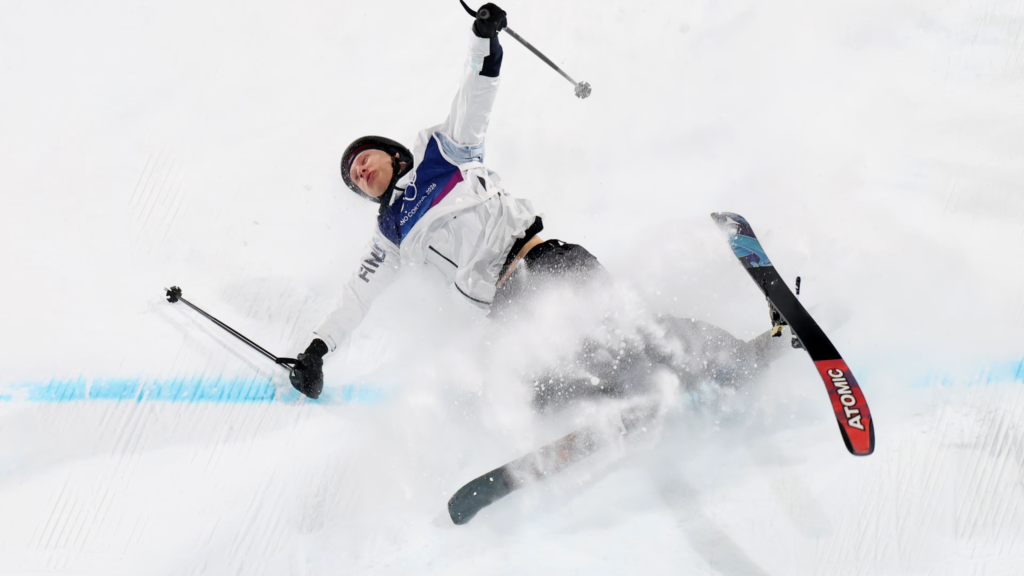
For Lajunen personally, the incident may become a defining moment in his athletic narrative. Elite sport often involves overcoming setbacks, including injury, disappointment, and public scrutiny. How athletes respond to such challenges can shape both career trajectory and public perception. Recovering from a highly visible crash requires not only physical healing but also mental resilience. Returning to competition after a traumatic fall can demand renewed confidence in one’s ability to perform complex aerial maneuvers safely.
The reaction of spectators, fellow competitors, and national supporters also forms part of the broader story. Applause as he was taken from the slope reflected a collective sense of relief and admiration for his courage. Such moments reinforce the human dimension of sport, where performance outcomes coexist with concern for athlete welfare.
Looking ahead, Lajunen remains an athlete at the beginning of his career rather than its peak. Olympic participation at 18 offers valuable exposure that many competitors do not experience until later. The lessons learned from both competition and adversity may contribute to his development in future international events. For Finland, his presence among the next generation of skiers suggests continued engagement with the evolving landscape of freestyle competition.
As the Games progressed, attention turned toward other events and medal contenders, yet the memory of the crash lingered as one of the competition’s most dramatic moments. It served as a reminder of the physical demands of elite freestyle skiing and the unpredictability that accompanies high-risk performance. For Elias Lajunen, the incident marked an unforgettable chapter in his Olympic debut, placing his name in global headlines while highlighting both the promise and peril that define the pursuit of sporting excellence.