
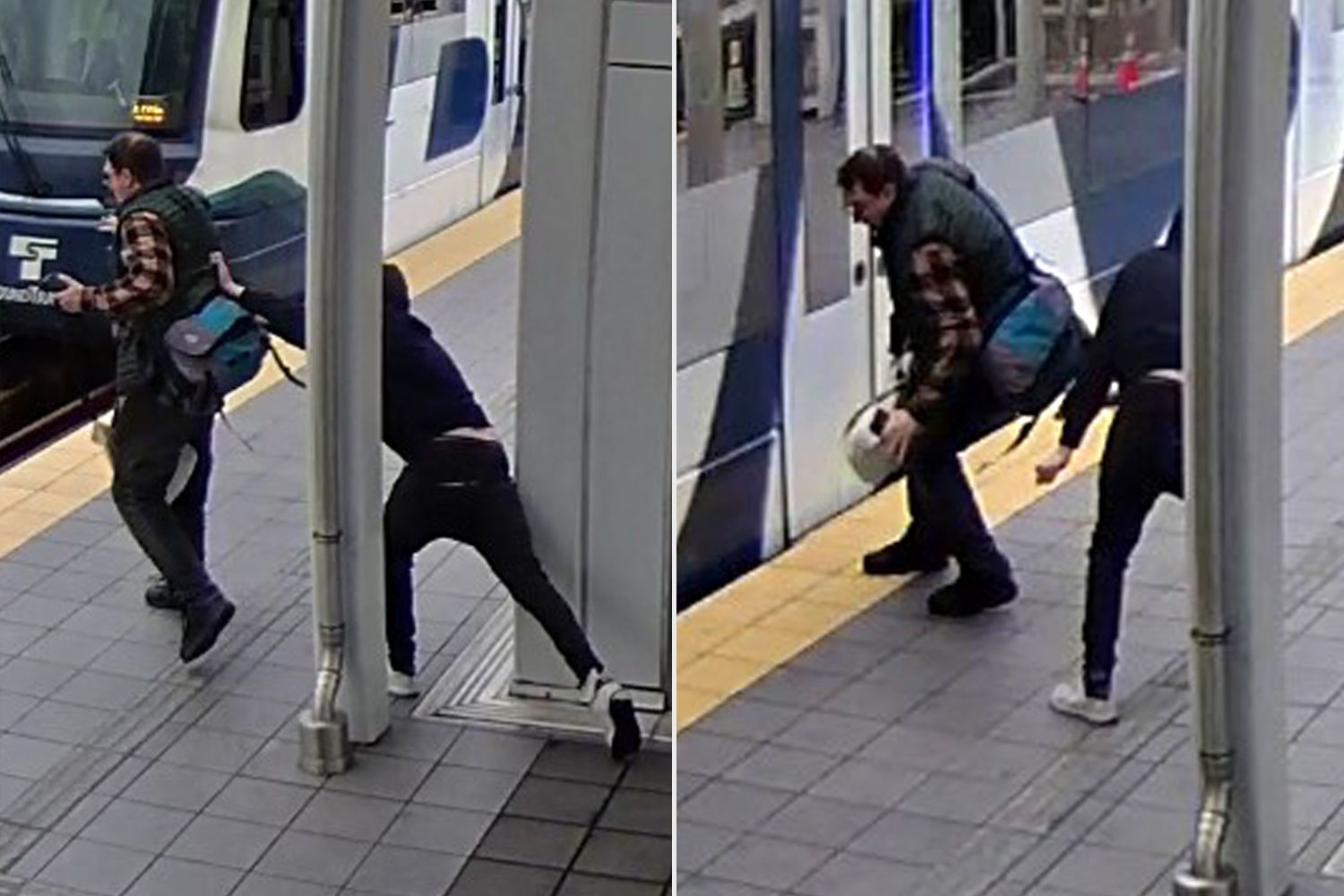
A disturbing incident at a busy transit hub in Seattle has drawn widespread attention after a video surfaced showing a man allegedly attempting to push a stranger in front of an approaching train. The footage, recorded on March 19 at Northgate Station, captures a moment that could have easily turned fatal. The victim narrowly avoided falling onto the tracks just seconds before the train arrived, escaping what authorities believe was a calculated attempt to cause serious harm.
The accused, 26-year-old Elisio Melendez, has since been arrested and charged with attempted murder in the second degree. The case has reignited discussions around public safety in transit systems, the role of mental health in criminal behavior, and the growing demand for preventive infrastructure measures.
Incident Captured on Camera and Swift Police Action
The viral footage shows a tense sequence unfolding on the station platform, where Elisio Melendez allegedly approaches an unsuspecting passenger from behind. As the train nears the platform, he appears to shove the individual toward the tracks. The victim, however, manages to regain balance and move away just in time, avoiding a potentially fatal collision. The timing of the incident has become a focal point in the investigation, with prosecutors stating that the act appeared deliberate and coordinated with the arrival of the train to maximize harm.
Following the incident, Melendez fled the scene, prompting an immediate investigation by local authorities. Surveillance footage from the station played a crucial role in identifying the suspect. Law enforcement officials tracked him down five days later, on March 24, at a nearby residential treatment facility. His arrest brought temporary relief to a shaken public, though questions remain about how such an incident could occur in a monitored public space.
In court filings, prosecutors emphasized the severity of the act, arguing that the timing and nature of the push indicated clear intent. As a result, they have requested a bond of $750,000, citing concerns about public safety and the possibility that the accused might fail to appear in court. The case is currently being processed through the judicial system, with further hearings expected to determine the next steps.
Defense Claims and Mental Health History
After his arrest, Melendez denied the allegations against him in a statement that has drawn both confusion and criticism. He suggested that someone else might have been responsible, even implying that another individual could have been wearing his clothes at the time of the incident. The remark, which included a reference to a nonexistent twin, has raised questions about his mental state and credibility.
Read : Who Is Matthew Aaron VanDyke, American Arrested In India Over Drone Warfare Training ?
Court records indicate that Melendez has a documented history of mental health issues, including a diagnosis of schizophrenia. His past interactions with the legal system further complicate the situation. In a 2019 domestic violence case, he was found incompetent to stand trial and subsequently avoided long-term incarceration. Instead, he underwent a state-ordered civil commitment, receiving treatment rather than serving a conventional sentence.
NEW: Man who was previously arrested for stabbing his own sister, charged with attempted murder after he shoved a random person toward an oncoming train.
— Collin Rugg (@CollinRugg) April 1, 2026
Elisio Melendez, 27, was committed to Western State Hospital following the stabbing of his sister in 2019.
He was later… pic.twitter.com/1IKd2nQHA0
This background has become a central aspect of the ongoing case, as it may influence both legal arguments and public perception. While mental health conditions can play a role in criminal behavior, they also present challenges for the justice system in determining appropriate consequences. The balance between treatment and accountability remains a contentious issue, particularly in cases involving violent or potentially lethal actions.
Prosecutors are expected to address this history as they build their case, potentially arguing that prior interventions were insufficient to prevent further incidents. Meanwhile, the defense may use the same information to argue for a different legal approach, possibly focusing on the need for continued psychiatric care rather than traditional punishment. The outcome could set a precedent for how similar cases are handled in the future.
Public Reaction and Calls for Safety Measures
The release of the video has triggered a strong reaction across social media platforms, with many expressing shock and concern over the apparent randomness of the attack. The incident has reinforced fears about personal safety in public spaces, particularly in transit systems where large numbers of people gather in close proximity to potential hazards.

Several users have pointed to the accused’s prior record and mental health history as reasons for stricter monitoring and intervention. Others have criticized what they perceive as systemic failures in addressing repeat offenders, arguing that earlier action might have prevented the incident altogether. The debate has also highlighted differing views on how to balance compassion for individuals with mental health conditions against the need to protect the public.
In addition to calls for stricter enforcement, many have suggested practical measures to improve safety at train stations. One commonly proposed solution is the installation of physical barriers or guardrails along platforms, similar to those used in some international transit systems. These barriers can prevent passengers from accidentally or intentionally entering the track area, significantly reducing the risk of such incidents.
Another suggestion involves the use of platform screen doors that align with train doors, creating a controlled entry and exit point. While these systems require substantial investment and infrastructure changes, they have proven effective in enhancing safety and efficiency in various cities around the world. Increased surveillance, visible security personnel, and public awareness campaigns have also been recommended as part of a broader strategy to deter similar acts.
The incident at Northgate Station serves as a reminder of the vulnerabilities that exist in everyday environments. While such events are relatively rare, their impact is profound, prompting both immediate concern and longer-term discussions about prevention. As the legal process continues, the focus is likely to remain on ensuring accountability while exploring ways to reduce the likelihood of similar occurrences in the future.