
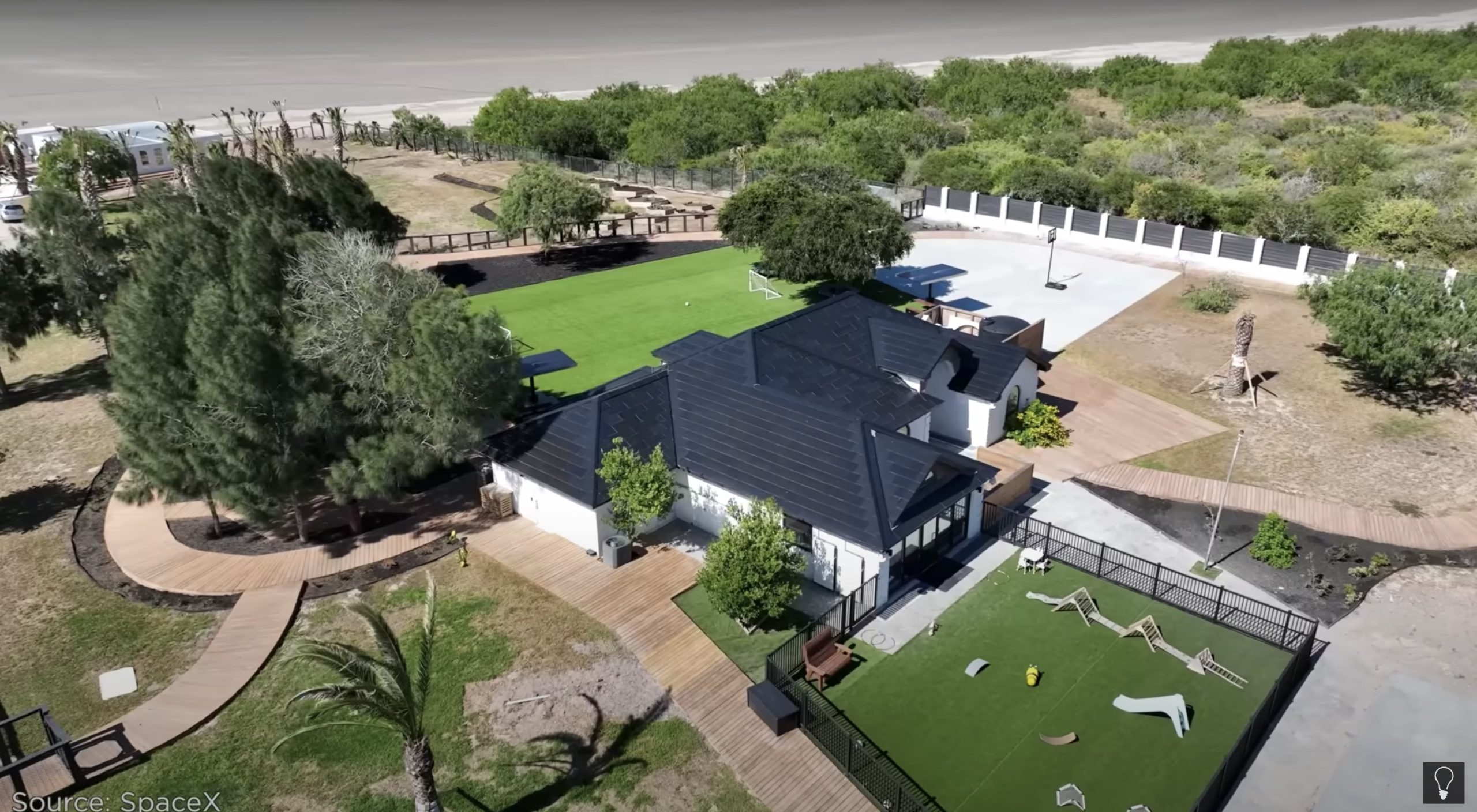
A new chapter in innovative education is set to unfold as Elon Musk announces the opening of Ad Astra, a Montessori-inspired school in Texas.
With its project-based, STEM-focused curriculum, this educational venture aims to nurture young minds with creativity, curiosity, and technological aptitude.
A Visionary Educational Approach
Ad Astra, meaning “to the stars” in Latin, is designed for children aged three to nine. Located just outside Bastrop, Texas, approximately 30 miles from Austin, the school embodies Musk’s vision of hands-on, project-based learning.
The curriculum incorporates science, technology, engineering, and mathematics (STEM), emphasizing creativity and practical problem-solving skills.
Housed on a sprawling 40-acre property, the school operates within a remodeled 4,000-square-foot building. This unique setting reflects Musk’s commitment to providing an environment conducive to innovation and exploration. Despite its modest beginnings, the school is poised to become a groundbreaking institution in early education.
Read : California Family Blames Elon Musk for Son’s Death Because Tesla Was in Autopilot Mode While Crashed
According to filings with Texas state authorities, Ad Astra received its permit to operate in September, allowing for an initial capacity of 21 students. The school’s website indicates plans to open in the fall of 2024, with applications currently being accepted for the 2024-25 academic year.
The Educational Ecosystem Around Ad Astra
Ad Astra is not Musk’s first foray into education. His broader educational initiatives include substantial financial contributions to academic institutions.
In the past year, Musk donated $100 million to establish a new university in Austin and an additional $137 million to create a primary and secondary school focused on STEM disciplines.
Elon Musk teaching in his school, Ad Astra.
— DogeDesigner (@cb_doge) August 2, 2024
pic.twitter.com/Hc0ahP5IoE
These efforts are consistent with Musk’s overarching goal of advancing human potential through education. Ad Astra, in particular, appears to cater to the children of Musk’s employees and the broader SpaceX community, given its proximity to a SpaceX facility. The school represents an extension of Musk’s philosophy of fostering innovation from an early age.
Ad Astra’s curriculum aligns with the Montessori method, which emphasizes child-led, experiential learning. This approach allows students to explore subjects at their own pace, nurturing critical thinking and independence.
The incorporation of STEM into this model aims to prepare students for a future where technological literacy and problem-solving skills will be paramount.
Employment Opportunities and Future Aspirations
In preparation for its opening, Ad Astra is currently recruiting educators who share its vision. Two job openings are available: one for a primary assistant teacher for children aged three to six and another for a STEM assistant teacher for students aged six to nine. These roles are integral to implementing the school’s innovative approach to education.
The school’s establishment is also symbolic of a larger trend toward integrating technology and traditional education. By blending hands-on projects with STEM, Ad Astra seeks to inspire a generation of learners who are not only knowledgeable but also adaptable and forward-thinking.
Ad Astra’s modest scale at launch—with a capacity for just 21 students—suggests a focus on quality and individual attention. However, given Musk’s history of scaling successful ventures, the school could expand its reach and influence in the coming years.

As the fall opening approaches, anticipation builds around the potential impact of Ad Astra on the educational landscape. The school represents a unique experiment in combining Montessori principles with Musk’s forward-looking vision, and its progress will be closely watched by educators, parents, and innovators alike.
The launch of Ad Astra also underscores Musk’s broader commitment to shaping the future through education. By creating opportunities for young learners to engage deeply with STEM and foster their natural curiosity, the school aims to develop critical thinkers and innovators who could contribute to solving the challenges of tomorrow.
As the world increasingly shifts towards technology-driven solutions, initiatives like Ad Astra play a vital role in preparing the next generation to thrive in an ever-evolving global landscape.