
Emma Fogarty’s life defies nearly every medical expectation once placed upon her. Born in 1984 with the most severe form of Epidermolysis Bullosa (EB), a rare and devastating genetic condition often referred to as “butterfly skin,” she was given just days to live. Doctors warned her parents that her fragile skin, which tears as easily as paper or a butterfly’s wing, would not withstand even the basic stresses of infancy. More than four decades later, Emma is not only alive but has become one of the longest-living people in the world with severe EB, an outcome few clinicians would have believed possible at her birth.
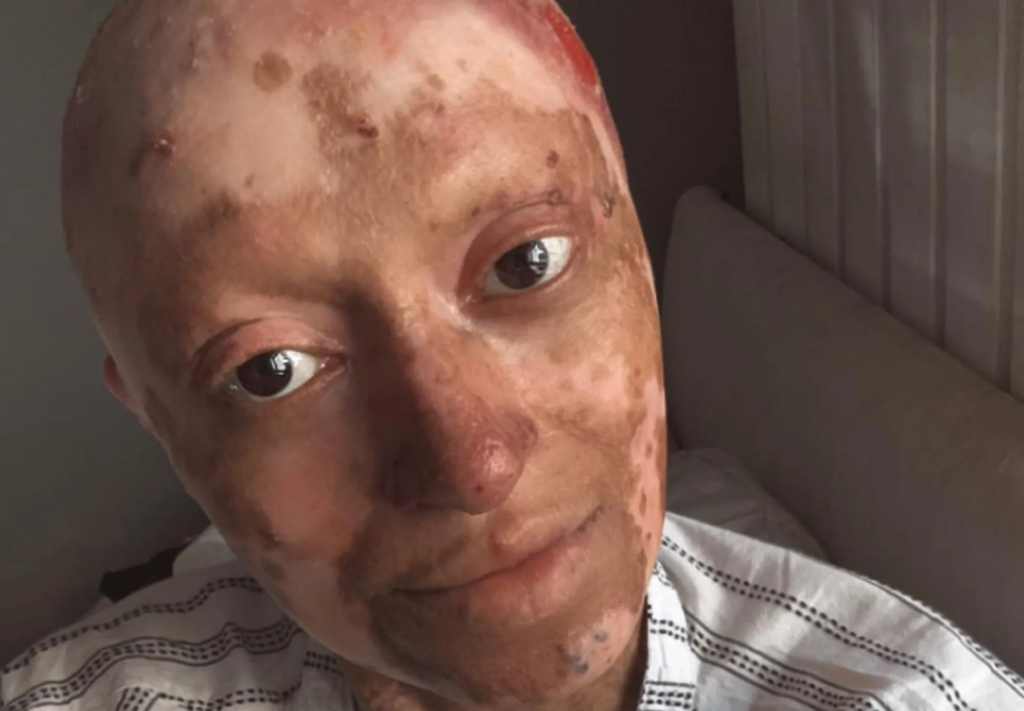
EB is extraordinarily rare, affecting approximately one in every 50,000 people globally. In its most severe forms, the condition causes constant open wounds, chronic infections, extreme pain, and progressive physical disability. For Emma, at least 80 percent of her body is perpetually covered in wounds, wrapped carefully in layers of protective bandages. Everyday contact with clothing, bedding, or a wheelchair can cause fresh injuries. The pain, which she describes as comparable to third-degree burns, is relentless, present for 90 to 99 percent of her waking life.
Yet those who meet Emma are often struck by what is absent rather than what is visible. Despite the physical toll, she speaks with warmth, humor, and candor, laughing with friends, savoring small rituals, and insisting on a life that extends beyond survival. Each Christmas Day, she remains at home with her parents and sister, watching Home Alone and enjoying a Bailey’s latte, deliberately taking a rare break from the agonizing bandage changes that dominate the rest of her year. These moments, ordinary to most, represent defiance in Emma’s world, a quiet insistence on joy in the face of constant pain.
Living Inside a Body That Never Heals
From the moment she was born, Emma’s body has existed in a state of near-continuous injury. Epidermolysis Bullosa is caused by genetic faults that prevent the skin’s layers from anchoring properly. Without the proteins needed to hold tissue together, even gentle friction can cause skin to blister, tear, or slough off entirely. In severe cases like Emma’s, the damage extends far beyond the surface, affecting internal tissues, the digestive tract, and even bones.
Throughout childhood, Emma endured experiences that few could imagine. Simple acts such as wearing tights could result in fabric adhering to raw wounds, sealing painfully into damaged skin. School brought not only physical suffering but emotional cruelty, as bullies targeted her appearance and limitations. Despite these hardships, she pursued education with determination, eventually completing college and securing a job at a bank in Dublin, achievements that stood in stark contrast to the dire predictions made when she was an infant.
Her condition, however, continued to progress. EB scarring constricted her throat over time, making swallowing increasingly difficult and necessitating repeated surgeries to stretch scar tissue. Even then, her diet remained limited to soft foods, as raw vegetables or solid textures could pose serious risks. Bone fragility, another consequence of EB, led to fractures from routine activity. A break in her foot marked the beginning of a physical decline that eventually left her dependent on a wheelchair.
Perhaps the most devastating blow came with cancer, a known risk for EB patients whose skin is constantly wounded and poorly healed, creating fertile ground for malignant mutations. In 2019, Emma underwent the amputation of her left leg as part of cancer treatment. The loss plunged her into a deep depression, forcing her to confront not only further physical limitation but also the emotional weight of survival itself. For many with EB, cancer claims lives far earlier; Emma had already outlived countless peers by that point, including close friends lost to EB-related illness in their twenties.
Read : What is delusional love disorder? 20-year-old Chinese man says ‘all girls in school like me’,
Despite this unrelenting progression, Emma has consistently fought for quality of life. She has lived independently, navigated adulthood with a rare disease, and advocated for better awareness, funding, and medical support for EB patients worldwide. Her experience underscores both the fragility of the human body and the resilience required to inhabit one that never heals.
An Unlikely Friendship That Changed Everything
One of the most unexpected chapters in Emma Fogarty’s life began in 2010 at a charity event, when she found herself seated beside actor Colin Farrell. What could have been a brief celebrity encounter instead became a profound friendship that would shape both of their lives. Farrell greeted her with a casual Dublin “Howyah” and, moments later, demonstrated a quiet but fierce protectiveness when he noticed her struggling with food that her scarred throat could not tolerate.
That evening, Farrell’s willingness to advocate for her, even in small ways, left a lasting impression. Emma later wrote that his look toward a waiter, demanding plain mashed potatoes without raw onions, conveyed a seriousness that made others listen. The interaction planted the seed of a bond that deepened over time, transcending distance, fame, and circumstance.
The two discovered an immediate sense of familiarity, as though they had known each other for decades. Their correspondence grew regular and personal, filled with updates about daily life, health struggles, hopes, and fears. Emma has emphasized that their friendship is built on mutual trust rather than celebrity or charity. Farrell, she notes, treats her not as an object of pity but as a confidante and equal, someone with whom he can discuss deeply personal matters.
As Emma faced repeated health crises, including sepsis and pneumonia, Farrell remained a steady presence from afar, visiting her family home in County Laois when he returned to Ireland and sitting down for tea like any other friend. His understanding of disability was shaped, in part, by his own life as a father to a son with Angelman syndrome, a rare genetic disorder that causes developmental delays and seizures. That shared familiarity with genetic illness created an unspoken empathy between their families.
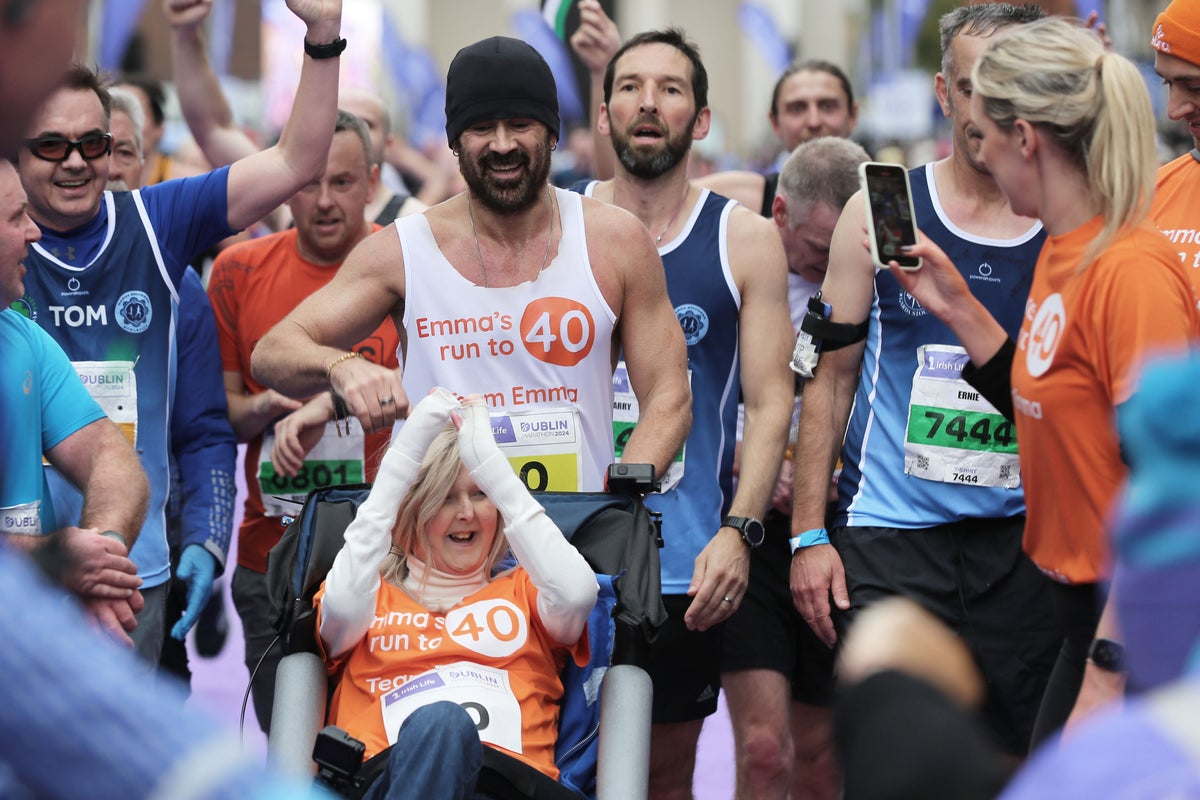
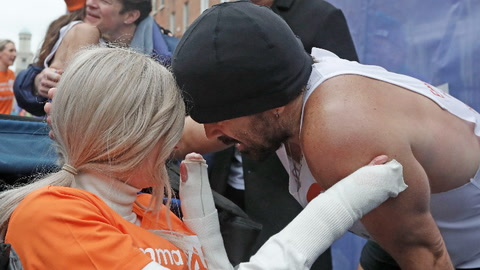
Their friendship eventually evolved into public advocacy. Farrell became a patron of Debra Ireland, a charity supporting those with EB, while Emma served as a spokesperson. In 2024, Farrell proposed running the Dublin Marathon to raise funds and awareness, an idea that culminated in a powerful image seen around the world. During the final four kilometers of the race, Farrell pushed Emma in her wheelchair, one kilometer representing each decade she had survived with EB.
The moment resonated globally, not as a spectacle but as a symbol of solidarity. Despite the physical toll the race took on Emma’s already fragile skin, resulting in new wounds from jostling and friction, she described the experience as deeply meaningful. Together, they raised nearly one million euros for EB research and support, transforming personal friendship into collective action.
Turning Pain Into Purpose Through Storytelling
The aftermath of the marathon marked another turning point in Emma Fogarty’s life. The attention generated by the race led to a book deal, offering her the opportunity to tell her story in her own words. Her memoir, Being Emma, is not merely an account of suffering but a testament to endurance, friendship, and the insistence on meaning even within severe limitation.
Read : 30-Year-Old Man Arrested at Trump Tower After Reports of a Disorderly
In the book, Emma chronicles a lifetime defined by pain but not consumed by it. She writes candidly about constant wounds, surgeries, and the psychological toll of knowing that sleep is often the only respite from agony. She also explores the unique community formed among those with EB, a network bound by shared experience and frequent loss. Friends met through hospitals and support groups often die young, leaving survivors to grieve repeatedly while continuing their own battles.
Emma’s writing does not shy away from anger or sorrow, but it consistently returns to hope. She reflects on the role her family has played in sustaining her, from parents who were told she would not survive infancy to a sister who has shared every stage of her journey. She also credits friendships, particularly with Farrell, for pulling her back from despair during her darkest moments, especially after her amputation.
Beyond personal narrative, Being Emma serves a broader mission. Emma is outspoken about the need for improved funding, research, and healthcare infrastructure for EB patients. While awareness has improved since her childhood, she stresses that there is still no cure and that many families lack adequate support. Treatments remain focused on wound care and symptom management, leaving patients vulnerable to infection, cancer, and early death.
Emma’s longevity, she believes, is not accidental. She attributes it to determination, advocacy, and an unwavering refusal to surrender to predictions. Her message to other EB families and to readers facing different forms of adversity is grounded in realism rather than sentimentality. She does not claim that resilience eliminates pain, only that it makes space for purpose alongside it.
At 41, an age she was never expected to reach, Emma Fogarty stands as living evidence of what can happen when medical limits are met with human resolve. Her life challenges assumptions about disability, endurance, and what it means to thrive. Through her memoir and public advocacy, she has transformed a body that has punished her since birth into a voice that educates, inspires, and demands change.
Bet722 is alright. Tried my luck on a few things and it was smooth enough. Deposits & withdrawals were quick and painless, which is always a plus. Give it a shot at bet722.