
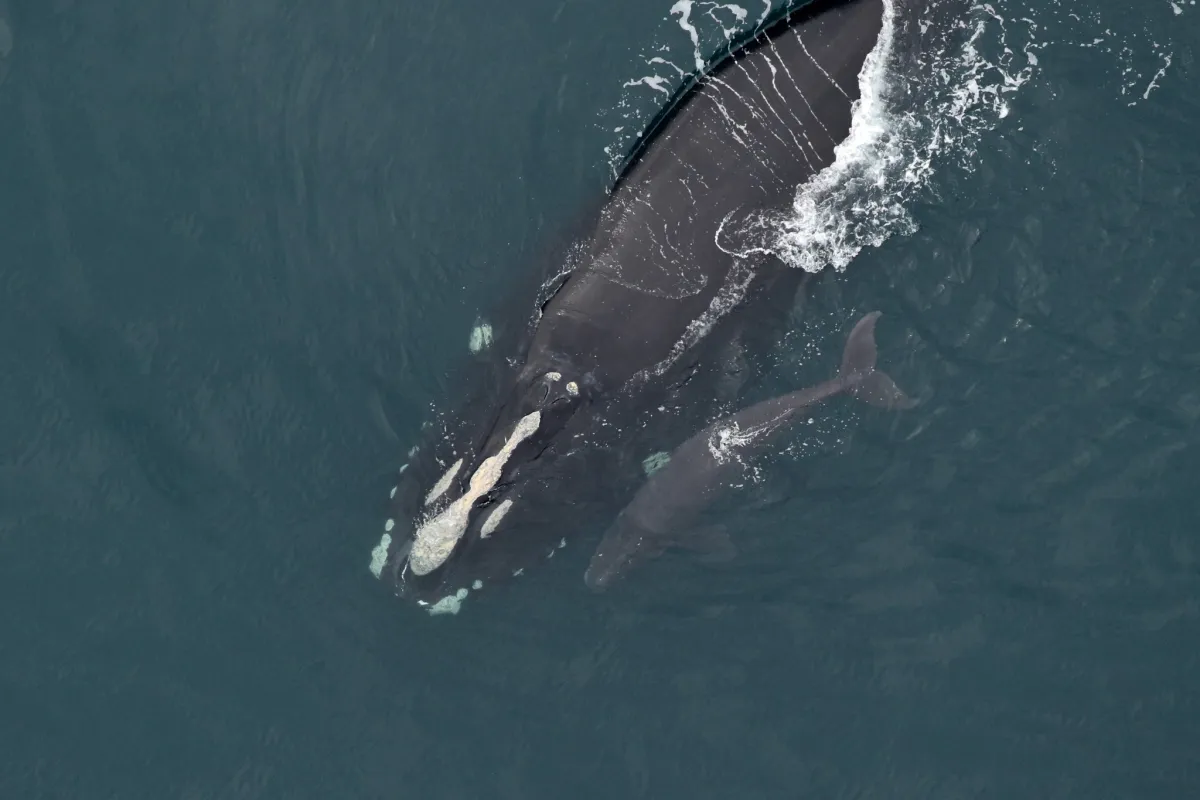
A peaceful day off the coast of Stanwell Park, New South Wales, turned into a nightmare when Endangered Whale Calf Struck by Speedboat, an event now caught in heartbreaking detail on drone footage. The calf, swimming beside its mother just below the water’s surface, became the unintended target of a high-speed vessel. The video, filmed by local photographer Michael Hatte, has since gone viral, sparking public outrage and reigniting conversations about marine conservation, especially during whale migration season.
Michael Hatte was documenting the serene movements of a southern right whale and her calf when he noticed a boat approaching the pair at considerable speed. Though he had momentarily stopped filming, Hatte sensed something was about to go wrong.
He quickly resumed recording, capturing a shocking three-second clip that showed the boat slicing through the water directly above the whales. The footage reveals the calf barely escaping a more serious injury by instinctively shifting its position, while the force of the collision knocked all three passengers on the boat off balance.
“It was absolutely horrific,” Michael Hatte later told Yahoo News. “I’m not an emotional guy, but I was absolutely gutted after the incident.” He shared his feelings of helplessness, knowing he could do nothing to stop what was unfolding before his eyes. His clip has since reached millions, drawing attention to the vulnerability of these majestic creatures and the pressing need for stricter boating regulations in whale migration zones.
Endangered Whale Calf Struck by Speedboat
Southern right whales are a critically endangered species that were nearly driven to extinction during the era of commercial whaling. Their slow recovery has been closely monitored by scientists, conservationists, and government agencies. Each sighting of a mother and calf pair is an encouraging sign, particularly in New South Wales waters where sightings are increasingly rare.
The whale calf involved in the recent incident was part of the only confirmed mother-calf pair spotted in NSW this season. The fact that this lone pair came so close to disaster has intensified concerns among marine experts and environmental authorities. According to a spokesperson for the NSW National Parks and Wildlife Service, “Boaties must keep an active lookout to avoid this happening again during the whale season.” The warning underscores the fragile state of the southern right whale population and the growing danger posed by recreational boating.
The collision, though seemingly minor in terms of visible injury, could have resulted in fatal consequences. Whales, especially calves, are susceptible to internal injuries and stress following boat strikes. The calf’s dive to the deeper water post-impact was not only a flight response but possibly a reaction to injury or disorientation. The psychological effects on both the calf and its mother remain unknown, but such encounters can lead to behavioral changes that affect their migration, feeding, and social interactions.
Unseen Beneath the Surface: The Challenge of Detection
One of the key reasons this tragic event occurred lies in the biology and behavior of southern right whales. Unlike humpbacks, southern rights lack dorsal fins, making them harder to detect when swimming near the surface. Whale scientist Dr. Barry McGovern from the Pacific Whales Foundation emphasized this in his assessment of the footage.
“They can be really difficult to see,” he noted, “and if you’re travelling at speed it can be very easy to miss them.” The flat backs and low profiles of these whales make them nearly invisible unless boaters are actively scanning the waters.
Further complicating matters is the timing of their migratory patterns. Between May and November, whales are commonly found along Australia’s eastern seaboard, resting and nursing in shallow coastal waters. These months coincide with warmer weather and increased human activity on the water, creating a perfect storm of risk. As more boats enter these waters for recreation, the chance of accidental strikes grows, especially when boaters are unaware or inattentive.
Dr. Vanessa Pirotta, a marine mammal researcher, labeled the incident “tragic,” reiterating the need for boater education. “We need to be vigilant,” she said. “This was a lucky escape, but not all whales are so fortunate.” Her sentiments reflect the growing body of scientific research urging for improved monitoring systems, stricter speed restrictions, and mandatory awareness campaigns for recreational boaters during migration season.
The Call for Stricter Marine Regulations
While the video sparked an emotional response among viewers, it also reignited a debate among marine policy makers and conservationists about existing maritime laws. Currently, boaters in New South Wales are advised to keep a distance of at least 100 meters from whales and travel at slow speeds in designated whale zones. However, as seen in this recent incident, guidelines without enforcement or awareness can be insufficient.
Experts argue for a multi-pronged approach: better signage at marinas, public education campaigns during whale season, and advanced whale detection technologies for boats. Some have proposed real-time alerts and tracking systems that can be integrated into boating GPS to warn skippers when whales are nearby. These systems have been piloted in other parts of the world, with promising results in reducing collisions.

Michael Hatte’s video has also prompted calls for more immediate action from state authorities. Wildlife conservation groups are urging the NSW government to revisit current policies and consider enacting stricter penalties for reckless boating. “This is not just about one calf,” an activist commented online. “It’s about protecting an entire species already struggling to survive.”
In the wake of the video’s viral spread, community engagement has surged. Petitions are circulating online calling for a seasonal speed limit in known whale habitats. Educational workshops and school programs are also being organized by marine nonprofits to inform the public, especially younger generations, about the importance of marine life and how to be responsible on the water.
A Teachable Moment for All
While the collision was a near-tragedy, it has provided an undeniable opportunity for public awareness and dialogue. Social media platforms have become conduits for sharing marine safety tips, facts about southern right whales, and firsthand experiences from other boaters who’ve encountered whales. The hope is that this moment will not fade into the usual cycle of viral content but will leave a lasting imprint on how Australians—and the world—treat their shared marine environment.
Photographer Michael Hatte, though devastated by the event, has become an unexpected spokesperson for whale safety. He continues to use his platform to advocate for marine conservation, urging others to “keep their eyes open and respect these animals.” His footage, while painful to watch, is now a valuable piece of documentation that may well help prevent future accidents.
Ultimately, the story of this whale calf is not just one of survival but of resilience and warning. The video has shed light on the critical need for harmonious coexistence between humans and marine life. As boaters take to the sea in the coming months, the message is clear: vigilance, responsibility, and respect are not optional—they are necessary lifelines for endangered species navigating a world increasingly shaped by human activity.