
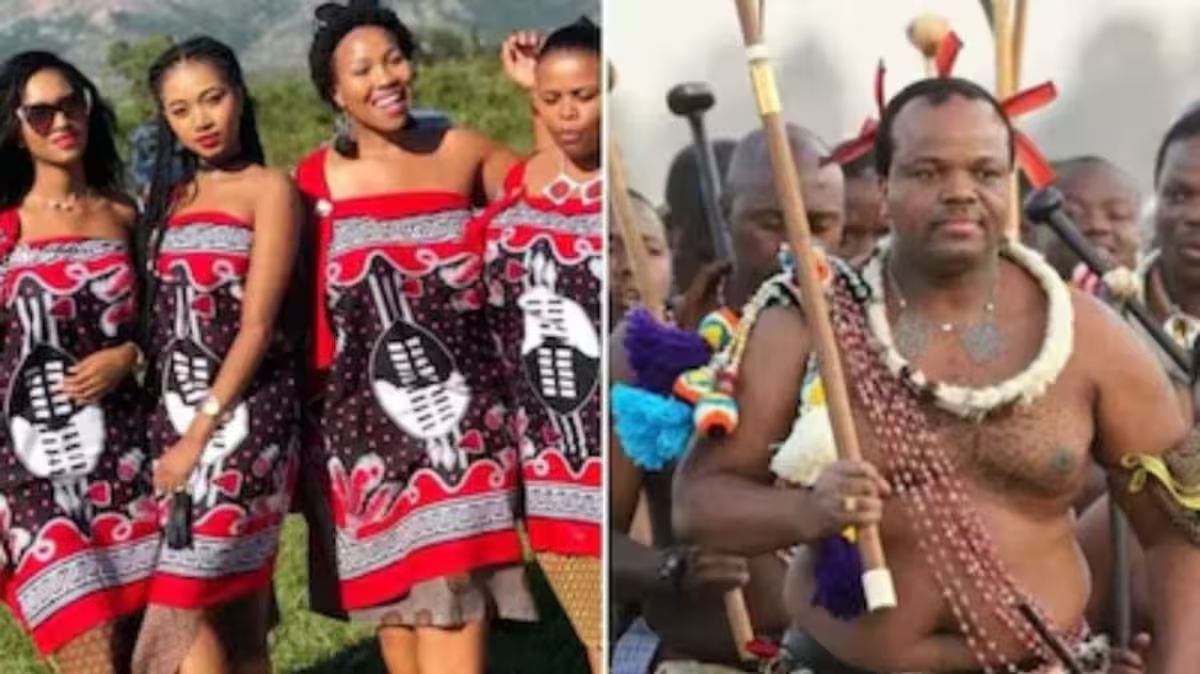
King Mswati III of Eswatini, Africa’s last absolute monarch, made headlines worldwide on July 10, 2025, upon his arrival at Abu Dhabi International Airport. Stepping off a private jet in traditional leopard-print attire, the 56-year-old ruler was flanked by 15 of his wives, 30 children, and nearly 100 aides and attendants. The massive entourage temporarily halted operations across three terminals, underscoring the logistical demands of such a high-profile royal visit. This event, captured in a now-viral video, highlights the king’s enduring commitment to Swazi traditions amid modern diplomatic engagements.
The arrival was not merely a spectacle but part of official business talks aimed at strengthening economic ties between Eswatini and the United Arab Emirates. As the small southern African kingdom grapples with domestic challenges, Mswati’s journey to the Gulf underscores his role in international relations. Reports indicate the delegation’s presence required extensive security coordination, with airport authorities implementing a brief lockdown to manage the influx. Eyewitness accounts describe a procession of elegantly dressed women in vibrant African fabrics, children in formal attire, and staff handling an array of luggage, all paying homage to the king as he descended the aircraft stairs.
King Mswati III ascended to the throne in 1986 following the death of his father, King Sobhuza II, who ruled for an unprecedented 82 years. Under Mswati’s leadership, Eswatini—formerly known as Swaziland until 2018—has maintained its status as one of the world’s few remaining absolute monarchies. The king holds supreme executive, legislative, and judicial powers, a system that has preserved Swazi cultural heritage but also drawn scrutiny from human rights advocates. His personal fortune, estimated at over $1 billion, stems from investments in mining, real estate, and agriculture, making him one of Africa’s wealthiest leaders.
The royal family’s size reflects longstanding polygamous customs central to Swazi identity. Mswati currently has more than 30 wives and over 35 children, though only a portion traveled to Abu Dhabi. His father, Sobhuza II, set a benchmark with 70 wives and more than 200 children, traditions passed down through generations. The king’s annual participation in the Umhlanga Reed Dance ceremony, where young women present reeds as a symbol of purity, often culminates in the selection of a new bride—a practice that reinforces royal lineage while sparking global debate on gender roles.
Eswatini, a landlocked nation of about 1.2 million people bordered by South Africa and Mozambique, relies heavily on agriculture, mining, and remittances. The UAE visit aligns with efforts to diversify partnerships beyond traditional African allies. Discussions reportedly focused on potential investments in Eswatini’s sugar and soft drink industries, where the royal family holds significant stakes. The king’s delegation included economic advisors and family members positioned in key sectors, signaling a blend of personal and state interests in these negotiations.
Security protocols for the arrival were meticulous. Abu Dhabi authorities cleared sections of the airport, redirecting commercial flights and passengers to alternative areas. The entourage’s scale—equivalent to a small diplomatic mission—necessitated armored vehicles and a dedicated escort upon landing. Observers noted the disciplined formation: wives and children grouped by seniority, aides managing protocol, and servants overseeing baggage that included ceremonial items and personal effects. This level of organization reflects the monarchy’s emphasis on hierarchy and respect, core tenets of Swazi governance.
#AbuDhabi airport witnessed a spectacle when King Mswati III of Eswatini arrived with 15 wives, 30 children and more than 100 attendants, with netizens saying "an entire village has arrived". #polygamy #africa #monarch #KingMswati #eSwatini #Africa pic.twitter.com/sPMquaKDdj
— Salar News (@EnglishSalar) October 7, 2025
The video footage, first emerging shortly after the July landing, resurfaced in early October 2025 amid heightened social media scrutiny. Shared across platforms, it amassed millions of views within days, with users marveling at the cultural display. One clip shows the king, barefoot and adorned in animal skins, receiving salutes from airport staff, while his wives—clad in matching red and blue ensembles—walk in unison. Children, ranging from toddlers to young adults, follow closely, some carrying national flags. The scene evoked comparisons to historical royal processions, blending ancient pomp with contemporary aviation.
The Scale of Royal Tradition: Family and Entourage Breakdown
At the heart of the Abu Dhabi arrival was the sheer magnitude of King Mswati III’s traveling party, a microcosm of Eswatini’s royal household. The 15 wives who accompanied him represent a select group from his larger harem, chosen perhaps for their roles in protocol or family representation. Each wife holds a distinct title and responsibilities within the palace, from cultural custodians to advisors on domestic affairs. Their presence in Abu Dhabi served not only as familial support but also as a statement of Swazi heritage, with traditional attire drawing admiration from local onlookers.
The 30 children included in the delegation spanned generations, from infants to university-aged heirs. Several are being groomed for public roles; for instance, Crown Prince Sicalo, one of Mswati’s sons, has accompanied his father on prior state visits. Daughters often participate in cultural events back home, preserving the Reed Dance legacy. This inclusion of youth highlights the monarchy’s focus on continuity, ensuring the next generation absorbs diplomatic nuances firsthand. Reports suggest the children engaged in light sightseeing during downtime, visiting UAE landmarks under tight security.
The 100 servants and aides formed the backbone of the operation, comprising cooks, drivers, security personnel, and cultural liaisons. Drawn from Eswatini’s civil service and royal retainers, this group managed everything from meal preparation—adhering to halal standards in deference to UAE customs—to translation services. Their efficiency prevented disruptions, though the group’s size amplified the event’s visibility. Insiders note that such entourages are standard for Mswati’s travels, reflecting a belief that a king’s authority is amplified by visible loyalty.

This structure mirrors the broader royal court in Eswatini, where thousands serve the monarchy directly or indirectly. The king’s multiple residences, including the Lozitha Palace, house extended family and staff year-round. During international trips, subsets are curated based on destination needs—economic experts for UAE talks, cultural figures for heritage-focused events. The Abu Dhabi contingent balanced these elements, prioritizing business while upholding tradition.
Critics, however, point to the financial implications. With Eswatini’s economy strained by global commodity fluctuations, funding such delegations raises questions about resource allocation. The king’s assets, including a fleet of luxury vehicles and private aircraft, are state-supported, fueling debates on fiscal transparency. Yet supporters argue these displays project national pride, attracting investors who see stability in the monarchy’s enduring customs.
The entourage’s composition also navigated cultural sensitivities. In the UAE, a nation blending Islamic traditions with modernity, the Swazi group’s polygamous setup was handled discreetly. No public faux pas occurred, and joint statements emphasized mutual respect. This diplomatic finesse has characterized Mswati’s Gulf outreach, building on prior visits that yielded aid and trade pacts.
Global Reactions and Broader Context: Wealth, Poverty, and Diplomacy
The viral video of King Mswati’s arrival ignited a firestorm of online discourse, polarizing viewers between awe and outrage. Social media platforms buzzed with memes depicting the entourage as “an entire village on vacation,” amassing over 50 million engagements by October 6, 2025. Admirers praised the unapologetic embrace of African royalty, with hashtags like #SwaziPride trending in southern Africa. One user commented, “This is culture in motion—respect to the king for keeping traditions alive.”
Conversely, detractors highlighted the stark inequality in Eswatini, where 59% of the population lives below the poverty line, per World Bank data. Unemployment hovers at 35%, exacerbated by HIV/AIDS prevalence and climate impacts on farming. Critics questioned the optics of a billion-dollar monarch’s jet-setting amid calls for democratic reforms. Human rights groups, including Amnesty International, have long flagged suppressed protests and media curbs under Mswati’s rule, viewing the UAE trip as emblematic of elite detachment.
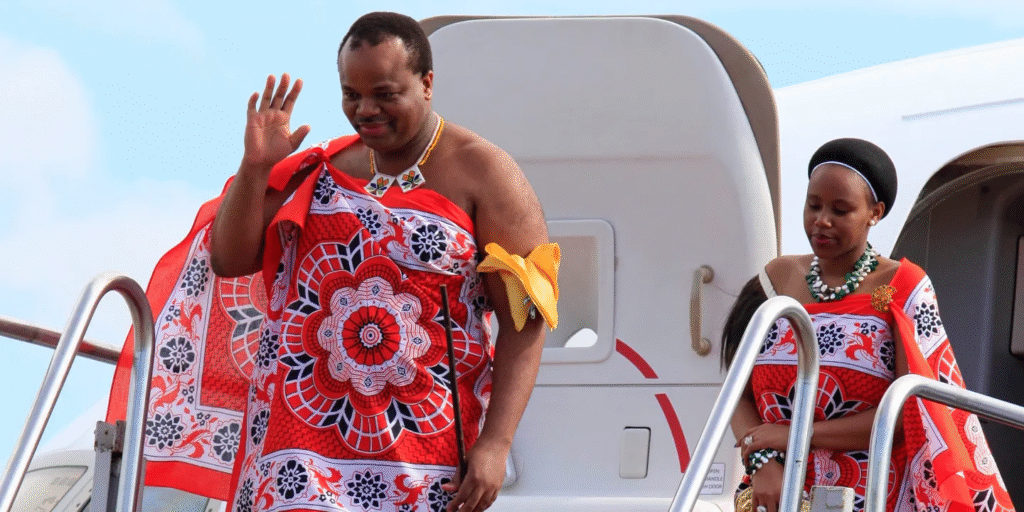
Domestically, the event stirred mixed sentiments. Pro-monarchy factions celebrated it as a boost to national image, potentially unlocking UAE investments in Eswatini’s $500 million sugar sector. Opposition voices, however, used the moment to demand accountability, citing unreported royal expenditures. In 2023, similar backlash followed Mswati’s purchase of a $500,000 Maybach for his 14th wife, Inkhosikati Makhosazana, amid food insecurity.
On the diplomatic front, the visit yielded tangible outcomes. Preliminary agreements explored UAE funding for Eswatini’s infrastructure, including renewable energy projects. Mswati’s meetings with Emirati officials echoed his 2024 tour of Saudi Arabia, where $100 million in pledges materialized. These ties diversify Eswatini’s economy, reducing reliance on South Africa, its primary trade partner.
The king’s health and succession plans remain under wraps, but the children’s inclusion signals preparation for future leadership. At 56, Mswati shows no signs of slowing, continuing annual rituals like the Incwala harvest ceremony. His Abu Dhabi trip, though extravagant, reinforces his narrative as a bridge between tradition and globalization.
As the video continues to circulate, it serves as a lens on Eswatini’s paradoxes: a tiny kingdom wielding outsized cultural influence, where royal opulence coexists with grassroots struggles. For now, the king’s UAE sojourn stands as a bold assertion of sovereignty in an interconnected world.