

The trial of a prominent horse racing trainer has drawn significant attention after allegations that a 72-year-old pensioner was violently assaulted during what prosecutors describe as a mistaken confrontation over suspected poaching. Richard Evan Rhys Williams, widely known in racing circles as Evan Williams, stands accused of causing grievous bodily harm with intent, with an alternative charge of inflicting grievous bodily harm.
The case, currently being heard at Cardiff Crown Court, centres on an incident that took place on the evening of 4 December 2024 in the rural village of Llancarfan in the Vale of Glamorgan. According to the prosecution, the alleged attack occurred when Williams confronted Martin Dandridge, who had been walking his daughter’s dog near paddocks and gallops associated with the Evan Williams Racing training facility.
Prosecutors claim that Williams, believing Dandridge to be engaged in illegal activity such as lamping or poaching, approached him armed with a hockey stick and proceeded to strike him repeatedly. Williams denies the charges, asserting that Dandridge’s injuries were the result of an accidental fall into a drainage ditch rather than an assault. The case has raised questions about rural tensions, assumptions surrounding countryside crime, and the proportionality of responses to suspected trespassing.
The Alleged Confrontation in the Paddock
The prosecution, led by William Bebb, outlined the events of the evening in considerable detail. It was, the court heard, a dark and unpleasant night, with Dandridge taking the family dog, Gulliver, for a final walk at around 9.30pm. He wore a head torch, and the dog had a light attached to its collar. These lights, according to the prosecution, caught the attention of Williams.
Two police officers were already in the vicinity, conducting patrols aimed at monitoring rural crime such as lamping and poaching. Evan Williams reportedly approached the officers in his 4×4 vehicle and informed them that individuals were “lamping in my field” and that he intended to challenge them. The officers then followed him toward the paddock area.
Dandridge testified that he saw a vehicle approach and park, after which a man exited carrying what he later recognised as a hockey stick. The court heard that Williams demanded to know what Dandridge was doing in the field with a lamp and a dog. The prosecution alleges that, despite Dandridge’s attempts to explain that he was staying in a nearby holiday cottage and merely walking the dog, Williams proceeded to “rain down blows” with the hockey stick.
Jurors were told that Dandridge was struck multiple times on his chest, leg, arm, and face. He described the force of the swings as violent, emphasising both the speed and impact. According to his testimony, the first blow landed on his back, followed by a strike to his right thigh that caused him to fall to the ground. He said he repeatedly pleaded for the assault to stop, stating that he was staying in a holiday cottage and simply walking his dog.
Dandridge recalled feeling helpless as the attack continued. On his knees, still holding the dog’s extendable lead, he described believing that he might not survive the encounter. He told the court he thought, “I’m going to die here and there’s nothing I can do.” Though he estimated the attack lasted approximately 60 seconds, he said it felt far longer due to the intensity and fear he experienced.
Read : Groundwater Temperature Could Rise by 3.5°C by the End of the Century: Will Become Undrinkable
The prosecution also stated that Connor Ring, a jockey and the partner of Williams’ daughter, was present and attempted to pull Williams away from Dandridge. The arrival of police officers brought the confrontation to an end. However, Dandridge expressed confusion in court when recounting how he was instructed to lie on the ground by officers upon their arrival, despite being the injured party.
He was subsequently taken to the Princess of Wales Hospital, where medical examinations revealed two fractured bones in his arm. The injuries, prosecutors argue, are consistent with repeated blows from a hard object such as a hockey stick.
Conflicting Accounts and the Defence Argument
Williams has denied assaulting Dandridge with a hockey stick. In police interviews conducted the day after the incident, he claimed that Dandridge’s injuries were caused not by an attack but by a fall into a drainage ditch approximately three feet deep. According to his account, the dog pulled Dandridge off balance, leading him to stumble into the ditch and sustain fractures upon impact.
The defence further disputes the allegation that Williams was armed with a hockey stick at all. Instead, he maintains that he was carrying a rope typically used to guide horses and that he intended to use it if necessary to control a loose dog. This alternative narrative directly contradicts Dandridge’s testimony and the prosecution’s assertion of a deliberate assault.

During cross-examination, defence counsel David Elias KC challenged Dandridge’s description of his head injuries, suggesting that they were more consistent with a fall onto rocky ground than with being struck by a hockey stick. He put it to Dandridge that the injuries occurred while stumbling or falling in the paddock area rather than from direct blows. Dandridge firmly rejected this suggestion, reiterating that his injuries were the result of being struck and not from falling.
The defence’s argument centres on undermining the prosecution’s claim of intent. The charge of causing grievous bodily harm with intent requires proof that the defendant deliberately sought to cause serious injury. By presenting the incident as an unfortunate accident compounded by misunderstanding, the defence seeks to cast doubt on both the alleged weapon and the deliberate nature of the injuries.
At the heart of the case lies the question of whether Williams acted out of genuine but mistaken suspicion, escalating a confrontation unnecessarily, or whether the entire account of a hockey stick assault has been mischaracterised. The jury must weigh conflicting testimonies and determine whether the prosecution has proven its case beyond reasonable doubt.
Rural Crime Concerns and Broader Implications
The setting of the alleged assault highlights ongoing concerns in rural communities regarding poaching and lamping. Lamping involves using powerful lights at night to spot animals, often deer or rabbits, which are then hunted illegally. Landowners and farmers frequently express frustration at such activities, which can damage property and pose safety risks.
However, the case underscores the risks inherent in confronting suspected offenders without clear evidence. The presence of police officers in the area that evening indicates that rural crime was already under active monitoring. According to the prosecution, Williams informed the officers of his suspicions and declared his intention to challenge the individuals he believed were lamping. What followed, the court has heard, escalated rapidly.
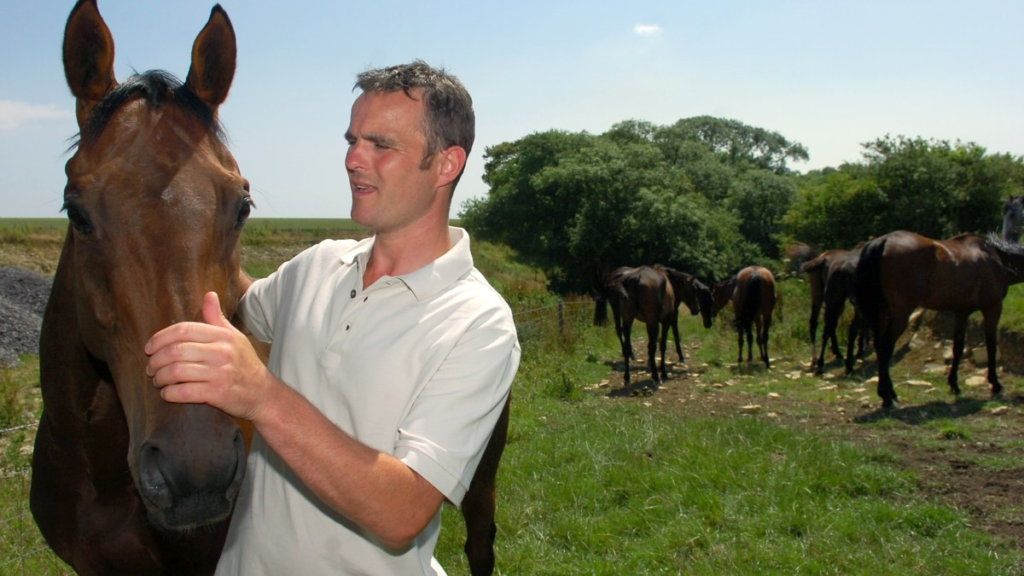
Dandridge and his wife had been staying at the Gallops holiday cottage for three weeks before the incident. The alleged assault occurred just three days before his 71st birthday. He testified that he regularly walked the dog near the horse racing stables both morning and night and had done so without incident previously. On the evening in question, he said the weather was poor and that he entered the paddock briefly to allow the dog to sniff around while remaining on an extendable lead.
The case has attracted attention not only because of the seriousness of the allegations but also because of Williams’ standing within the racing community. As a trainer associated with high-profile events such as the Grand National, his reputation carries weight beyond the immediate locality. The outcome of the trial may have significant professional as well as legal consequences.
For the jury, the decision will rest on an evaluation of credibility and physical evidence. They must consider whether the injuries sustained by Dandridge align more convincingly with repeated strikes from a weapon or with a fall into uneven terrain. They must also assess whether any actions taken by Williams were proportionate to his stated suspicions.
As the trial continues at Cardiff Crown Court, the proceedings remain focused on the events of that winter night in Llancarfan. The contrasting narratives presented by prosecution and defence illustrate how a brief encounter in a rural paddock has evolved into a serious criminal trial with potentially life-altering consequences for both men involved.