
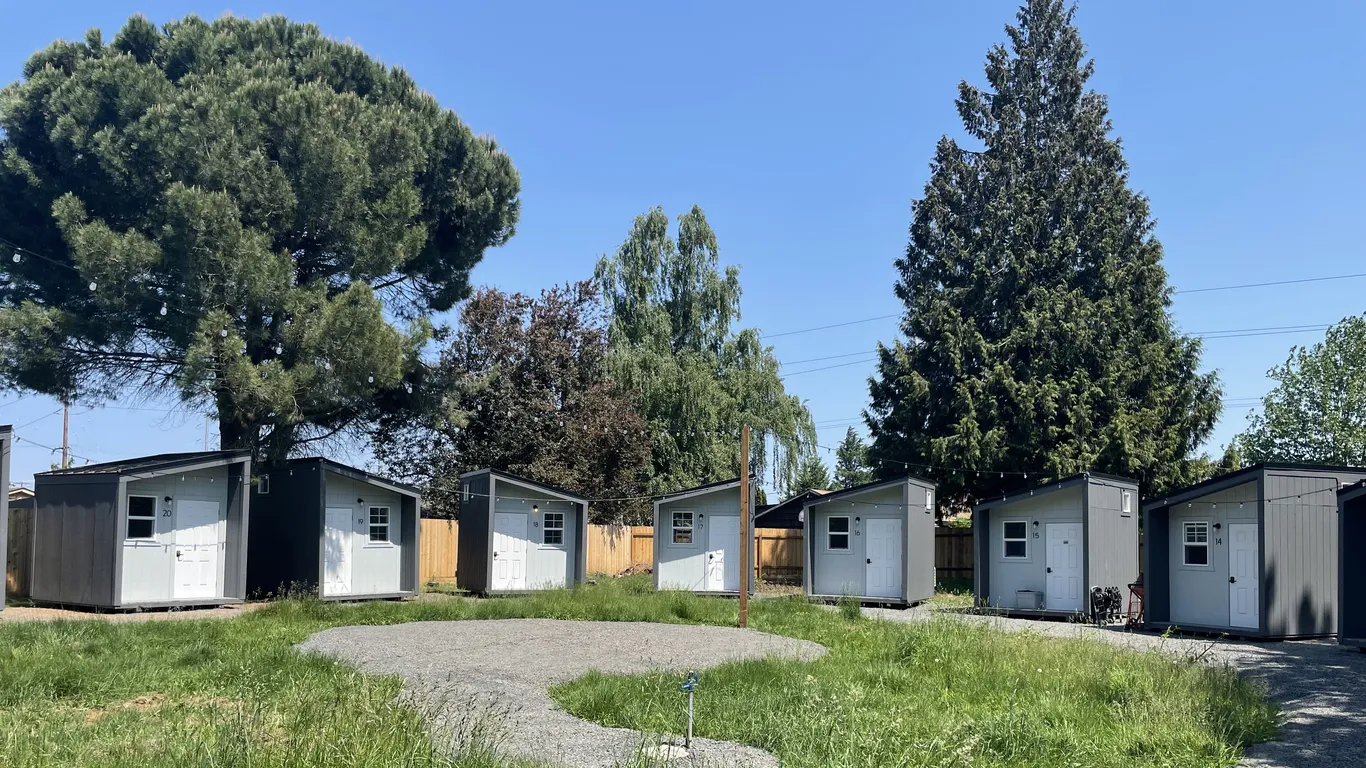
Portland’s approach to addressing homelessness has entered a contentious new phase as city officials prepare to enforce stay limits that could see nearly 100 people removed from municipally run Safe Rest villages. The decision, outlined by Mayor Keith Wilson in a memo to the City Council, has reignited debate over how cities should balance neighborhood concerns, public safety, and the needs of people experiencing homelessness.
While the administration argues that enforcing time limits is essential to moving individuals toward permanent housing, critics warn the policy risks pushing vulnerable residents back onto the streets and undermining the very goals the Safe Rest villages were designed to achieve.
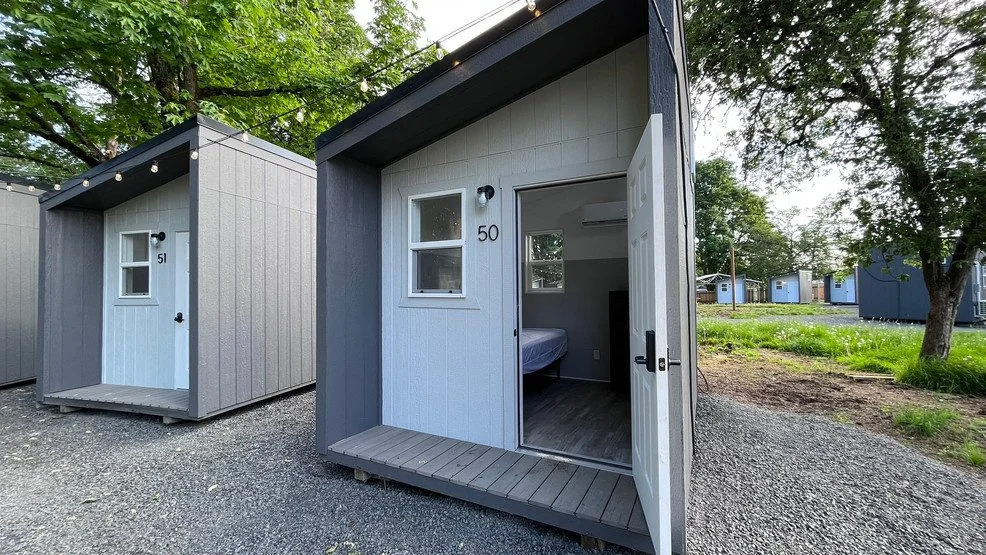
The Safe Rest villages, composed largely of small pod-style shelters, were introduced as a structured alternative to unsanctioned encampments. They were intended to provide short-term stability, access to services, and a pathway toward long-term housing. Now, with enforcement set to begin as early as next month, Portland finds itself at the center of a broader national discussion about whether transitional shelter models can deliver lasting solutions or whether rigid timelines ultimately exacerbate homelessness.
The Rationale Behind Enforcing Stay Limits
Mayor Wilson’s memo makes clear that the administration views stay limits as a necessary component of an effective homelessness response. Under rules introduced in September, residents entering Safe Rest villages are expected to adhere to a 120-day stay limit and actively engage with service providers. According to the mayor, these requirements reflect “nationwide best practices” aimed at encouraging progress toward independence and stable housing. In this view, the villages are not meant to function as indefinite accommodations but as stepping stones within a larger system.
City officials argue that without enforcement, the Safe Rest villages risk becoming static shelters rather than dynamic transitional spaces. If residents remain indefinitely without moving into permanent housing, fewer beds become available for people newly experiencing homelessness. The administration maintains that enforcing limits will help ensure turnover, allowing more individuals to benefit from the program and preventing the villages from becoming de facto long-term encampments.
Supporters of the policy also point to persistent complaints from surrounding neighborhoods, particularly near the Multnomah Safe Rest Village, which has been operating for three years and provides around 100 pods. Residents have reported increases in antisocial behavior, including drug use, satellite camping outside village boundaries, and disturbances late at night. For city leaders, these complaints underscore the need to reinforce rules and expectations within the villages, including engagement with services designed to reduce such issues.
Read : Man’s Body Frozen at -196°C in Hope of Future Revival in Australia
Wilson has framed the policy as an incentive rather than a punishment, emphasizing that the ultimate goal is to move people into permanent housing. By requiring engagement with case managers, employment programs, and health services, the city hopes to create a structured environment that pushes residents toward stability. In theory, those who actively participate and make progress should transition out of the villages within the allotted time, freeing space for others in need.
Criticism and Concerns from Advocacy Groups
Despite the administration’s assurances, advocacy organizations and homelessness service providers have voiced strong opposition to the planned evictions. Critics argue that strict stay limits fail to account for the complex realities faced by people experiencing homelessness, including mental health challenges, substance use disorders, and a severe shortage of affordable housing. From this perspective, enforcing time limits without guaranteeing alternative placements risks undoing any stability residents have achieved.
Read : From Viral Video to Viral Mascot: How Portland Frog Became ‘No Kings’ Protest Mascot
Molly Hogan, executive director of Portland’s Welcome Home Coalition, has been among the most vocal critics. She argues that removing people from shelter does not address the root causes of homelessness and instead penalizes individuals for circumstances largely beyond their control. Hogan and others contend that the policy contradicts Mayor Wilson’s campaign promises to reduce unsheltered homelessness, warning that nearly 100 people could be forced back onto the streets as a result.
Advocates also question whether the city has sufficient permanent housing options available to accommodate those exiting the Safe Rest villages. Portland, like many U.S. cities, continues to grapple with a shortage of affordable units, long waitlists for subsidized housing, and limited supportive housing for people with complex needs. Without clear pathways to housing, critics say, stay limits amount to little more than a deadline that residents cannot realistically meet.
There are also concerns about the potential impact on trust between homeless individuals and city services. Safe Rest villages were promoted as a humane alternative to unsanctioned camps, offering safety, privacy, and access to support. If residents perceive the villages as places where they can be expelled after a fixed period regardless of their progress, advocates fear fewer people will be willing to enter the system at all. This could undermine outreach efforts and push more individuals to remain in unsafe or hidden encampments.
Neighborhood Tensions and the Political Context
The controversy surrounding the Safe Rest villages cannot be separated from broader neighborhood tensions and Portland’s national political profile. In areas near the villages, some residents say the presence of the pods has altered the character of their communities. Reports of noise, drug activity, and visible disorder have fueled frustration, particularly in upmarket neighborhoods unaccustomed to large-scale shelter facilities. For these residents, enforcement of stay limits is seen as a necessary step toward restoring a sense of safety and normalcy.
City leaders face the difficult task of addressing these concerns while avoiding policies that simply displace homelessness rather than reduce it. Portland has long cultivated a reputation as a liberal, creative, and relatively laid-back city, but in recent years it has become a frequent target of harsh criticism from the Trump administration.

The former president has repeatedly portrayed Portland as a city in decline, using inflammatory language to describe it as “war-ravaged” and dangerous. In late 2025, amid a nationwide immigration crackdown, hundreds of National Guard troops were deployed to the city, further intensifying scrutiny.
Many Portland residents have pushed back against this portrayal, sharing images of calm neighborhoods and vibrant local markets to counter the narrative of chaos. Against this backdrop, local leaders are acutely aware that homelessness policy decisions are not only local governance issues but also fodder for national political debates. How Portland handles the Safe Rest villages may influence perceptions of whether progressive cities can manage homelessness effectively without resorting to punitive measures.
The situation highlights the broader challenge facing cities across the United States: balancing compassion with accountability in homelessness policy. Transitional shelters like Safe Rest villages occupy a middle ground between emergency shelters and permanent housing, and their success depends heavily on the availability of follow-up options. Without sufficient investment in affordable housing and supportive services, enforcing stay limits risks becoming an exercise in displacement rather than resolution.
As Portland moves forward with its plan, the outcomes will likely shape future policy decisions. If enforcement leads to measurable increases in permanent housing placements, city officials may view the approach as validated. If, however, large numbers of people are forced back into unsheltered homelessness, the policy could face intensified backlash and calls for reversal. For now, the impending evictions underscore the unresolved tensions at the heart of Portland’s homelessness response and the difficulty of translating policy ideals into practical, humane solutions.
Alright! I’ve been having a little look into jlace and it seems pretty solid. Games are smooth and everything loads quickly. It’s got my recommendation! Go check it out and have a try: jlace
This actually answered my downside, thank you!