
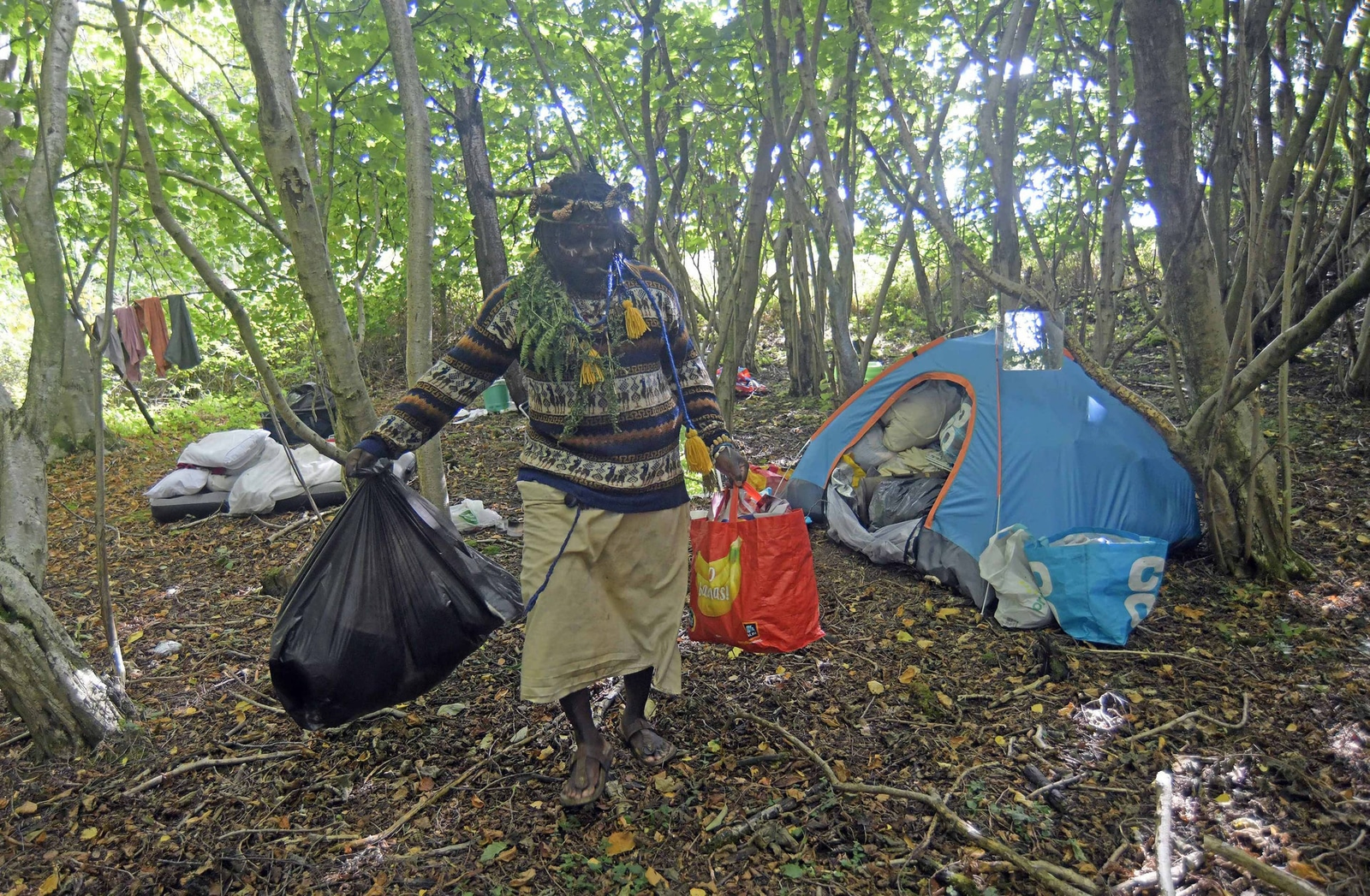
In a escalating saga unfolding in the serene woodlands of the Scottish Borders, the Scottish Borders Council has initiated fresh legal proceedings to remove a self-proclaimed “African tribe” from their latest encampment. The group, known as the Kingdom of Kubala, has relocated just a short distance from their previous site following a court-ordered eviction, prompting authorities to act swiftly to prevent further disruption. This development, reported widely this week, highlights ongoing tensions between unconventional land claims and local governance in the picturesque town of Jedburgh.
The Kingdom of Kubala, consisting of three individuals who describe themselves as descendants of a “lost African tribe,” arrived in the area earlier this year with bold assertions of ancestral rights. Their presence has captivated local media and residents alike, blending elements of cultural reclamation with legal defiance. As the council moves forward with court applications, questions arise about the balance between individual freedoms and community welfare in rural Scotland.
The Relentless Journey of the Kingdom of Kubala
The story of the Kingdom of Kubala began in the spring of 2025, when the trio first pitched their tents on a hillside overlooking Jedburgh, a historic town in the Scottish Borders known for its ancient abbey and rolling countryside. Led by Kofi Offeh, a 36-year-old Ghanaian formerly known as an opera singer under the name Kofi Offeh, the group quickly established their royal titles. Offeh proclaimed himself King Atehene, while his partner, Jean Gasho, 42 or 43 depending on reports, from Zimbabwe, adopted the name Queen Nandi. Joining them was Kaura Taylor, originally from Texas, who positioned herself as the “handmaiden” Asnat.
From the outset, the group’s mission was steeped in narrative of historical injustice. They claimed to be reclaiming land purportedly stolen from their ancestors approximately 400 years ago during the era of colonial explorations and slave trade routes that touched Scottish shores. “We are pilgrims returning to our sacred soil,” Queen Nandi stated in an early social media video, her words echoing through the misty valleys. The Kingdom of Kubala, they insisted, was not merely a camp but a sovereign entity reborn, complete with rituals, chants of “Kubala Kubala,” and a rejection of modern bureaucratic authority.
Initial encounters with locals were a mix of curiosity and concern. Residents in Jedburgh, a community of around 4,000 nestled between the Cheviot Hills, reported sightings of the group foraging in the woods and engaging passersby with tales of ancient lineages. The hillside site, on private land, offered seclusion amid birch and pine trees, but it wasn’t long before complaints surfaced about litter, potential fire hazards, and unauthorized access. Scottish Borders Council, responsible for enforcing planning and environmental regulations, first engaged the group through welfare checks, offering access to local services like housing support and healthcare.
By July 2025, the situation had deteriorated. The council issued an initial eviction notice, citing breaches of trespass laws and risks to public safety. The trio vacated the hillside but did not stray far. Instead, they relocated about a mile away to another patch of woodland adjacent to an industrial estate on the outskirts of Jedburgh.
Scottish Borders Council has launched fresh court action to evict a self-styled 'African tribe.'
— Ghana Weekend (@GhanaWeekend) September 17, 2025
The three members of the 'Kingdom of Kubala' – Ghanaian Kofi Offeh, Zimbabwean-born Jean Gasho, and American Kaura Taylor.
🎥:BBC AFRICA#Ghanaweekend pic.twitter.com/bQ0anErxQe
Here, their encampment evolved into a more fortified setup: tarpaulin shelters, a central fire pit, and symbolic markers declaring the land as Kubala territory. Social media posts from the group proliferated, garnering international attention with videos of ceremonies and defiant messages. “The spirits of our forebears guide us,” King Atehene declared in one clip, his voice carrying the cadence of operatic training.
This second site, however, proved equally contentious. The woodland, dense with native flora and popular among hikers, belongs to the council itself, complicating matters further. Attempts at dialogue faltered as the group refused to recognize official documents, viewing them as “paper illusions” from a colonial past. By early September, the council’s patience waned, setting the stage for the current legal escalation.
Council’s Firm Stance and the Mechanics of Eviction
Scottish Borders Council’s response has been methodical, prioritizing de-escalation while upholding the rule of law. Deputy Leader and Jedburgh Councillor Scott Hamilton has been vocal in updates, emphasizing that the actions stem from landowner rights and community protection. “We’ve exhausted every avenue of engagement,” Hamilton stated following the most recent developments. The council’s initial July eviction from the hillside was executed without major incident, but the group’s proximity relocation tested resolve.
The turning point came in early September. On Friday, September 5, the landowner of the second site—private interests represented through legal channels—served a formal notice demanding departure by 5pm on Monday, September 8. The Kingdom of Kubala dismissed it outright, with Queen Nandi posting online: “We do not bow to edicts of the fallen empire.” Non-compliance triggered civil proceedings at Jedburgh Sheriff Court.
Read : Irish Influencer Dara Tah Criticized for Offering Salt to Cannibal Tribe for TikTok Video
On Friday, September 12, Sheriff Peter Paterson issued a warrant for removal, effective immediately. This order targeted the trio for trespass on private property, a civil matter rather than criminal, to avoid unnecessary escalation. Five sheriff officers, supported by Police Scotland, arrived at the site at 8am on Tuesday, September 16. The operation unfolded peacefully: tents dismantled, belongings packed, and the group escorted off the land. No arrests occurred, underscoring the council’s welfare-oriented approach.
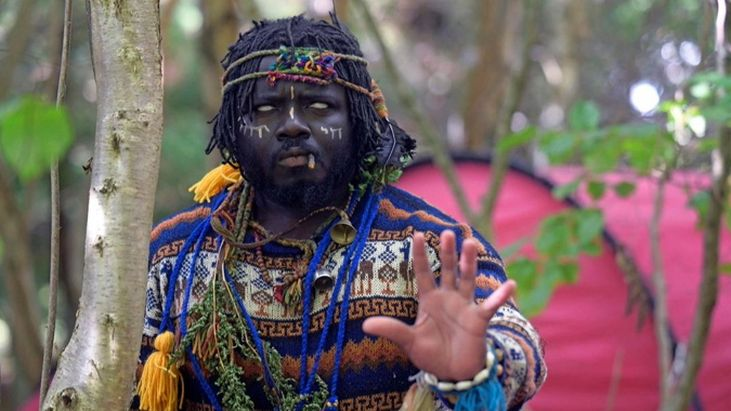
Yet, the eviction’s success was short-lived. Within hours, the trio crossed a small fence into adjacent woodland—now confirmed as council-owned property—and re-established camp mere meters away. Workmen promptly erected barriers around the original site, but the new location posed fresh challenges. Councillor Hamilton announced that very evening that legal action had commenced anew. “The individuals complied with the court order by their own volition but have moved to adjacent land owned by the council,” a statement read. “We will continue to act in the interests of public safety.”
This latest proceeding involves applying for an interim interdict, a Scottish legal tool to halt ongoing trespass pending full hearings. The council has coordinated with partners, including environmental health teams, to monitor the site for sanitation issues and fire risks. Police presence remains advisory, ensuring no vigilantism from locals. Hamilton urged the public: “Please do not engage with this group,” citing concerns over misinformation and safety.
The council’s strategy reflects broader Scottish policy on unauthorized encampments, balancing human rights with property laws under the Housing (Scotland) Act. While the group has not been accused of violence, the persistent relocation raises logistical strains on a region already managing tourism and agriculture.
Broader Ramifications and Voices from the Ground
The Kingdom of Kubala’s standoff reverberates beyond Jedburgh’s woods, touching on themes of identity, sovereignty, and migration in modern Scotland. For the group, it’s a profound act of resistance. In a Facebook post dated September 16, they proclaimed: “Nobody can stop Kubala. The Kingdom of Kubala can never be destroyed!” Their narrative draws from pan-Africanist ideals, invoking figures like Queen Nandi of the Zulus—Gasho’s namesake—and ancient Ashanti kingdoms, blending Offeh’s Ghanaian roots with Taylor’s American outsider perspective. Refusing media interviews without “gifts,” they maintain an air of regal detachment, fueling online fascination and donations.
Locally, reactions vary. Some residents express sympathy, viewing the trio as vulnerable migrants seeking belonging in a country with a complex colonial history. “Scotland has its own history of clearances—it’s poetic in a sad way,” one anonymous Jedburgh shopkeeper remarked. Others decry the disruption: trails blocked, wildlife disturbed, and resources diverted. The industrial estate nearby worries about business impacts, while environmentalists fret over woodland preservation in an area prized for biodiversity.
Legally, the case underscores Scotland’s devolved justice system. Sheriff Paterson’s swift warrant highlights efficiency in handling such disputes, but the council-owned land twist could prolong matters. If an interdict is granted, forced removal might follow, potentially involving social services for relocation support. Critics question whether cultural claims warrant exemptions from trespass laws, drawing parallels to indigenous rights debates elsewhere.
As of September 19, the new site remains active, with chants audible from nearby paths. The council’s legal team prepares for hearings, while the Kingdom persists in ritual. This peculiar chapter in Borders lore may yet inspire art or activism, but for now, it tests the threads of community cohesion. Will Kubala’s flame flicker out, or ignite wider discourse on belonging? Only time—and the courts—will tell.