

In a stark case highlighting failures in law enforcement medical protocols, the family of Kingsley Fifi Bimpong, a 50-year-old U.S. Postal Service worker from Cottage Grove, Minnesota, has filed a federal wrongful death lawsuit against Eagan police officers and Dakota County correctional staff. The suit, lodged on October 9, 2025, in U.S. District Court in Minnesota, accuses the defendants of deliberate indifference to Bimpong’s medical emergency, leading to his death on November 19, 2024.
Kingsley Fifi Bimpong, a lawful permanent resident originally from Ghana, suffered a massive hemorrhagic stroke that went untreated for five hours and 40 minutes while in custody, despite exhibiting textbook symptoms. The family seeks $120 million in damages, alleging violations of Bimpong’s Eighth and Fourteenth Amendment rights under the U.S. Constitution. This lawsuit underscores persistent issues in distinguishing medical crises from suspected impairment in arrests, with attorneys arguing that timely intervention could have saved his life.
The Traffic Stop and Arrest: Early Signs of Medical Distress Overlooked
The sequence of events began on the evening of November 16, 2024, when Kingsley Fifi Bimpong left his shift at the Eagan Postal Distribution Center earlier than usual, complaining of a severe headache. Driving home, he veered into oncoming traffic and struck a curb, prompting an Eagan police officer to pull him over around 8 p.m. From the initial interaction, Bimpong displayed profound confusion and disorientation—hallmarks of a stroke. Body-worn camera footage captured him unable to recall his name, address, or destination, repeatedly responding “I don’t know” despite wearing his USPS vest.
Officers noted no odor of alcohol and found no evidence of drugs in his vehicle, yet they proceeded under suspicion of driving while impaired. A certified Drug Recognition Evaluator (DRE), Officer Martin Jensen, was summoned to assess Bimpong. DRE training, mandated by the Minnesota State Patrol, explicitly instructs officers to differentiate drug impairment from medical conditions like strokes, emphasizing symptoms such as slurred speech, facial droop, and unilateral weakness.
However, the lawsuit claims Jensen aborted the standard 12-step evaluation after just three steps, ignoring these protocols. Officer Jensen’s partner, Officer Moseng, repeatedly raised concerns about a possible stroke on camera, even starting to say, “Is this dude having a stro—,” before Jensen muted the device. Bimpong’s right arm hung limp, described as “flaccid,” and he struggled to follow simple commands, yet Jensen dismissed these as signs of intoxication.
An emergency medical provider at the scene inquired if Bimpong needed hospital transport, but Jensen replied, “It’s a whole thing,” opting instead to detain him. The decision to arrest rather than seek immediate care stemmed partly from logistical concerns: hospital transport would require an officer to remain on-site, delaying their shift. Bimpong was handcuffed and taken to the Eagan Police Department for a blood draw warrant, where his condition deteriorated further.
Surveillance video showed him stumbling, drooling uncontrollably onto his beard without wiping it, and nodding off repeatedly—additional stroke indicators. Despite these red flags, no medical call was made. The arrest report falsely documented him as coherent, a claim the lawsuit refutes with video evidence. This phase alone lasted over two hours, during which Bimpong’s untreated stroke progressed irreversibly, setting the stage for the custody failures to come.
Custody at Dakota County Jail: Hours of Inaction Amid Visible Agony
Upon arrival at Dakota County Jail in Hastings around 10:30 p.m., Kingsley Fifi Bimpong’s health plummeted. He was placed in a holding cell, where he soon collapsed onto the floor, writhing in pain and losing bladder control, soaking himself in urine. Jail surveillance footage, cited extensively in the complaint, depicts him in this state for over three hours, with seven correctional officers passing by the cell multiple times without entering or summoning aid. Logs falsely recorded “inmate and cell OK” during these checks, despite the video showing Bimpong unresponsive, foaming at the mouth, and his body cooling to the touch.
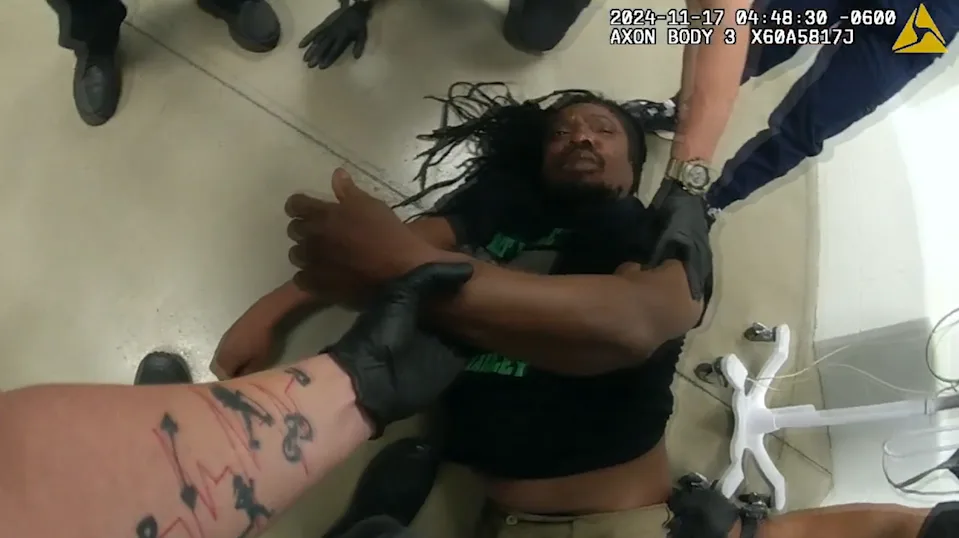
His pupils became pinpoint and fixed, non-reactive to light, and his feet turned gray—a dire sign of circulatory failure. The lawsuit names these officers, including Eduardo Decache, for their roles in the neglect. It was not until approximately 2:10 a.m. on November 17—nearly five and a half hours after arrest—that staff finally entered the cell. By then, Kingsley Fifi Bimpong was in cardiac arrest, his tongue protruding white from his mouth. CPR was initiated belatedly, and he was rushed to United Hospital in St. Paul, where scans confirmed a massive brain hemorrhage rendering him brain dead.
Family members, including relatives in Ghana, were consulted via phone and made the anguished decision to withdraw life support two days later, on November 19. Attorneys from Robins Kaplan LLP, representing the family, described this as “one of the worst jail deaths we’ve ever seen,” emphasizing that every minute of delay compounded the brain damage from oxygen deprivation. The Minnesota Department of Corrections later investigated, issuing a corrective action plan in February 2025 for inadequate well-being checks and outdated staff training in CPR and first aid. This custody phase exemplifies systemic lapses, where policy required hourly medical assessments for impaired detainees, yet none occurred.
Legal Claims and Broader Implications: Seeking Accountability and Reform
Filed by attorneys Katie Bennett and Vicki Hruby on behalf of Bimpong’s estate, the 50-page complaint targets three Eagan officers—Martin Jensen, his partner, and the initial responding officer—along with seven Dakota County staff and the county itself. It alleges deliberate indifference, a legal standard under 42 U.S.C. § 1983 for civil rights violations, asserting that officials knew of the risk to Bimpong’s health but disregarded it.
The suit demands not only compensatory and punitive damages totaling $120 million but also injunctive relief: mandatory retraining in stroke recognition, improved DRE protocols, and body camera policies prohibiting muting during medical discussions. Bennett stated, “The shocking deliberate indifference from local authorities stripped Kingsley of his last safeguard: the right to basic medical care.”

Dakota County has not yet responded formally, but the City of Eagan issued a statement denying obvious medical distress during police contact, claiming no emergent need was apparent to lay observers. Hruby, speaking for Eagan, reiterated that Kingsley Fifi Bimpong’s symptoms were not “objectively serious” at the station. However, the lawsuit counters with expert affidavits and video timestamps, arguing that trained personnel should have recognized the crisis.
This case echoes national patterns, such as the 2023 death of Tyre Nichols or ongoing scrutiny of in-custody medical neglect, amplified here by racial undertones—Bimpong’s Ghanaian heritage and the tendency to attribute Black men’s symptoms to drugs. For Kingsley Fifi Bimpong’s family, the suit is a quest for justice amid grief. A dedicated father and community member, he had worked 20 years for the USPS without incident.
His death leaves a void, but the litigation aims to prevent repeats. As proceedings unfold, it spotlights Minnesota’s jail oversight gaps, with the Department of Corrections’ post-incident review revealing training delinquencies affecting 40% of staff. Experts predict a lengthy battle, potentially settling post-discovery, but the family’s resolve signals a push for transformative change in how authorities handle medical emergencies in custody.
**mind vault**
mind vault is a premium cognitive support formula created for adults 45+. It’s thoughtfully designed to help maintain clear thinking