

A civil lawsuit filed in Canada has brought new scrutiny to the responsibilities of artificial intelligence companies after a devastating school shooting in the small community of Tumbler Ridge, British Columbia. The family of 12-year-old Maya Gebala, who survived the attack but remains critically injured, is suing OpenAI, the company behind ChatGPT, alleging the firm failed to alert authorities despite internal warnings that the suspected shooter had discussed violent scenarios with the chatbot months before the tragedy.
The case raises difficult questions about how technology companies monitor conversations on their platforms and what obligations they have when users appear to be planning real-world violence. The shooting on 10 February shocked the country and left eight people dead, including five children and the suspect’s own mother. The attack quickly became one of the deadliest mass shootings in Canadian history and deeply affected the quiet northern community.
As investigators examined the background of the suspected gunwoman, 18-year-old Jesse Van Rootselaar, attention turned to her online activity and alleged interactions with ChatGPT. According to the lawsuit filed by Maya’s mother, Cia Edmonds, the technology company had significant warning signs months earlier but failed to notify law enforcement. The legal action seeks to hold the company accountable for what the family describes as missed opportunities to prevent the violence.
It also highlights growing concerns around how advanced AI systems interact with users and whether companies have adequate safeguards to identify and respond to potential threats. While OpenAI has expressed sympathy for the victims and pledged to improve its policies, the case is expected to become a major test of how responsibility is defined when emerging technologies intersect with public safety.
Lawsuit Allegations and ChatGPT Interactions
According to the lawsuit filed by Maya Gebala’s family, the suspect began interacting with ChatGPT months before the attack, describing hypothetical situations involving firearms and mass violence. The complaint claims that Jesse Van Rootselaar treated the chatbot as a “trusted confidante,” using it as a space to discuss violent ideas and possible scenarios over a period of several days in late spring or early summer of 2025. The family alleges that these conversations contained language serious enough to trigger internal warnings within the company.
The lawsuit claims that at least twelve employees working at OpenAI flagged the conversations as concerning. Internal discussions reportedly categorized the messages as indicating “an imminent risk of serious harm to others.” According to the filing, those employees recommended that Canadian law enforcement should be notified about the interactions so authorities could potentially intervene.
However, the complaint alleges that the recommendation to contact authorities was ultimately rejected. Instead, the only action taken by the company was to ban the user’s ChatGPT account in June 2025 due to the nature of the conversations. The family’s lawsuit argues that this response was inadequate given the seriousness of the warnings raised internally.
Another key claim in the lawsuit centers on how the suspect was able to continue using the platform after the initial ban. The filing alleges that Van Rootselaar simply created a second account, allowing her to continue discussing violent scenarios involving firearms and potential attacks. The plaintiffs argue that OpenAI’s systems failed to prevent a previously flagged user from returning to the platform and continuing similar conversations.
Read : Adrian Gonzales Acquitted of All Child Endangerment Charges in Robb Elementary School Shooting
The lawsuit also questions whether proper safeguards existed regarding age verification. According to the complaint, the suspect opened her first ChatGPT account before turning eighteen. While minors can use the service with parental consent, the plaintiffs allege that no meaningful verification process was in place to confirm her eligibility or to monitor potentially dangerous activity more closely.
Read : Mawphlang: The Sacred Forest in Meghalaya Where You Can’t Take Even a Leaf
In the legal filing, the family claims that the company had “specific knowledge of the shooter’s long-range planning of a mass casualty event.” Despite this knowledge, the lawsuit states that OpenAI did not take further steps to notify authorities or intervene in a way that could have disrupted the planning. The plaintiffs argue that if law enforcement had been alerted at the time of the flagged conversations, the eventual attack might have been prevented.
The case is expected to examine how technology companies evaluate threats within user conversations and what thresholds must be met before contacting authorities. It also raises questions about the limits of automated moderation systems and whether human oversight should play a larger role when potential real-world harm is discussed.
The Tumbler Ridge Shooting and Its Consequences
The events that led to the lawsuit began with the shooting at a school in Tumbler Ridge on 10 February. The small community in northeastern British Columbia, known primarily for its resource industry and quiet residential neighborhoods, was unprepared for the scale of the tragedy that unfolded that day. Authorities say the attack resulted in eight deaths, including five young children. Among those killed was the suspect’s own mother.
The violence left the town reeling, with families, educators, and students struggling to understand how such an event could occur in a community that had rarely experienced serious crime. During the attack, Maya Gebala was among the students inside the school. According to the lawsuit, she attempted to secure the building by trying to lock the door to a library in an effort to keep the shooter out. As she tried to protect others, the suspect fired multiple shots at her.
The complaint states that Maya was shot three times, suffering wounds to her neck and head. The injuries caused what the lawsuit describes as a catastrophic brain injury. Since the shooting, she has remained hospitalized while undergoing extensive medical treatment and rehabilitation. Her family says the injuries have permanently altered her life. Medical experts cited in the lawsuit reportedly indicate that the damage to her brain may have lifelong consequences affecting mobility, communication, and overall quality of life.
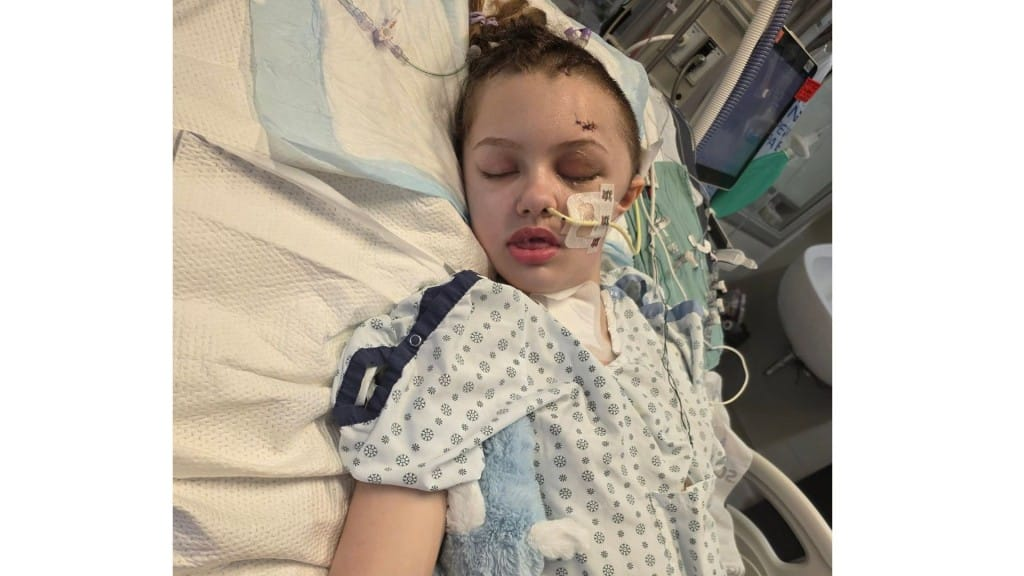
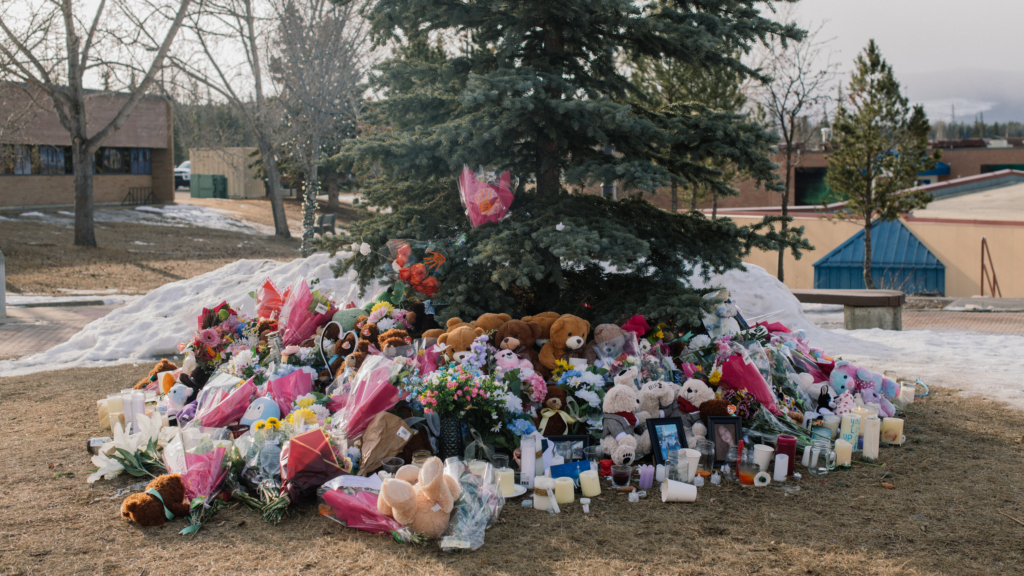
The family argues that the devastating impact of the shooting is central to their decision to pursue legal action. The tragedy also had a profound effect on the wider Tumbler Ridge community. Schools were closed for days following the attack, and grief counseling services were provided to students and residents. Memorials appeared across the town as people gathered to mourn the victims and support the families affected.
Investigators began examining the suspect’s background soon after the attack. Reports about her online activity and interactions with AI systems emerged during the early stages of the investigation, eventually forming part of the legal argument presented by Maya Gebala’s family.
For the community, the focus has remained on recovery and remembrance. Yet the lawsuit has extended the discussion beyond the town itself, placing attention on the broader issue of how digital platforms may intersect with acts of violence. As the case proceeds, it could influence how both technology companies and policymakers respond to warning signs that appear within online conversations.
OpenAI’s Response and Policy Changes
In response to the lawsuit and the broader public concern surrounding the case, OpenAI has expressed sympathy for the victims and acknowledged the seriousness of the events in Tumbler Ridge. A company spokesperson described the shooting as an “unspeakable tragedy” and said the company’s thoughts remain with the victims, their families, and the affected community. The company has stated that it did not contact law enforcement at the time of the original flagged conversations because the account did not meet its internal threshold for a credible or imminent threat of serious physical harm.
According to OpenAI, its policies at the time required a higher level of certainty before notifying authorities. However, following the tragedy, the company has indicated it is reevaluating those policies. OpenAI says it is committed to making meaningful changes designed to improve how potential threats are handled and to prevent similar situations in the future.
Read : Salvation Army Bell Ringer Alvin Echols Shot Dead Inside Kroger by Teenager
As part of those efforts, the company’s chief executive officer Sam Altman held a virtual meeting on 4 March with Canadian officials, including the country’s artificial intelligence minister and the premier of British Columbia. During the discussion, Altman reportedly pledged to strengthen the company’s protocols for notifying law enforcement when conversations suggest a potential risk of violence. Reports from the meeting indicated that the company also plans to apologize directly to the Tumbler Ridge community.
The discussions with Canadian officials reflected the growing role governments may play in shaping how technology companies address safety risks associated with artificial intelligence platforms. In an open letter sent to Canadian officials on 26 February, OpenAI’s vice-president of global policy outlined several changes the company says it has already begun implementing. These measures include bringing in mental health and behavioral experts to help assess conversations that may indicate harmful intentions.
The company also said it has made the criteria for referring cases to law enforcement more flexible. Under the revised approach, OpenAI claims that the suspect’s account would have been reported to authorities based on the information now available under the updated guidelines. Additional changes involve improving detection systems designed to identify attempts by users to bypass safety safeguards. According to the company, these systems will focus particularly on individuals considered to pose the highest potential risk for real-world violence.
Another measure under consideration is the creation of a direct contact channel with Canadian law enforcement agencies. The goal of such a system would be to allow faster communication when conversations on the platform raise concerns about possible threats. Despite these commitments, Canadian officials have indicated that they are still awaiting detailed plans explaining how the changes will be implemented. The country’s artificial intelligence minister has said that while the company appears willing to improve its protocols, concrete steps and accountability mechanisms have not yet been fully outlined.
The lawsuit brought by Maya Gebala’s family is likely to become a central part of the broader debate surrounding the responsibilities of artificial intelligence developers. As AI systems continue to become more widely used in everyday life, the question of how companies detect and respond to dangerous behavior on their platforms remains unresolved. The outcome of the case may influence how governments, courts, and technology firms define those responsibilities in the years ahead.
Like7777… hmm, interesting name. Looks like some kind of gaming or social platform. Might be worth a look, especially if it has good games. Check it out here if you’re interested. Get liked! like7777
Okay, so I was trying to find some free spins at Winner Casino, and I gotta say, it took a bit of digging. But hey, who doesn’t love free spins? Hopefully, this helps someone else find them easier! Check it out winner casino giros gratis
Been hearing a lot about kk222game. Gave it a shot and it’s actually pretty fun! Lots of different options to choose from. Give it a try! Get to the action kk222game