
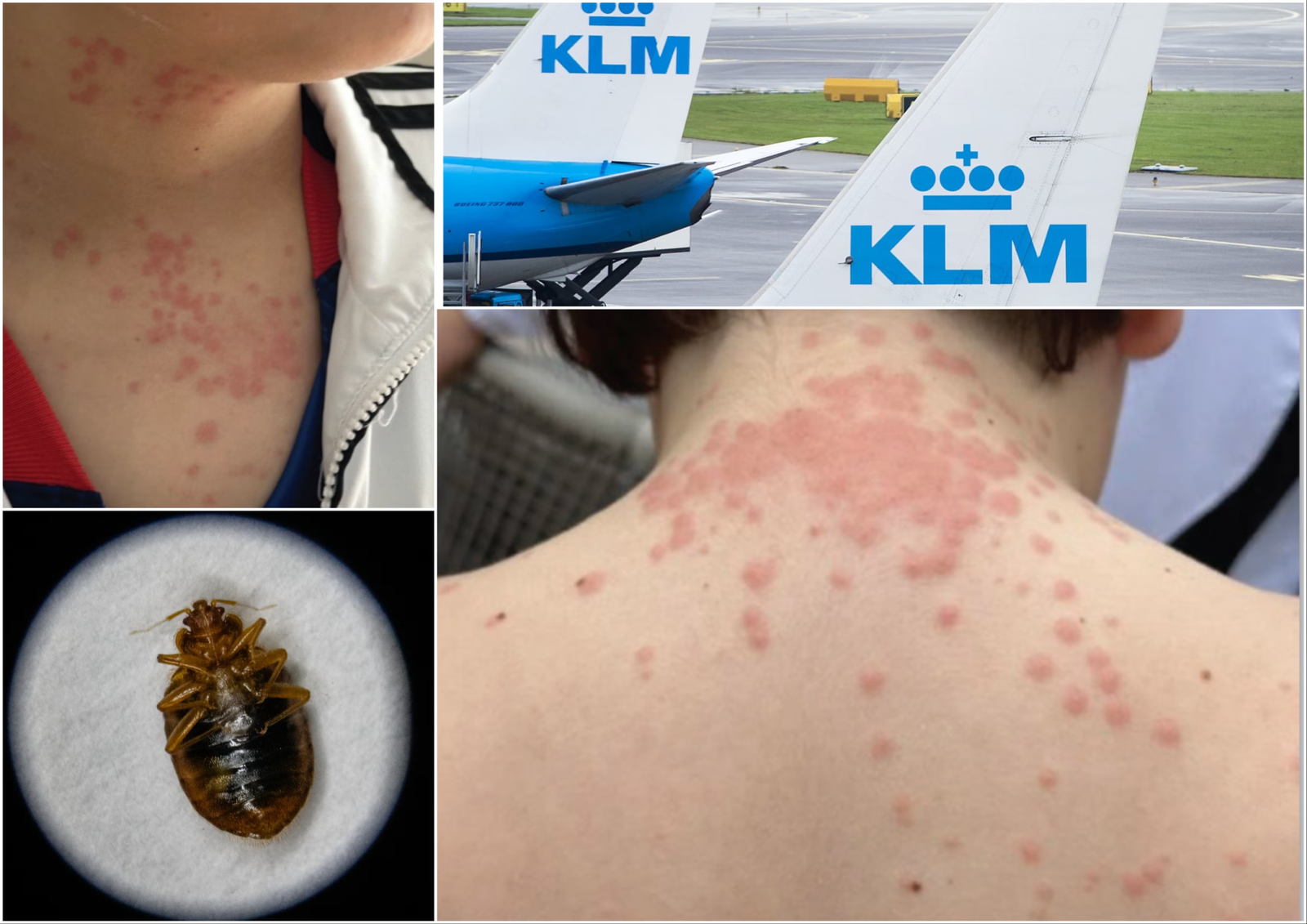
A Virginia family’s long-planned European vacation, booked with premium miles and intended to be a comfortable journey across the Atlantic, instead became the basis of a federal lawsuit alleging serious lapses in airline sanitation and passenger care. According to a complaint filed in the US District Court for the Western District of Virginia, ophthalmologist Romulo Albuquerque, his wife Lisandra Garcia, and their two young sons were repeatedly bitten by bed bugs while flying in business class on a transatlantic flight operated by KLM Royal Dutch Airlines.
The family claims the infestation caused physical injury, emotional distress, lasting scars, and effectively ruined their trip before it began, prompting them to seek $200,000 in damages from both KLM and Delta Air Lines.
The lawsuit highlights growing concerns about cleanliness aboard commercial aircraft, the responsibilities of airlines in code-share arrangements, and the extent to which passengers can expect transparency and protection when something goes seriously wrong mid-flight. While airlines have long insisted that insect infestations on planes are rare and swiftly addressed, this case presents a detailed account that challenges those assurances and raises questions about how such incidents are handled when they occur at 35,000 feet.
Allegations of an Infested Cabin and Crew Response
The Albuquerque family’s journey began on March 21, when they departed Roanoke, Virginia, on a Delta-branded flight to Atlanta before connecting to a KLM-operated transatlantic service to Amsterdam. From there, they were scheduled to continue onward to Belgrade to visit family and friends. According to the complaint, the first leg of the journey was uneventful. Problems allegedly began several hours into the overnight flight from Atlanta to Amsterdam, where the family was seated in business class, with the parents in seats 12H and 12K and their children directly behind them.
Approximately two hours into the flight, Lisandra Garcia reportedly began to feel sensations of insects crawling on her skin, followed by sharp bites. The complaint states that she soon noticed small bugs on her light-colored sweater and in the creases of the seat upholstery. As the discomfort intensified, it became clear, the family alleges, that they were dealing with bed bugs actively feeding on them during the flight.
When Albuquerque and Garcia alerted the cabin crew, they say the response was not focused on immediate remediation or relocation, but on containing the situation quietly. According to the lawsuit, flight attendants urged the couple to lower their voices to avoid causing panic among other passengers. The family claims they were discouraged from drawing attention to the issue, despite continuing to be bitten. In an effort to document what was happening, they took photos and videos of the insects on their clothing and around their seats.
The complaint further alleges that, as the flight neared Amsterdam, crew members again advised the family not to inform others about the infestation, warning that doing so could result in missing their onward connection. By that point, the lawsuit states, all four family members had sustained multiple bites across their necks, torsos, arms, legs, and lower backs. The visible welts and intense itching reportedly persisted throughout the remainder of the journey.
Read : American Airlines Passenger Duct-Taped and Sued in 2024 for Violent Behavior Onboard in 2021 Flight
Flight attendants eventually provided plastic bags for the family to isolate their belongings, according to the complaint, and the Albuquerques continued on a subsequent KLM flight to Belgrade. They allege that even during the connecting flight, the discomfort from the bites remained severe, with no meaningful relief offered beyond the bags and verbal reassurances.
Medical Aftermath and a Ruined Vacation
Upon arriving in Belgrade, the family says the reality of the situation became fully apparent. Rather than enjoying the start of their vacation, they were immediately preoccupied with preventing further infestation and managing their injuries. According to the complaint, all clothing was washed in boiling water in an attempt to kill any remaining bed bugs, and advice was sought from a physician friend on how to treat the bites.
The lawsuit describes a slow and uncomfortable recovery process marked by persistent itching, pain, and visible rashes that did not begin to fade until after the family returned to the United States. The marks were not merely cosmetic, the family contends, but a source of embarrassment and anxiety that limited their willingness to participate in social activities during what was supposed to be a family visit abroad.
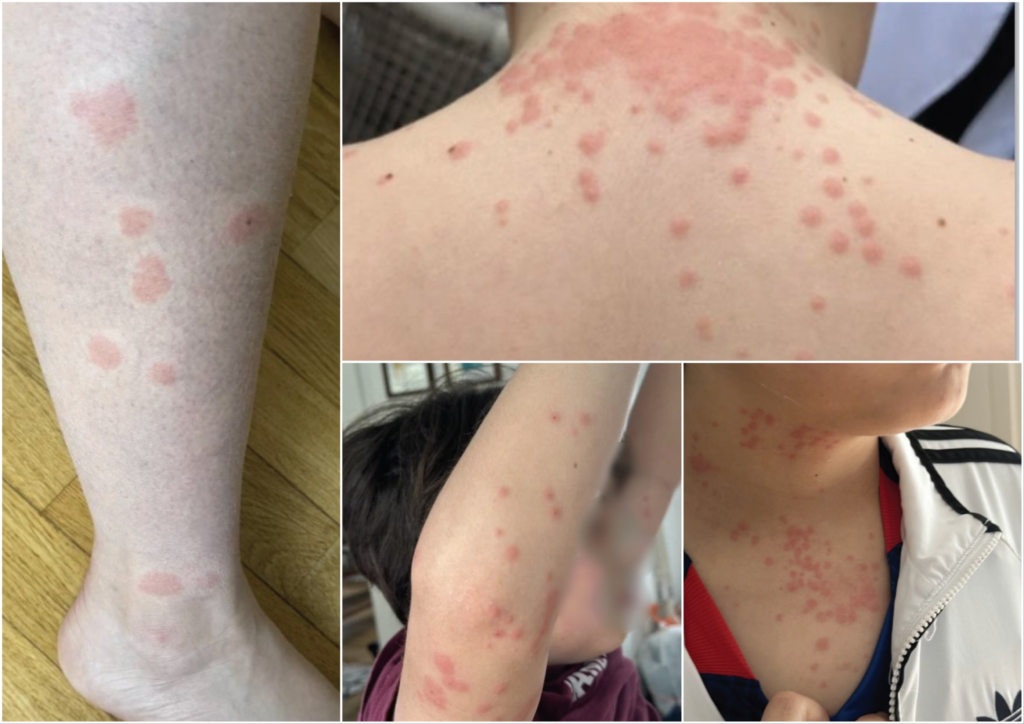
After returning home, the situation escalated further. About a week later, the Albuquerques took their children to a pediatric clinic, where doctors prescribed topical steroids and antihistamines. According to the complaint, medical professionals confirmed that the injuries were consistent with bed bug bites. The family was also advised to use bug bombs in their home and car as a precautionary measure, reflecting fears that the insects could have traveled with them and caused a secondary infestation.
The children, the lawsuit states, suffered particular distress. Despite being medically cleared as “not contagious,” their visible welts led to embarrassment at school, requiring doctors’ notes to reassure administrators. For Lisandra Garcia, the impact appears to be ongoing. The complaint alleges that she still bears scars on her lower back from the bites, months after the incident.
Beyond the physical injuries, the family claims significant emotional harm. The lawsuit lists anxiety, humiliation, anger, fear, and mental anguish among the consequences of the alleged infestation. They also state that they were forced to dispose of personal items and clothing out of concern for contamination, adding financial loss to their damages.
Legal Claims Against KLM and Delta
Central to the lawsuit is the complex relationship between Delta Air Lines and KLM Royal Dutch Airlines. The family booked their tickets through Delta using the SkyMiles program, with a total face value of approximately $8,800. Although the transatlantic flight was operated by KLM on a KLM aircraft, it carried a Delta flight number as part of a code-share agreement. As a result, both airlines are named as defendants.
The complaint alleges negligence, arguing that the airlines failed to properly inspect, clean, and maintain the aircraft cabin, allowing a bed bug infestation to persist. It also contends that the crew’s response prioritized operational convenience and public relations over passenger safety and well-being. By allegedly discouraging the family from speaking up and continuing to expose them to bites, the lawsuit claims the airlines compounded the harm rather than mitigating it.

Attorneys representing the Albuquerques have stated that they attempted to resolve the matter privately before filing suit, but received no satisfactory response from either airline. As a result, they say litigation became necessary to assert the family’s rights and seek fair compensation.
Public responses from the airlines have been cautious. A Delta spokesperson emphasized that the allegations relate to a flight not operated by Delta, while confirming the company would review the complaint and respond through legal channels. KLM, for its part, has said it cannot comment on the specific allegations while the matter is pending, noting that it will address the claims in court.
The case also draws attention to a broader issue within air travel. Pest control experts have noted that bed bugs are not unheard of on aircraft, given the high passenger turnover and fabric-covered seating that can harbor insects brought aboard in luggage or clothing. While airlines maintain cleaning protocols designed to prevent such incidents, documented cases, including viral social media posts in recent years, suggest that infestations can and do occur.
For the Albuquerque family, however, the issue is less about industry trends and more about accountability. Their lawsuit asserts that business-class passengers paying a premium, whether in cash or miles, are entitled to a basic standard of hygiene and prompt, transparent handling of emergencies. They argue that failing to meet that standard resulted in tangible harm that continues to affect their lives.
As the case proceeds through federal court, it may offer insight into how far airline liability extends in situations involving onboard infestations, particularly in code-share arrangements where responsibility can be diffuse. It may also influence how airlines train crews to respond when health-related incidents arise mid-flight, balancing the desire to avoid panic with the obligation to protect passengers.
For now, the Albuquerques are seeking compensatory damages of $200,000, plus interest, for what they describe as a vacation that was effectively over before it began. Whether the court ultimately agrees with their claims remains to be seen, but the lawsuit underscores the lasting impact that a few hours in an allegedly infested cabin can have on a family’s health, finances, and peace of mind.