
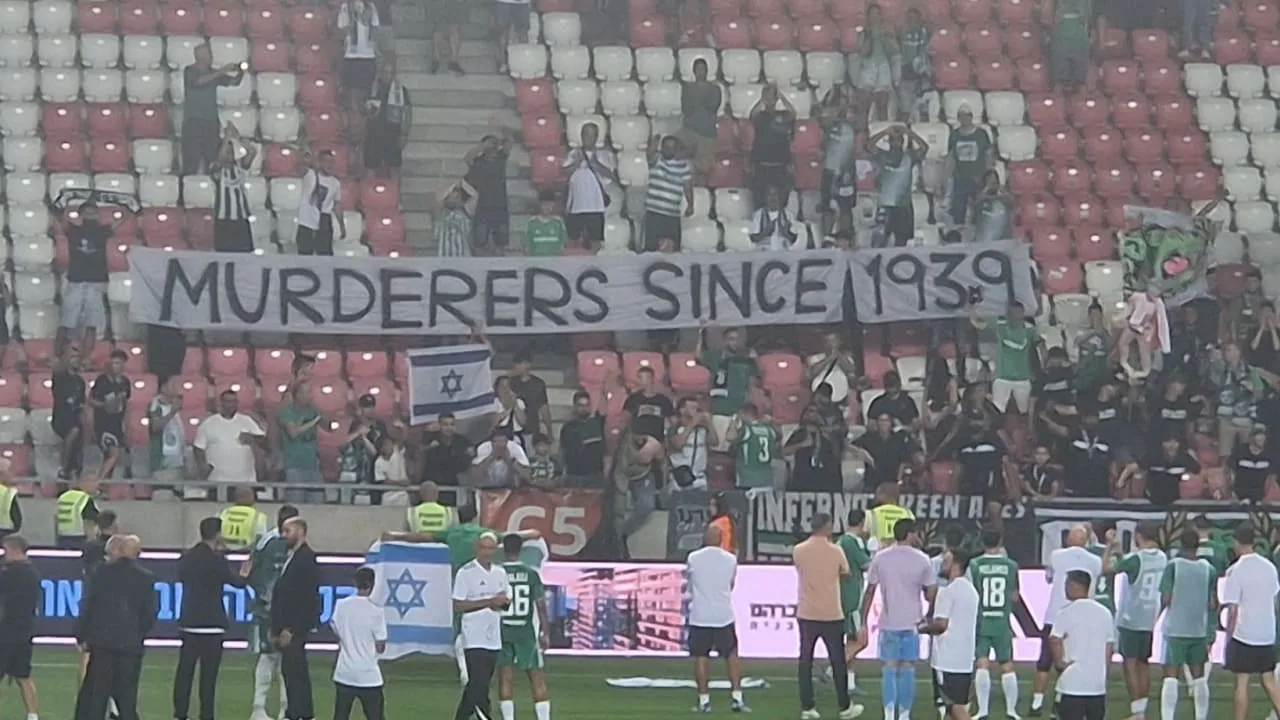
The world of football is often celebrated as a unifying force, bringing together fans from different nations, cultures, and backgrounds. However, the sport can sometimes become a stage for controversy, especially when historical and political tensions intersect with fan culture. A recent incident during a Europa Conference League match between Israeli club Maccabi Haifa and Polish team Rakow Czestochowa exemplifies this dynamic.
Fans of Maccabi Haifa displayed a banner reading “Murderers since 1939,” sparking outrage in Poland and drawing international attention. The match, played in Debrecen, Hungary for security reasons, became the center of a heated debate about the responsibilities of sports fans, historical memory, and international relations.
Background of the Match and the Controversy
The Europa Conference League fixture between Maccabi Haifa and Rakow Czestochowa was moved from Poland to Debrecen, Hungary, due to security concerns and the sensitivity of the match. Despite these precautions, the game became overshadowed by the actions of a group of Israeli supporters who displayed the banner across a row of seats.
The message on the banner—”Murderers since 1939″—provoked strong reactions because 1939 marks the beginning of World War II, a time when millions of Poles, including three million Jews, were killed. Polish officials considered the banner a direct insult to the memory of those who suffered and perished during the war.
Polish President Karol Nawrocki, a former head of the country’s Institute of National Remembrance, condemned the act on social media, writing that “The scandalous banner displayed by Maccabi Haifa fans insults the memory of Polish citizens—victims of World War Two, including 3 million Jews. Stupidity that no words can justify.”
Maccabi Haifa fans held a banner saying “MURDERERS SINCE 1939” during a match against a Polish team in Hungary. It looks like Israeli fans couldn’t cope with the defeat. pic.twitter.com/Qfg1vsBAih
— Judgy Emoji (@JudgyEmoji) August 15, 2025
The banner quickly became a focal point in discussions about fan behavior, historical awareness, and the intersection of sports and politics. While the match itself was meant to be a sporting contest, the provocative display shifted attention to issues far beyond the stadium.
Reactions from Officials and the Public
The display of the banner drew criticism from both Polish and Israeli authorities. Polish Interior Minister Marcin Kierwinski described the incident as “anti-Polonism” and condemned the distortion of Polish history by what he called “Israeli hooligans,” emphasizing that such actions required strong rebuke.
Meanwhile, the Israeli Embassy in Warsaw also condemned the banner, making clear that the actions of a small group of fans did not represent the views of the majority of Israeli supporters. In a statement shared on social media, the embassy wrote, “There is no place for such words and actions, from any side, neither at the stadium nor anywhere else. Never! These shameful incidents do not reflect the spirit of the majority of Israeli fans.”
The strong reactions highlight how sports events can quickly become a platform for international debate, especially when historical and national sensitivities are involved. UEFA, the governing body for European football competitions, has strict rules against discriminatory behavior and political messaging in stadiums. Incidents like this present a challenge for UEFA, which must balance fan freedom with the need to maintain respect and safety in sporting environments.
The outrage surrounding the banner is rooted in the historical context of World War II and the suffering endured by Poland and its citizens. The year 1939 is a pivotal moment in history, marking the invasion of Poland and the beginning of a conflict that led to the deaths of millions. The Holocaust and other wartime atrocities left deep scars on the Polish population, including Jewish communities. Any statement implying collective responsibility on the part of the Polish nation touches on highly sensitive historical and cultural memories.

Football, while primarily a sport, has long been intertwined with expressions of national identity and political sentiment. Fans often use matches to demonstrate allegiance, voice grievances, or comment on historical events. However, the use of inflammatory language tied to past tragedies crosses the line from sporting rivalry to provocation, risking diplomatic tensions and public backlash.
The incident also raises broader questions about responsibility. Sports clubs, fan organizations, and governing bodies all play a role in ensuring that stadiums are safe spaces that do not propagate hate or historical distortion. Education about historical events, clear rules, and strict enforcement of codes of conduct are essential to prevent future incidents.
The banner displayed by Maccabi Haifa fans during the Europa Conference League match against Rakow Czestochowa serves as a stark reminder of the powerful intersection of sports, politics, and history. While football is celebrated for its ability to bring people together, it can also amplify tensions when historical grievances are invoked. The strong condemnations from Polish officials and the Israeli Embassy underscore the broader implications of fan actions, showing that words and symbols in sports arenas carry weight beyond the game itself.
Rakow Czestochowa won the match 2-0, securing a 2-1 aggregate victory, but the controversy surrounding the banner overshadowed the sporting result. The incident illustrates that in international football, emotions run high not only on the pitch but also in the stands, where the passions of fans can intersect with sensitive historical narratives. It is a reminder that sportsmanship involves not only fair play in the game but also respect for history, memory, and international understanding.
Incidents like this highlight the need for continued dialogue, education, and awareness among sports fans worldwide, ensuring that football remains a platform for unity rather than division. Respecting historical memory and the experiences of others is as important as cheering for one’s team, reinforcing the idea that with the power of sports comes the responsibility to act thoughtfully and responsibly.
Rakow Czestochowa’s victory will be remembered in terms of the scoreline, but the controversy surrounding the banner will likely remain a cautionary tale about the consequences of inflaming historical sensitivities and the importance of respect both on and off the field.