

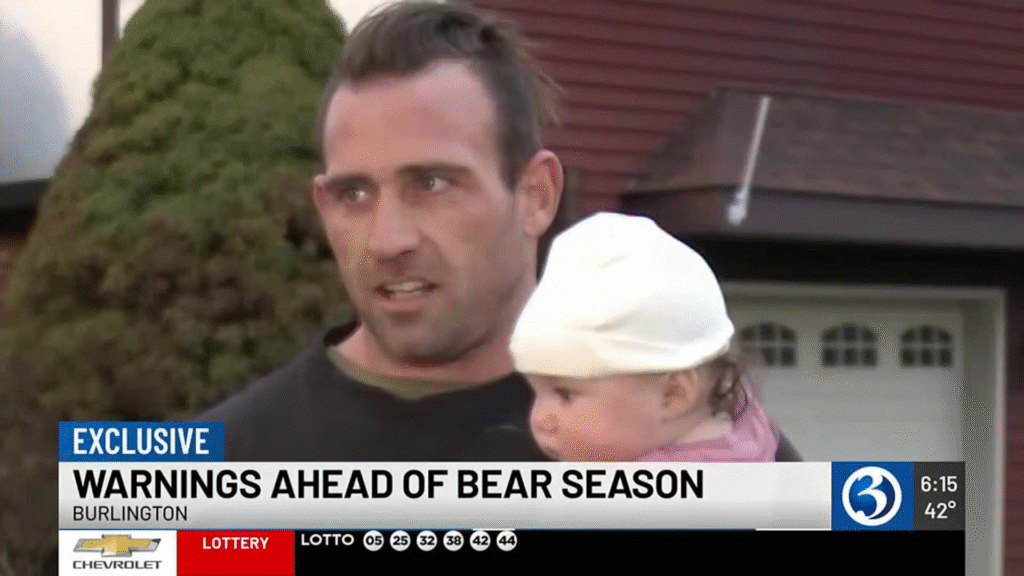
A Connecticut Father Arrested for Shooting a Bear. Todd Topicz, found himself at the center of public scrutiny and legal consequences after a terrifying incident involving a black bear that wandered dangerously close to his children. The early morning confrontation took place in Bethlehem, a small town where human-wildlife interactions are not uncommon but rarely escalate to violence.
The black bear had approached Topicz’s home, entered the open garage where his kids were playing, and even chased the family dog up a tree. Alarmed and fearing for his family’s safety, Topicz acted fast.
He claimed he fired warning shots into the air, hoping to scare the bear away. In the commotion and fear of the moment, he didn’t realize that one of the shots had actually struck the bear.
It was only after a neighbor notified the police the next day about a dead bear found in the woods that the fatality was confirmed. What Topicz believed was a defensive act to protect his children quickly turned into a legal nightmare.
Despite the bear entering an area of the home where his children and wife were present, the Connecticut Department of Energy and Environmental Protection (DEEP) later arrested him on charges of the illegal taking of a bear.
This move stunned Todd Topicz, as he cited a 2023 state law that allows residents to kill a bear in self-defense if there is a reasonable belief that the animal poses a threat of bodily harm or enters a building occupied by people. In Topicz’s case, the bear had done both.
Father Arrested for Shooting a Bear
The decision by DEEP to pursue charges sparked confusion and controversy. The arrest occurred two weeks after the incident, and Topicz was left trying to reconcile his actions with the state law he believed he had followed.
He publicly questioned DEEP’s motives and rationale, pointing out that the 2023 law clearly stipulates that people have the right to defend themselves and their property against potentially dangerous wildlife intrusions.
Adding to the confusion, DEEP has refused to publicly comment on the case, citing potential legal constraints. This silence has only intensified public interest and concern, prompting state legislators to step in.
Read : Father Makes 3-Year-Old Daughter Fill Bowl with Tears for Watching Excess TV in China
Senators Eric Berthel, Henri Martin, and Stephen Harding issued a joint letter to DEEP Commissioner Katie Dykes, requesting clarity. In their letter, the senators emphasized the importance of public transparency and asked why the agency would charge someone who appeared to be acting to protect his family under the very guidelines the law provides.
“The Department of Energy and Environmental Protection is not commenting on the case. Why? Has the case been sealed? If so, why?” the senators questioned. Their letter called on DEEP to issue a public statement, arguing that such clarification would help constituents understand the law better and prevent similar legal entanglements in the future.
This political involvement highlights a deeper issue—how legal definitions of self-defense and wildlife protection can conflict, especially when a person’s immediate reaction is driven by fear and instinct rather than calculated legal analysis.
In Topicz’s view, the presence of a bear just feet from his children was enough to warrant a defensive response. But whether the law agreed was now a matter for the courts and public opinion.
Community Reactions and a Possible Resolution
Public opinion in the small community of Bethlehem has largely sided with Todd Topicz. Many residents believe that in a life-or-death situation involving one’s family, a parent shouldn’t be punished for choosing safety over passivity.
Social media discussions and local talk radio have been filled with people expressing disbelief over the charges, saying that anyone would have done the same if faced with a bear entering their home.
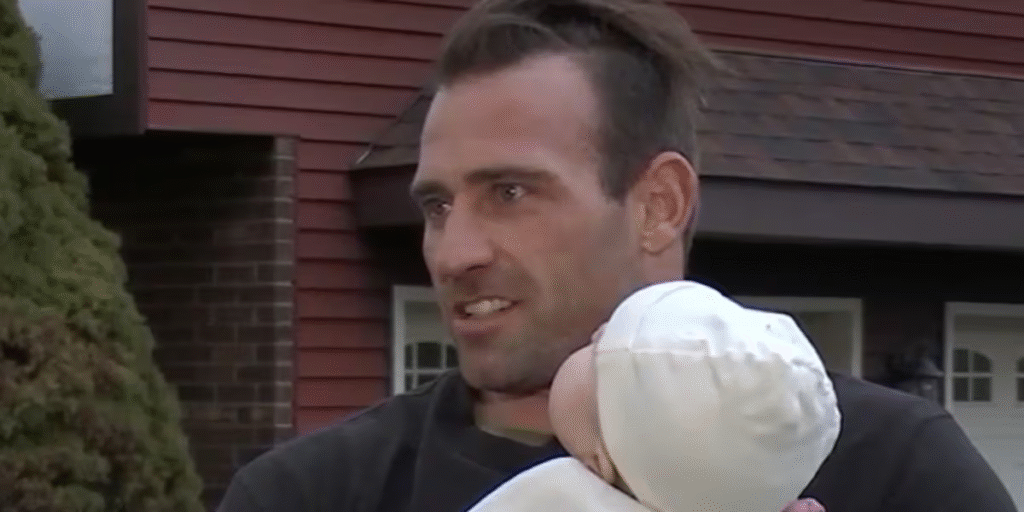
Adding to the complex legal twist, Topicz was enrolled in an accelerated rehabilitation program for first-time offenders. This program allows individuals to avoid formal charges and a criminal record if they successfully complete it.
While this may spare Topicz from jail time and permanent legal consequences, it does little to erase the stigma of the arrest or the emotional toll the process has taken on his family.
Critics of the DEEP’s actions argue that the agency is more focused on enforcing wildlife protections than understanding the human side of such encounters. They suggest that while laws are necessary to protect animals, those same laws must also recognize and accommodate the unpredictability of real-life situations, especially when children are involved.
Todd Topicz’s story has become a rallying point for those calling for clearer legislation and more empathetic enforcement practices. It has also reignited debates about Connecticut’s growing black bear population and the challenges of coexistence between humans and wildlife in semi-rural areas.
As more people move into areas once dominated by forests and animal habitats, these kinds of encounters are expected to rise. The question remains: How should the law balance the rights of wildlife with the instinctive drive of parents to protect their children?
Although Topicz is expected to walk away without formal charges due to the rehabilitation program, the case remains a cautionary tale. It has exposed potential gaps in the law and highlighted the need for greater awareness among residents about how to handle wildlife confrontations legally.
It also underscores the emotional burden placed on individuals who must defend their families under duress, only to later find themselves entangled in a legal system that appears to question their motives.
The silence from DEEP has only fueled further frustration. Until the agency offers a public explanation, the community—and the broader public—will likely continue to speculate on why a man who tried to protect his children was treated like a criminal. For many, it feels like a betrayal of common sense and parental instinct.
As the legal dust settles, Todd Topicz and his family are left to pick up the pieces. His wife, still pregnant at the time of the incident, now faces the uncertainty of bringing a child into a world where defending one’s family can lead to an arrest. The children, meanwhile, have likely been affected by the trauma of both the bear encounter and the fallout that followed.
In the end, this case may go down as a landmark moment in Connecticut’s ongoing discussion about human-wildlife conflict. Whether it leads to changes in policy or merely fades as another strange chapter in legal history remains to be seen.
But for Todd Topicz, the incident is more than a news story—it’s a life-altering experience that has forever changed how he views safety, law, and justice.