
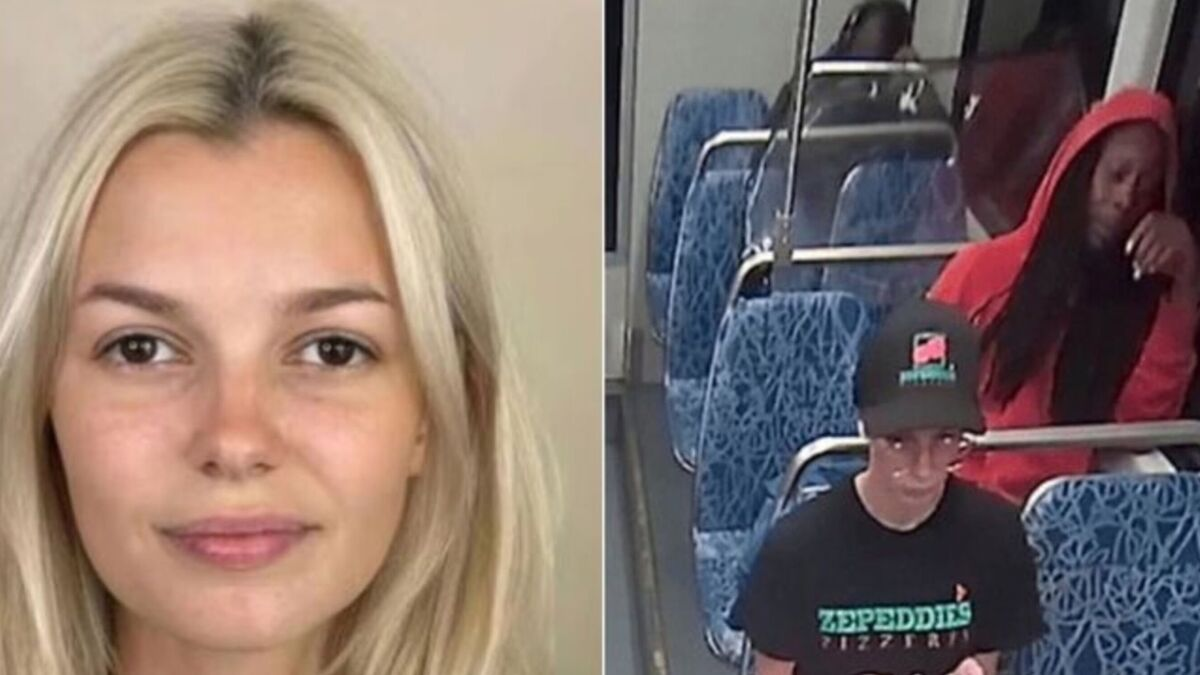
The tragic story of Iryna Zarutska, a 23-year-old Ukrainian refugee brutally killed on a Charlotte, North Carolina, light rail train, has captured international attention. The young woman, who fled war-torn Ukraine in 2022 seeking safety in the United States, met a horrific end on August 22, 2025, when she was fatally stabbed in an unprovoked attack.
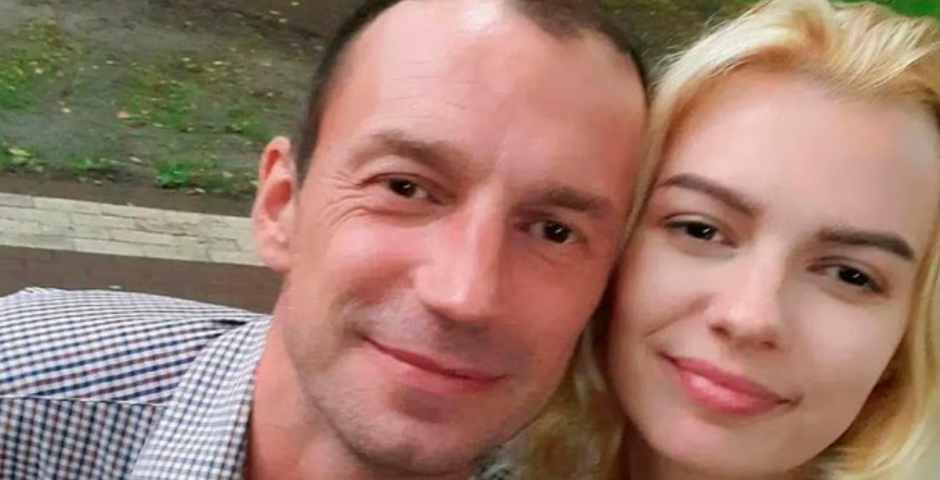
Adding to the family’s profound grief, Iryna’s father, Stanislav Zarutskyi, was unable to attend her funeral due to Ukraine’s wartime restrictions on men of military age leaving the country. This devastating situation highlights the intersection of personal tragedy, global conflict, and systemic issues in public safety.
A Life Cut Short: Iryna Zarutska’s Journey and Dreams
Iryna Zarutska was born on May 22, 2002, in Kyiv, Ukraine, to parents Anna and Stanislav Zarutskyi. Growing up in a close-knit family alongside her sister Valeriia and brother Bohdan, Iryna was known for her vibrant spirit and creative talents. Described as a gifted artist, she loved sculpting and designing clothing, pursuits that reflected her passion and individuality. Her family and friends remembered her as kind, hardworking, and deeply loved, with a neighbor noting to the New York Post that she was “sweet” and beloved by the entire community for her pet-sitting and warm demeanor.
In 2022, six months after Russia’s full-scale invasion of Ukraine, Iryna, her mother, and her siblings fled to the United States, seeking asylum and safety from the relentless bombings and uncertainty of war. Her father, Stanislav, remained behind due to Ukraine’s mandatory military service laws, which prohibit men of fighting age from leaving the country. This separation was a painful but necessary decision, as the family hoped to reunite once the conflict subsided.
Iryna settled in Charlotte, North Carolina, where she worked tirelessly to build a new life. She held a full-time job at Zepeddies Pizzeria, quickly advancing from an entry-level position to a line cook, and was taking English classes at Rowan-Cabarrus Community College with aspirations to become a veterinary assistant. Her uncle, in an interview with Good Morning America, described her as “the glue of the family,” emphasizing her determination to pursue the American dream.
On the night of August 22, 2025, Iryna was returning home from her shift at the pizzeria, still in her work uniform, when she boarded the Lynx Blue Line train in Charlotte’s South End neighborhood. Surveillance footage, later released to the public, captured her final moments as she sat scrolling on her phone, unaware of the danger lurking nearby. Decarlos Brown Jr., a 34-year-old man with a history of over a dozen prior arrests and diagnosed schizophrenia, sat behind her.
Without warning, Brown pulled out a folding knife, stood, and stabbed Iryna three times, at least once in the neck. She collapsed, clutching her throat, as Brown exited the train at the next stop, leaving her to die. The attack, described by police as random and unprovoked, transformed a routine commute into a nightmare, shocking the community and reigniting debates about public safety and criminal justice policies.
A Father’s Grief: Barred by War from Saying Goodbye
Stanislav Zarutskyi’s inability to attend his daughter’s funeral compounded the family’s grief. Ukraine’s martial law, enacted in response to Russia’s invasion, prohibits men aged 18 to 60 from leaving the country to ensure a robust defense against the ongoing conflict. As a result, Stanislav was denied permission to travel to the United States for Iryna’s funeral, held in Charlotte at the end of August 2025.
A family neighbor, speaking to the New York Post, explained that Stanislav “had to stay back” due to these “war time rules,” leaving him “devastated” at being unable to say a final goodbye to his daughter. The Daily Mail reported that Stanislav’s absence was a profound blow, as he was unable to join Iryna’s mother, siblings, and uncle in mourning her loss.
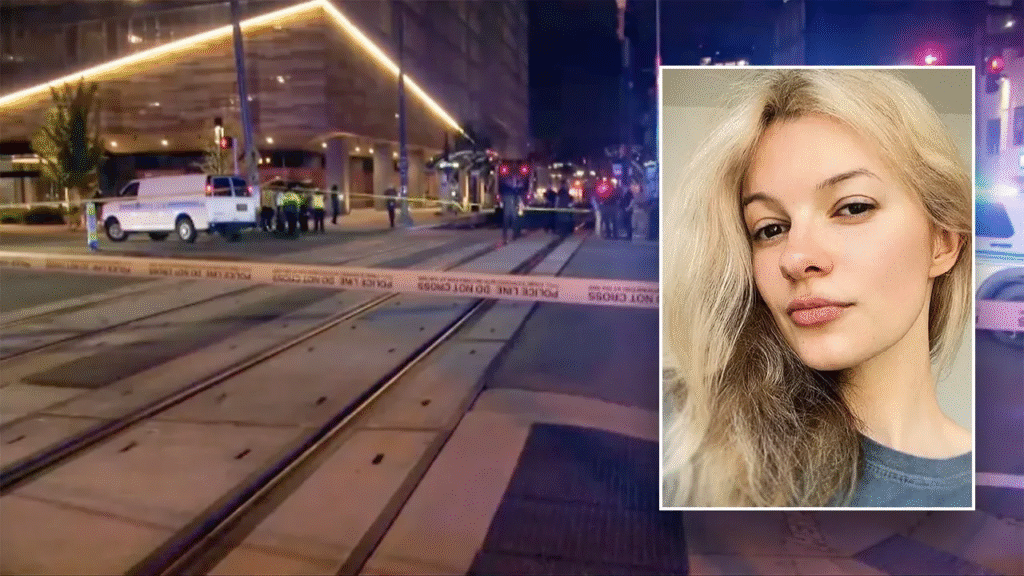
The funeral itself was a somber affair, attended by family, friends, and members of the Charlotte community who had come to know Iryna. Her pizzeria employer honored her as an “incredible employee” and a “true friend,” with the owner joining others at the service. A GoFundMe campaign launched by the family raised over $38,000 to support memorial efforts, including plans for 300 murals of Iryna across the United States, reflecting her passion for art and the community’s desire to honor her memory.
Vigils, such as one held on September 12 at Marshall Park in Uptown Charlotte, underscored the widespread grief and outrage over her death. Ukrainian officials expressed condolences, and the U.S. Embassy in Kyiv assisted the family, but Stanislav’s absence due to Ukraine’s mobilization laws remained a heartbreaking reminder of the war’s far-reaching impact.
This situation highlights the human cost of global conflicts, where families are torn apart not only by violence but also by the bureaucratic and legal constraints of wartime. Stanislav’s plight resonates with countless Ukrainian families separated by the ongoing war, where personal tragedies are compounded by the inability to reunite or mourn together. For the Zarutskyi family, the loss of Iryna was not only a personal devastation but also a stark reminder of the sacrifices demanded by their homeland’s struggle for survival.
Systemic Failures and Calls for Change
The murder of Iryna Zarutska has sparked intense scrutiny of public safety and criminal justice systems in Charlotte and beyond. Decarlos Brown Jr., the suspect, faces both state first-degree murder charges and a federal indictment for committing an act causing death on a mass transportation system. If convicted on the federal charge, he could face the death penalty, though North Carolina has not executed anyone in nearly a decade.
Attorney General Pam Bondi, advocating for the harshest possible sentence, stated that Iryna’s murder was a “direct result of failed soft-on-crime policies that put criminals before innocent people.” Brown’s extensive criminal history, including prior convictions for armed robbery, breaking and entering, and larceny, has fueled criticism that authorities failed to keep a known offender off the streets.
Brown’s family revealed that he had been diagnosed with schizophrenia but refused medication, with his behavior deteriorating after his release from a five-year prison term in 2022. His sister told Kursiv Media Uzbekistan that Brown believed Iryna was “reading his mind,” a delusion that reportedly motivated the attack.
This revelation has raised questions about the handling of individuals with untreated mental illness and the adequacy of mental health interventions within the criminal justice system. Critics, including local officials and community members, have pointed to Brown’s release without bail in January 2025, after misusing the 911 system, as evidence of systemic leniency.
Iryna’s family has been vocal in condemning what they describe as “lapses in security protocols” on the Charlotte Area Transit System (CATS). The attack, captured on chilling surveillance footage, occurred in full view of other passengers, prompting reviews of CATS’s security contracts with Professional Security Services.
Charlotte Mayor Vi Lyles called the attack “senseless and tragic,” urging the public not to share the footage out of respect for Iryna’s family, who were forced to view it alongside the public. The family’s lawyer, Lauren O. Newton, emphasized Iryna’s kind and hardworking nature, noting that she came to the U.S. for peace and safety, only to have her life “stolen in the most horrific way.”
The case has also drawn political attention, with former President Donald Trump recording a video message criticizing Democratic policies for contributing to rising crime rates and advocating for the death penalty for Brown. The tragedy has fueled broader discussions about urban transit security, mental health treatment, and the consequences of lenient criminal justice policies. Community awareness programs and better surveillance technology have been proposed as potential solutions, but for Iryna’s family, these measures come too late.
In conclusion, Iryna Zarutska’s murder is a heartbreaking convergence of personal loss, global conflict, and systemic failures. Her life, marked by resilience and ambition, was cut short in a random act of violence, leaving her family and community to grapple with profound grief.
Stanislav Zarutskyi’s inability to attend her funeral due to Ukraine’s wartime restrictions underscores the far-reaching impact of the ongoing conflict, while the circumstances of her death have ignited calls for reform in public safety and criminal justice. Iryna’s legacy as a talented artist and beloved family member endures, but her story serves as a sobering reminder of the challenges facing refugees and the urgent need for systemic change to prevent such tragedies in the future.