
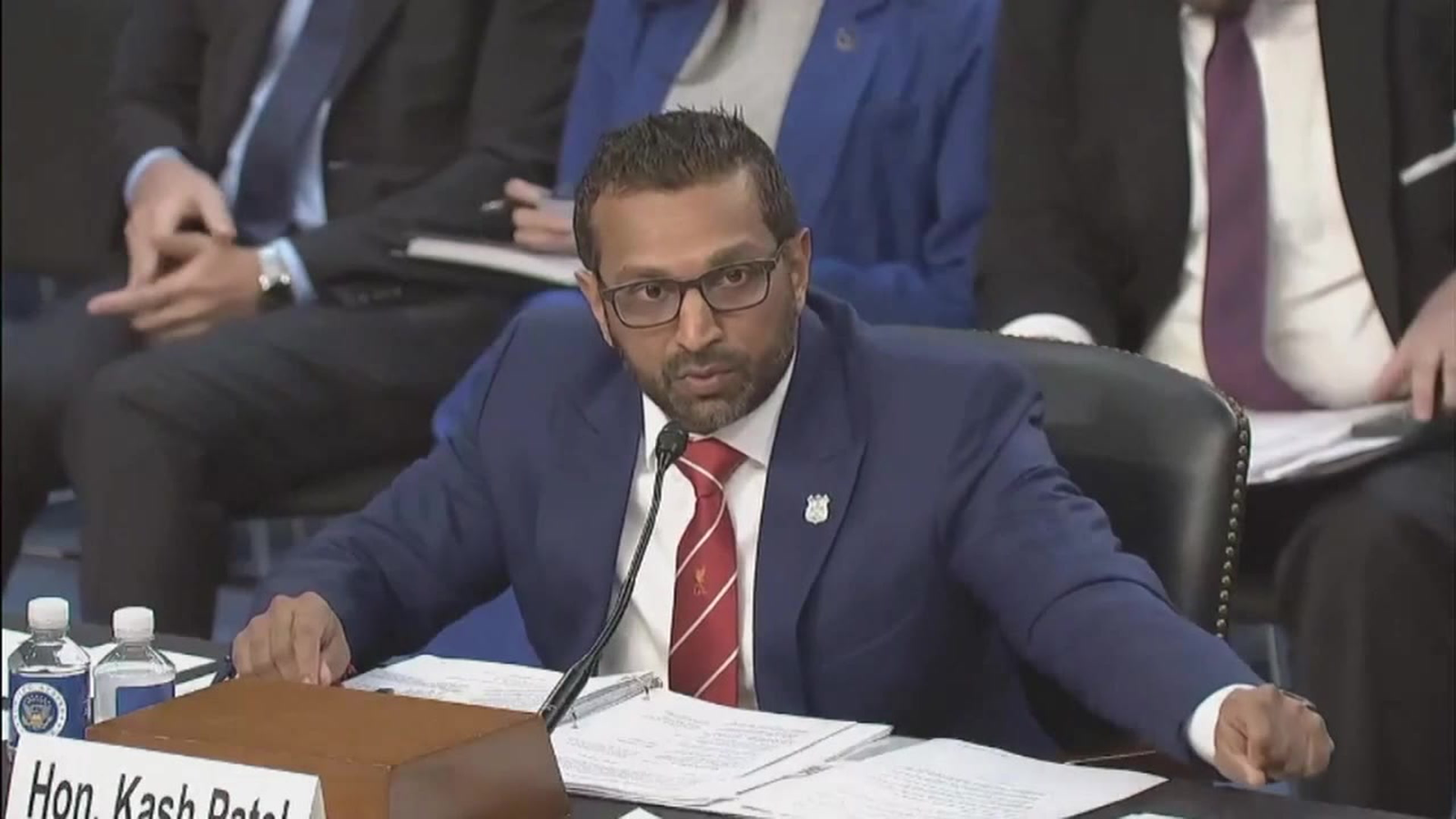
In a move that has ignited fierce debate over free speech and workplace policies within federal agencies, FBI Director Kash Patel dismissed a new agent trainee on October 1, 2025, citing the display of a Pride flag at the employee’s workstation during a prior assignment. The decision, outlined in an official dismissal letter, has drawn sharp criticism from Democratic lawmakers and LGBTQ+ advocacy groups, who view it as part of a broader effort to purge perceived “woke” elements from the bureau.
The trainee, a veteran FBI employee with a decorated service record, was undergoing training at the FBI Academy in Quantico, Virginia, when the termination was enacted. This incident unfolds amid a government shutdown and escalating tensions over diversity initiatives in the Trump administration.
The firing highlights ongoing clashes between the current FBI leadership’s emphasis on political neutrality and expressions of personal identity among staff. Sources familiar with the matter confirmed to multiple outlets that the “inappropriate political signage” referenced in Patel’s letter specifically alluded to the rainbow Pride flag, which the trainee had placed on his desk while assigned to the Los Angeles field office under the previous administration. The bureau has not publicly elaborated beyond the letter, but the episode underscores a shift in internal culture since Patel assumed the directorship earlier this year.
The Incident and Official Rationale
The dismissal letter, dated Wednesday, October 1, 2025, invoked President Donald Trump’s Article II authority to summarily remove the trainee from his position at the Quantico academy. Patel wrote that the employee had “exercised poor judgment with an inappropriate display of political signage” during his time in Los Angeles, a role he held as a non-agent staffer focused on diversity coordination. The letter did not explicitly mention the Pride flag but described the action as a violation warranting immediate termination, effective upon receipt.
The trainee, whose identity has not been disclosed publicly out of respect for privacy protocols, joined the FBI as a professional staff member several years ago and advanced through roles that included coordinating diversity programs in field offices. In 2022, he received the Attorney General’s Award for Excellence in Furthering the Interests of the United States, recognizing outstanding contributions to national security efforts. Colleagues described him as a high-performing employee with no prior disciplinary issues, who had recently entered the rigorous 20-week new agent training program to transition into a full special agent role.
Two veteran FBI officials, speaking anonymously to media, emphasized that under previous directors, including Christopher Wray, displaying a Pride flag at a personal workstation was not considered a policy infraction. Such decorations were common during Pride Month observances and aligned with the bureau’s long-standing support for inclusive environments, including participation in LGBTQ+ events and internal affinity groups. The Los Angeles assignment occurred in 2024, well before Patel’s appointment, when the FBI maintained guidelines allowing personal items that did not interfere with operations.
Read : Kash Patel’s Girlfriend Sues Podcaster Kyle Seraphin for Calling Her ‘Israeli Spy’
Patel’s rationale frames the flag as a form of political advocacy incompatible with the FBI’s apolitical mandate. In the letter, he stressed the need for employees to uphold “impartiality and professionalism,” arguing that any signage perceived as endorsing a partisan cause undermines public trust. This interpretation marks a departure from prior precedents, where similar displays—such as military branch flags or religious symbols—were permitted if they remained discreet. The trainee was informed of the decision during a routine training review, with no opportunity for appeal cited in the correspondence. As of October 4, the FBI has declined to comment further, citing personnel matters.
Read : China Calls Worldwide Scientists to Study the Sample of Lunar Soil: Restricted Only US
This case is not isolated within Patel’s brief tenure. Earlier this year, the director oversaw the termination of over a dozen employees who knelt in solidarity during 2020 crowd control operations following the George Floyd protests—a gesture former Director Wray publicly defended as non-violatory. Additionally, three senior executives were pressured to resign amid allegations of disloyalty, later filing lawsuits claiming the actions stemmed from White House directives influenced by Trump’s inner circle. These patterns suggest a systematic review of employee histories for signs of ideological misalignment.
Backlash and Political Reactions
The firing prompted immediate condemnation from across the political spectrum, with Democratic leaders decrying it as an assault on free expression and civil rights. Senate Judiciary Committee Democrats, through spokesperson Josh Sorbe, stated, “LGBTQ+ individuals should be able to serve their country openly and proudly. Rather than policing desk displays, Kash Patel should focus on keeping our nation safe.” The group vowed to intensify oversight of the FBI, accusing Patel of “deprofessionalizing and weaponizing” the agency.
House Equality Caucus Chair Rep. Mark Takano (D-Calif.) labeled the action “despicable,” framing it within a larger “purge” of LGBTQ+ voices from federal service. “This isn’t just censorship; they’re firing people for simply being LGBTQI+ or supporting the community,” Takano said. “These acts exemplify how commonplace anti-LGBTQI+ discrimination has become in this administration.”
Similarly, Senate Democratic Whip Dick Durbin (D-Ill.), the Judiciary Committee’s ranking member, criticized the move as an attack on First Amendment protections. “If you’re an LGBTQ+ person who wants to protect our country at the FBI, you should be able to do so openly and with pride,” Durbin remarked. “Patel’s tenure has left America less safe, less free, and less secure.”
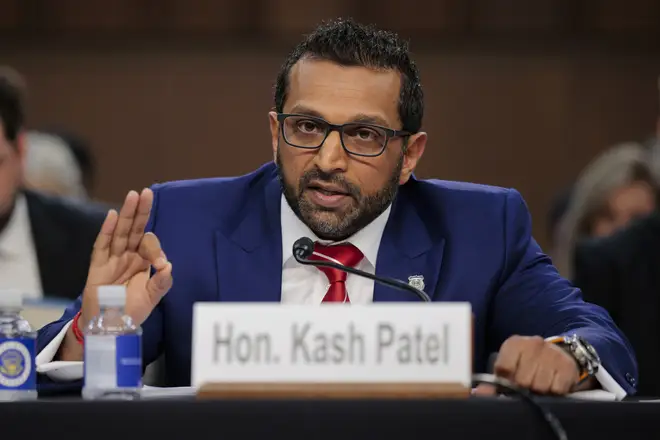
Advocacy organizations amplified these voices. Luke Schleusener, CEO of Out in National Security, called the dismissal “a clear act of bias and a warning to public servants and allies.” He likened it to a “Second Lavender Scare,” referencing mid-20th-century purges of gay federal workers, and noted similar restrictions at the Department of Veterans Affairs on Pride displays. The Human Rights Campaign issued a statement asserting the firing is “illegal,” as federal employees retain basic First Amendment rights. “If you can be targeted for your expression, no one is safe,” the group posted on social media.
Even some conservative commentators expressed unease, though muted. Outlets like AL.com reported the story neutrally, highlighting the trainee’s award-winning record and questioning the proportionality of the response. MSNBC sources revealed internal FBI chatter, with agents warning colleagues post-inauguration to scrub profiles for LGBTQ+ affiliations amid rumors of file audits targeting such lists. Lawyer Alejandra Caraballo warned that “anything as innocuous as a pride flag can now cause a federal investigation or job loss,” aiming to instill fear and enforce compliance.
Public reaction on platforms like Reddit and Instagram trended toward outrage, with users sharing the trainee’s 2022 award as evidence of selective enforcement. No Republican lawmakers have publicly defended or criticized the decision as of October 4, though Trump’s past comments on banning progressive Pride flags—echoed by allies like Rep. Marjorie Taylor Greene—provide context for the administration’s stance.
Broader Context and Implications
Patel’s action occurs against a backdrop of aggressive reforms aimed at aligning the FBI with President Trump’s vision of a “drain the swamp” overhaul. Since taking office in January 2025, Trump has directed federal agencies to dismantle diversity, equity, and inclusion (DEI) programs, issuing executive orders to streamline firings and curb what he terms “radical left” influences. The FBI, long a target of Trump’s rhetoric for alleged biases during his first term, has seen heightened scrutiny, including proposals to reclassify “transgender ideology-inspired violence” as an extremism category—a move decried as baseless stigmatization.
This firing exacerbates fears among federal workers, particularly in law enforcement, where morale is already strained by the ongoing shutdown. Reports indicate contractors and staff handling LGBTQ+ issues across agencies face dismissals, fueling lawsuits over discrimination. The trainee’s case could set a precedent, prompting reviews of innocuous symbols like Pride lanyards or ally stickers. Critics argue it erodes the FBI’s recruitment of diverse talent, essential for community trust in investigations involving hate crimes, which rose 12% in 2024 per bureau data.
Supporters of Patel, including Trump allies, maintain such measures restore neutrality, preventing the bureau from becoming a “political weapon.” Yet, with the trainee’s lawsuit potential looming—bolstered by First Amendment claims—the episode risks prolonged legal battles, diverting resources from core missions like counterterrorism.
As the dust settles, this incident crystallizes the cultural fault lines in Trump’s second term. For LGBTQ+ federal employees, it signals a chilling environment where personal pride intersects with professional peril. Senate Democrats’ promised probes may yield hearings, but in a divided Congress, accountability remains uncertain. The FBI’s silence speaks volumes, leaving agents to navigate an era where a flag on a desk can end a career built on service.
Wow! This can be one particular of the most beneficial blogs We have ever arrive across on this subject. Actually Fantastic. I’m also an expert in this topic therefore I can understand your hard work.