
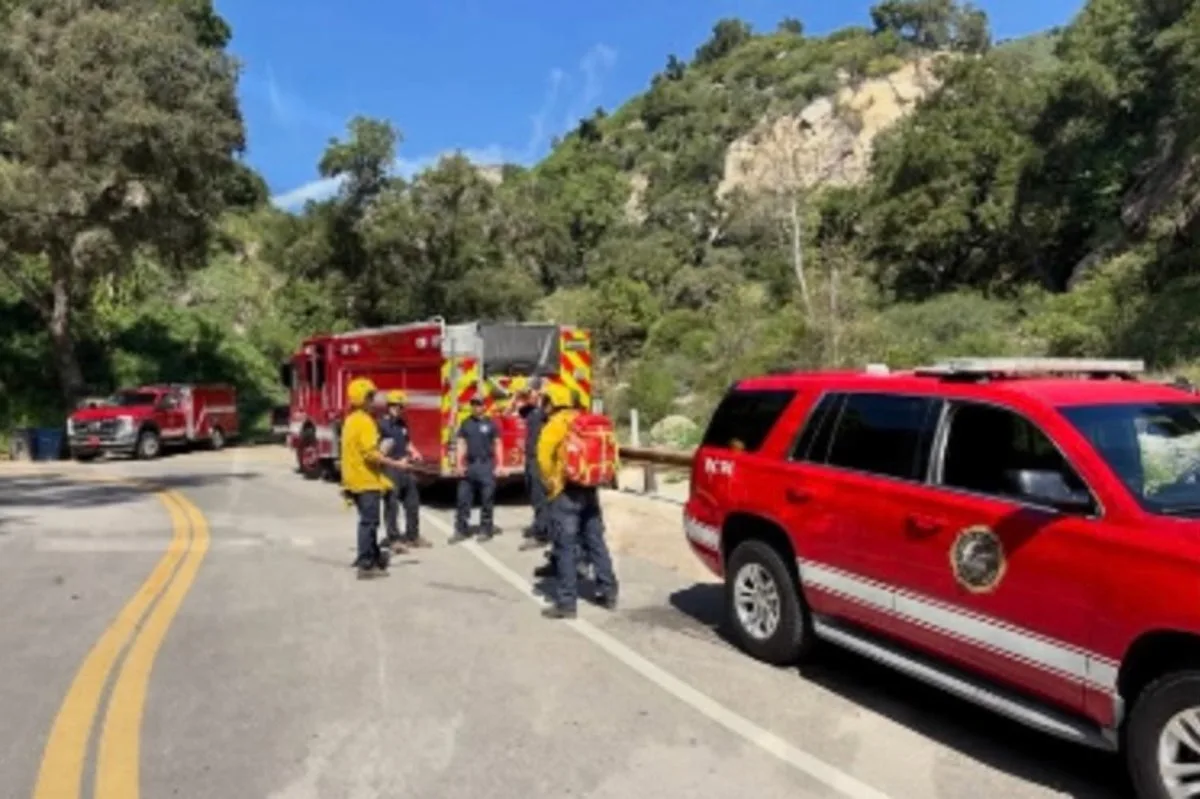
A routine hike in the mountains near Santa Barbara turned into a medical emergency when a woman suffered a severe allergic reaction after being stung by fire ants along a popular trail. Emergency responders were forced to carry out an urgent rescue operation that ultimately required a helicopter evacuation from the remote terrain. The incident unfolded on the West Fork of the Cold Spring Trail, an area known for scenic views and steady foot traffic from hikers exploring the foothills above the coastal communities.
According to local authorities, the woman had been hiking when she came into contact with fire ants, triggering an allergic reaction that quickly escalated into a potentially dangerous situation. Emergency services were notified Tuesday morning, prompting a coordinated response involving firefighters, search and rescue personnel, and an aerial rescue team. Because the terrain is rugged and difficult to access quickly by foot, rescuers had to rely on a helicopter to reach the injured hiker before her condition worsened.
Officials later confirmed that the helicopter located the woman before ground crews could reach her on the trail. A rescue specialist was lowered down to the site and secured the patient for extraction. She was then hoisted into the aircraft and transported to a nearby hospital for medical treatment. While her current condition has not been publicly disclosed, authorities indicated that the evacuation was necessary due to the severity of the allergic response.
Fire ants are small insects but can cause significant medical issues, particularly for individuals who experience allergic reactions to their venom. Although most stings result in temporary pain and irritation, some cases can lead to life-threatening complications. The incident serves as a reminder of the unpredictable hazards that can arise during outdoor recreation, even on well-known trails that many hikers consider routine destinations.
The rescue operation drew attention on social media after emergency responders shared details of the mission online. Members of the public expressed appreciation for the quick actions of firefighters, search and rescue teams, and the helicopter crew who worked together to bring the woman to safety. The event also prompted renewed discussion about the medical risks associated with insect stings and the importance of rapid emergency response in remote environments.
Emergency Rescue Operation on a Remote Mountain Trail
The emergency response began when authorities received a report that a hiker had suffered a serious allergic reaction while traveling along the West Fork of the Cold Spring Trail. Located in a mountainous area above Santa Barbara, the trail winds through steep terrain and narrow paths that can make access difficult for emergency crews. Responders from the Montecito Fire Department and members of the county search and rescue team were dispatched to the scene shortly after the call was received.
Initial plans involved reaching the woman on foot, but responders quickly realized that time and terrain could present serious challenges. Allergic reactions can escalate rapidly, especially when venom is involved, and immediate medical attention can be critical. Because of these concerns, authorities deployed a county helicopter to locate the hiker and provide faster assistance from the air.
The helicopter crew located the injured woman before firefighters on the ground were able to reach her position. After identifying a safe location for the aircraft to hover, rescuers lowered a specialist down to the trail. This rescuer assessed the woman’s condition and prepared her for an aerial extraction. The operation required careful coordination between the helicopter crew and the rescuer on the ground to ensure a secure lift from the steep terrain.
Read : 51-Year-Old Man Charged with Assault & Aggravated Assault of Solo Hiker Sarah Gibbs
Once the hiker was safely attached to the rescue hoist, she was lifted into the helicopter and flown away from the mountain area. From there, she was transported directly to a hospital where medical personnel could evaluate and treat the allergic reaction. Authorities stated that the helicopter evacuation allowed responders to remove the patient quickly and safely from an otherwise hard-to-reach area.
Read : Bizarre!!! Man Bites Snake Twice Who Bit Him Once: Snake Dies
Emergency rescues in mountainous regions often depend on air support because ground access can take significant time. Trails such as the Cold Spring system may appear relatively accessible to hikers, but they can quickly become difficult environments for emergency response teams. Helicopters equipped with hoisting equipment allow rescuers to reach patients rapidly and remove them without requiring lengthy ground transport.
In this case, the combined efforts of firefighters, search and rescue volunteers, and aviation personnel helped ensure that the hiker received prompt medical care. Officials emphasized that the swift coordination between ground crews and the helicopter team played a crucial role in the outcome of the rescue mission.
Understanding the Risks of Fire Ant Stings
Fire ants are small but aggressive insects known for their painful stings and defensive behavior. When disturbed, these ants can swarm quickly and deliver multiple stings in a short period of time. Their venom produces a burning sensation that gives the insect its name and can lead to irritation, swelling, and blistering on the skin.
The insects are typically reddish in color and relatively small in size, ranging from about one millimeter to approximately five millimeters in length. Despite their size, they possess a powerful stinger located at the rear of their bodies. Fire ants also have strong mandibles used for gripping, allowing them to latch onto skin while delivering their sting.
People often encounter fire ants accidentally while walking through areas where the insects have built nests in the soil. These nests are commonly found in open ground, grassy areas, or along trails where foot traffic may disturb the colony. When someone steps near or directly on a nest, the ants may swarm and sting in defense of their territory.
Most fire ant stings result in localized reactions that include a sharp burning sensation followed by red bumps or welts. These bumps can become itchy and may eventually form small blisters. In many cases, the blisters resolve within about a week without requiring extensive medical treatment.

However, for some individuals, the venom can trigger a much more serious reaction. Allergic responses to fire ant stings can involve widespread swelling, difficulty breathing, dizziness, or a sudden drop in blood pressure. In severe cases, the reaction may progress to anaphylaxis, a life-threatening condition that requires immediate medical intervention.
Anaphylaxis occurs when the immune system reacts intensely to a substance it perceives as harmful. Symptoms can develop quickly and may include confusion, fainting, or loss of consciousness. Without prompt treatment, the condition can lead to cardiac complications or other critical medical issues.
Because these reactions can escalate rapidly, emergency responders treat severe allergic responses with urgency. Rapid transportation to a medical facility allows healthcare professionals to administer medications and monitor the patient’s condition closely. In remote outdoor locations, this often requires helicopter transport to minimize delays.
Outdoor Safety and Awareness for Hikers
The incident on the West Fork of the Cold Spring Trail highlights the importance of awareness when hiking in natural environments where insects and other hazards may be present. Trails that appear familiar or frequently visited can still contain risks that hikers may not immediately notice. Insects such as fire ants often build colonies in areas where soil remains undisturbed for long periods. Trails, campsites, and grassy clearings can sometimes host these colonies without obvious warning signs.
Read : 21-Year-Old Hiker Joseph Brambila Found Dead on Mount Whitney Month After Vanishing in Solo Climb
Hikers who accidentally step on or near a nest may suddenly encounter a swarm of defensive ants. Protective clothing can reduce the chances of direct skin contact with insects. Long pants, socks, and closed footwear create barriers that make it harder for ants to reach exposed skin. Staying on established paths and being mindful of ground surfaces can also help reduce the likelihood of disturbing insect nests.

Another important safety measure involves understanding personal medical risks. Individuals who know they are allergic to insect stings often carry emergency medications prescribed by their healthcare providers. These medications can help manage severe allergic reactions until professional medical care becomes available. Hiking with companions can also increase safety during outdoor activities.
If a medical emergency occurs, companions can call for help, provide assistance, or guide rescuers to the location of the injured person. Solo hikers may face greater challenges if they become incapacitated far from assistance. Emergency response teams routinely remind outdoor enthusiasts to inform someone about their hiking plans before heading into remote areas. Sharing details such as the planned route and estimated return time can help authorities locate a missing or injured person more quickly if something goes wrong.
Despite these risks, hiking remains a widely enjoyed activity that offers physical exercise and opportunities to explore natural landscapes. Trails like the Cold Spring system attract visitors seeking views of mountains, coastal scenery, and local wildlife. While incidents such as the recent fire ant sting emergency are uncommon, they demonstrate how quickly a routine outing can change.
For the woman rescued from the trail, the coordinated response of firefighters, search and rescue teams, and helicopter crews ensured that she was able to receive urgent medical care. The incident stands as an example of how emergency services operate in challenging terrain and how small environmental hazards can sometimes lead to serious medical situations.
456betviplogin sorted me out quick. VIP treatment all the way. Time to win some serious cash! You should try it too. 456betviplogin
Heard good things about jita7 and decided to check it out. Not disappointed! Games are awesome. Let’s go! Give them a try! jita7
b2xbetlogin made it easy to get in the game. Appreciate the simple process. Let’s hope I can say the same about winning! Give it a go! b2xbetlogin