
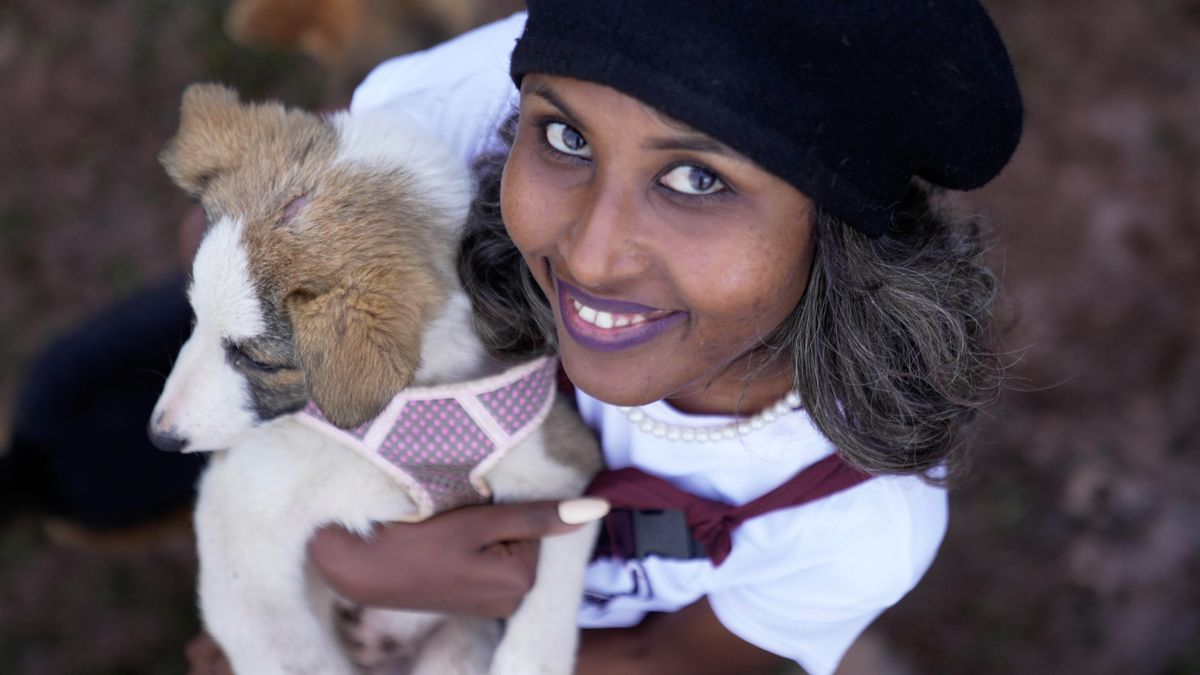
In the bustling heart of Addis Ababa, where skyscrapers rise and modern apartments reshape the city’s skyline, a quiet humanitarian mission unfolds on the outskirts. Amidst the hum of construction and the chaos of urban transformation, one young woman’s compassion has become a rare refuge for the city’s forgotten creatures. Feven Melese, a 29-year-old music graduate, has devoted her life to rescuing, feeding, and rehoming stray dogs—an effort that has not only saved hundreds of lives but also ignited a growing awareness of animal welfare in Ethiopia.
Through her modest shelter, Feven Melese offers food and accommodation to forty rescued dogs while feeding nearly seven hundred others scattered across the streets each week. In just two years, she has successfully rehomed more than three hundred dogs. Her mission goes beyond care; it challenges deeply rooted social perceptions about animals and their place in Ethiopian life.
Changing Hearts in a Culture of Indifference
For generations, dogs in Ethiopia have been regarded mainly as guards rather than companions. Their value, in many households, has been measured by their ability to protect property rather than their capacity to feel or be loved. Feven Melese’s work directly confronts this cultural mindset. “In Ethiopia, the society does not understand,” she explains. “They say, are they hungry? Do they have feelings? They don’t care if they eat or not. If they are sick, they don’t care.” Her words reveal not resentment, but a call for empathy—a plea for Ethiopians to see dogs as sentient beings deserving of kindness and respect.
The challenge is formidable. With an estimated 200,000 stray dogs wandering the streets of Addis Ababa, neglect and abandonment are everyday realities. The city’s modernization has inadvertently made things worse. As landlords increasingly enforce “no-pet” policies in new residential complexes, many owners are forced—or choose—to abandon their animals. Homeless dogs, once kept as household guards, now roam the streets hungry, scared, and exposed to disease.
Feven Melese’s shelter, located on the city’s fringes, stands as one of the very few sanctuaries available. It is far from luxurious: simple structures offer basic shelter, and food supplies are often stretched thin. Yet for the dogs who end up there, it is a place of safety and care. Among them is Konjit, whose name means “beautiful” in Amharic—a gentle creature recovering from a road accident, wearing a small neck brace as she wags her tail when Feven holds her. Stories like Konjit’s remind Feven why she began her mission in the first place.
Her love for animals started early. As a child growing up in Addis Ababa, she would bring home stray dogs she found wandering near her neighborhood. “My mother got angry and tried to take them back to the streets,” she recalls with a smile. “But they kept coming back, and I would still take them in.” That unshakable compassion eventually became the foundation of her life’s work.
While Feven Melese’s passion inspires many, it also highlights a growing debate in the city. Some residents express concern about the dangers stray dogs pose, particularly at night. “They do not allow people to pass on the road and can be aggressive, even biting,” says Yonas Bezabih, a local resident.
Read : 21 Benefits of Having a Pet Dog
“They are very dangerous for the community, as their owners are unknown. No one can safely pass this way at night.” Such fears, though understandable, often lead to extreme measures. Authorities have been criticized for poisoning thousands of stray dogs ahead of major public events, especially after isolated biting incidents. These killings have drawn condemnation from animal rights activists, who call for humane, sustainable solutions instead.
A Small Shelter with a Big Vision
Feven Melese’s shelter may be small, but its impact is immense. On any given day, forty dogs live under her care, each with its own story of survival. Some were victims of road accidents, others were abandoned after their owners moved away. Every week, she and her team of volunteers set out with bags of food, feeding approximately seven hundred street dogs across various neighborhoods. It is exhausting, expensive work—yet Feven remains undeterred.
Her initiative has inspired a network of young volunteers who share her vision. Among them is Luna Solomon, a friend who visits the shelter several times a week. She helps feed the dogs, check on their health, and assist in rehoming efforts. Luna points out a common bias against female dogs: “People don’t usually pick female dogs because it takes a lot of responsibility to raise one. They don’t want to deal with her having puppies.” This attitude leads to the widespread abandonment of females, leaving Feven’s shelter disproportionately full of them.
Rehoming each dog is an uphill task. It requires not only finding a willing adopter but ensuring they understand the responsibility of pet ownership. Many of Feven Melese’s supporters, like volunteer Biruk Dejene, first connected with her through social media. Biruk had been searching for a safer home for his own mistreated dog when he found Feven’s page. “Now I get to see my dog, Zuse, when I visit the shelter every week to volunteer,” he says. His experience reflects a growing awareness among young Ethiopians about animal welfare—an awareness that Feven’s activism has helped to spark.
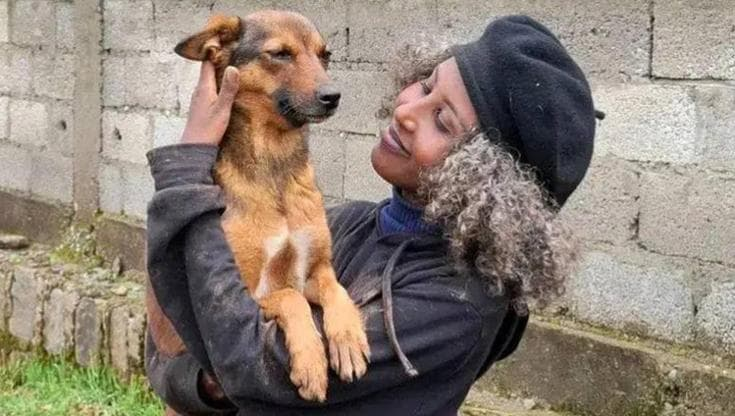
The shelter’s expenses—food, medical care, vaccinations, and occasional surgeries—rely heavily on donations. Feven Melese often uses her own savings to fill gaps. Despite financial challenges, she continues to expand her reach, advocating for sterilization programs, adoption drives, and public education campaigns. Her goal is not merely to care for individual dogs but to create a shift in national consciousness—a new culture of compassion where animals are seen as part of the community, not outsiders.
Government response has been mixed. Melese Anshebo, a city administration official, recently announced plans to begin dog registration and vaccination efforts to encourage responsible ownership. However, he also noted that dogs showing symptoms of diseases might have to be “eliminated,” a statement that alarms animal rights advocates. Veterinarian Dr. Alazar Ayele has emphasized that rabies remains a serious public health issue but warns that the current approach—poisoning or killing stray dogs—is counterproductive. “What we need are coordinated, humane approaches, more vaccines, trained veterinarians, and community education,” he explains. “That is how we protect both people and animals.”
Feven Melese echoes this sentiment. To her, the solution lies in compassion, structure, and education. She dreams of establishing a larger, well-equipped sanctuary with veterinary facilities and training programs for animal caregivers. In her vision, no dog would have to die of hunger or fear on the streets of Addis Ababa again.
The Rise of a Grassroots Animal Welfare Movement
Feven Melese’s efforts have become a rallying point for Ethiopia’s growing community of animal rights advocates. Through social media, she documents her daily work—feeding drives, rescue missions, adoption success stories—and these posts resonate with thousands of followers. Her images of once-broken dogs now smiling in new homes have inspired donations and volunteer sign-ups, both from Ethiopians and the diaspora.
This online visibility has also opened dialogues about ethics, empathy, and modernization. Many young people see her as a symbol of change—a woman challenging both cultural norms and institutional apathy through sheer perseverance. Her story underscores the power of individual action in addressing systemic neglect.
Still, the road ahead is long. Feven Melese and her team face constant logistical challenges: shortages of dog food, limited access to veterinary care, and occasional hostility from neighbors who see stray animals as nuisances. Yet she continues, motivated by moments of transformation—the frightened stray that learns to trust again, the puppy that finds a loving family, the community member who begins to see dogs not as threats but as beings worthy of care.
One of Feven’s most enduring strengths is her ability to mobilize others. She has forged partnerships with local veterinarians, animal welfare groups, and ordinary citizens who help transport, foster, and adopt animals. Together, they are building the foundation of what could become Ethiopia’s first large-scale humane animal rescue network. Her dream extends beyond Addis Ababa; she envisions outreach programs in other cities where stray populations are just as dire.
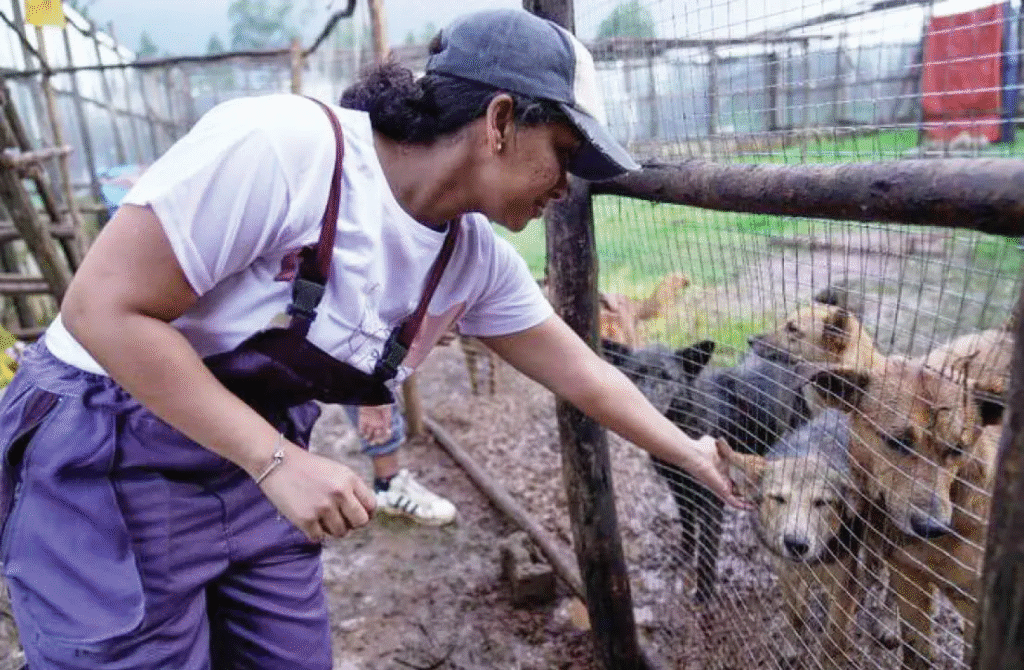
Her friend Biruk believes that awareness is the key to lasting change. “There’s no attachment,” he says, referring to how many dog owners treat their animals. “They just want them for their benefits. We’re trying to change that.” The grassroots awareness campaigns led by Feven and her peers have already begun to make an impact—particularly among Ethiopia’s younger generations, who are more open to adopting pets and supporting welfare initiatives.
The shelter has also become a place of education. Visitors, especially children, are encouraged to interact gently with the dogs, learning empathy through experience. For many of them, it is the first time they have ever petted or played with a dog. These moments, Feven believes, are seeds of change—small acts of kindness that can grow into a broader culture of compassion.
Even as she battles daily exhaustion, Feven remains optimistic. Her social media updates often carry messages of gratitude and hope. In one post, she wrote, “When I look into their eyes, I see life asking for another chance. And I will give it, again and again.” Her words capture the essence of her mission: a quiet, unrelenting defiance against apathy.
In a city where modernity has too often come at the cost of compassion, Feven Melese stands as a testament to what one person’s empathy can achieve. Her shelter may not yet have the resources of a formal institution, but it has something far more powerful—the heart and determination of a young woman who refuses to look away.
As Addis Ababa continues to expand, its stray dogs remain a poignant reflection of the lives left behind in the race toward progress. But thanks to Feven and her community of volunteers, many of these dogs now have a voice, a home, and a future. Through her work, she has shown that kindness can endure even amidst the challenges of urban life—and that true development must include compassion for all living beings.