
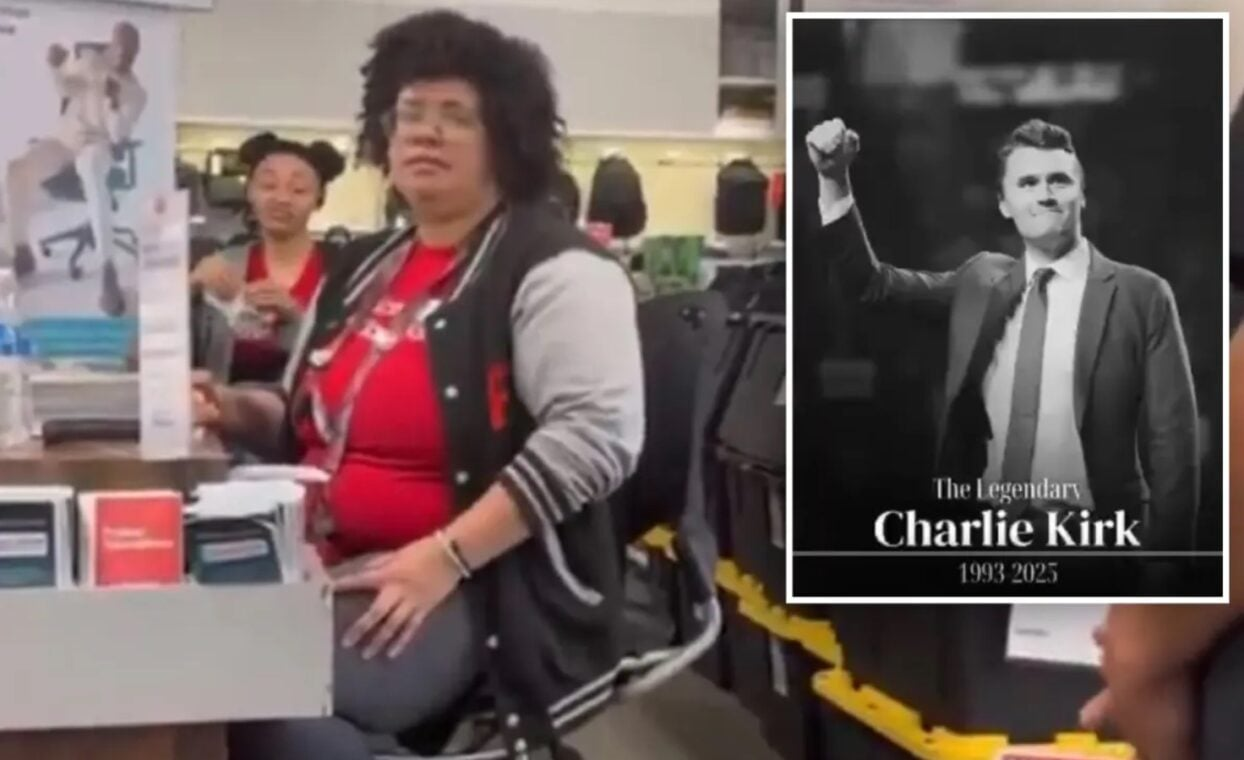
On September 13, 2025, a significant controversy erupted in Portage, Michigan, when an Office Depot employee refused to print a poster for a vigil honoring Charlie Kirk, the late conservative commentator and founder of Turning Point USA. The incident, which quickly gained traction online, led to the employee’s termination and sparked widespread debate about free speech, corporate policies, and the politicization of workplace decisions. The refusal, captured on video and shared widely on social media, was labeled by the employee as an objection to printing “propaganda.”
The Incident at Office Depot
The controversy began when the Kalamazoo County Republican Party placed an order at an Office Depot store in Portage, Michigan, for posters to be used at a vigil for Charlie Kirk, who was fatally shot on September 10, 2025, during an event at Utah Valley University. The posters, described as featuring a black-and-white image of Kirk with his fist raised and the words “The Legendary Charlie Kirk,” were intended for a prayer vigil scheduled for that evening at Bronson Park in Kalamazoo. According to Matthew DePerno, an attorney and Republican activist, the order was placed at 2:24 PM, and a payment of $56.17 was made.
However, around 5:30 PM, a print supervisor named Beryl contacted the organizers to inform them that the store would not fulfill the order, citing the poster’s content as “political propaganda.” A video recorded by a member of the Kalamazoo County Republican Party captured the confrontation inside the store. In the footage, the customer challenged the refusal, emphasizing that the poster was for a memorial vigil, not a political event. The manager defended the decision, stating that the store does not print materials deemed political and that Kirk, as a political figure, fell under this category. The employee’s explanation faltered mid-sentence when pressed further, leaving the reasoning unclear.
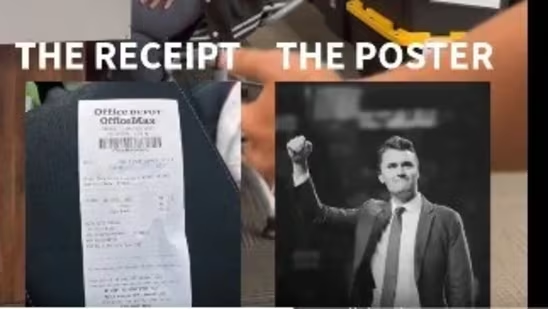
Following the refusal, DePerno and the group took their request to a nearby FedEx store, where staff reportedly apologized for the situation and printed the posters free of charge. DePerno later shared the video and a receipt of the canceled order on social media, tagging Office Depot and questioning the acceptability of the refusal. The post quickly went viral, amassing over 100,000 views by Friday evening and igniting a firestorm of criticism.
Read : List of Countries with the Most Bald Men in 2024: Spain top the list
Office Depot’s corporate office responded swiftly, issuing a statement that condemned the employee’s actions as “unacceptable, insensitive, and a violation of company policy.” The company confirmed that the employee involved was no longer with the organization and that they had reached out to DePerno to address the issue and fulfill the order. While it remains unclear whether a refund was processed for the initial payment, the company’s apology aimed to quell the growing backlash.
Public Reaction and Calls for Boycott
The viral video sparked an immediate and intense reaction, particularly among conservative circles. Social media platforms saw an outpouring of outrage, with prominent accounts amplifying the story. One widely shared post stated, “HOLY CRAP. A customer put in an order and paid for a poster for a vigil for Charlie. @officedepot REFUSED to print it because they said it’s ‘propaganda.’ WTF @officedepot?!” This sentiment was echoed by many who viewed the refusal as an attack on conservative values and free expression. Some users labeled the incident “anti-American,” while others called for a boycott of Office Depot, urging consumers to divest from the company’s stock and take their business elsewhere.
Critics argued that the employee’s decision to label the vigil poster as propaganda reflected personal bias brought into the workplace. One commenter noted, “They brought their personal issues to work. A poster for a vigil for Charlie Kirk is not political propaganda.” Others pointed out that the poster contained no overt political messaging, only an image and a commemorative phrase, making the refusal seem unjustified. Matthew DePerno himself described the incident as “outrageous,” emphasizing that the poster was a simple tribute to a slain individual, not a campaign advertisement.
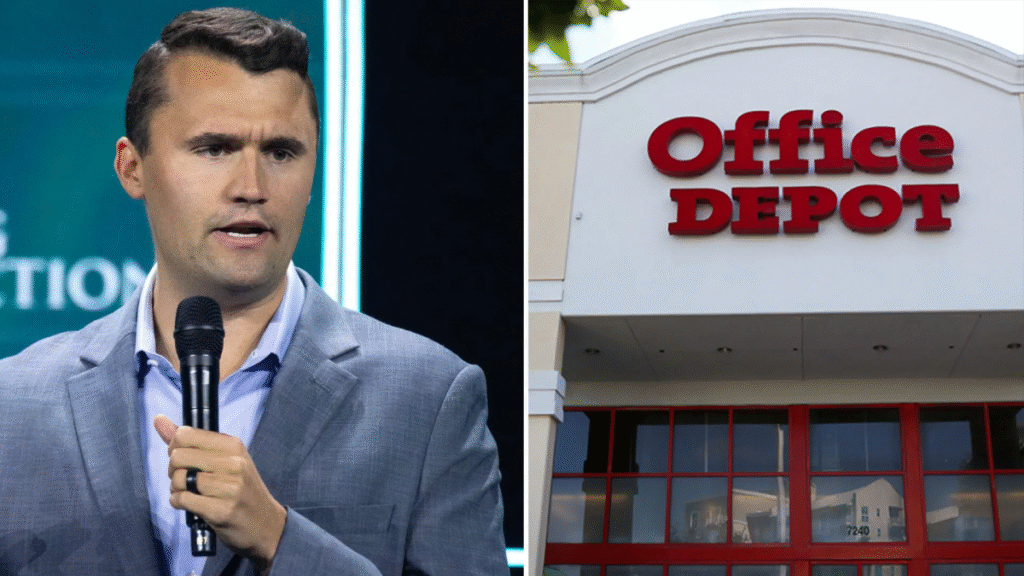
On the other hand, some defended the employee’s right to refuse the order, citing Office Depot’s policy that allows employees to decline printing materials deemed graphic, inflammatory, or inciting. However, this perspective was overshadowed by the dominant narrative of censorship and discrimination against conservative voices. The incident drew comparisons to other recent controversies, such as the firing of a Carolina Panthers public relations employee for a social media post mocking Kirk’s death, highlighting a pattern of professional repercussions for actions related to Kirk’s assassination.
The boycott calls gained traction, with some users praising FedEx for stepping in to print the posters at no cost. One person commended FedEx, stating, “doing business the right way,” while others suggested that Office Depot’s refusal could have lasting financial consequences. The swift corporate response and the employee’s termination did little to stem the tide of criticism, as many felt the incident exposed deeper issues within the company’s culture and policies.
Broader Implications and Context
The Office Depot incident occurs against the backdrop of heightened political tensions following Charlie Kirk’s assassination. Kirk, a polarizing figure known for his outspoken conservative activism, was killed at the age of 31 during an outdoor event in Utah. The tragedy prompted vigils across the country, including in New York, Phoenix, and Kalamazoo, as supporters mourned his loss and celebrated his legacy. His death also drew responses from high-profile figures, including the White House and California Governor Gavin Newsom, who condemned the violence and expressed condolences to Kirk’s family.
The refusal to print the vigil poster tapped into broader debates about free speech and the role of private businesses in moderating content. For many conservatives, the incident was seen as an example of corporate overreach and bias against their values. The label of “propaganda” applied to a memorial poster raised questions about how companies define and enforce policies regarding political content. Office Depot’s policy, which reserves the right to refuse work deemed inflammatory, was scrutinized, with critics arguing that it was applied inconsistently or influenced by the employee’s personal views.
This incident also reflects the challenges businesses face in navigating politically charged environments. The viral nature of the video and the subsequent boycott calls underscore the power of social media to amplify controversies and pressure companies into swift action. Office Depot’s decision to fire the employee and issue an apology was likely driven by the need to mitigate reputational damage, but it also highlighted the precarious position of employees who make judgment calls in sensitive situations.
Furthermore, the incident connects to ongoing discussions about the politicization of public figures’ deaths. Kirk’s assassination has sparked a range of reactions, from heartfelt tributes to controversial social media posts, some of which have led to additional firings and suspensions. For example, reports surfaced of professionals being placed on leave or terminated for insensitive comments about Kirk’s death, indicating a broader societal reckoning with how such events are addressed in public and professional spheres.
The Office Depot case also raises questions about the balance between employee autonomy and corporate accountability. While the employee may have acted within the bounds of company policy, the public’s perception of the refusal as discriminatory led to swift consequences. This dynamic illustrates the challenges of maintaining neutrality in a polarized climate, where even seemingly routine business decisions can become flashpoints for ideological battles.
In conclusion, the Office Depot incident in Portage, Michigan, serves as a microcosm of larger societal tensions. The refusal to print a vigil poster for Charlie Kirk, followed by the employee’s termination and the company’s apology, highlights the complexities of navigating free speech, corporate policies, and public sentiment in a highly polarized era.
As vigils continue to honor Kirk’s memory, including a planned memorial service on September 21, 2025, at State Farm Stadium in Glendale, Arizona, the controversy underscores the enduring impact of his legacy and the challenges of commemorating it in a divided society. The incident has left Office Depot grappling with reputational fallout, while sparking broader conversations about the role of businesses in shaping public discourse.