

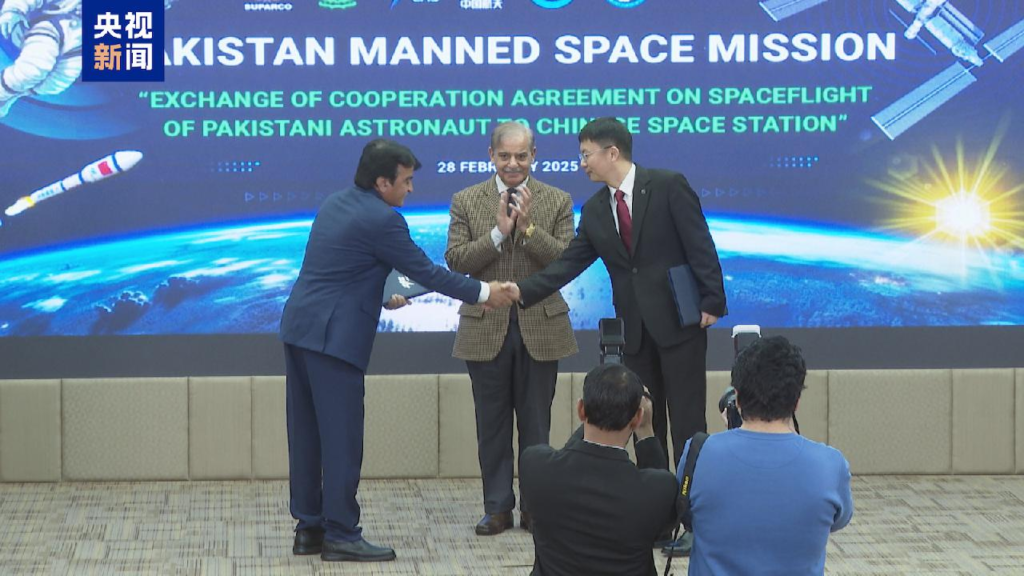
China’s space program has taken another significant step forward by welcoming foreign astronauts to its Tiangong space station. In a landmark agreement, China and Pakistan have signed a cooperation deal to train Pakistani astronauts, marking the first time a non-Chinese crew member will join a mission aboard Tiangong.
This development highlights China’s expanding space diplomacy and deepens its strategic partnership with Pakistan. With Pakistan’s growing interest in space exploration, this collaboration signifies a major milestone for both countries and underscores China’s ambition to rival established space powers like the United States and Russia.
China’s Growing Space Diplomacy
China has consistently positioned itself as a key player in the global space race, particularly as it seeks to expand its partnerships beyond its borders. The decision to welcome Pakistani astronauts to the Tiangong space station reflects Beijing’s broader vision of fostering international cooperation in space exploration.
While NASA remains dominant in space exploration through its collaborations with international partners like the European Space Agency (ESA), China is building its own alliances with emerging space-faring nations.
Pakistan, a long-time ally of China, has been actively participating in Chinese-led space missions. In May 2024, Pakistan was among the nations that sent payloads aboard China’s Chang’e-6 lunar probe, a mission that successfully retrieved samples from the far side of the Moon.
This involvement showcased Pakistan’s growing interest in space research and reinforced its collaboration with China’s space program. Now, the agreement to train and send Pakistani astronauts to Tiangong further cements this partnership.
Read : Priceless Piece of Moon Donated to Ireland by Apollo Astronauts Destroyed by Fire
China’s space station, which was completed in late 2022, is now a fully operational orbiting laboratory. While the International Space Station (ISS) has hosted astronauts from various nations, Tiangong has, until now, only accommodated Chinese astronauts.
Read : Russian Satellite Declared Dead in 2022 Breaks into Over 100 Pieces in Space
The inclusion of a Pakistani astronaut signifies China’s willingness to open its space program to allies and strengthen its influence in global space exploration.
Pakistan’s Ambitions in Space Exploration
Pakistan’s participation in China’s space missions is a crucial step in its own ambitions to develop a stronger space program. Historically, Pakistan’s space initiatives have been limited, largely due to budgetary constraints and a lack of technological infrastructure. However, with China’s support, Pakistan has made significant strides in recent years.
Pakistan’s space agency, the Space & Upper Atmosphere Research Commission (SUPARCO), has been collaborating with China for satellite launches and other space-related projects.
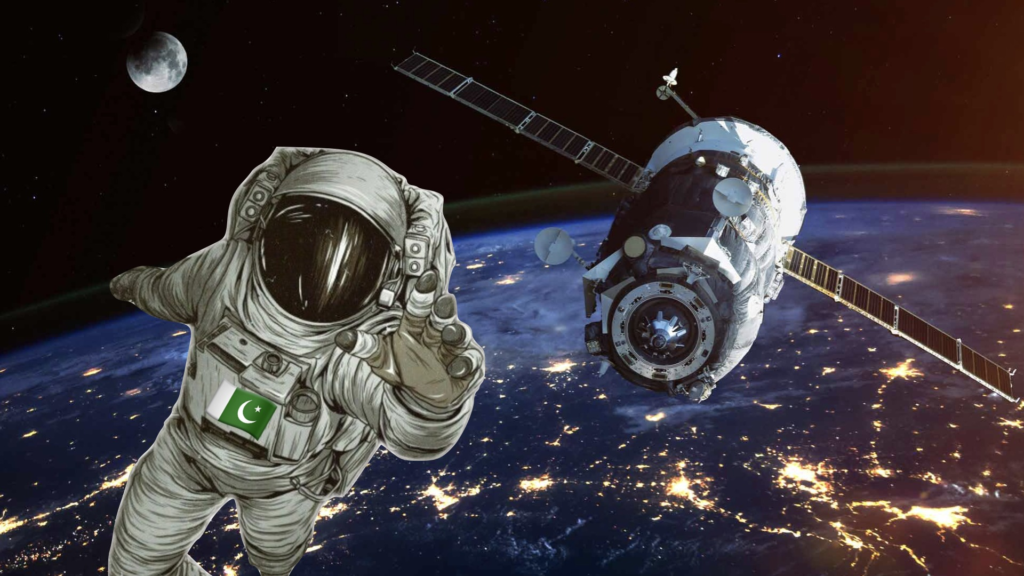
In 2018, Pakistan launched two satellites with Chinese assistance: the PRSS-1 (Pakistan Remote Sensing Satellite) and the PakTES-1A. These satellites have played a key role in earth observation, agriculture monitoring, and disaster management in Pakistan.
The latest agreement between China and Pakistan will see Pakistani astronauts undergo rigorous training in China over the next year before joining a mission to Tiangong.
This will mark the first time a Pakistani astronaut travels to space, a historic achievement for the country. The training program will include physical conditioning, spacecraft operations, emergency response drills, and scientific research techniques.
The move is expected to inspire future generations of Pakistani scientists, engineers, and space enthusiasts. It also aligns with Pakistan’s broader goal of developing a sustainable space program and contributing to international space missions in the coming decades.
The Future of the Tiangong Space Station
Tiangong, meaning “Heavenly Palace” in Chinese, is China’s first long-term space station and a symbol of the country’s ambitions in space exploration. Designed to operate for at least 15 years, the station orbits the Earth at an altitude of 450 km (280 miles) and can accommodate three astronauts for extended missions.
China developed Tiangong as an alternative to the International Space Station, from which it was excluded due to U.S. restrictions. With the ISS nearing the end of its operational lifespan, Tiangong could become the primary space station in orbit by the 2030s.
China has already expressed interest in expanding international collaborations, and the inclusion of a Pakistani astronaut is likely the first step toward a more diverse crew.
Beyond training foreign astronauts, China has also invited international scientific projects to be conducted aboard Tiangong. Various experiments related to microgravity, life sciences, and materials science are already planned for the station. By positioning itself as a hub for space research, China is enhancing its role in the global scientific community.
Pakistan’s upcoming mission to Tiangong will not only strengthen Sino-Pakistani ties but also pave the way for other nations to participate in China’s space program. As China continues to expand its influence in space, it is expected that more countries from Asia, Africa, and Latin America will seek partnerships with Beijing for space missions.
The arrival of a Pakistani astronaut aboard Tiangong will be a landmark event, signaling a shift in global space exploration dynamics. It highlights China’s growing capabilities, Pakistan’s aspirations, and the potential for new alliances in space.
As both nations prepare for this historic mission, the world will be watching closely to see how this collaboration shapes the future of human spaceflight.