

In a landmark move that underscores the ongoing tensions surrounding transgender rights in the United Kingdom, Dr Victoria McCloud, the nation’s first openly transgender judge, has initiated proceedings against the UK government at the European Court of Human Rights (ECHR). This action stems from a recent Supreme Court ruling that has redefined the legal understanding of sex under equality laws, a decision McCloud argues violated her fundamental human rights and those of thousands of other transgender individuals.
As a retired High Court Master now living in Ireland, Victoria McCloud’s challenge highlights broader concerns about fairness in judicial processes and the inclusion of affected voices in high-stakes legal debates. Her case not only seeks to address personal grievances but also aims to set a precedent for how transgender perspectives are considered in future rulings. With the UK’s transgender community watching closely, this development could influence equality policies across Europe.
The Trailblazing Career of Dr Victoria McCloud
Dr Victoria McCloud’s journey to becoming a pivotal figure in British legal history is marked by academic excellence, professional achievements, and personal resilience. Born Victoria Helen Williams on October 13, 1969, in Surrey, England, she pursued a rigorous educational path that laid the foundation for her multifaceted career.
Graduating from Christ Church, Oxford, in 1990 with a degree in Experimental Psychology, Victoria McCloud went on to earn a doctorate in human visual system science in 1993. This scientific background informed her analytical approach to law, which she entered after completing a law conversion course in 1994. Called to the bar in 1995, she quickly established herself as a barrister at Coram Chambers, specializing in complex civil matters.
Victoria McCloud’s ascent in the judiciary was groundbreaking. In 2006, she was appointed as a Deputy Costs Judge, or Taxing Master, and by June 2010, she became a full Queen’s Bench Master in the High Court of Justice. At the time, she was the youngest person ever to hold this position, the first transgender individual, and only the second woman. This role involved overseeing procedural aspects of civil litigation, including costs assessments and case management.
Over her tenure, Victoria McCloud presided over numerous high-profile cases, involving figures such as former US President Donald Trump, Labour leader Jeremy Corbyn, model Katie Price, and MP Andrew Mitchell. Her docket spanned diverse areas like asbestos-related diseases, constitutional rights, modern slavery, defamation, equitable interpleader, and national security issues.
As an author and innovator, Victoria McCloud contributed significantly to legal scholarship. She penned the first five editions of the Civil Procedure Handbook and the Surveillance and Intelligence Law Handbook under her former name. In 2016, she founded the Historic Abuse Lawyers’ Forum (HALF), an initiative to explore alternative resolutions for historic abuse cases, demonstrating her commitment to compassionate and efficient justice.
Throughout her career, McCloud balanced her professional duties with her identity as a trans woman, having transitioned publicly while maintaining a dignified presence in a traditionally conservative field. However, the evolving socio-political climate in the UK regarding transgender issues took a toll. In February 2024, McCloud announced her resignation, effective April 2024, stating that the national situation and judi
Read : The Rainbow Connection: How the Rainbow Became a Symbol of the LGBTQ+ Community
cial framework no longer allowed her to serve as a salaried, prominent judge while being transgender in a dignified manner. This decision came amid increasing scrutiny and debates over transgender rights, including policies on gender recognition and single-sex spaces. Following her retirement, she relocated to the Republic of Ireland, where she now works as a litigation strategist at W-Legal, a firm specializing in human rights and equality law. Victoria McCloud has been in a civil partnership since 2006 with Annie McCloud, an NHS psychiatrist, providing a stable personal foundation amid professional upheavals.
Victoria McCloud’s career not only shattered barriers but also positioned her as an advocate for marginalized groups. Her experiences as a transgender judge have informed her critiques of systemic biases, making her a vocal proponent for inclusive legal processes. This background is crucial to understanding her current legal battle, as it reflects a lifetime dedicated to justice, now turned inward to challenge perceived injustices against her own community.
The Supreme Court Ruling and Its Controversial Process
The catalyst for Dr Victoria McCloud’s ECHR challenge is a pivotal Supreme Court ruling delivered in April 2025, which has reshaped the interpretation of sex under the Equality Act 2010. The case, For Women Scotland Ltd v The Scottish Ministers, originated from a challenge by the gender-critical campaign group For Women Scotland against the Scottish government’s gender representation policies. At its core, the dispute questioned whether the term “woman” in equality legislation includes transgender women who hold Gender Recognition Certificates (GRCs), which legally recognize their gender identity.
The Supreme Court ultimately ruled that “sex” in the Equality Act refers to biological sex at birth, not the acquired gender affirmed by a GRC. This decision overturned two decades of legal understanding that GRCs provided full recognition of a person’s gender for most purposes, including discrimination protections.
As a result, transgender women with GRCs are not considered women under certain equality provisions, potentially affecting access to single-sex services like toilets, changing rooms, rape crisis centers, and prisons. The ruling prompted the Equality and Human Rights Commission (EHRC) to issue updated guidance, effectively endorsing exclusions based on biological sex, which critics argue amounts to a blanket ban on transgender individuals using facilities aligned with their gender identity.
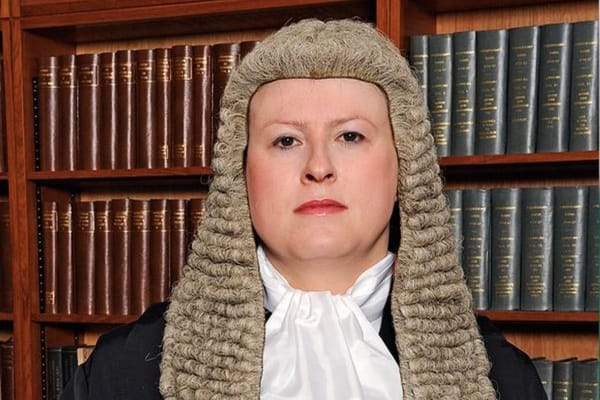
What has drawn particular ire is the process leading to this judgment. In March 2024, Victoria McCloud applied to intervene in the Supreme Court proceedings, seeking to provide evidence on the ruling’s impact on transgender people with GRCs. She argued that the case’s outcome would directly affect legal protections for herself and approximately 8,500 others in the UK diagnosed as transsexual and holding GRCs.
Despite this, her application was rejected in October 2024, with no reasons provided by the court. Notably, the Supreme Court permitted interventions from gender-critical organizations, including Sex Matters and a coalition comprising the LGB Alliance, The Lesbian Project, and Scottish Lesbians. However, no transgender individuals or advocacy groups were allowed to present evidence, creating what McCloud describes as a one-sided process.
This exclusion has been labeled as fundamentally unfair by transgender rights organizations. The Equality Network in Scotland called the ruling a reversal of established protections, while the Transgender Equality Network Ireland (TENI) viewed it as a setback for human rights, particularly for trans and intersex people.
Victoria McCloud herself has been outspoken, stating that the decision “literally changed my legal sex for discrimination purposes, overnight.” She further elaborated on the practical implications: “We are now two sexes at once. We are told we must use dangerous spaces such as male changing rooms and loos when we have female anatomy. If we are raped we must go to male rape crisis. We are searched by male police, to ‘protect’ female police from, I assume, our female anatomy.”
The ruling’s aftermath has been contentious. Gender-critical groups like For Women Scotland and Sex Matters have urged swift implementation, criticizing delays in updating policies for schools and prisons. Meanwhile, the Scottish government is awaiting an EHRC code of practice, expected to be presented to Equalities Minister Bridget Phillipson soon, before parliamentary review.
Reports have emerged of unintended consequences, such as gender non-conforming women facing harassment in facilities, highlighting the ruling’s broader societal ripple effects. The EHRC’s use of AI to analyze consultation responses has also been defended as efficient, though it underscores the modern complexities of policy-making in this area.
Challenging the UK at the European Court of Human Rights
Undeterred by the Supreme Court’s refusal, Dr Victoria McCloud has escalated her fight to the European Court of Human Rights in Strasbourg, filing a case against the UK government that could redefine procedural fairness in transgender-related litigation. Supported by the Trans Legal Clinic and her firm W-Legal, McCloud’s application invokes Articles 6, 8, and 14 of the European Convention on Human Rights.
Article 6 guarantees the right to a fair trial, which she claims was breached by the exclusion of transgender evidence. Article 8 protects respect for private and family life, including gender identity, while Article 14 prohibits discrimination. The case challenges both the substance of the Supreme Court ruling and the procedural flaws that led to it. Victoria McCloud argues that denying her intervention undermined the court’s ability to make an informed decision, effectively silencing those most impacted.

“The court reversed my and 8,500 other people’s sex for the whole of equality law,” she stated, emphasizing the overnight erosion of rights. By bringing the matter to the ECHR, Victoria McCloud seeks not only a rehearing but also a broader acknowledgment that trans voices must be included when their rights are at stake. This historic action is framed as a fight against exclusion, with the Trans Legal Clinic launching a crowdfunding campaign to cover legal costs, court fees, and related work, ensuring the case proceeds without financial barriers.
Living in Ireland, Victoria McCloud’s relocation adds an international dimension, potentially influencing how the ECHR views the UK’s compliance with human rights standards. The proceedings could take years, but early indications suggest strong support from trans advocacy groups, who see it as a counter to the UK’s perceived rollback on transgender protections.
UK ministers have defended the Supreme Court decision, asserting it provides clarity for women and service providers while maintaining protections for single-sex spaces. However, critics argue it exacerbates vulnerabilities for transgender individuals, potentially leading to increased discrimination and safety risks.
If successful, Victoria McCloud’s case could compel the UK to revisit the ruling, mandating inclusive processes in future equality cases. It also aligns with her earlier calls for international scrutiny, including appeals to genocide prevention organizations to investigate the UK’s treatment of trans people. As the ECHR deliberates, this challenge stands as a testament to McCloud’s enduring commitment to justice, bridging her judicial legacy with advocacy for human rights.
In conclusion, Dr Victoria McCloud’s pursuit at the ECHR represents a critical juncture in the UK’s transgender rights landscape. Her story—from pioneering judge to international litigant—illustrates the personal costs of systemic debates and the imperative for equitable legal representation. As developments unfold, the outcome may reshape protections for transgender individuals, ensuring their voices are heard in the halls of justice.