
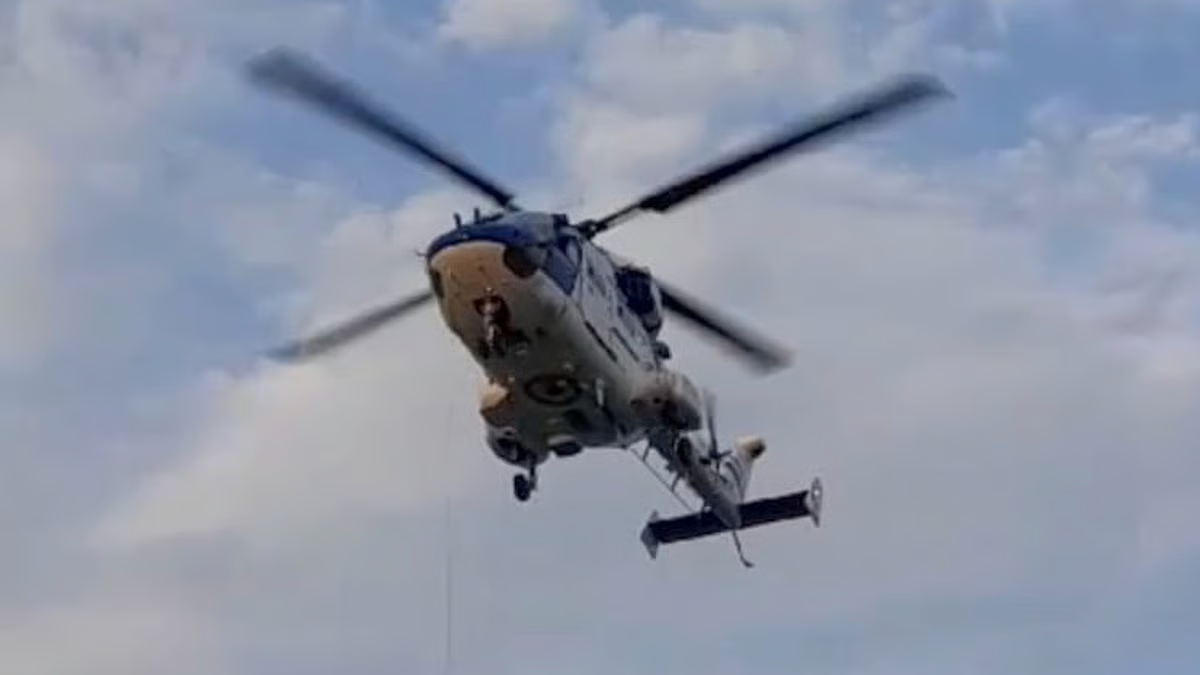
On August 13, 2025, a dramatic police helicopter chase in Merseyside captured public attention when video footage surfaced on social media, showing a National Police Air Service (NPAS) helicopter flying perilously close to the ground while pursuing a suspect on a motorbike.
The incident, which took place near Carr Mill Dam in St Helens, sparked widespread debate about the safety and appropriateness of the helicopter’s low-altitude maneuvers. Following an internal review, the NPAS concluded that the crew acted appropriately, and no disciplinary action would be taken.
The Incident: A High-Stakes Pursuit
The pursuit began around 2:30 PM on August 13, 2025, when Merseyside Police received reports of a man riding a green Kawasaki scrambler bike in an “extremely dangerous” manner near Carr Mill Dam. Witnesses reported the rider speeding through residential areas, mounting pavements, and narrowly avoiding a pedestrian, posing a significant risk to public safety. The NPAS helicopter was deployed to assist ground officers in tracking the suspect, who was allegedly driving a stolen motorbike.
Video footage shared on platforms like TikTok, including by user @unk.hitta8, captured the helicopter flying just meters above the ground, at times disappearing behind trees as it shadowed the motorcyclist through fields and along roads, including the A580. The pursuit, which lasted over an hour, was described as a fast-paced and unpredictable operation. At one point, a second individual reportedly joined the rider on the bike, further complicating the chase.
The pursuit ended when the motorbike ran out of fuel, allowing ground officers to apprehend the primary suspect, a 33-year-old man from Rainford. He was arrested on suspicion of multiple offenses, including dangerous driving, driving a vehicle without the owner’s consent, driving while disqualified, failing to stop, using a motor vehicle without third-party insurance, and conspiring to intentionally or recklessly cause a public nuisance.
A second suspect, a 32-year-old man from St Helens, was detained for alleged theft of a motor vehicle and assisting an offender. The dramatic footage of the helicopter’s low-altitude flight raised immediate concerns among the public. Many questioned whether such maneuvers were safe, given the proximity to the ground and obstacles like trees. The NPAS acknowledged the public’s interest, noting that the short video clip circulating online did not provide the full context of the hour-long operation.
ব্রিটেনে মোটরবাইকে থাকা সন্দেহভাজনকে তাড়া করল পুলিশের হেলিকপ্টার pic.twitter.com/Fqkq88C1ml
— Community In UK (@communityinuk) August 20, 2025
Chief Superintendent Fiona Gaffney, NPAS Chief Operating Officer, explained that the crew had been preparing to land in a safe location to assist in the apprehension but aborted the landing when the suspect continued to flee. The helicopter’s subsequent acceleration at low altitude was described as an “accepted take-off manoeuvre” to maintain visual contact with the suspect.
The Investigation: Ensuring Accountability and Safety
Following the incident, the NPAS launched an internal review to assess whether the helicopter crew adhered to operational protocols. The investigation focused on several key areas: adherence to standard operating procedures for high-speed pursuits, the maintenance of safe altitudes to minimize risks to the public, and the completion of dynamic risk assessments during the operation. The review included analysis of the helicopter’s flight data recorder, which provided precise details on speed, altitude, and movements, as well as onboard camera footage, radio communications, and witness statements from ground officers and members of the public.
Read : Two Civilian Helicopters Collided Mid-Air in Finland, 5 Dead
The NPAS concluded that the crew had acted appropriately and within regulations. The review found that the crew conducted a dynamic risk assessment, a critical process that allows pilots to evaluate risks in real-time during fast-paced operations. Chief Superintendent Gaffney emphasized that the unpredictable nature of vehicle pursuits requires crews to make rapid decisions to ensure public safety.
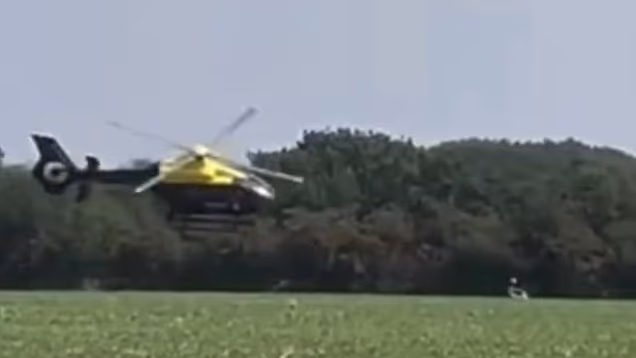
The decision to fly at a low altitude was justified as part of the pursuit, particularly given the crew’s intention to land and the need to maintain visual contact with the fleeing suspect. The NPAS also consulted with the UK Civil Aviation Authority (CAA), which confirmed it would review the incident’s outcome and processes to ensure compliance with aviation regulations.
Merseyside Police supported the NPAS findings, highlighting the dangerous behavior of the suspect, who endangered lives through reckless driving. Detective Inspector Jimmy Rotheram noted that the rider only stopped when the motorbike ran out of fuel, underscoring the necessity of the helicopter’s role in tracking the suspect over an extended period. ‘
The NPAS emphasized that safety remains their highest priority, and robust procedures are in place to guide operational decisions. The exoneration of the crew was seen as a reaffirmation of their training and professionalism, but it also prompted broader discussions about the risks and regulations governing police helicopter operations.
Implications for Police Helicopter Operations
The Merseyside incident has significant implications for police helicopter operations and public perception of law enforcement tactics. While the NPAS crew was cleared of wrongdoing, the viral nature of the footage and the public’s reaction highlight the need for transparency and communication in high-risk police operations.
The NPAS acknowledged the public’s concern, stating, “We thank the public for their concern and engagement and remain committed to transparency and professionalism in all our operations.” This commitment is crucial for maintaining public trust, especially when operations involve potentially dangerous maneuvers in populated areas.
Police helicopter operations are governed by strict aviation regulations and internal standard operating procedures. Typically, NPAS helicopters maintain a minimum altitude of 60 to 150 meters during routine patrols to ensure safety. However, they are permitted to descend during pursuits or surveillance operations, provided a dynamic risk assessment is conducted. The Merseyside incident underscores the complexity of these operations, where crews must balance the need to apprehend suspects with the imperative to protect public safety.
The training provided to NPAS crews, which includes aviation skills, law enforcement tactics, and risk management, is designed to equip them for such high-stakes scenarios. The exoneration of the crew suggests that their training and decision-making processes were effective, but it also raises questions about whether existing protocols could be further refined to address public concerns.

The incident also highlights the evolving role of technology in policing. The NPAS is exploring high-tech alternatives, such as unmanned helicopters capable of flying at higher altitudes and remaining airborne for extended periods. These drones, currently being trialed, could reduce the risks associated with low-altitude manned flights while maintaining the ability to track suspects effectively. However, the transition to unmanned systems raises questions about cost, capability, and public acceptance. For now, manned helicopters remain a critical tool for police forces, particularly in situations requiring rapid response and real-time coordination with ground units.
Public reaction to the Merseyside chase, as seen on platforms like Reddit and TikTok, reflects a mix of fascination and concern. Some praised the crew’s skill and bravery, with comments on social media describing the pursuit as “awesome” and the crew as “legends.” Others criticized the low-altitude flight as “dumb and reckless,” questioning whether the helicopter should have focused on directing ground units rather than attempting to land.
These varied perspectives underscore the challenge of balancing effective policing with public safety and perception. The NPAS’s transparency in addressing the incident, including their detailed explanation of the maneuver and the review process, is a step toward addressing these concerns. The Merseyside incident also serves as a case study for other police forces. The successful apprehension of the suspects demonstrates the value of air support in modern policing, particularly for tracking mobile and dangerous offenders.
However, the public outcry and subsequent investigation highlight the need for ongoing training reviews and clear communication with the public. The NPAS’s collaboration with the CAA ensures that incidents like this are scrutinized to maintain high standards, but it also suggests that guidelines for the use of force and pursuit tactics may need periodic updates to reflect technological advancements and public expectations.
In conclusion, the Merseyside police helicopter chase of August 13, 2025, was a high-profile incident that tested the capabilities and protocols of the NPAS. The internal review’s findings that the crew acted appropriately reaffirm the professionalism of the pilots and their adherence to safety procedures. However, the public’s reaction and the viral spread of the footage underscore the importance of transparency and accountability in police operations.
As technology evolves and public scrutiny intensifies, the NPAS and Merseyside Police must continue to refine their approaches to ensure that high-risk pursuits prioritize both public safety and effective law enforcement. The incident serves as a reminder of the challenges and responsibilities faced by those who protect our communities, often in the face of unpredictable and dangerous circumstances.