
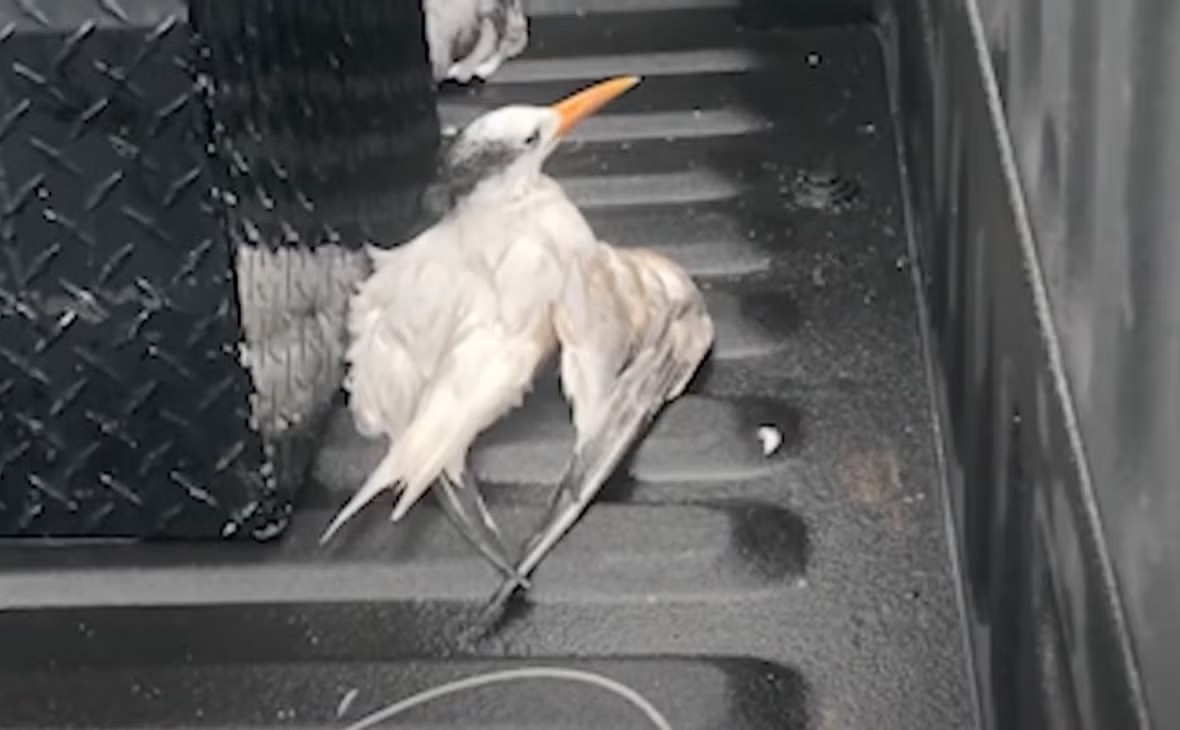
The tranquil shores of Cape Canaveral, Florida, were shattered last week by a disturbing act of violence that left dozens of shorebirds dead and local wildlife rescuers reeling in disbelief. According to authorities, a driver allegedly plowed into a flock of nearly fifty birds in what investigators are now probing as a possible deliberate attack. Out of the entire flock, only one bird is known to have survived, while more than thirty were killed instantly and others had to be euthanized due to catastrophic injuries. The shocking scene has prompted an extensive multi-agency investigation and renewed discussions about animal cruelty laws in Florida.
A Scene of Devastation Along the Waterfront
The tragedy unfolded on Friday morning at a cargo loading area in Cape Canaveral, an otherwise bustling industrial stretch near the port that often doubles as a resting site for migrating shorebirds. The Wild Florida Rescue, a local nonprofit that specializes in saving injured wildlife, was alerted to the scene after witnesses reported an incident involving a vehicle that had struck an unusually large number of birds. When a volunteer responder arrived, the sight that greeted them was one of chaos and carnage—dozens of small, delicate shorebirds lay strewn across the pavement, some lifeless, others barely clinging to life.
According to FOX 35 Orlando, rescue workers immediately began collecting the injured birds and transporting them to the Florida Wildlife Hospital. Unfortunately, the extent of the injuries was overwhelming. Many birds suffered broken wings, crushed legs, and internal trauma that could not be treated. Despite the best efforts of veterinarians and volunteers, thirteen of the injured birds had to be euthanized. In total, the driver’s actions left thirty-five birds dead at the scene, thirteen euthanized, and only one survivor—a devastating toll for a single event.
Wild Florida Rescue later described the incident on social media as one of the most distressing cases their team had ever encountered. The organization emphasized that the nature of the injuries and the layout of the scene suggested the act had not been an accident, but rather an intentional attack. In a statement quoted by FOX 35, the rescue team called it a “disturbing and deliberate act” and urged authorities to pursue justice for the animals that had been killed.
The Florida Fish and Wildlife Conservation Commission (FWC) quickly joined the investigation, collecting both physical and video evidence from the site. Witnesses reportedly provided footage showing the vehicle’s movements, which investigators are reviewing to determine whether the driver intentionally targeted the birds. The driver, whose name has not yet been released, has been interviewed by authorities, though no charges have been filed as of the latest reports.
Investigators Weigh Evidence in a Potential Animal Cruelty Case
Animal cruelty cases involving wild species can be legally complex, particularly when determining intent. Florida’s animal cruelty statutes, under Section 828.12 of the state law, classify the intentional killing or tormenting of an animal as a third-degree felony punishable by up to five years in prison and a $10,000 fine. However, to meet that threshold, investigators must prove that the suspect’s actions were deliberate or malicious. In cases involving wildlife, that often requires a combination of eyewitness testimony, video evidence, and behavioral context.
Officials with the FWC and local law enforcement agencies have confirmed that they are working closely with the Brevard County State Attorney’s Office, which will ultimately decide whether criminal charges will be filed. The state attorney’s office is reportedly reviewing footage captured by nearby cameras and statements from witnesses present during the time of the incident.
Wildlife rescuers are disturbed after a huge flock of shorebirds were run over by a vehicle. The FWC, U.S. Fish and Wildlife are investigating. A suspect's also been interviewed but still no arrest has been made since the incident on Friday. pic.twitter.com/ytryGYnR7v
— Esther Bower (@estherbower_tv) October 14, 2025
Experts say that the unusual scale of this event—nearly fifty birds struck at once—will likely influence how prosecutors assess intent. Birds typically congregate in visible flocks along open ground, especially near water. Hitting such a large number of them would almost certainly require a driver to continue moving forward through the group, suggesting awareness of their presence. Wildlife advocates have argued that this makes the explanation of an accidental collision increasingly implausible.
Environmental and animal welfare groups throughout Florida have condemned the incident and called for stronger enforcement of wildlife protection laws. Representatives from the Florida Wildlife Hospital described the aftermath as “heartbreaking,” noting that many of the birds were likely part of a migratory group stopping along the Atlantic Flyway—a critical route that many shorebird species use each year. Losing even a few dozen individuals from a single flock can have ripple effects on the broader population, particularly for species already facing threats from habitat loss and climate change.
Local residents have also voiced outrage over the event. Social media platforms were flooded with messages expressing grief and disbelief, as well as demands for accountability. One commenter wrote that the sight of the dead birds near the docks was “like nothing I’ve ever seen,” while another described it as “a deliberate act of cruelty that must be punished.”
A Pattern of Alarming Animal Cruelty Cases in Florida
This latest tragedy comes amid a troubling series of animal cruelty incidents in Florida, raising broader concerns about the state’s enforcement of its animal protection laws. Just weeks before the Cape Canaveral incident, a Miami-Dade County man was arrested for killing and eating his two pet peacocks in what authorities described as an act of vengeance against a neighbor. According to the Miami Herald, 61-year-old Craig Vogt allegedly slaughtered the birds after warning his neighbor to stop feeding them. When she continued, he carried out his threat and later told investigators that he did it to “prove a point.” Vogt now faces a third-degree felony charge of aggravated animal cruelty, a case that shocked even seasoned law enforcement officers.
These incidents highlight the range of cruelty cases that Florida’s animal welfare agencies confront—ranging from domestic abuse of pets to deliberate attacks on wildlife. Advocates have long argued that despite having strong laws on the books, the state often struggles with consistent enforcement and public awareness. Organizations like Wild Florida Rescue and the Florida Wildlife Hospital operate largely on donations and volunteer support, which can limit their capacity to respond to emergencies and advocate for policy reform.
In response to recent events, several advocacy groups have renewed calls for legislative action to increase penalties for animal cruelty and to provide better funding for wildlife rehabilitation centers. They argue that stricter deterrents, combined with educational outreach, could help reduce the frequency of such attacks. Environmental scientists have also emphasized the need for public education about coexistence with Florida’s diverse wildlife populations. As human activity expands along coastal areas, interactions between people and wild animals have become more frequent—and not always harmonious.
The Port Canaveral attack, in particular, underscores how vulnerable migratory and coastal birds are to human interference. Shorebirds, including species like sandpipers and plovers, depend on Florida’s beaches and estuaries as rest stops during their long migrations. Even small disturbances can disrupt feeding and breeding patterns. A violent event of this magnitude not only kills the individual birds but can also alter the behavior of surviving flocks, leading them to avoid otherwise safe habitats.
Biologists who have examined similar incidents note that intentional harm to wildlife can also have ecological consequences that ripple through the food chain. Shorebirds play an important role in coastal ecosystems, helping to control insect populations and maintain the balance of marine environments. Their sudden loss in large numbers can therefore have cascading effects that reach far beyond the immediate scene of the tragedy.
Public Outcry and the Pursuit of Justice for the Birds
As the investigation continues, Florida residents and animal advocates are closely watching for developments in the case. While officials have not disclosed the driver’s identity or any potential motive, the evidence collected so far may prove decisive in determining whether charges will be filed. The Brevard County State Attorney’s Office has not provided a timeline for when a decision might be announced, but investigators have confirmed that they are treating the case with urgency due to its seriousness and public attention.
Community members have begun organizing vigils and memorials to honor the birds killed in the attack. One local environmental group, Space Coast Audubon Society, has announced plans for a small gathering at the Cape Canaveral shoreline, where participants will place symbolic feathers and flowers near the site of the incident. The event aims to both commemorate the lives lost and raise awareness about the importance of protecting Florida’s native wildlife.
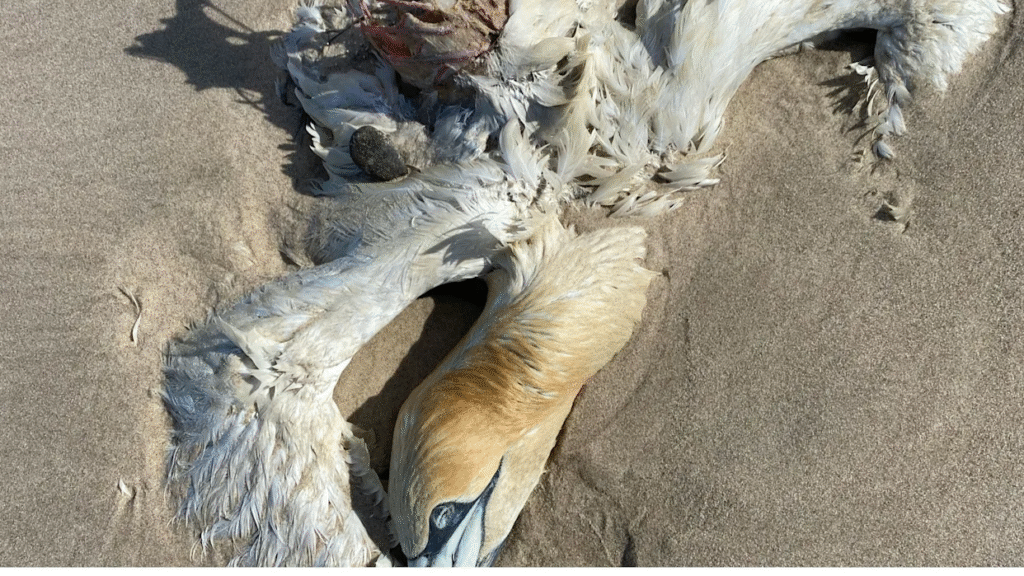
Online, Wild Florida Rescue has continued to share updates about the case while also encouraging the public to report any acts of animal cruelty or suspicious activity involving wildlife. In their posts, the organization expressed gratitude for the outpouring of support from residents and reiterated their commitment to seeing justice served. “These birds were innocent lives taken in an act of senseless cruelty,” the group wrote. “We owe it to them to ensure that this never happens again.”
The broader community response has been a mix of grief, anger, and determination. Many residents of the Space Coast region, long known for its thriving bird populations and conservation efforts, have taken the event as a wake-up call. Calls for improved surveillance around industrial and port areas have gained traction, as such sites often attract both wildlife and heavy machinery, creating potential risks when operators act negligently—or maliciously.
At the state level, the incident may also reignite discussions about expanding Florida’s wildlife protection programs. Legislators and environmental groups have occasionally clashed over funding priorities, but cases like this one tend to bring bipartisan condemnation and public pressure for reform. Lawmakers could consider new measures aimed at enhancing penalties for deliberate harm to wildlife, increasing support for rehabilitation centers, and improving public reporting mechanisms for suspected animal cruelty.
Meanwhile, the sole surviving bird from the incident remains under medical observation at the Florida Wildlife Hospital. Staff members have reported that the bird is stable and receiving ongoing care. While its recovery offers a small glimmer of hope amid tragedy, rescuers emphasize that the survival of one does not diminish the gravity of the loss. “Each of those birds mattered,” one volunteer said. “They were living creatures that deserved to exist in peace.”
As investigators work to piece together the final details of the Port Canaveral case, the shocking nature of the event has left an indelible mark on Florida’s conservation community. Whether through stronger legal consequences or renewed efforts at public education, many hope that the outcome will lead to lasting change—one that honors the lives lost by ensuring that such cruelty never takes flight again.