
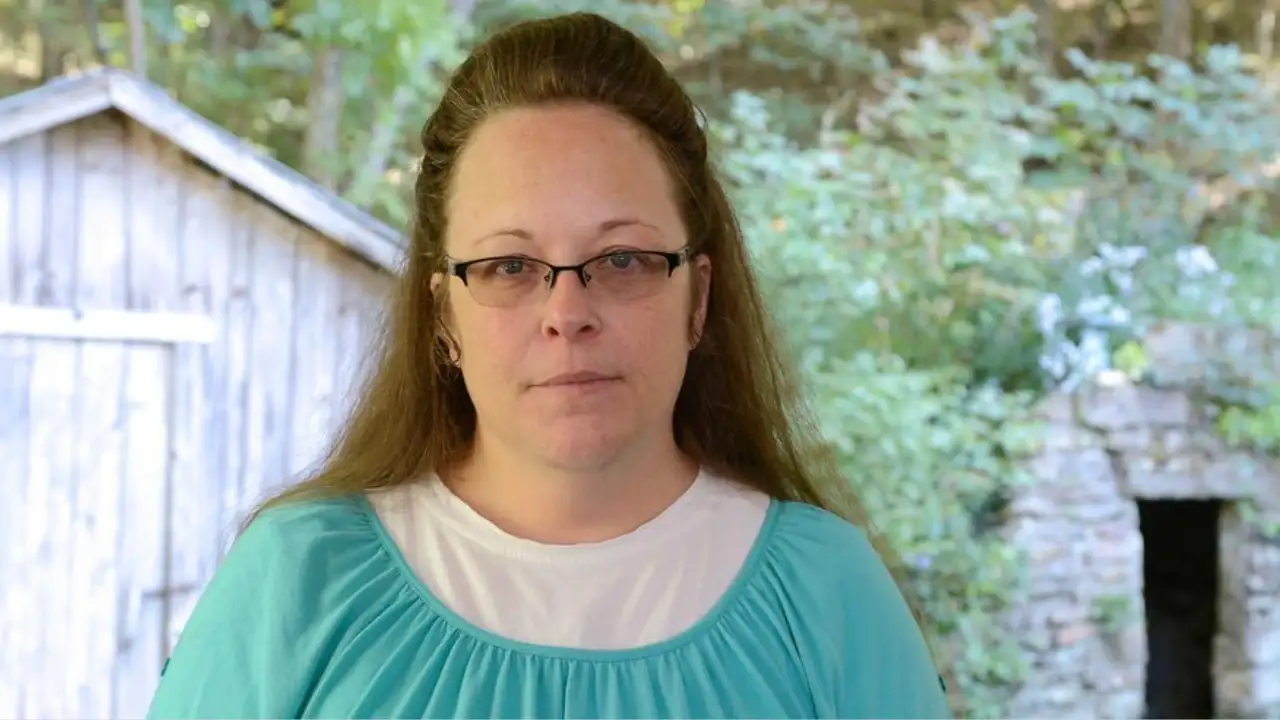
The United States Supreme Court is once again encountering the legal and cultural tensions surrounding same-sex marriage as it considers whether to hear an appeal from former Kentucky county clerk Kim Davis. Davis became widely known in 2015 after she refused to issue marriage licenses to same-sex couples following the Supreme Court’s landmark decision in Obergefell v. Hodges, which legalized same-sex marriage nationwide.
Her case now returns to the Supreme Court under circumstances that carry potentially far-reaching implications. While the court is not required to take up the matter and may ultimately decline to do so, the petition arrives before a court with a conservative majority that has already demonstrated its willingness to reconsider or overturn established precedents.
The case raises questions not only about the scope of religious liberty for public officials but also about the stability of same-sex marriage rights that have been in place for nearly a decade. As the court deliberates privately, legal observers and advocacy groups are paying close attention to what could become a significant moment in the evolving relationship between constitutional rights and religious conscience in public service.
Kim Davis’s Refusal and Legal Battle
Kim Davis served as a county clerk in Rowan County, Kentucky, when the Supreme Court issued its decision in Obergefell v. Hodges in June 2015. The ruling required marriage licenses to be issued to same-sex couples on the same terms as opposite-sex couples. Davis, citing her Christian religious beliefs, refused to issue licenses to same-sex couples and briefly suspended the issuance of all marriage licenses in her jurisdiction.
Her stance quickly attracted national attention. Supporters viewed her as a defender of religious liberty, while critics argued that she was using her public office to deny the constitutional rights of others. Her refusal resulted in legal action from couples seeking marriage licenses, including David Ermold and David Moore, who filed suit after Davis’s office rejected their application. In September 2015, Kim Davis was held in contempt of court for defying a federal order requiring her to issue licenses. She was briefly jailed, further elevating the political and media attention surrounding her case.
After her release, deputy clerks began issuing licenses, though questions later arose about the validity of those licenses due to changes Kim Davis made to the forms. Davis ultimately left office in 2019, but the legal consequences of her decision continued. In 2023, a jury awarded Ermold and Moore $100,000 in damages. Davis appealed, arguing that her refusal to issue licenses was protected by the First Amendment’s free exercise clause.
Read : Church of England Faces Threat of Split Over Stance on Gay Couples
In March 2024, the U.S. Court of Appeals for the Sixth Circuit rejected her argument, ruling that because she acted as a government official, she was bound by constitutional obligations that supersede personal religious belief. The court stated that public officers cannot violate constitutional rights based on personal conscience, emphasizing that the protections of the First Amendment do not extend to public officials acting in an official capacity to deny citizens their lawful rights. Davis has now petitioned the Supreme Court to reverse that ruling.
Davis’s Arguments and the Broader Challenge to Obergefell
In her petition to the Supreme Court, Davis has made two primary arguments. First, she contends that she should be shielded from personal liability because her actions were motivated by sincerely held religious beliefs. She argues that government employees should not be forced to choose between public service and faith. Her legal team claims that failing to protect officials who act based on religious convictions would render First Amendment protections ineffective for those working in government roles.
Read : Lions Mauls Zookeeper Jian Rangkharasamee To Death In Front Of Visitors at Safari World zoo
Second, the petition challenges the legitimacy of the Obergefell decision itself. Her attorneys assert that Obergefell lacks grounding in historical legal tradition and reference the Court’s 2022 reversal of Roe v. Wade in Dobbs v. Jackson Women’s Health Organization, which similarly used arguments concerning tradition and historical precedent. They suggest that the Court’s reasoning in Dobbs could be applied to overturn the constitutional right to same-sex marriage.
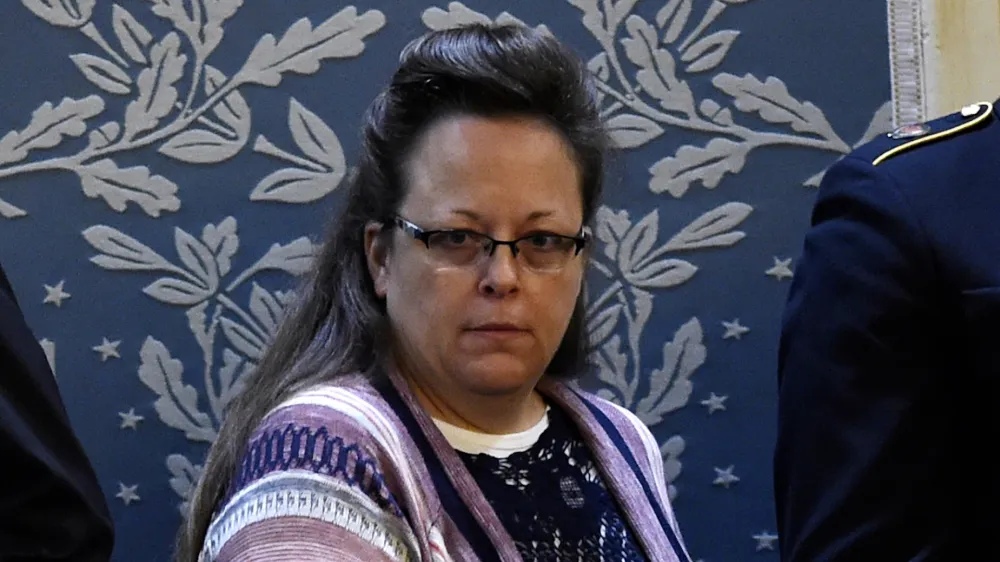
This request places the Court in a difficult position. Even if the justices want to address the narrower issue of liability for public officials acting on religious convictions, the petition explicitly invites reconsideration of Obergefell as a whole. Legal scholars note that the Court may choose to focus only on the liability question without addressing marriage rights. However, the mere possibility of opening Obergefell to review has already prompted concern from advocacy groups and civil rights organizations.
The Supreme Court receives thousands of petitions each term but hears only a small fraction. Four justices must agree to accept a case. While the Court currently has a 6–3 conservative majority, this does not guarantee that it will take up Davis’s petition, particularly given the wide-reaching consequences that could follow from revisiting a major constitutional precedent.
Potential Implications for Same-Sex Marriage Rights
If the Supreme Court decides to hear the case and uses it to reconsider Obergefell, it could create significant uncertainty for same-sex couples across the United States. Nearly 800,000 same-sex marriages have taken place since the 2015 ruling. Overturning or weakening Obergefell could affect inheritance rights, parental rights, access to spousal benefits, health insurance policies, and tax status. Even the possibility of such disruption carries social and legal ramifications, as individuals and families organize their lives around the assumption that their marriages are recognized under federal law.
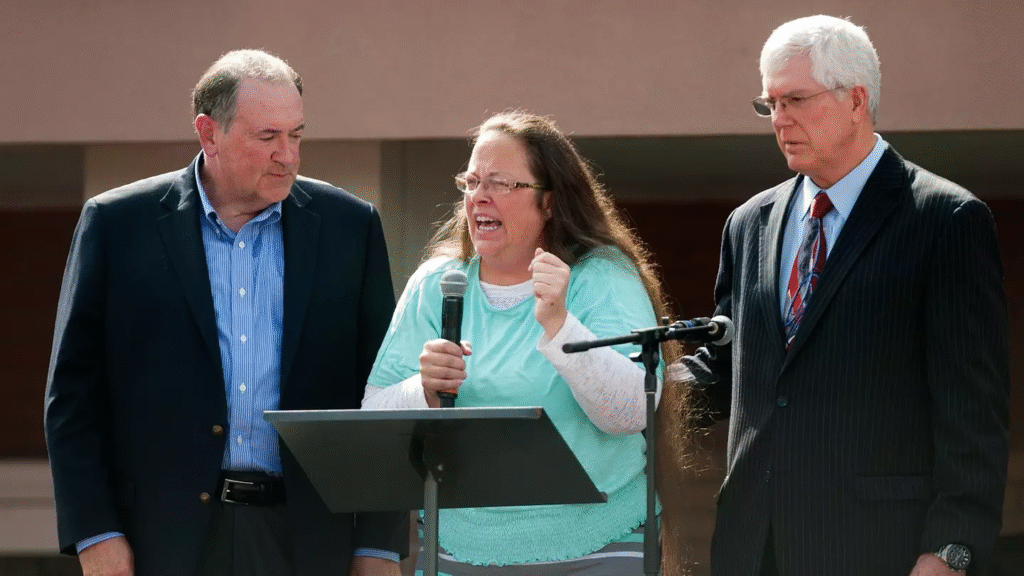
Ermold and Moore’s legal brief warns that overturning Obergefell could encourage public officials to ignore laws they personally disagree with, hoping courts will protect them retroactively. It also argues that destabilizing marriage rights would inflict harm on families who rely on legal recognition in matters ranging from property ownership to medical decision-making. The brief asserts that changing or rescinding those rights after nearly a decade would create widespread legal confusion.
Advocacy groups planning to demonstrate outside the Supreme Court emphasize that the case represents more than a dispute over one official’s actions. They argue that the case touches on broader attempts to expand religious exemptions in ways that could allow government workers to decline services based on personal beliefs, potentially affecting not only marriage licensing but also healthcare, employment, and education rights.
At the same time, some legal analysts describe Davis’s petition as a long shot. The Supreme Court may prefer to allow lower court rulings to stand without inviting renewed disputes over marriage equality. Others note that the Court sometimes waits for multiple cases on a related issue before reconsidering precedent. The Court may also weigh the social and political implications of revisiting a ruling that has become integrated into legal and cultural norms.
The Court has not yet announced whether it will take up the case. If the justices choose to do so, arguments would likely be scheduled months in the future, with a ruling potentially arriving next year. For now, the matter remains under private deliberation, with many watching closely for signs of the Court’s direction as it weighs constitutional rights, religious freedom, and the long-term stability of marriage equality in the United States.