
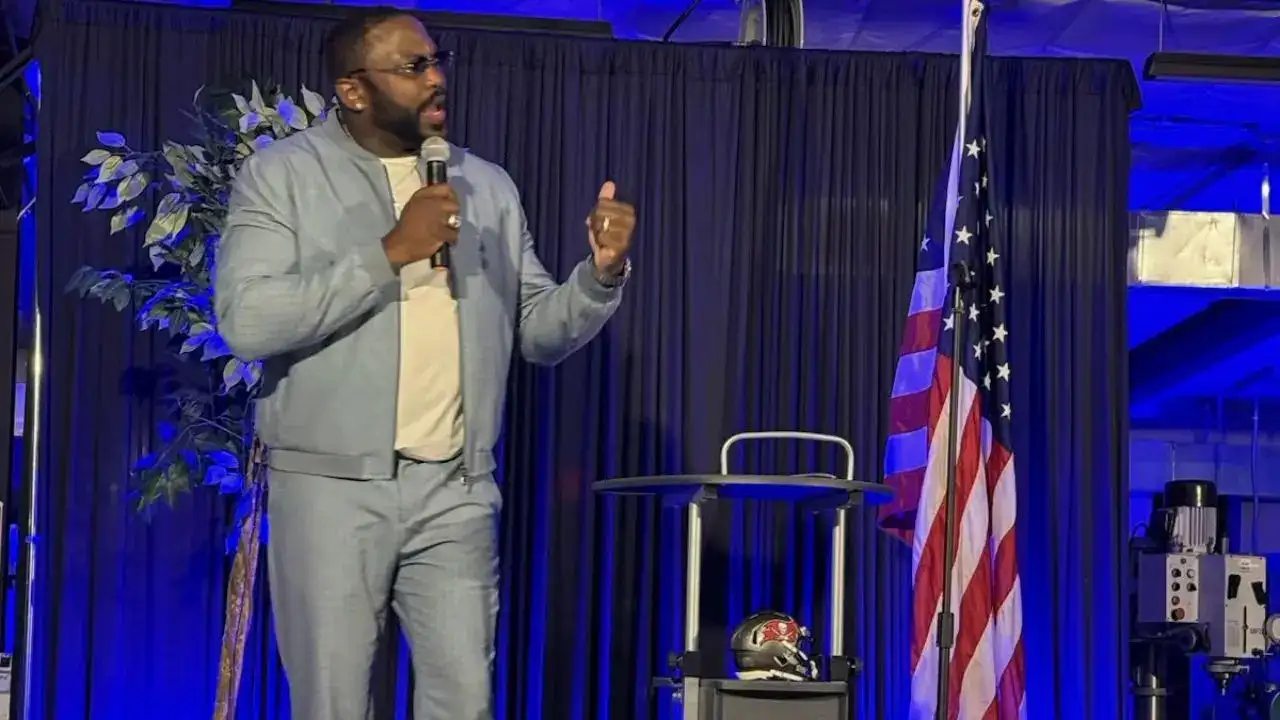
Former NFL wide receiver Frank Murphy appeared outside the United States Supreme Court in Washington, DC, on Tuesday as the justices heard oral arguments in two closely watched cases concerning the participation of transgender athletes in girls’ and women’s sports. Murphy, who was drafted by the Chicago Bears in the sixth round of the 2000 NFL Draft and later played for the Tampa Bay Buccaneers, addressed a gathering of supporters near the court while demonstrators from opposing sides of the issue assembled in the nation’s capital.
His remarks framed the debate through the lens of parenthood, leadership, and competitive equity, adding a prominent former professional athlete’s voice to a legal and cultural dispute that has drawn national attention. The cases before the Supreme Court, Little v. Hecox and West Virginia v. BPJ, involve state laws that restrict transgender girls from participating in girls’ school sports teams.
Supporters of these laws argue they are necessary to preserve fairness and competitive balance, while opponents contend they discriminate against transgender students and violate constitutional protections. As the justices considered arguments from both sides inside the courtroom, the atmosphere outside reflected the broader national debate, with advocates, activists, and public figures gathering to express their views. Murphy’s presence underscored how the issue has extended beyond legal circles into the worlds of sports, politics, and public discourse.
Frank Murphy’s Background and Presence at the Supreme Court
Frank Murphy’s remarks carried added weight because of his background as a professional athlete. Drafted by the Chicago Bears in 2000, Murphy entered the NFL after a collegiate career that demonstrated both athletic skill and dedication. Although his professional playing career was relatively brief compared with some of the league’s longest-tenured stars, his experience within elite competitive sports shaped his perspective on fairness, physicality, and opportunity.
By the time he spoke outside the Supreme Court, Murphy was no longer addressing audiences as an active player but as a former athlete and, as he emphasized, as a father. Standing near the court, Murphy addressed supporters who had gathered to voice concern about the implications of transgender participation in girls’ and women’s sports. Protesters from both sides of the debate were present, reflecting the polarized nature of the issue.
Murphy framed his involvement not as a political gesture but as a personal one, rooted in what he described as a responsibility to protect opportunities for women and girls. Introducing himself primarily as a parent rather than as a former NFL player, he sought to ground his message in family and leadership values. In his remarks, Murphy spoke about the importance of safeguarding women’s sports and ensuring that female athletes are afforded fair competitive environments.
He praised the courage of women who have spoken publicly about their concerns, telling the crowd that their actions required bravery and resilience. Comparing their advocacy to the demands of professional sports, Murphy suggested that the determination shown by these women was on par with, if not greater than, the challenges faced by athletes at the highest levels of competition. His comments resonated with supporters who view the issue as central to the future of women’s athletics.
“We have some brave, outstanding women.” –@TheFrankMurphy, former NFL player with Tampa Bay Buccaneers at the @A1Policy rally for their #SaveWomensSports rally
— Texas Values (text txvalues to 797979 for update) (@txvalues) January 13, 2026
The U.S. Supreme Court hears #SaveWomensSports case TODAY West Virginia v. B.P.J. and Hecox v. Little which will… pic.twitter.com/LQT60me7Pq
Murphy also acknowledged the broader significance of the Supreme Court cases, noting that the decisions could have far-reaching implications for school sports programs across the country. While he did not delve into legal technicalities, his presence highlighted how former athletes are increasingly engaging in policy debates related to sports governance and participation. By speaking outside the Supreme Court, Murphy aligned himself with a growing number of sports figures who have chosen to weigh in publicly on cultural and legal issues affecting athletics.
The Supreme Court Cases and the National Debate on Women’s Sports
The Supreme Court’s consideration of Little v. Hecox and West Virginia v. BPJ represents a pivotal moment in the ongoing national debate over transgender participation in school sports. Both cases involve challenges to state laws that restrict transgender girls from competing on girls’ teams in public school athletics. Proponents of the laws argue that biological differences can create competitive advantages that undermine fairness in women’s sports, while opponents assert that such restrictions stigmatize transgender students and limit their educational opportunities.
Read : Singer Tish Hyman Claims Gold’s Gym Revoked Her Membership Over Transgender Locker Room Complaint
Inside the courtroom, attorneys for both sides presented arguments addressing constitutional questions, including equal protection and federal civil rights law. The justices’ questions reflected the complexity of balancing anti-discrimination principles with states’ interests in regulating school athletics. Although no decision was issued on Tuesday, the conclusion of oral arguments marked a significant step toward rulings that could establish nationwide precedents.
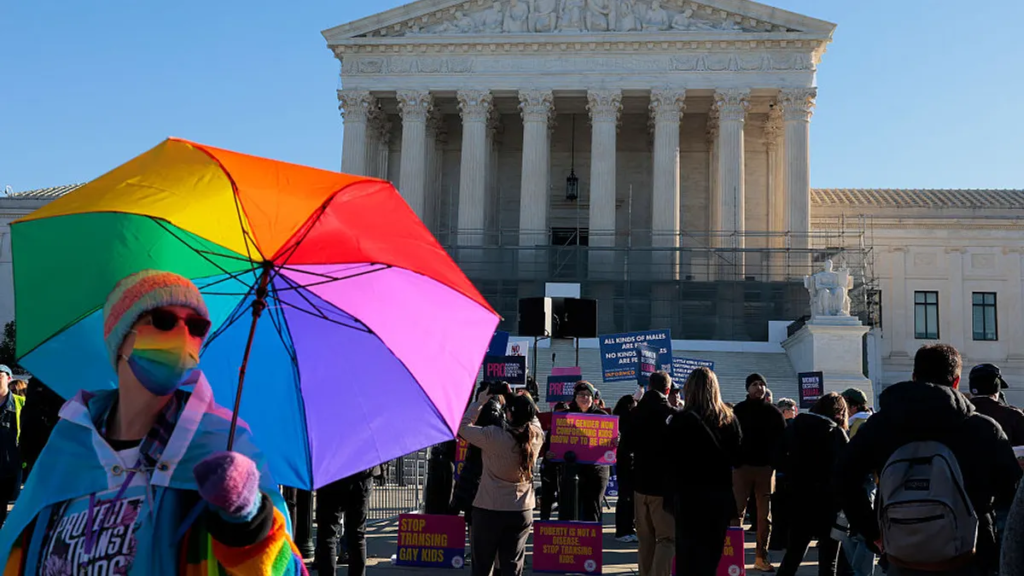
Outside the court, the scene mirrored the intensity of the legal proceedings. Supporters of the state laws emphasized fairness, safety, and the preservation of opportunities for female athletes, often invoking examples from competitive sports to illustrate their concerns. Opponents highlighted inclusion, mental health, and the rights of transgender youth to participate fully in school life. The gathering of protesters, advocates, and public figures underscored how the issue has become a focal point in broader discussions about gender, equality, and the role of sports in society.
Murphy’s comments fit squarely within the arguments advanced by supporters of the laws. By framing the issue as one of leadership and protection, he echoed themes commonly raised by advocates who believe that women’s sports require clear categories to remain fair and competitive. His emphasis on fatherhood added a personal dimension to the debate, suggesting that the stakes extend beyond legal doctrine to the values families wish to instill in future generations.
The Supreme Court’s eventual decisions are expected to influence how states and school districts nationwide approach the question of transgender participation in athletics. Depending on the outcomes, the rulings could either affirm states’ authority to impose restrictions or reinforce protections for transgender students under federal law. As such, the cases have drawn attention not only from legal experts but also from athletes, parents, educators, and policymakers.
Political Context and Murphy’s Remarks on Leadership
In addition to addressing fairness in sports, Murphy’s remarks touched on the broader political context surrounding the issue. He praised President Donald Trump and his administration for what he described as standing by women’s sports, framing this stance as an example of leadership that influenced his decision to speak out. By linking the debate to national leadership, Murphy situated the Supreme Court cases within a wider political landscape where sports policy, gender issues, and executive priorities intersect.
Murphy’s comments reflected a view shared by many supporters of the state laws, who see federal leadership as a key factor in shaping policies related to athletics and education. By expressing encouragement at what he characterized as supportive leadership in the White House, Murphy suggested that executive actions and public statements can play a role in setting the tone for national discussions about women’s sports. His remarks drew applause from supporters who view the issue as one requiring decisive action from political leaders.
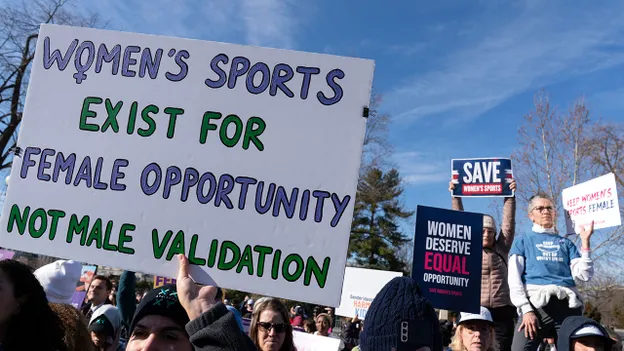
The inclusion of political praise also illustrated how the debate over transgender athletes has become intertwined with partisan perspectives. While Murphy focused primarily on sports and family values, his acknowledgment of presidential leadership highlighted the reality that policy decisions in this area are often influenced by broader political agendas. This intersection of sports, law, and politics has contributed to the intensity of the national conversation, with stakeholders from diverse backgrounds weighing in.
As oral arguments concluded and the crowd outside the Supreme Court began to disperse, Murphy’s presence remained a notable element of the day’s events. His remarks did not resolve the legal questions before the justices, but they added to the chorus of voices seeking to influence public understanding of what is at stake. For supporters, his status as a former NFL player lent credibility to arguments about competitive fairness.
For observers, his appearance underscored how debates over school sports have reached the highest levels of the judiciary and drawn in figures from across American life. The Supreme Court is expected to issue its decisions in the coming months, and the rulings will likely shape the future of girls’ and women’s sports across the country.
Regardless of the outcomes, the arguments heard inside the courtroom and the demonstrations outside reflect a continuing national effort to reconcile principles of fairness, inclusion, and opportunity within the realm of athletics. Murphy’s remarks outside the court stand as one example of how former athletes are engaging with these issues, bringing their experiences and perspectives into a debate that extends far beyond the playing field.