
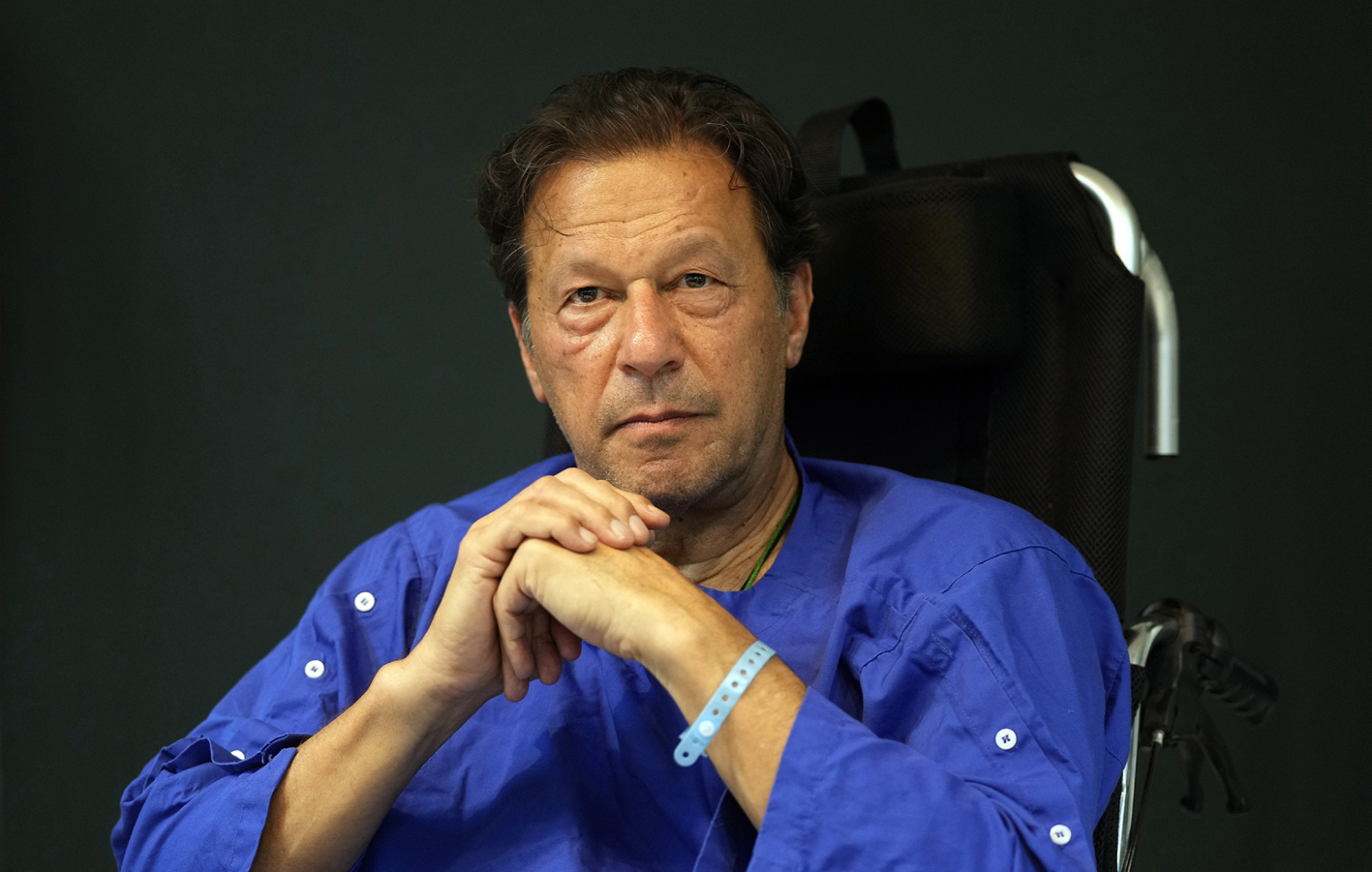
The political landscape of Pakistan has been shaken by the sentencing of former Prime Minister Imran Khan to 14 years in prison in a high-profile corruption case.
The anti-graft court’s decision to convict both Khan and his wife, Bushra Bibi, over their welfare foundation, the Al-Qadir Trust, marks a significant chapter in the nation’s political and judicial history.
This development has raised questions about political motivations, the influence of the military, and the future of democracy in Pakistan.
The Landmark Conviction of Imran Khan and Bushra Bibi
Imran Khan, the former cricket star turned political leader, has faced a multitude of legal challenges since his ousting from power in 2022. His conviction, along with his wife Bushra Bibi, revolves around allegations of corruption tied to the Al-Qadir Trust, a welfare foundation established by the couple.
On Friday, a special anti-graft court convened inside the jail near Islamabad where Khan is being held. Judge Nasir Javed Rana delivered the verdict, sentencing Khan to 14 years in prison and Bushra Bibi to seven years. The court concluded that the prosecution had presented sufficient evidence to prove its case.
Bushra Bibi, a spiritual healer, was taken into custody after the ruling despite recently being released on bail. Her arrest further underscores the gravity of the charges against the couple. For Khan, this latest conviction is the most severe of the numerous legal cases he has faced.
Read : 1,000 Protesters Demanding the Release of Jailed Ex-PM Imran Khan Arrested in Islamabad
Khan has vehemently denied the allegations, claiming they are politically motivated and part of a broader effort to silence him. “I will neither make any deal nor seek any relief,” Khan stated, resolutely maintaining his stance against what he sees as an unjust campaign to disqualify him from the political arena.
Political Turmoil and Military Influence
The conviction of Imran Khan cannot be viewed in isolation; it is deeply intertwined with Pakistan’s turbulent political environment and the powerful role of the military establishment.
Since being ousted as Prime Minister in 2022, Khan has mounted an unprecedented campaign against the country’s military generals, openly criticizing their role in political affairs.
Read : Here’s Why Pakistan Has Banned the Social Media App X (Twitter)
This has led to a significant escalation in tensions between Khan’s Pakistan Tehreek-e-Insaf (PTI) party and the military, which has historically wielded considerable influence over Pakistan’s political landscape.
Analysts suggest that Khan’s conviction is part of a broader strategy to pressure him into stepping away from politics. The delayed sentencing, which had been postponed several times, was perceived by many as a tactic to coerce Khan into accepting a deal with the military to exit the political arena.

The United Nations has also weighed in on Khan’s legal troubles. In a report from the previous year, a UN panel of experts stated that Khan’s detention “had no legal basis and appears to have been intended to disqualify him from running for political office.”
Khan’s PTI party, despite winning the most seats in the February election, was unable to form a government due to a coalition of parties deemed more amenable to military influence. This crackdown on PTI has significantly weakened the party’s political clout and raised concerns about democratic backsliding in Pakistan.
Implications for Pakistan’s Political Future
The conviction of Imran Khan and his ongoing legal battles have profound implications for Pakistan’s political future. With over 200 cases filed against him, Khan has become a polarizing figure, symbolizing both resistance to military dominance and the contentious nature of Pakistani politics.
Supporters of Khan view his conviction as a politically motivated attempt to eliminate a popular leader who challenges the status quo. His charisma and populist appeal have garnered him significant support, particularly among the youth and middle-class voters.
However, his critics argue that his confrontational approach and failure to reconcile with the establishment have contributed to the current political instability.
Khan’s disqualification from February’s election and his imprisonment have left PTI in a weakened state. The party has faced a widespread crackdown, with many of its leaders and supporters arrested or intimidated. Despite this, PTI remains a formidable political force, as evidenced by its strong performance in recent elections.

The broader implications of Khan’s conviction extend beyond his political career. It raises critical questions about the independence of Pakistan’s judiciary, the role of the military in politics, and the country’s commitment to democratic principles.
Observers and analysts have expressed concerns about the use of legal cases to suppress political dissent and marginalize opposition leaders. Such practices not only undermine the rule of law but also erode public trust in democratic institutions.
Imran Khan’s sentencing to 14 years in prison marks a pivotal moment in Pakistan’s political history. The conviction, rooted in allegations of corruption, is emblematic of the broader struggles facing the country, including political polarization, judicial integrity, and the pervasive influence of the military.
As Khan remains behind bars, his unwavering resolve and vocal criticism of the establishment continue to resonate with his supporters. However, the challenges facing PTI and the broader implications for democracy in Pakistan cannot be overlooked.
The case of Imran Khan serves as a stark reminder of the complexities and challenges of governance in Pakistan. It highlights the need for greater transparency, accountability, and respect for democratic norms to ensure a stable and prosperous future for the nation. Whether this conviction will mark the end of Khan’s political journey or fuel his comeback as a resilient leader remains to be seen.