

A disturbing and deeply troubling incident unfolded in Wahiawa, Hawaii, when Four Teenagers Assault 21-Year-Old Woman named Carly, who has an intellectual disability. The attack, captured on video, shows the teens taunting, physically abusing, and humiliating Carly in public, sparking widespread outrage and mobilizing the local community.
The harrowing footage reveals the cruelty of the assault and has raised urgent conversations about bullying, disability rights, community responsibility, and the justice system’s response to such acts of violence.
Four Teenagers Assault 21-Year-Old Woman With Intellectual Disability
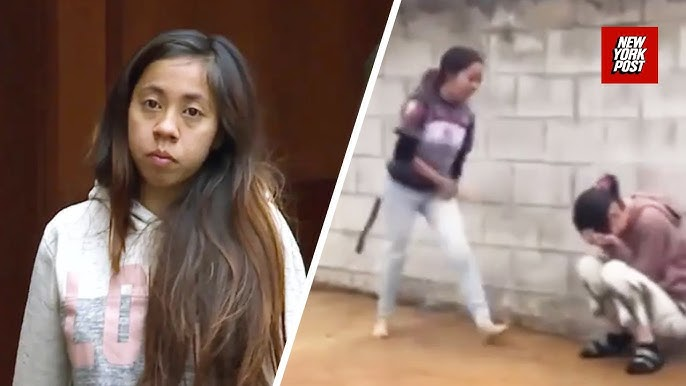
The incident took place in Wahiawa, a small town located about 20 miles north of Honolulu. The four teenagers targeted Carly, an intellectually disabled young woman, in a disturbing episode that quickly escalated from verbal taunts to brutal physical violence. The video shows two of the teens surrounding Carly and deliberately provoking her.
Jasmine Keola, one of the 18-year-old assailants, demands that Carly remove her backpack and then throws it on the ground. She also forcefully slaps Carly’s glasses off her face, an act that visibly frightens and destabilizes Carly.
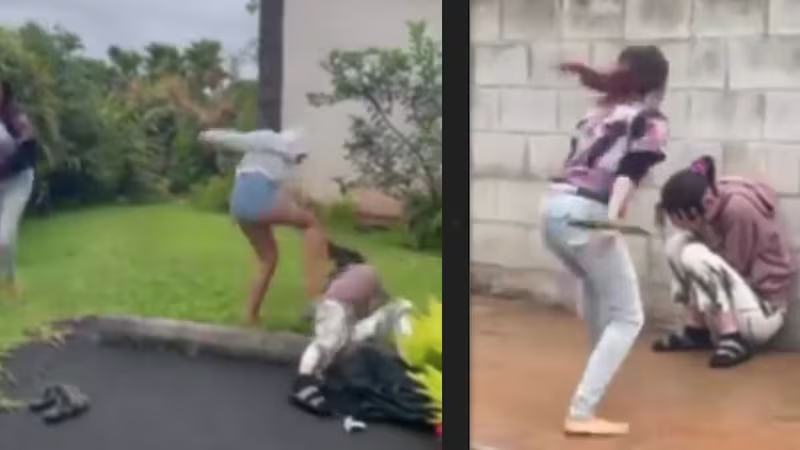
Despite Carly’s obvious distress and repeated pleas, the teenagers continue their aggression. Carly is seen crouching on the ground, screaming as the teens slap her repeatedly. At one point, Carly expresses her fear and pain, telling the teens that she does not want to take the bus anymore because of them.
She attempts to leave the scene, expressing a desire to escape the harassment. Yet, the teens mock her, refusing to relent. As Carly moves across the street, the assault intensifies. The video shows the attackers kicking and punching her while she lies defenseless on the ground, unable to protect herself from the violent onslaught.
The verbal abuse accompanying the physical attack is equally disturbing. The teens use degrading and hateful language, mocking Carly’s inability to fight back. One of the girls even boasts about Carly being “knocked out,” displaying a shocking lack of empathy or remorse for their actions. The entire episode is a horrifying example of cruelty and callousness directed at a vulnerable individual.
Community Response and Calls for Justice
The video of the attack quickly spread, causing shock and outrage across Hawaii and beyond. Local residents, deeply disturbed by the cruelty shown toward Carly, mobilized quickly to assist law enforcement in identifying and apprehending the four teenagers. The community’s swift response illustrates a powerful collective rejection of bullying and violence, especially toward those with disabilities.
Members of the community took to social media to livestream their efforts to track down the attackers, drawing thousands of viewers. At one point, as many as 11,000 people watched live videos of residents confronting and pursuing the teens. This public involvement reflects the strong sense of justice and solidarity with Carly among Wahiawa’s residents.
Michael Kitchens, a well-known Honolulu resident and founder of the anti-crime group Stolen Stuff Hawaii, condemned the attack in no uncertain terms. He described the assault as “absolutely cruel” and went further to stress that it was “more than bullying,” characterizing it as a “senseless, cruel assault” and “pure evil.”
Read : Hawaii Babysitter Dixie Villa Jailed After 7-Month-Old Baby Dies From Benadryl Overdose
Kitchens expressed that the perpetrators should feel ashamed of themselves and made clear he has no sympathy for their actions, particularly given Carly’s disability and inability to defend herself.
Many others in the community echoed these sentiments. Leilehua High School senior Journey Emond told Hawaii News, “It’s not right. We’re not bullies ourselves. You shouldn’t bully anybody else, especially someone that can’t stand up for themselves.” The widespread condemnation highlights how bullying and violence against vulnerable individuals are increasingly being recognized as intolerable in society.
The four teenagers were subsequently arrested and face legal consequences for their actions. Their arrest is a critical step toward justice, but the incident also raises broader questions about prevention, education, and support for vulnerable individuals in the community.
Addressing Bullying and Protecting Vulnerable Individuals
This brutal attack on Carly has reignited urgent conversations about bullying, particularly against individuals with intellectual and developmental disabilities. People with disabilities often face higher risks of abuse and discrimination, making protective measures and awareness campaigns essential to safeguarding their rights and dignity.
Schools, communities, and policymakers must work together to promote empathy, inclusion, and respect from an early age. Anti-bullying programs that educate young people about disabilities and the impact of their behavior can help prevent such tragic incidents. Equally important is fostering safe environments where victims feel supported and confident in seeking help.
Law enforcement and judicial systems also play a vital role in addressing violence against vulnerable individuals. Swift legal action against perpetrators sends a clear message that such behavior will not be tolerated. However, punishment alone is not enough; rehabilitative efforts aimed at educating offenders about the harm they cause and promoting positive behavioral change are also necessary.
Community involvement, as seen in Wahiawa, is critical in both responding to and preventing bullying. Residents who stand up against violence and support victims create a culture that values kindness and accountability. The large-scale social media mobilization in this case demonstrated the power of community solidarity in confronting injustice.
Additionally, support services for victims, especially those with disabilities, must be strengthened. Counseling, medical care, and legal assistance can help survivors recover physically and emotionally, while advocacy organizations can provide ongoing protection and empowerment.
The assault on Carly is a painful reminder of the vulnerabilities that people with disabilities face. It is a call to action for all stakeholders to intensify efforts to combat bullying, ensure justice, and build communities where every individual is treated with dignity and respect.
This case underscores the need for continued vigilance, education, and community engagement to prevent such atrocities in the future. By learning from this tragic incident and fostering a culture of compassion and respect, we can work toward a society where no one is subjected to violence or discrimination because of their disability or any other factor.