
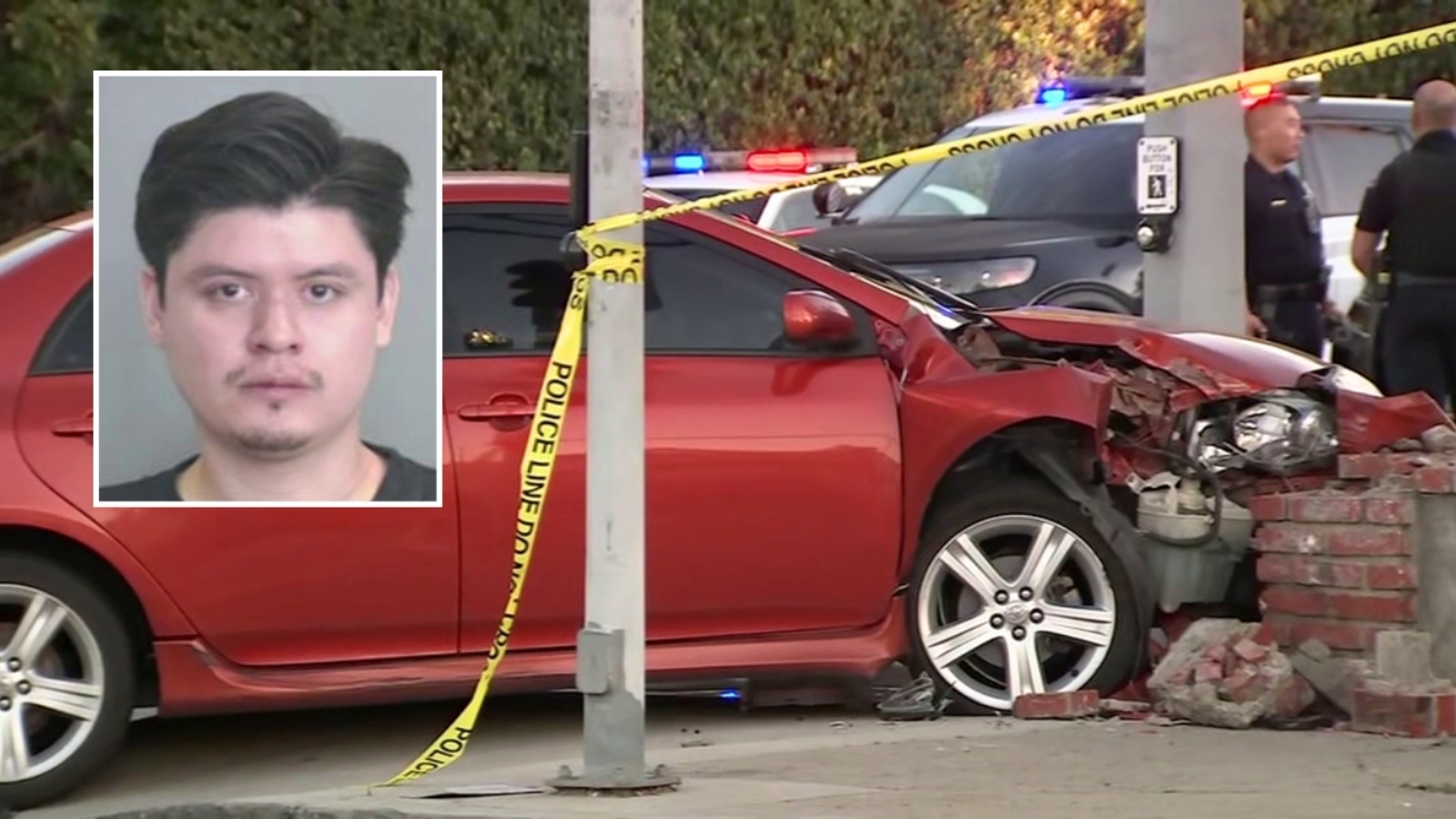
The quiet afternoon of Thursday, January 29, 2026, in Fremont, Nebraska, was disrupted by a shocking incident that has drawn national attention and raised urgent questions about safety, protest rights, and community responsibility. A student participating in a non-school-sponsored protest against U.S. Immigration and Customs Enforcement (ICE) was struck by an SUV displaying a political flag in front of Fremont High School. Local law enforcement and school officials are still investigating the event, and the young victim’s condition has been the subject of growing concern and discussion.
Context of the Protest and the Incident
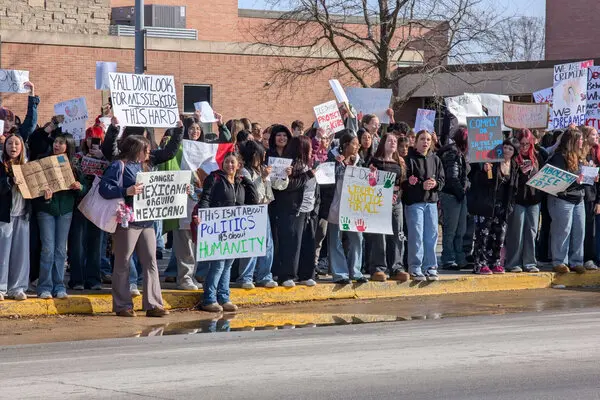
On Thursday afternoon just after 2 p.m., dozens of students at Fremont High School organized a peaceful demonstration outside the campus to voice their opposition to actions by ICE, part of a broader wave of protests occurring across the United States in response to federal immigration enforcement policies and recent high-profile deaths linked to ICE operations.
The student-led walkout was not officially sponsored by the school, but administrators were present at the scene with the stated goal of ensuring participants remained safe and peaceful throughout the event. Video footage captured at the scene shows students holding signs and chanting as they stood near the road outside the school. At various points during the demonstration, a red SUV with a Trump campaign flag mounted to its rear window drove past the crowd repeatedly.
During its final pass, the driver pulled the vehicle up near the group of students, exited the SUV, and engaged in a brief verbal exchange with some protesters. After returning to the driver’s seat, the vehicle accelerated forward. A student who had stepped into the street with a sign was struck, thrown off to the side, and fell to the ground. The SUV stopped momentarily as a school administrator approached, then left the scene.
Emergency responders were called, and the injured student was transported by ambulance to a nearby hospital. Video footage and witness accounts indicate that the student was conscious and responsive as she was loaded into the emergency vehicle, and later reports suggested she was alert and speaking with first responders, though officials have not released detailed medical updates publicly.
Investigation, Local Reaction, and Broader Implications
In the hours following the incident, the Fremont Police Department located and identified the driver of the SUV. Police officials confirmed the driver is a juvenile, though no name has been released due to age protections. Law enforcement is continuing its investigation into the collision, interviewing witnesses and reviewing video evidence to determine whether criminal charges will be filed. The Dodge County Attorney’s Office has stated that it is reviewing all available evidence before deciding on any formal charges, emphasizing the seriousness with which they are approaching the case.
Read : Tuscarora High School Student Trent Lasher Arrested in Connection With Leesburg Manhole Explosion
The incident has sparked strong reactions from community members, elected officials, and advocates on all sides of the issue. U.S. Representative Mike Flood, whose congressional district includes Fremont, described the event as disturbing and reiterated the importance of protecting the ability of people to protest safely. Nebraska Governor Jim Pillen issued a statement emphasizing that political violence of any kind is unacceptable and underscoring the need for a thorough investigation.
Police locate a juvenile driver accused in a hit-and-run that injured a student and instead of keeping kids in class, Fremont Public Schools had them out at a demonstration while administrators “Supervised.” Let that sink in. Kids go to school to LEAR(N) not to be marched outside… pic.twitter.com/TMn0wFT64H
— Black Rebel (@RealBlackRebel_) January 31, 2026
Other state officials, including U.S. Senators Pete Ricketts and Deb Fischer, offered prayers for the injured student and called for accountability and respect for peaceful assembly. Within the Fremont community, reactions have ranged from outrage at what many see as a deliberate act of aggression to concern about the risks inherent in protests that bring students into close contact with traffic and bystanders.
Some parents and local residents have criticized school administrators for allowing students to organize and create protest materials during class time, arguing that insufficient safeguards were in place to protect participants. Others have defended the students’ right to express their views and called for enhanced safety protocols during such demonstrations.
Nationally, the incident in Fremont has become part of a larger conversation about civic engagement, youth activism, and the physical dangers that can emerge at politically charged events. Across the country, students and community groups have staged protests and walkouts in opposition to immigration policies and enforcement practices. While these events are often peaceful, the Nebraska collision highlights how rapidly a situation can escalate when tensions intersect with vehicles, public spaces, and emotionally invested groups.
Safety, Rights, and Future Considerations
This incident underscores the complex interplay between constitutional rights, community safety, and the responsibilities of institutions. Students have a legally protected right to free speech and peaceful assembly, but ensuring their safety — especially when demonstrations occur near roads and in public spaces — remains a critical concern for school administrators, law enforcement, and families alike. Fremont Public Schools has reiterated its commitment to student safety and its cooperation with first responders but is also likely to face scrutiny over its role in supervising the protest.
Legal experts note that the use of a vehicle in a protest setting, whether intentional or not, raises serious legal questions. Leaving the scene of an accident, especially one involving injury, can itself be a criminal offense under Nebraska law. Whether the driver’s actions will be charged as criminal assault, reckless driving, hit-and-run, or other violations will depend on the outcome of the ongoing investigation and the interpretations of prosecutors and judges.
The broader implications of the event extend beyond legal considerations. For many students and youth activists, the collision has served as a sobering reminder of the potential risks associated with public demonstrations. Conversations about protest planning, risk assessment, and participant training are likely to become more prominent in schools and activist circles. At the same time, community leaders, educators, and policymakers are confronting difficult questions about how to balance the encouragement of civic engagement with the necessity of keeping young people safe.
In the days ahead, the Fremont case may continue to develop as investigators complete their work and local officials decide on appropriate legal actions. The injured student’s recovery, the community’s response, and the broader national dialogue about protest rights and safety will all shape how this incident is understood and addressed in the months to come.